Enhance critical thinking Addition Worksheets for Ages 3-9
4 filtered results
-
From - To
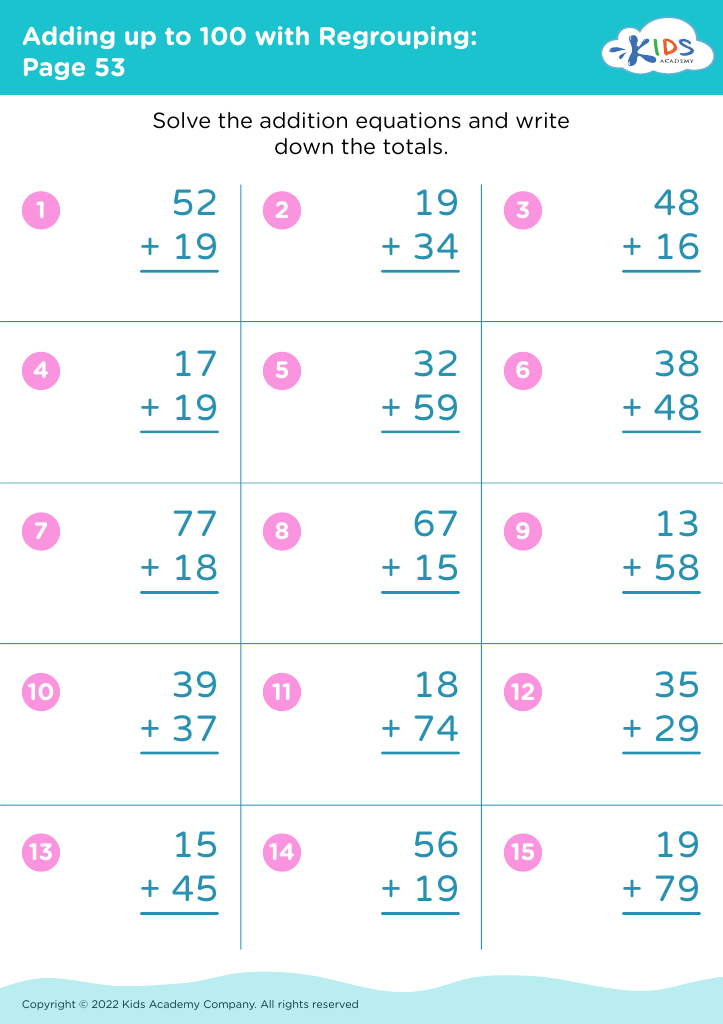
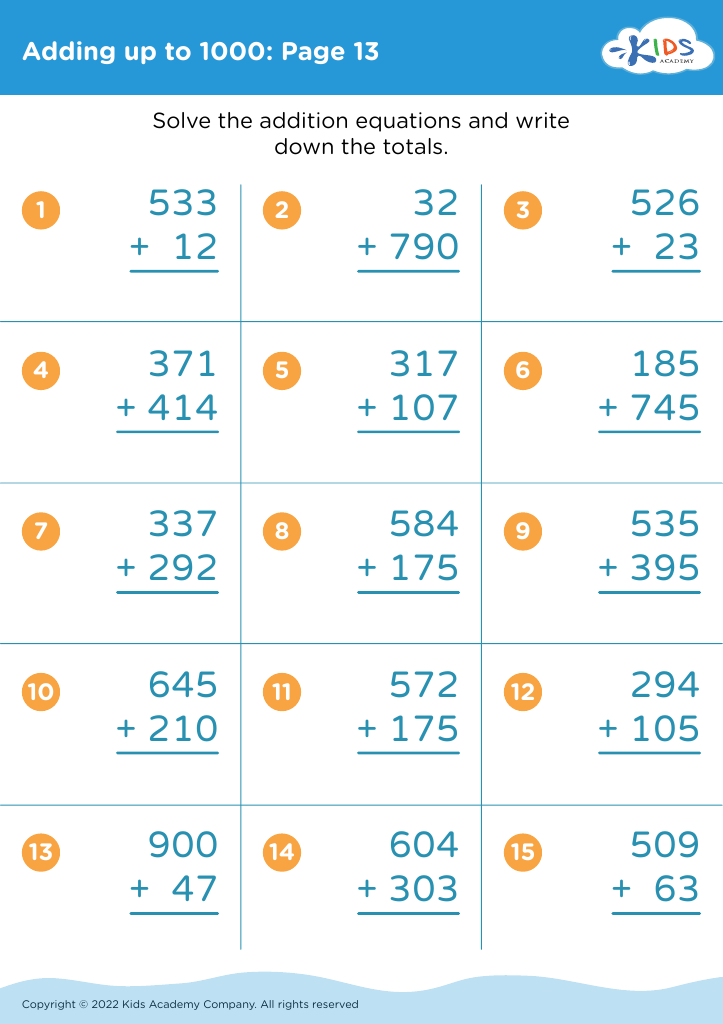
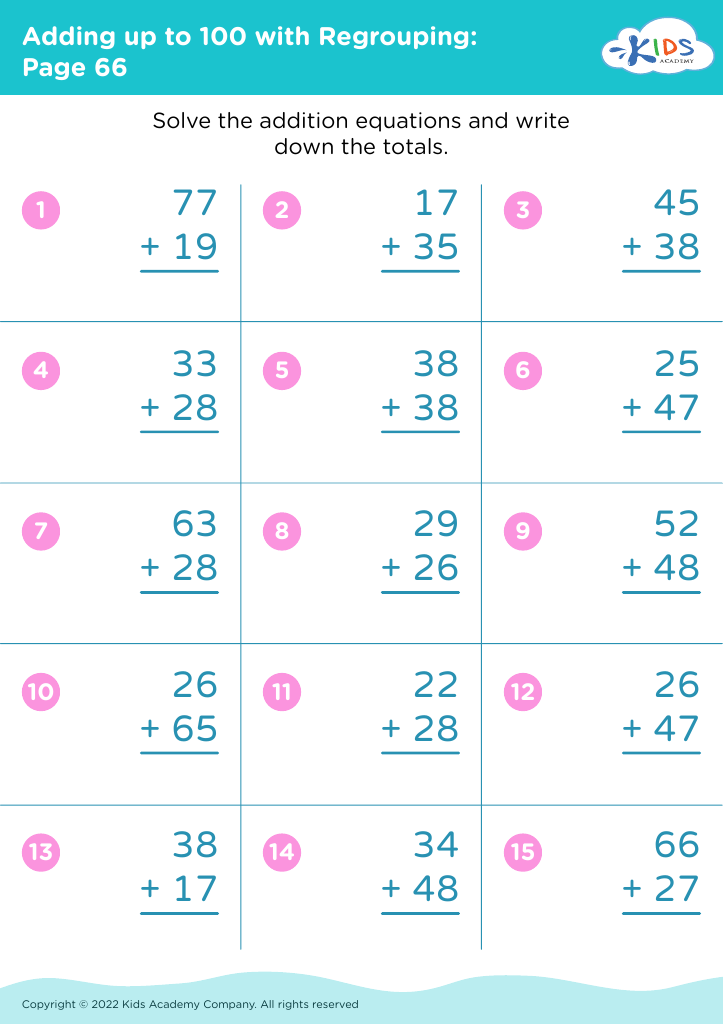
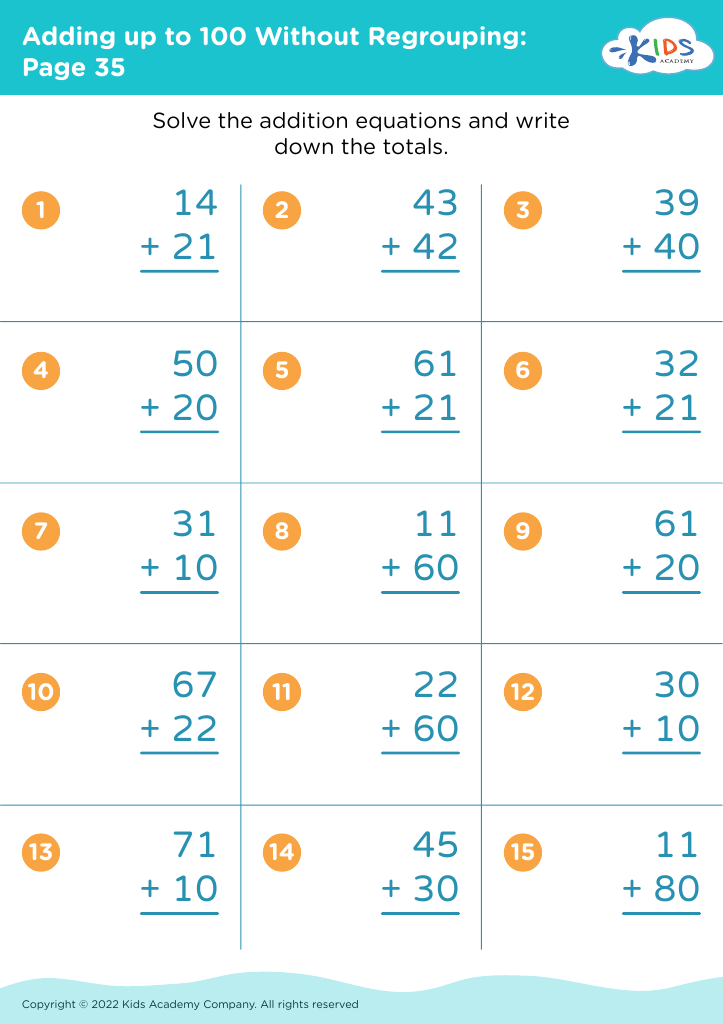
Discover our "Enhance Critical Thinking Addition Worksheets" designed for children aged 3-9! These engaging and interactive worksheets promote essential math skills while fostering analytical thinking. Each activity encourages kids to solve problems creatively, strengthening their understanding of addition through various challenges. Our worksheets include fun illustrations and relatable scenarios, making learning enjoyable and effective. Perfect for home or classroom use, these resources help young learners develop confidence in their mathematical abilities as they explore concepts at their own pace. Start your child's journey to become a critical thinker and a math whiz today with our thoughtfully designed addition worksheets!


.jpg)




Enhancing critical thinking in children aged 3-9 is crucial for their overall development and future success. At this young age, children are naturally curious, making it an ideal time to cultivate analytical and creative thinking skills. Critical thinking fosters problem-solving abilities, encouraging young learners to approach challenges methodically and think outside the box.
When parents and teachers prioritize critical thinking, they equip children with the tools to question information, draw connections between concepts, and make informed decisions. This skill is not only pivotal in academic settings but also in everyday life situations. For instance, when children learn to analyze a story or solve a math problem, they develop skills that enhance their understanding and retention of ideas.
Moreover, critical thinking promotes independence and self-confidence. Children who can articulate their thoughts and reasoning are more likely to express themselves, negotiate, and collaborate effectively with peers. As a result, they become active participants in their own learning process.
In today’s rapidly changing world, nurturing critical thinking ensures that children are prepared to adapt and thrive. Thus, parents and teachers must prioritize this skill as a foundational element of early education, laying the groundwork for lifelong learning and curiosity.








