Enhance fine motor skills Addition Worksheets for Ages 3-9
4 filtered results
-
From - To
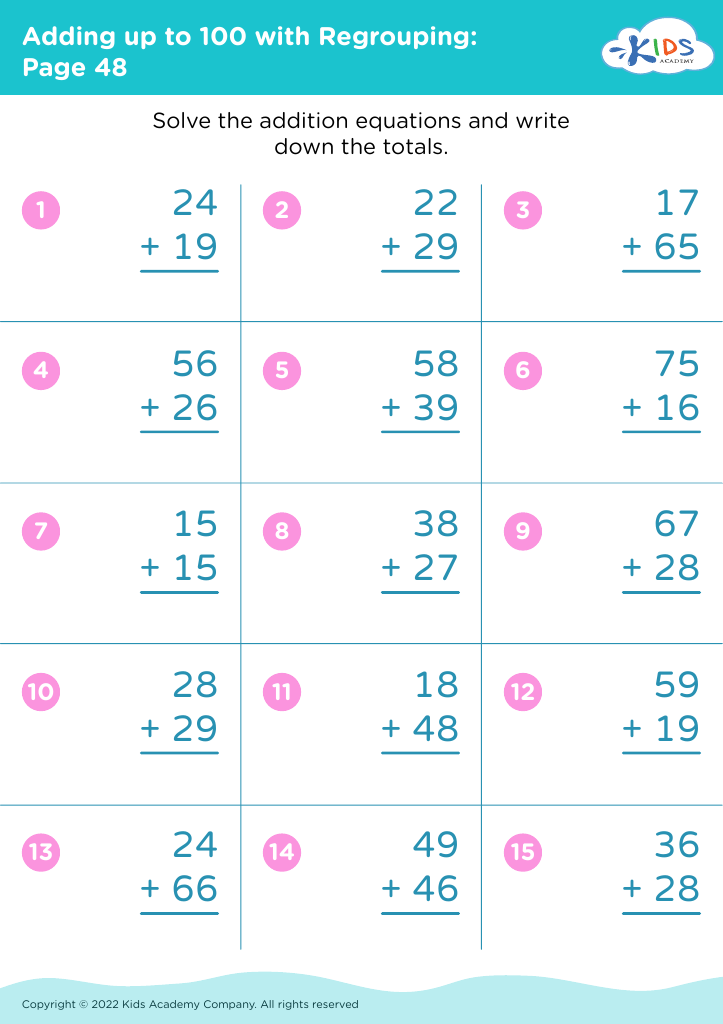
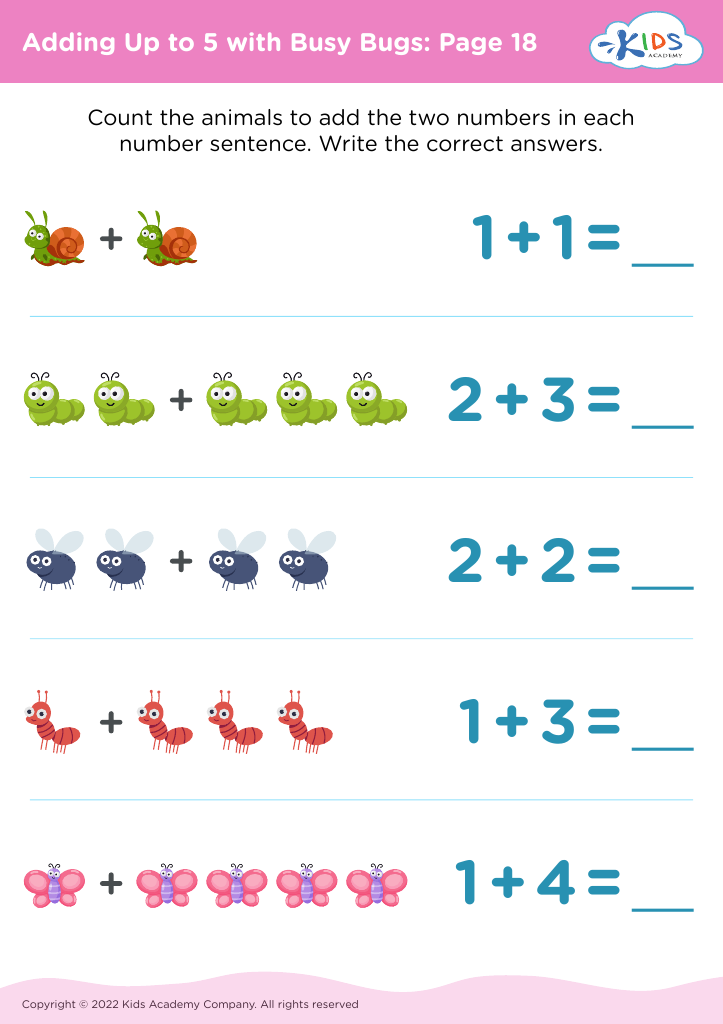
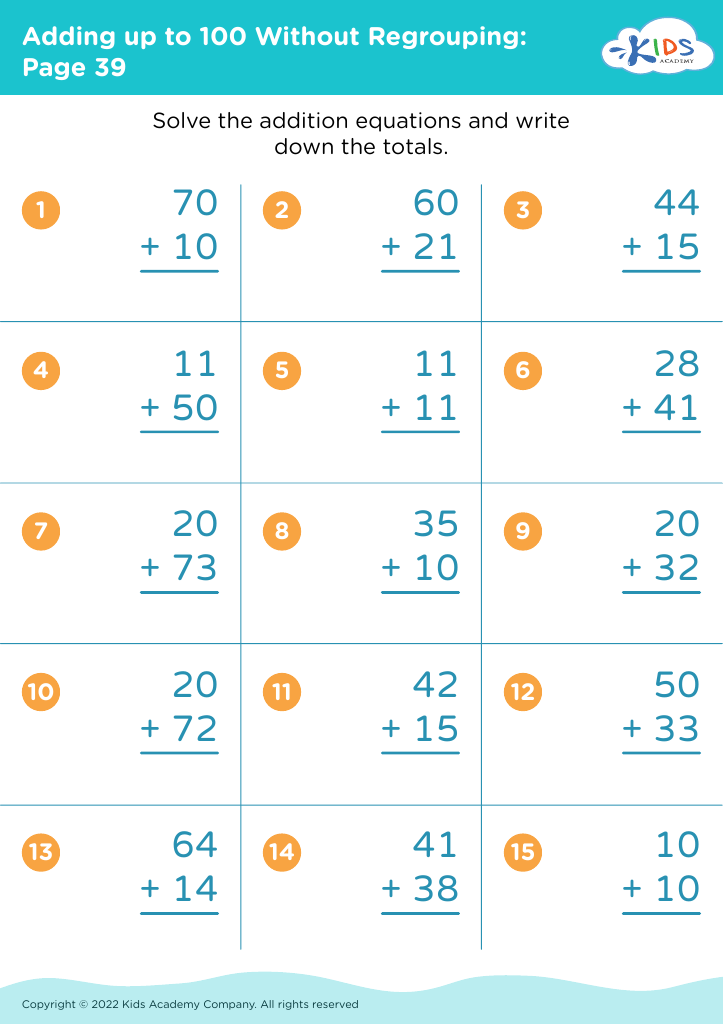
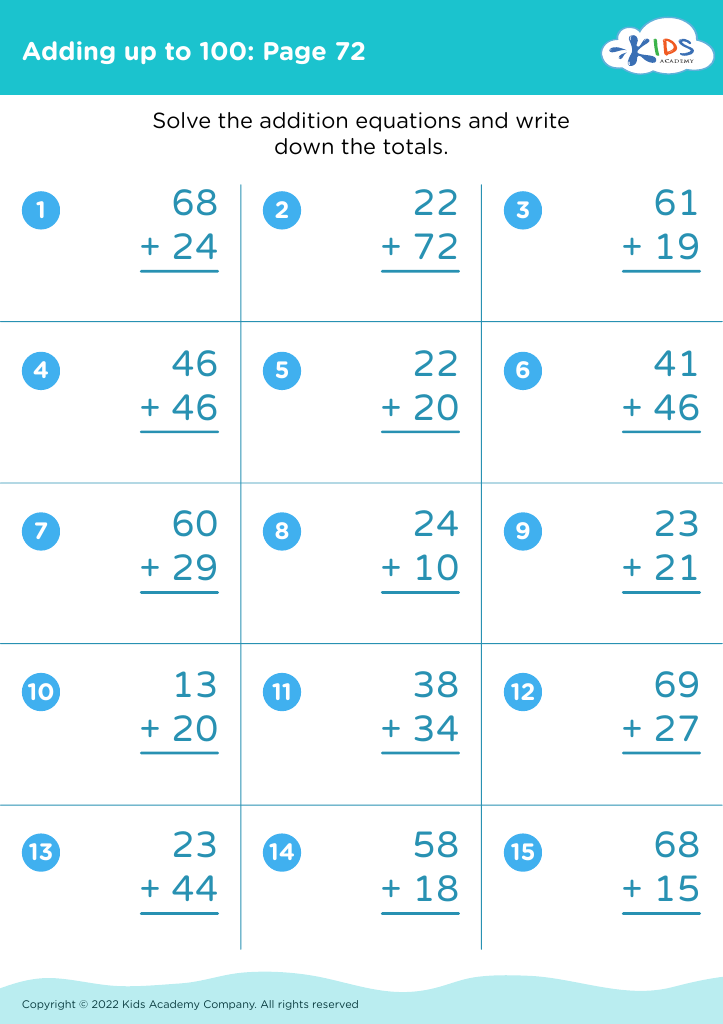
Unlock your child’s potential with our "Enhance Fine Motor Skills Addition Worksheets for Ages 3-9". Tailored to blend foundational math with crucial fine motor skills, these interactive worksheets feature engaging activities that foster both learning and dexterity. Designed by educational experts, each worksheet offers vibrant illustrations, relatable themes, and hands-on challenges that make addition practice enjoyable. Perfect for classroom or home use, our worksheets inspire kids to develop precise hand-eye coordination, improve pencil control, and boost their confidence in math. Let math become a delightful adventure with tools that prepare your child for academic success and everyday tasks.








Enhancing fine motor skills is crucial for children aged 3-9 as it significantly impacts their overall development and learning abilities. Fine motor skills involve the small muscles in the hands, fingers, and wrists, which are essential for everyday tasks such as writing, buttoning clothes, and using utensils. By focusing on fine motor skill development, parents and teachers help children improve their hand-eye coordination and dexterity, which are foundational for academic success and personal independence.
For young learners, well-developed fine motor skills are directly related to their ability to write legibly and efficiently. Early experiences in manipulating small objects and engaging in detailed activities, such as drawing or cutting with scissors, prepare children for more complex tasks like holding a pencil correctly and forming letters. This enhancement in fine motor skills not only boosts academic performance but also increases self-esteem as children become more adept at managing tasks independently.
Moreover, activities that improve fine motor skills often require focus and patience, fostering better concentration and discipline in young children. By investing time in enhancing these skills during the critical early years, parents and teachers set the foundation for a lifetime of successful learning and functional abilities, supporting both academic achievement and everyday life skills.








