Fine Motor Skills (coloring) Addition Worksheets for Ages 3-9
6 filtered results
-
From - To
Enhance your child's fine motor skills and math abilities with our engaging Addition Worksheets for Ages 3-9. These interactive worksheets combine the joy of coloring with the foundational practice of addition, making learning fun and effective. Each page features delightful illustrations designed to captivate young minds while they color and calculate. Perfectly suited for toddlers to early grade students, these printable worksheets encourage concentration, improve hand-eye coordination, and foster a love for math. Whether at home or in classroom settings, our addition worksheets offer a balanced approach to developing fine motor skills and mathematical confidence.
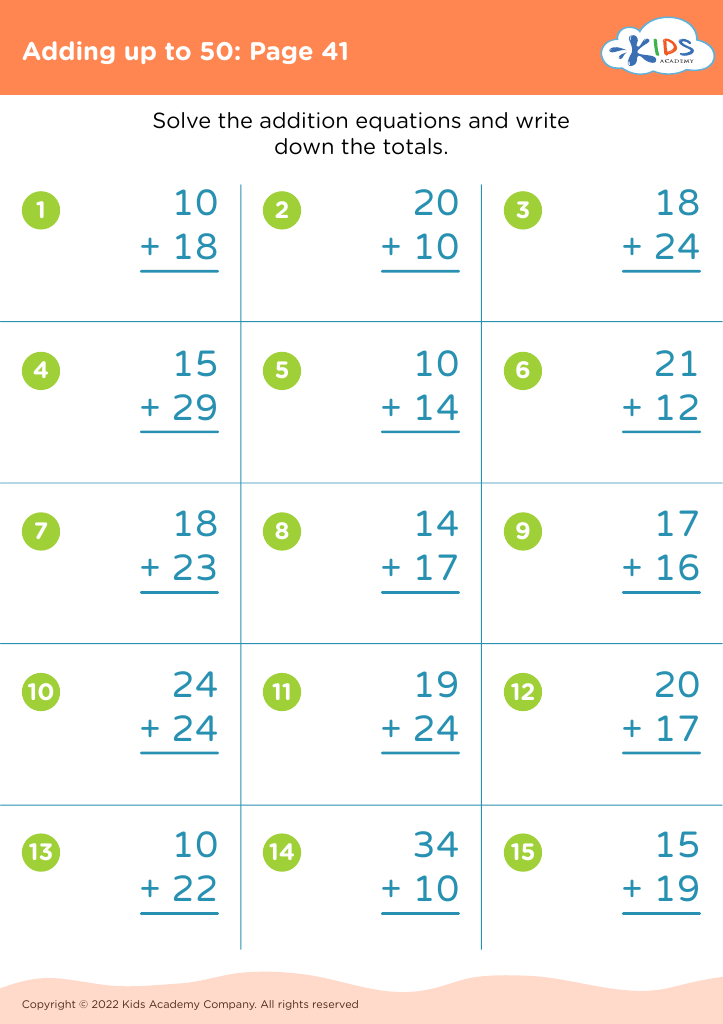
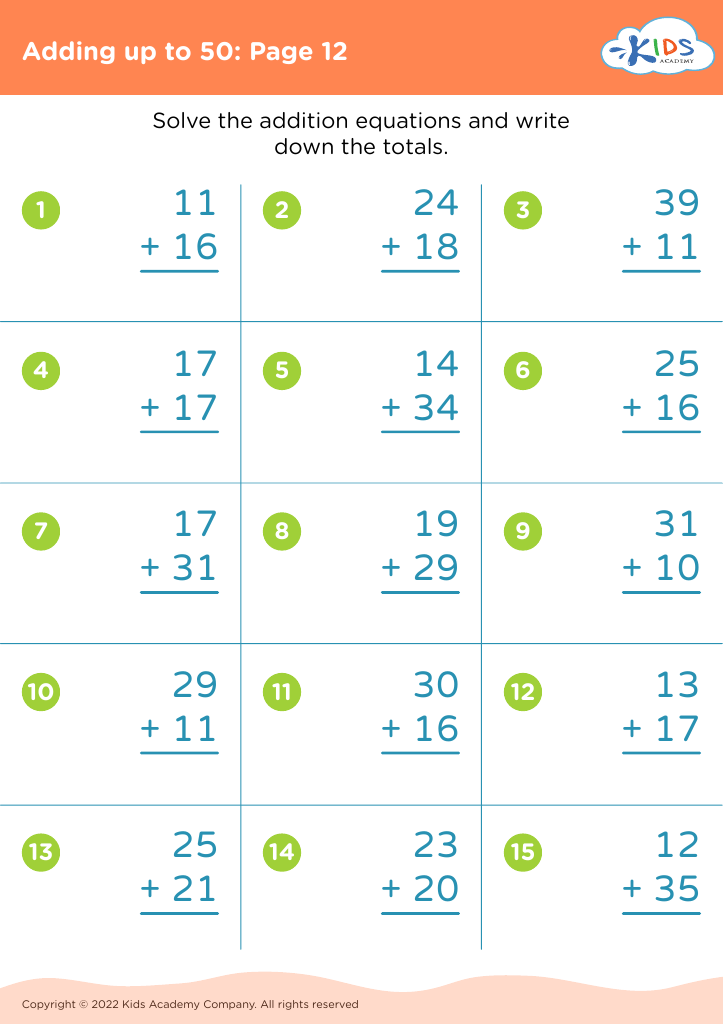
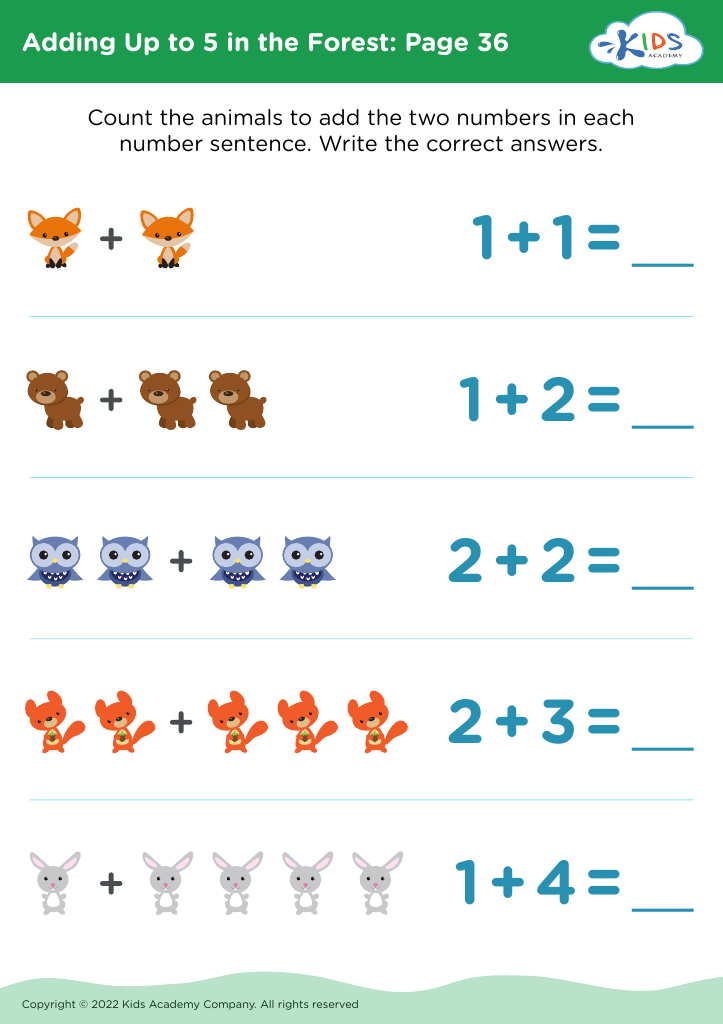
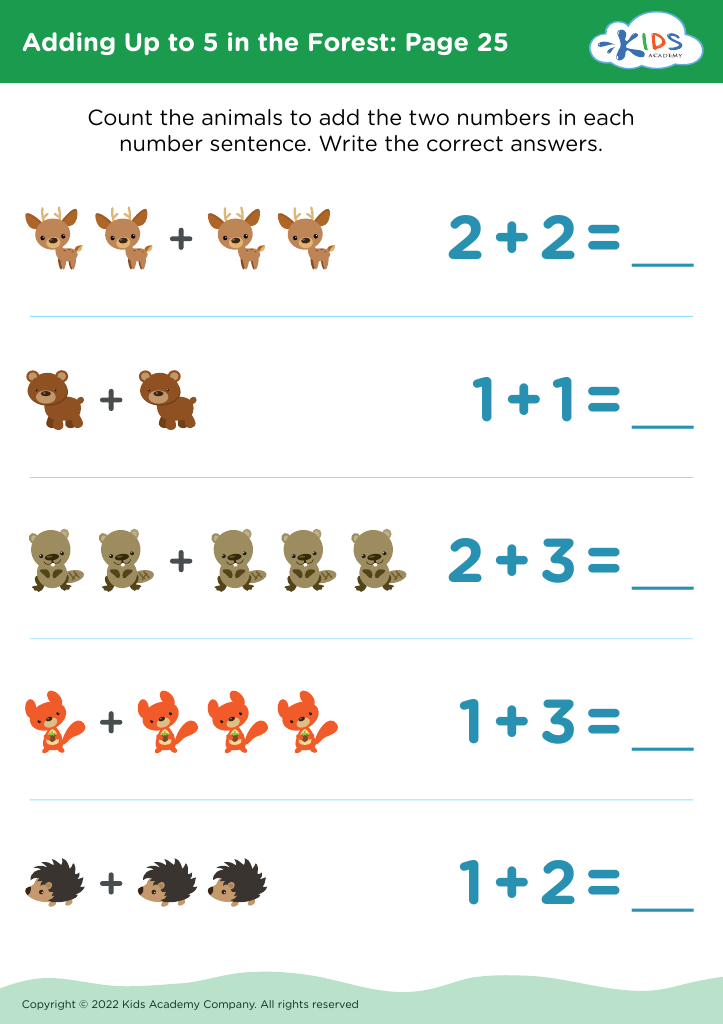
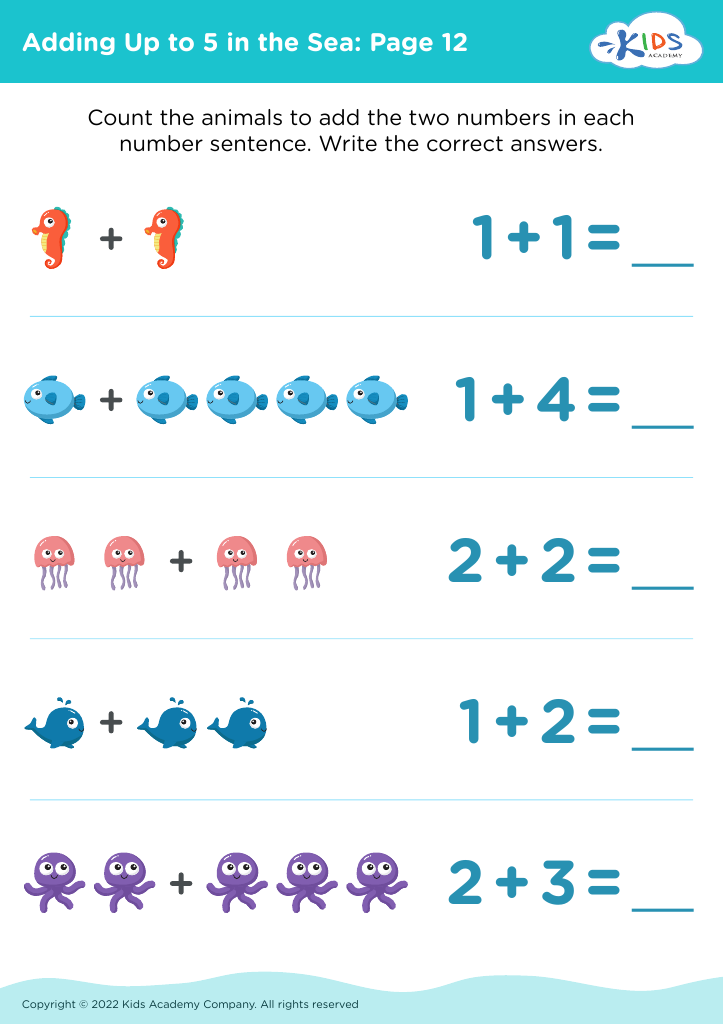
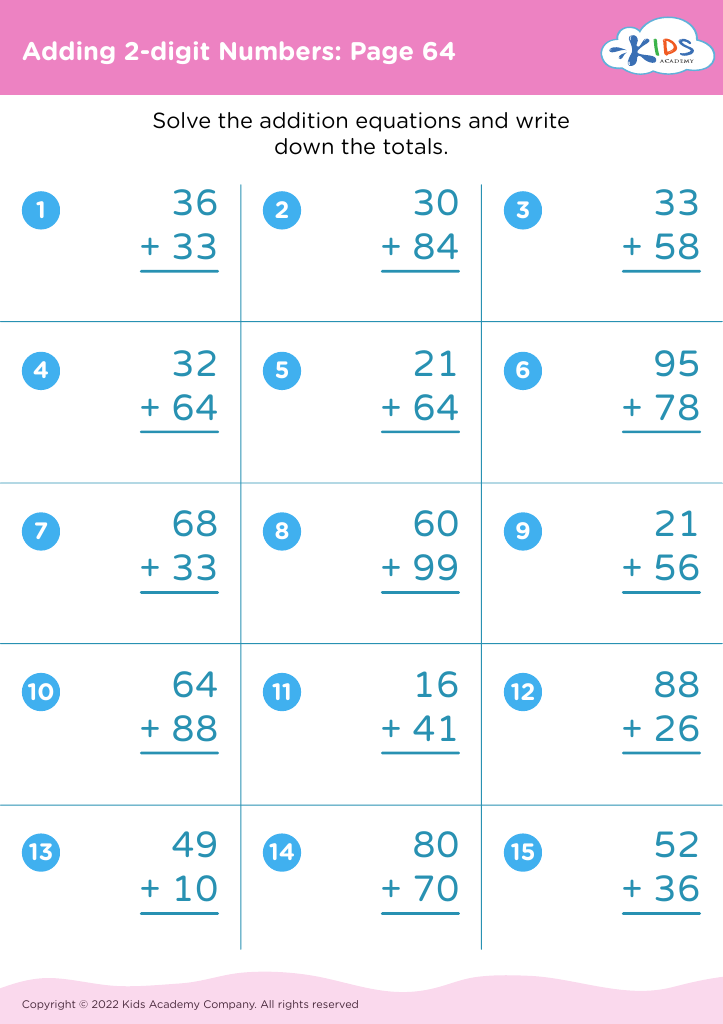








Fine motor skills, such as those developed through coloring and addition activities, are crucial for children aged 3-9 as they form a foundation for essential everyday tasks. For parents and teachers, prioritizing these skills is vital because they significantly enhance a child's ability to perform precise movements with their hands and fingers. Engaging in activities like coloring helps improve hand-eye coordination, muscle control, and dexterity, all of which are important for writing, dressing, and using utensils.
Coloring serves as an enjoyable and creative means to boost concentration and patience, helping children develop their ability to focus on tasks for extended periods. Additionally, the act of staying within lines and choosing colors cultivates spatial awareness and decision-making skills. Incorporating basic addition into these activities adds another layer of cognitive development, promoting mathematical understanding and problem-solving abilities.
For teachers, integrating fine motor skill development into the curriculum helps to ensure that students are well-prepared for more complex academic tasks. Parents, on the other hand, will see the day-to-day improvements in their child's independence and self-esteem. By investing time in enhancing fine motor skills, both parents and teachers play a crucial role in a child's holistic development, setting the stage for lifelong learning and success.








