Improve number recognition Addition Worksheets for Ages 3-9
15 filtered results
-
From - To
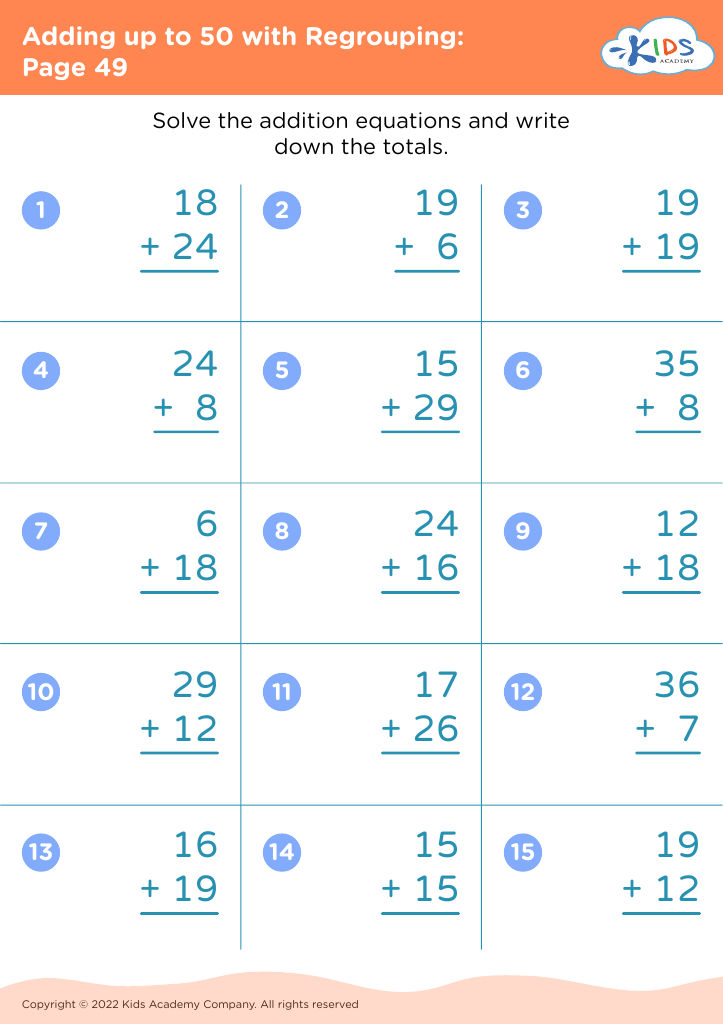
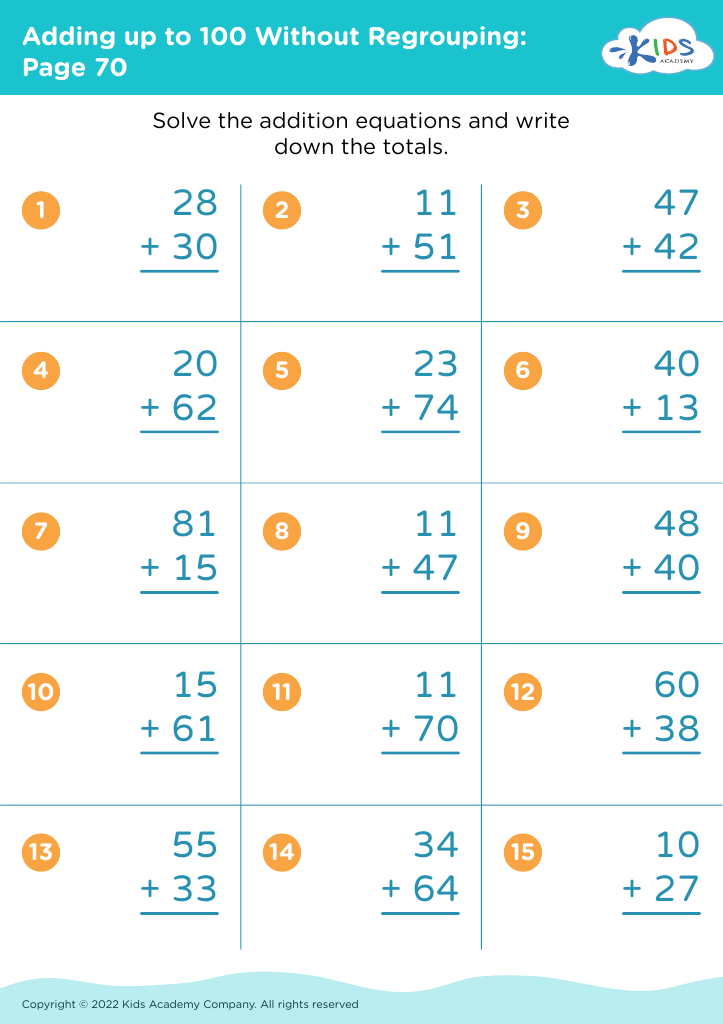
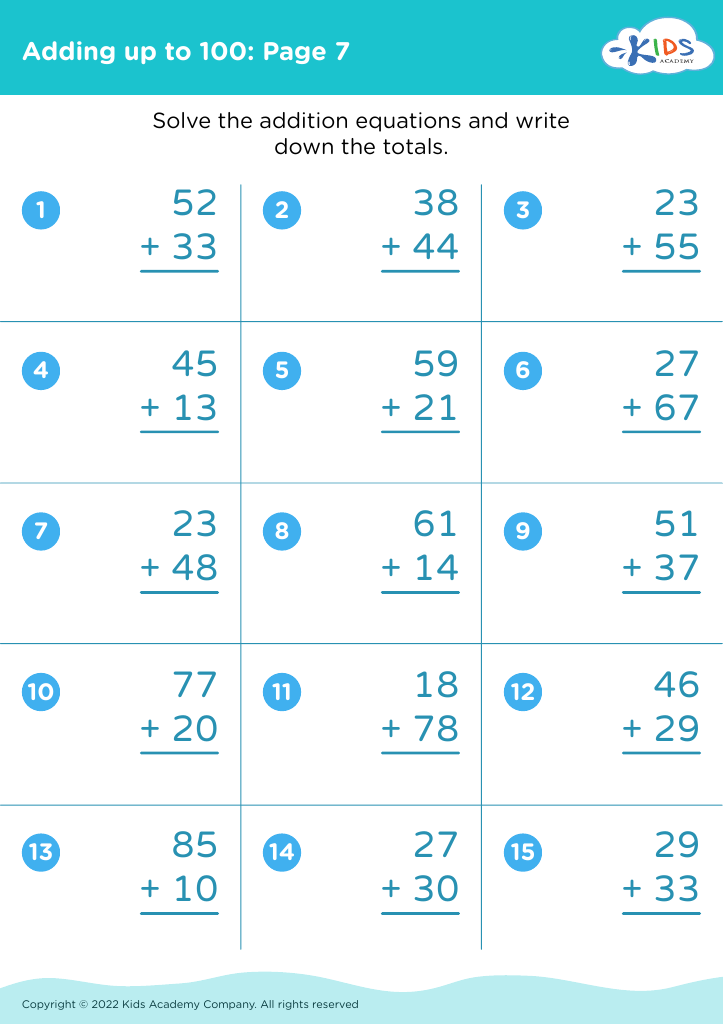
Enhance your child's early math skills with our "Improve Number Recognition Addition Worksheets for Ages 3-9"! These engaging and educational worksheets from Kids Academy are specially designed to develop number recognition and basic addition skills in young learners. Perfect for preschoolers to third graders, each worksheet is visually stimulating and interactive, making learning fun and effective. With activities tailored to various skill levels, children can build confidence in their understanding of numbers while mastering addition effortlessly. Foster a strong mathematical foundation and watch your child's skills soar with our expertly crafted worksheets. Start learning and growing today!
Visit Kids Academy for more!
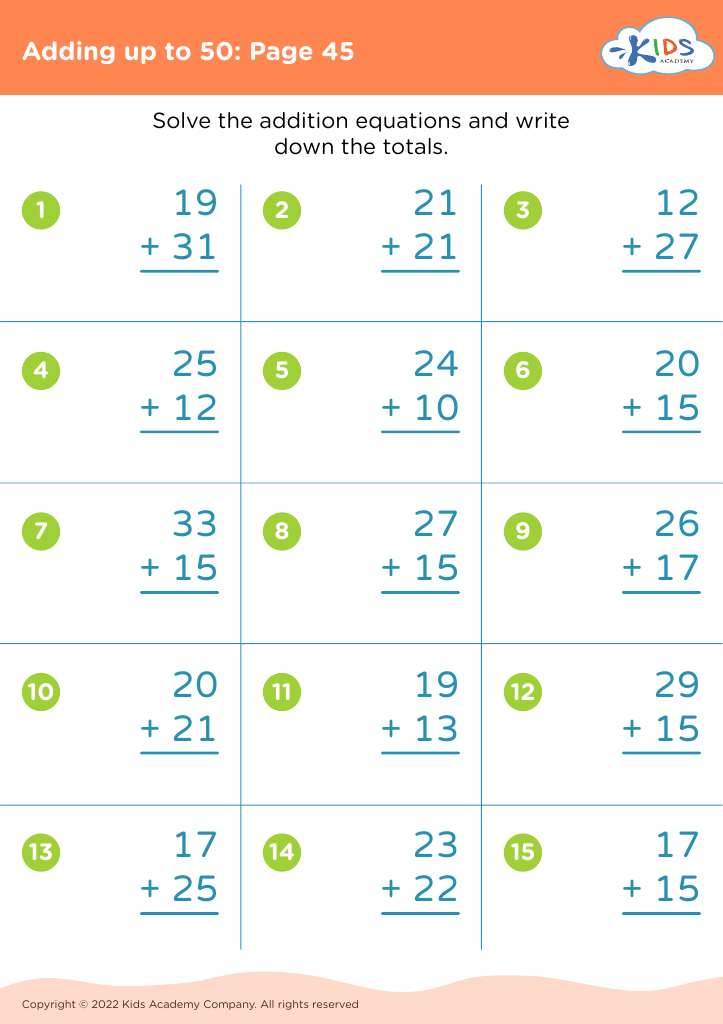
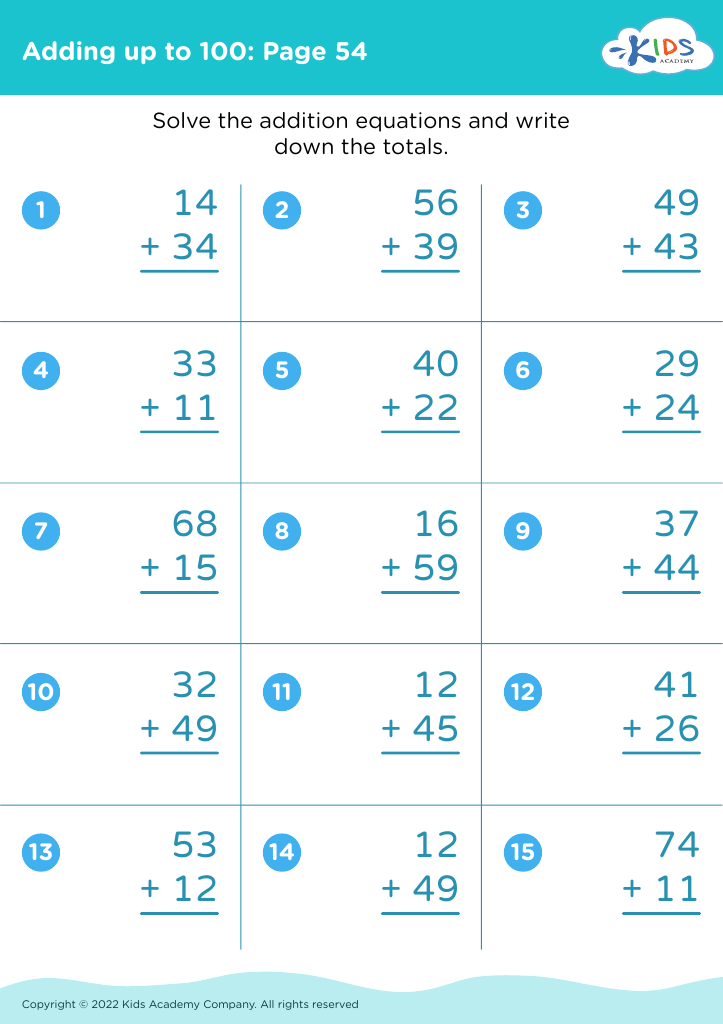
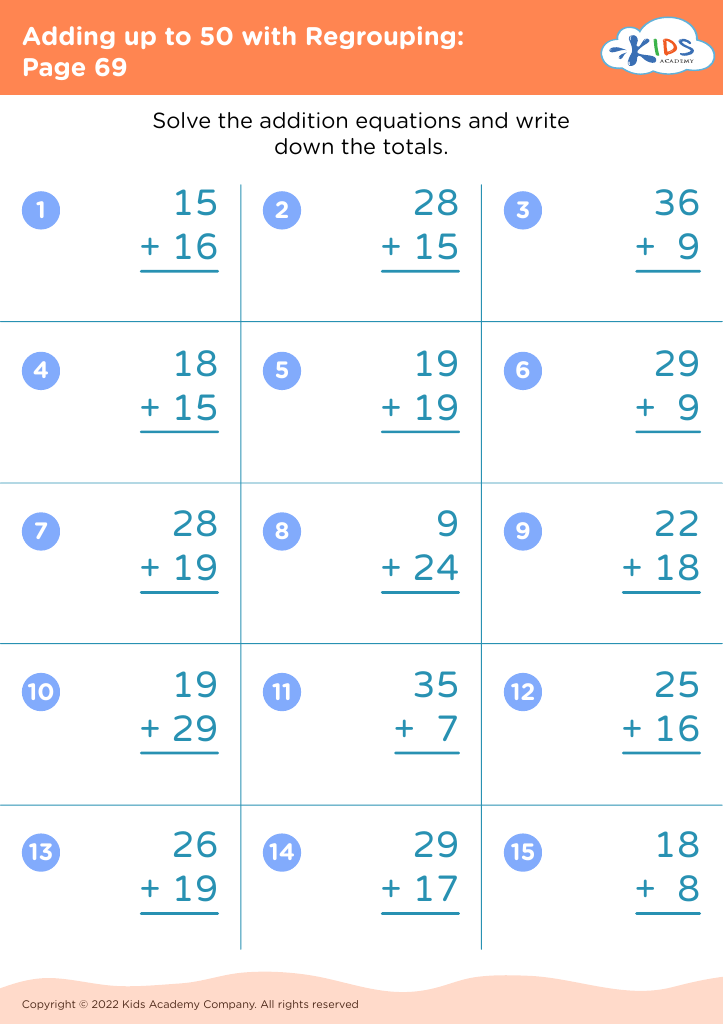
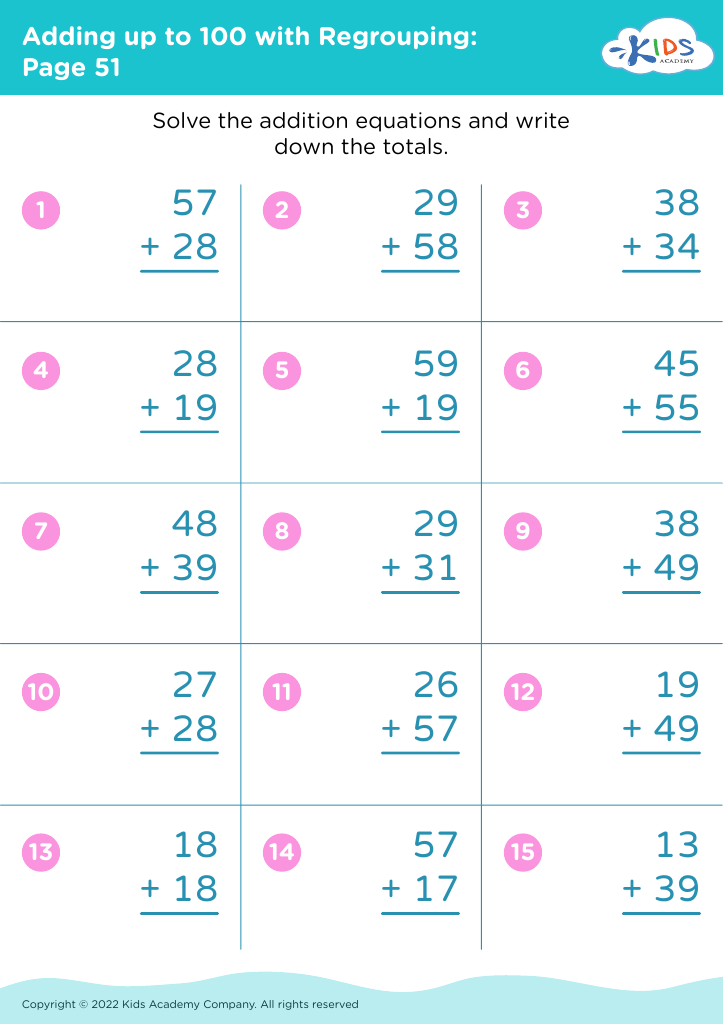
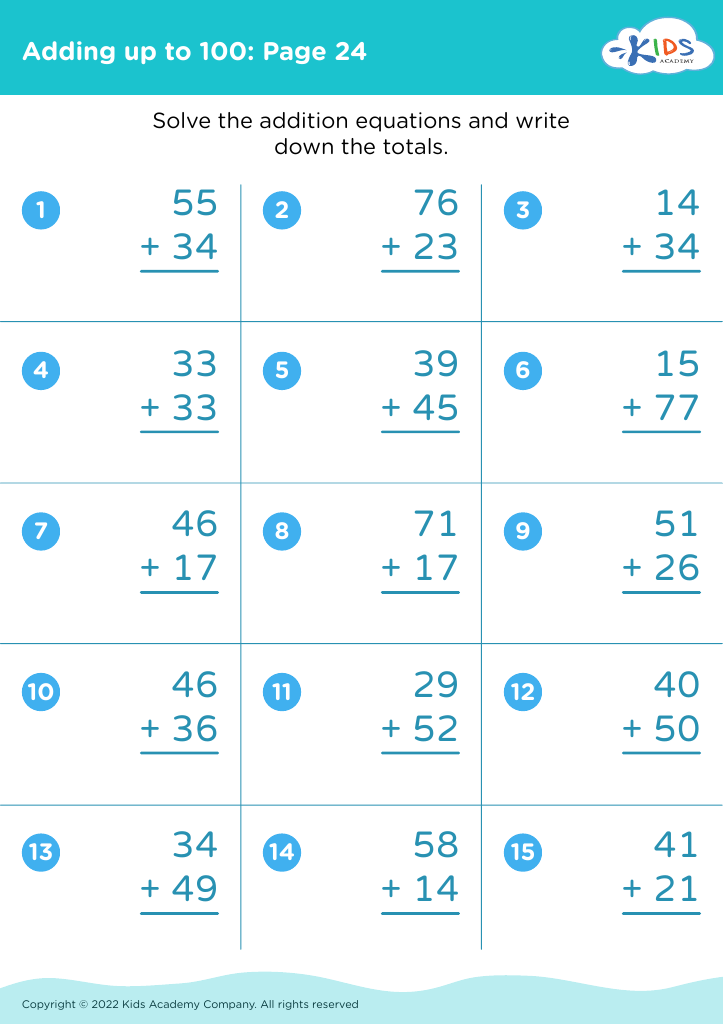
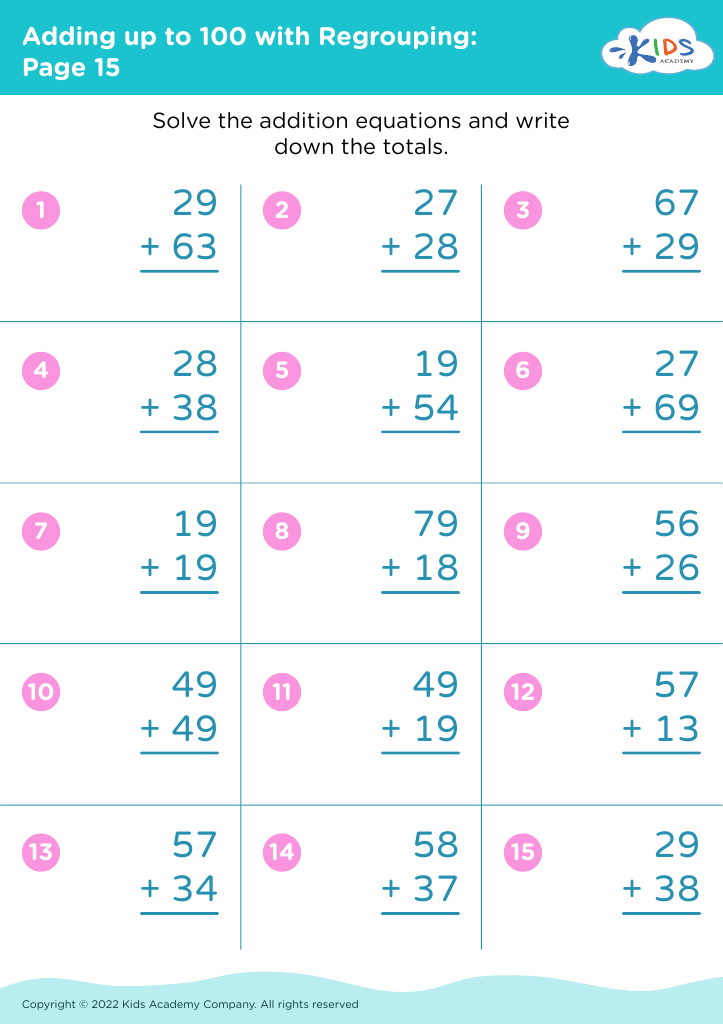
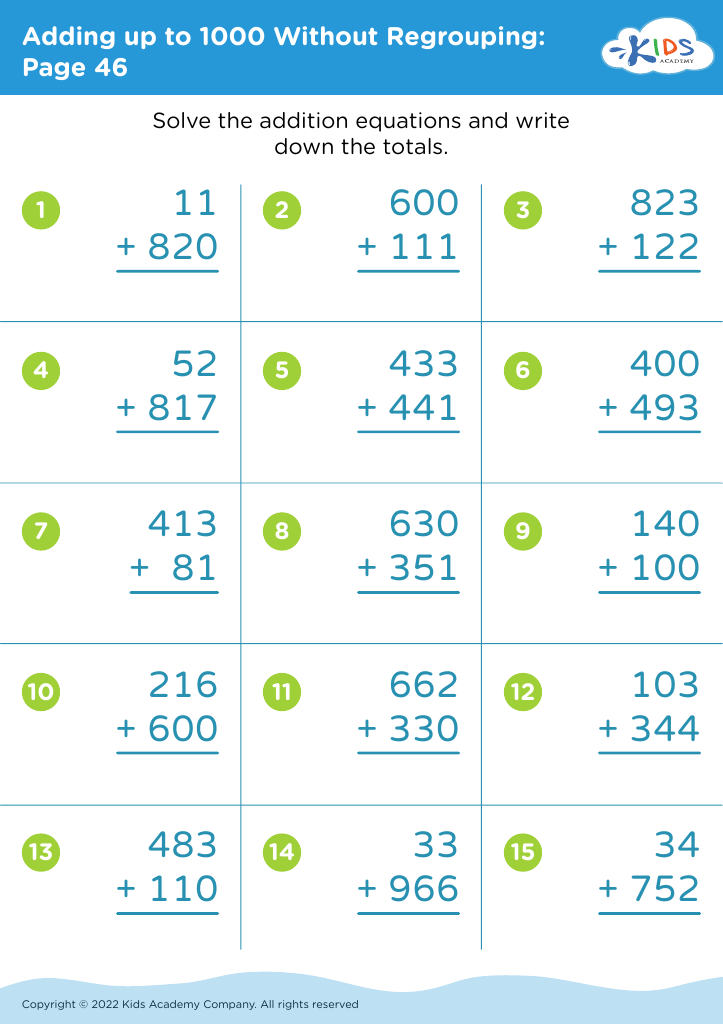
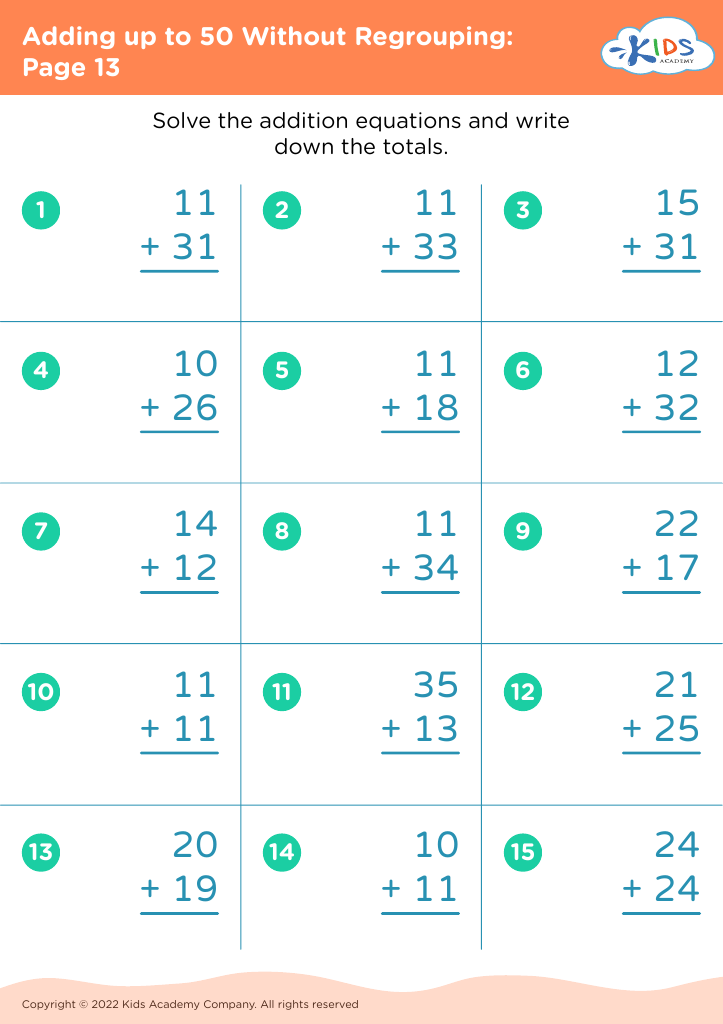
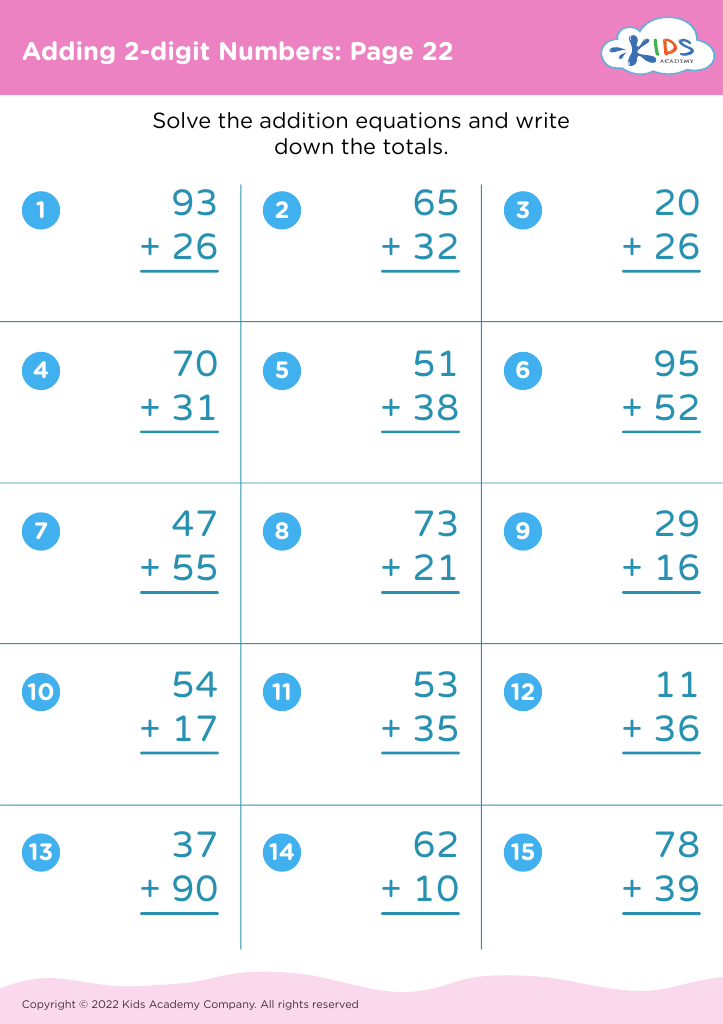
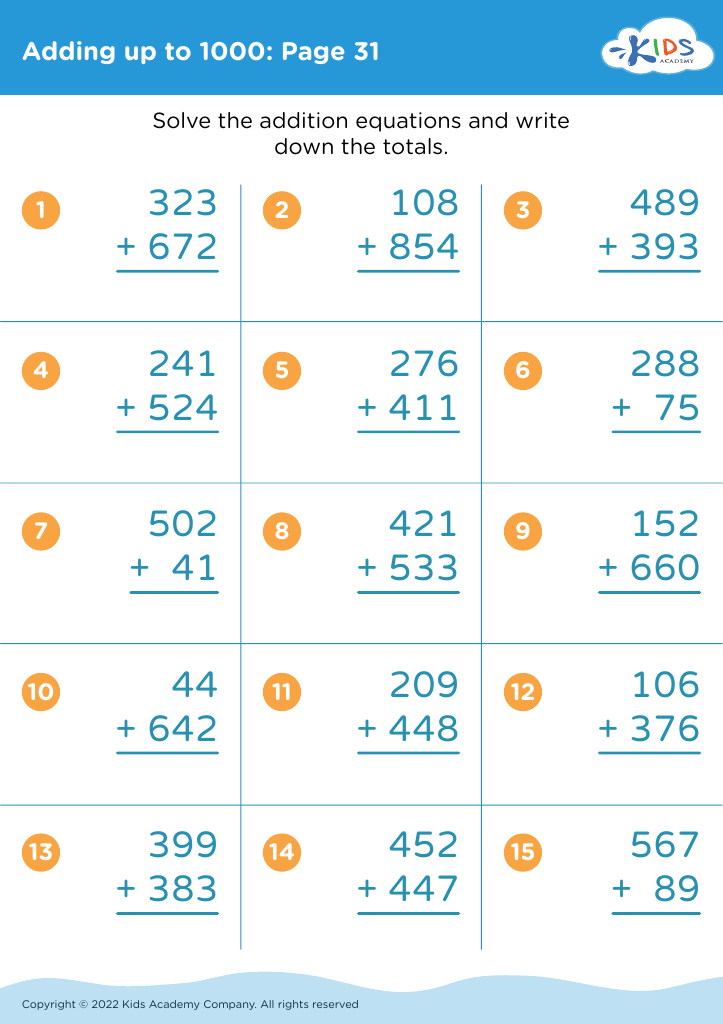
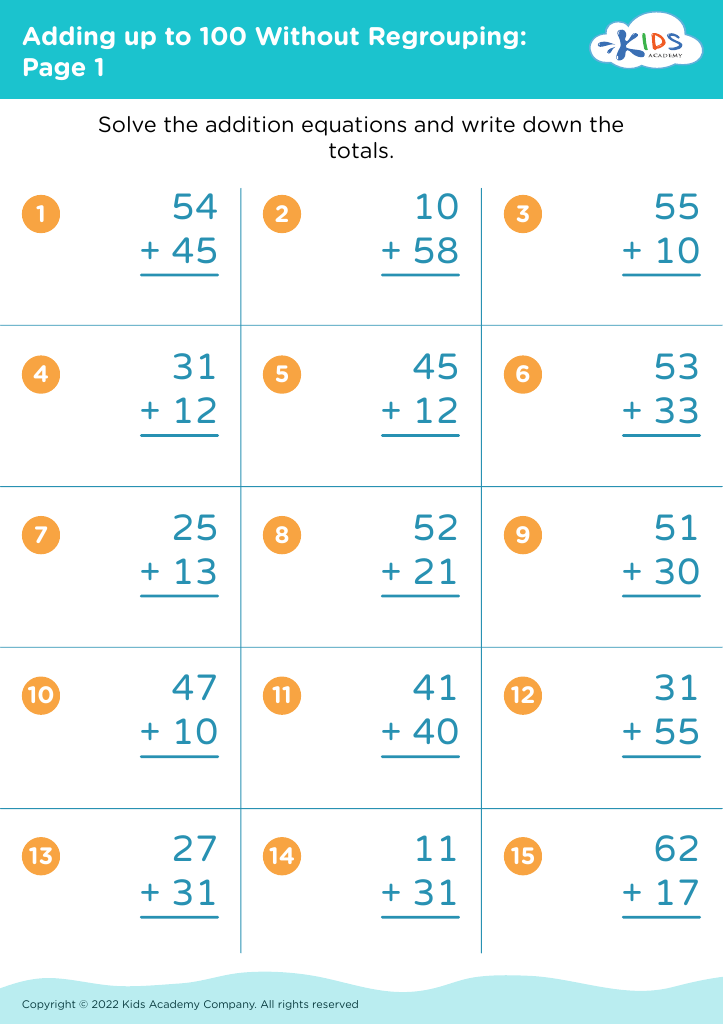
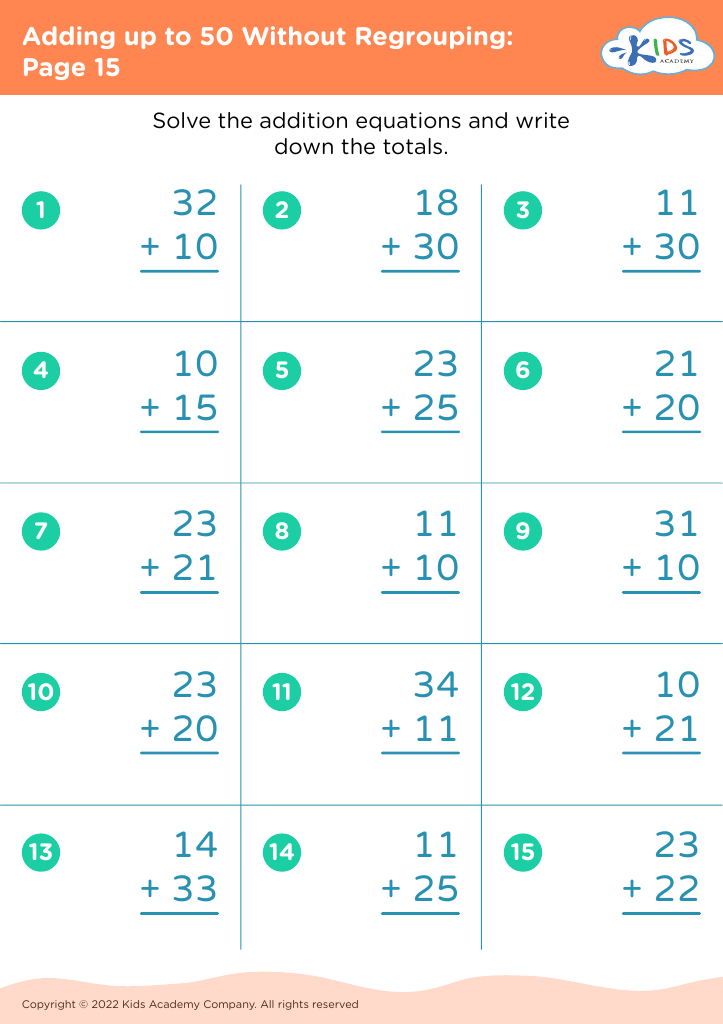








Number recognition and early addition skills form the foundation of a child's mathematical learning and development. For children ages 3-9, mastering these skills is crucial for several reasons:
-
Building Blocks for Advanced Math: Number recognition helps children understand the concept of quantity and numerical order. Successfully identifying and understanding numbers leads to mastering addition, which is pivotal for more complex arithmetic operations they'll encounter in later grades.
-
Cognitive Development: Improving number recognition and basic addition encourages cognitive development. It fosters problem-solving skills, analytical thinking, and an understanding of relationships between numbers.
-
Confidence in Learning: When children become proficient in these foundational skills, they build confidence in their abilities to learn and tackle new challenges. This confidence often transfers to other subjects and aspects of their education.
-
Early Academic Success: Strong early math skills are linked to academic success in later years. Children with a solid grasp of early math are more likely to excel in school, opening up more opportunities for their future.
-
Real-World Applications: Basic math skills are used in everyday life, from counting toys to figuring out time. Early proficiency helps children navigate these tasks with ease.
By focusing on improving number recognition and early addition skills, parents and teachers set children on a path to lifelong learning and success.








