Learn subtraction Addition Worksheets for Ages 3-9
4 filtered results
-
From - To
Welcome to our "Learn Subtraction and Addition Worksheets" designed specifically for children aged 3-9! Our engaging and interactive worksheets provide a fun way to help young learners master basic math skills. With a variety of problems focused on both addition and subtraction, these resources encourage children to practice at their own pace. Bright colors and child-friendly designs enhance the learning experience, fostering a love for mathematics early on. Whether at home or in the classroom, our worksheets are perfect for reinforcing skills and building confidence. Explore our collection today and watch your child's math abilities soar!
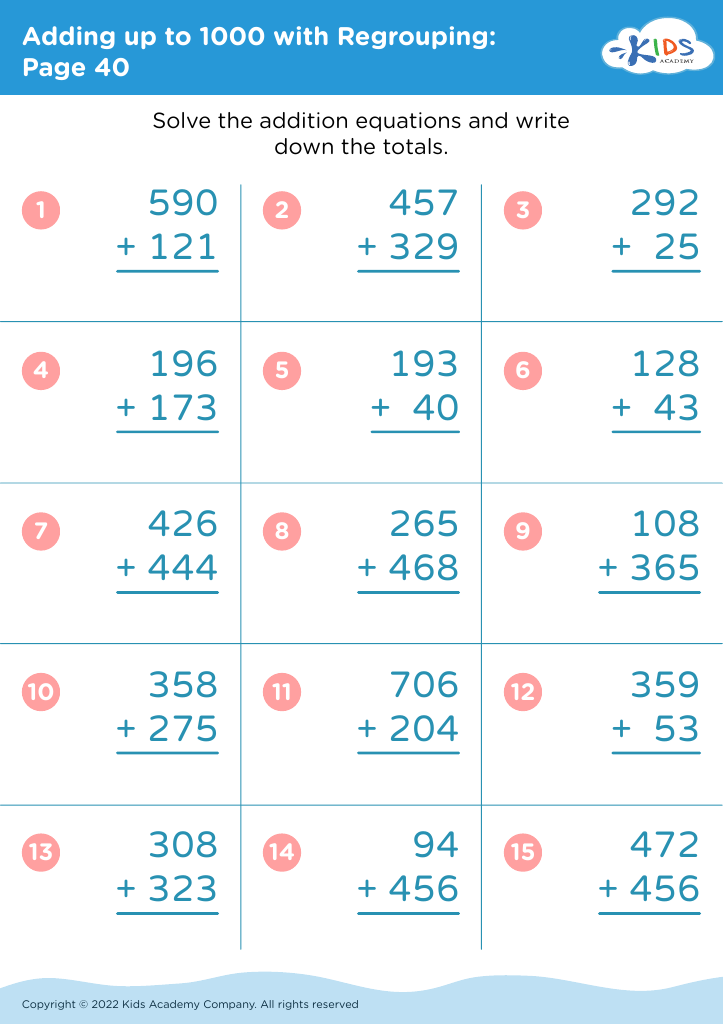
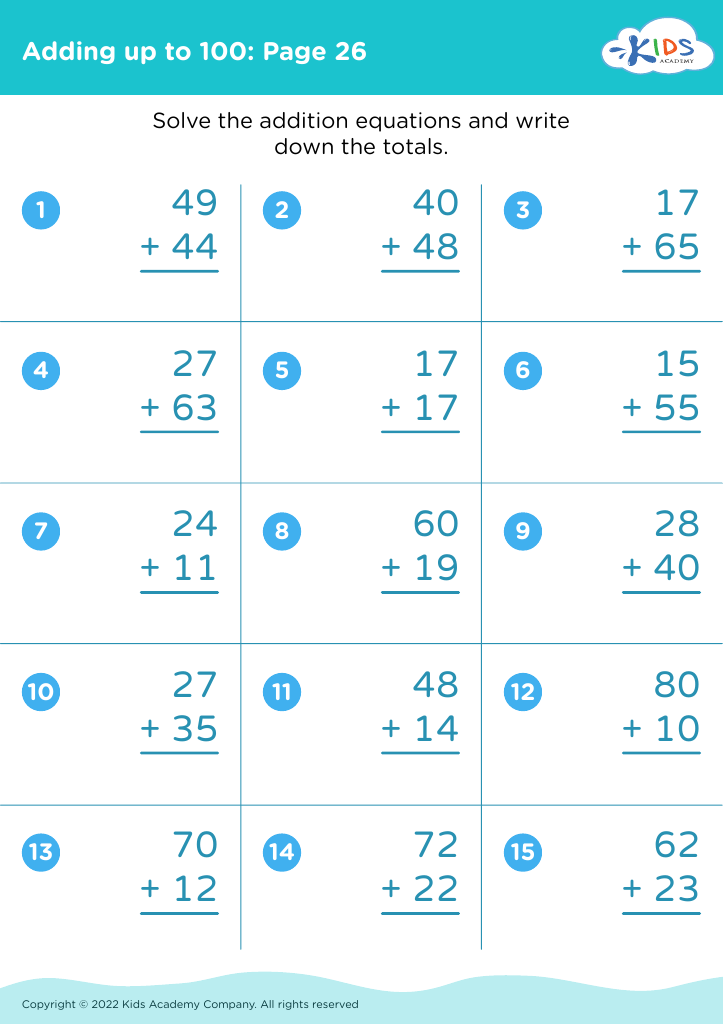
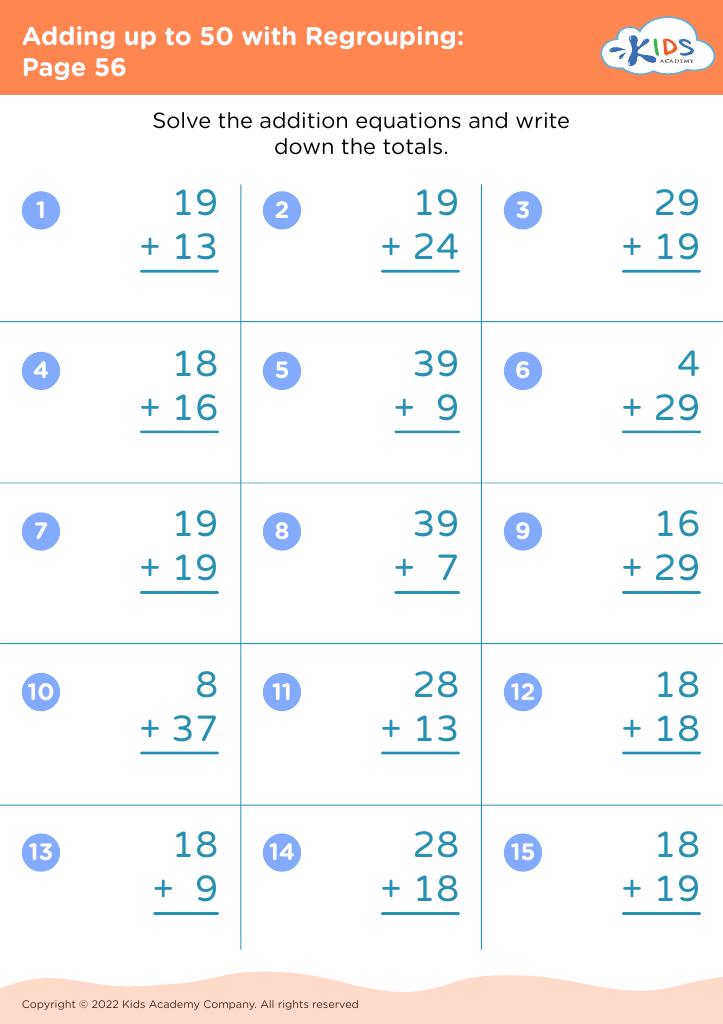
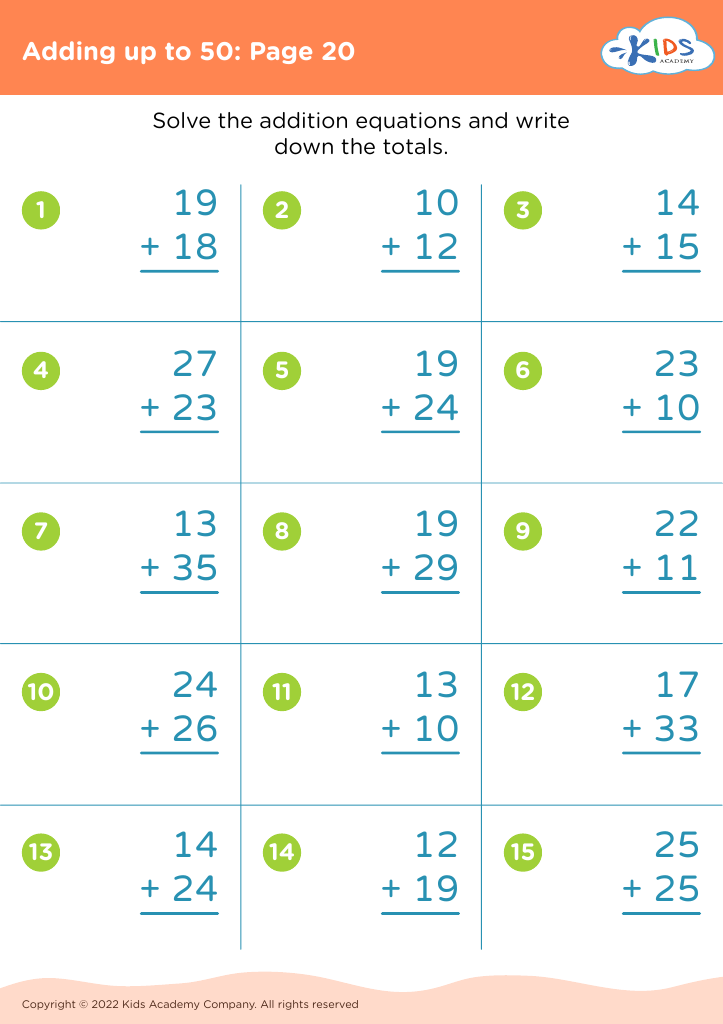








Parents and teachers should prioritize learning subtraction and addition for children ages 3 to 9 because these foundational skills are essential for overall academic development. Mastering basic arithmetic not only nurtures a child’s cognitive abilities but also builds their confidence. During these formative years, children develop critical thinking and problem-solving skills, and a strong grasp of addition and subtraction provides a framework for understanding more complex mathematical concepts later on.
Furthermore, engaging with numbers enhances children’s ability to make sense of the world around them. It fosters logical reasoning and instills a sense of accomplishment as they learn to solve problems. Early exposure to math concepts can also mitigate math anxiety, equipping children with a positive mindset towards future challenges in the subject.
Additionally, learning math supports language development; discussing numerical concepts allows children to expand their vocabulary and comprehension skills. Moreover, these skills play a vital role in everyday life, helping them manage tasks related to shopping, cooking, and budgeting as they grow.
Overall, investing time in teaching addition and subtraction fosters a lifelong love for learning, confident independent thinkers, and well-prepared students for academic success and real-world applications.








