Logical thinking development Addition Worksheets for Ages 3-9
8 filtered results
-
From - To
Enhance your child's logical thinking skills with our engaging Addition Worksheets for ages 3-9! Designed to promote critical problem-solving abilities, these worksheets combine fun and education, helping young learners master basic addition concepts while sharpening their reasoning skills. Our collection features vibrant illustrations, interactive puzzles, and a variety of challenging exercises tailored to different learning stages. Perfect for parents and educators, these worksheets not only support math fundamentals but also foster cognitive development. Download our Logical Thinking Development Addition Worksheets today and watch your child become more confident and proficient in math! Unlock their potential with playful learning experiences they’ll love!
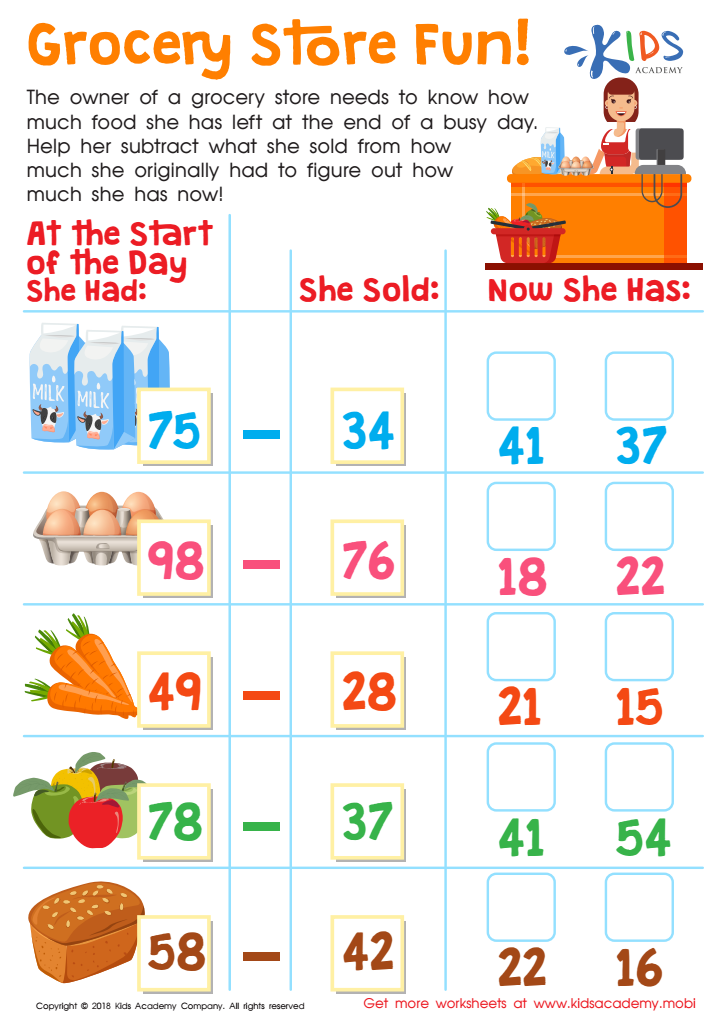
Grocery Store Fun! Worksheet
 Assign to My Students
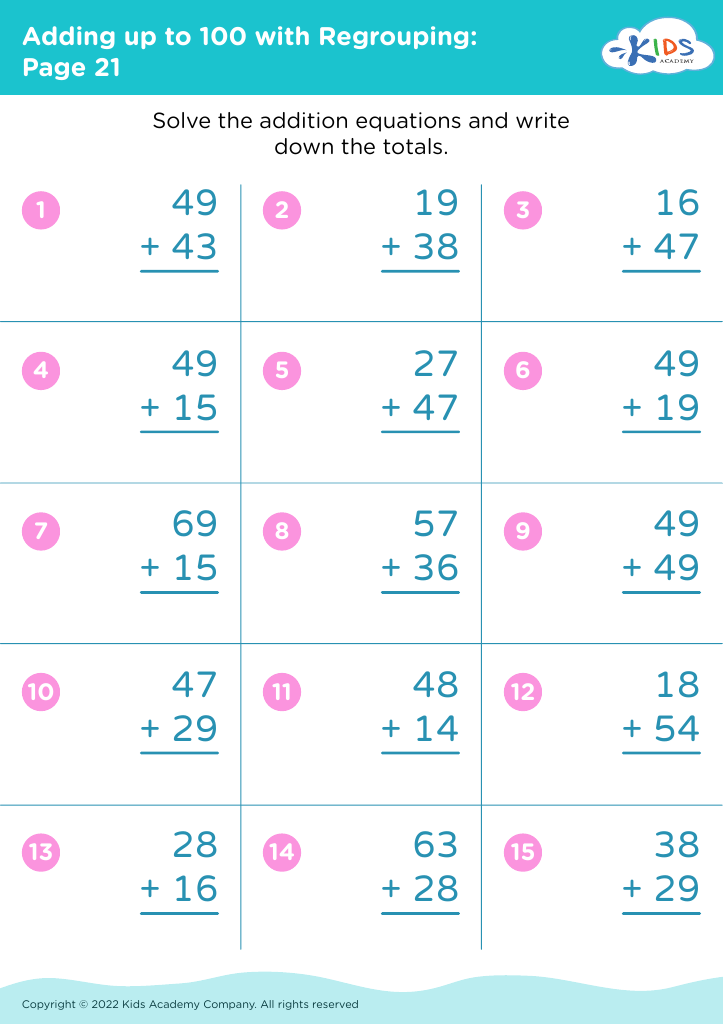
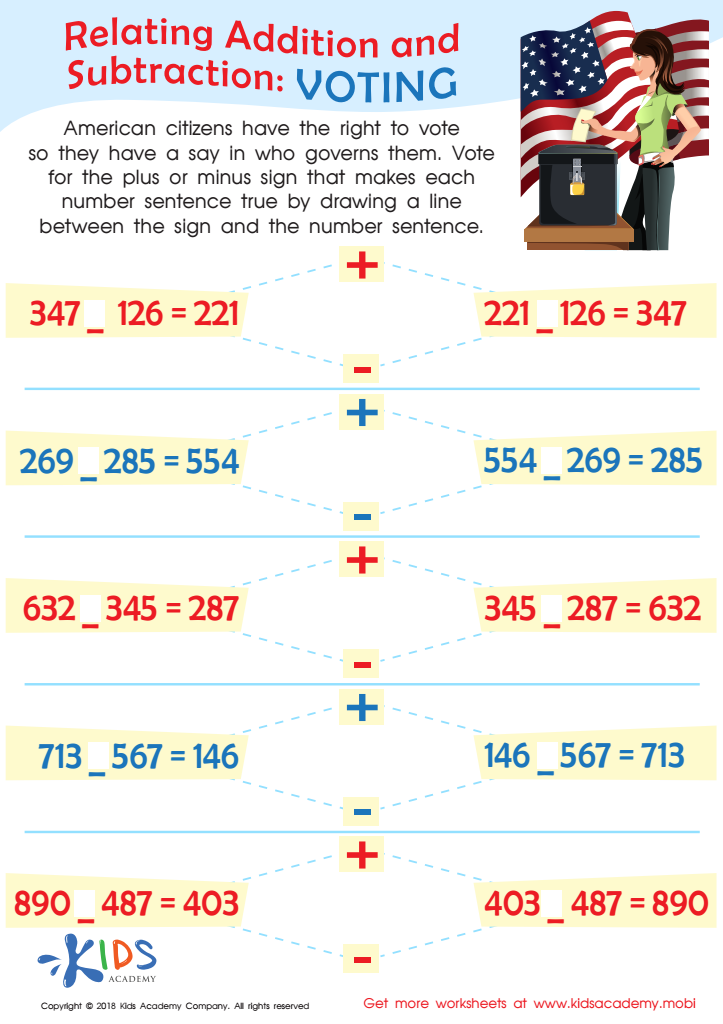
Voting Worksheet
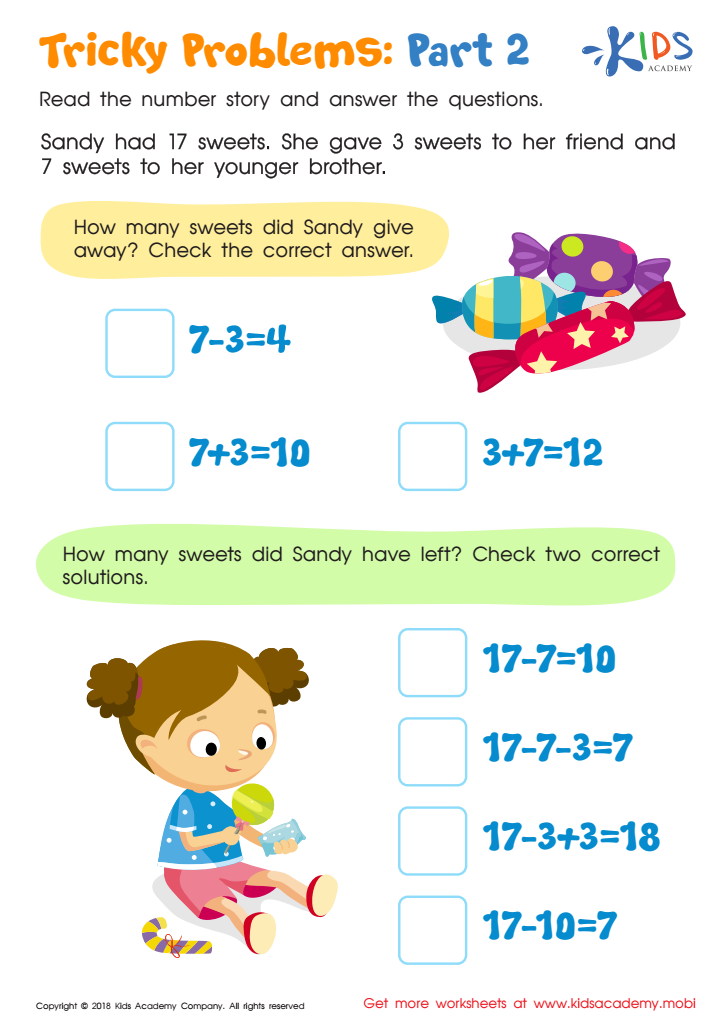
Tricky Problems Worksheet: Part 2








Logical thinking and addition skills are foundational for children aged 3-9, and parents and teachers should prioritize their development for several reasons. Firstly, logical thinking fosters problem-solving abilities and enhances critical reasoning. When children learn to think logically, they can analyze situations, make connections, and develop strategies to overcome challenges, skills that are vital not just in maths but across all subjects and life scenarios.
Moreover, mastering basic addition enables children to comprehend more complex mathematical concepts later on. It lays the groundwork for understanding patterns, relationships, and the use of numbers in real-world applications, which is essential in a technology-driven society.
Additionally, engaging in these skills enhances cognitive development. Activities that promote logical thinking and addition encourage children to use their imagination and creativity, further developing their intellectual capacity.
Involving parents and teachers in this journey creates a supportive learning environment, making it easier for children to explore and enjoy maths. It cultivates a love for learning and instills confidence in their abilities. Ultimately, fostering logical thinking and addition at an early age equips children with the tools they need to excel academically and in everyday life, making it an essential focus for caregiving adults.








