
Number identification Addition Worksheets for Ages 3-9
5 filtered results
Difficulty Level
Grade
Age
-
From - To
Subject
Activity
Standards
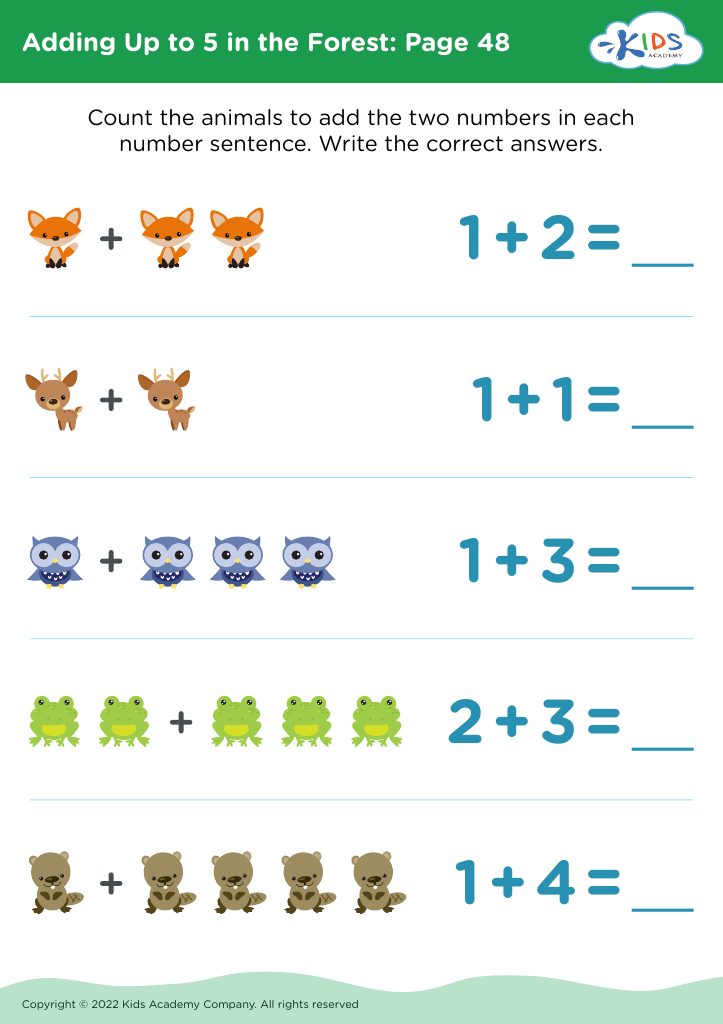
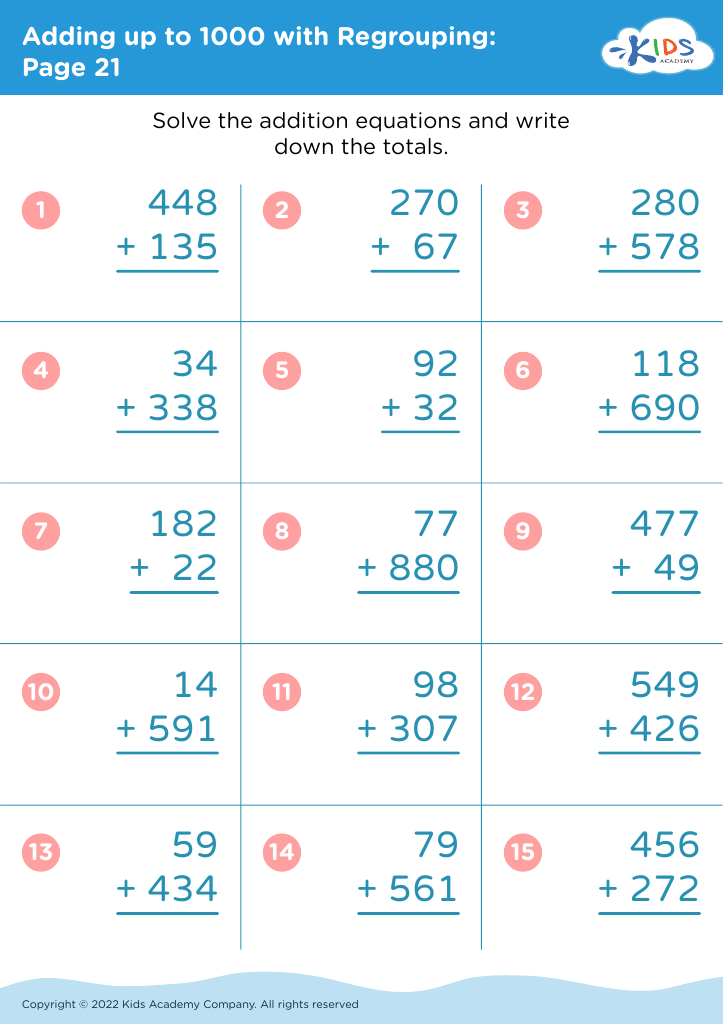
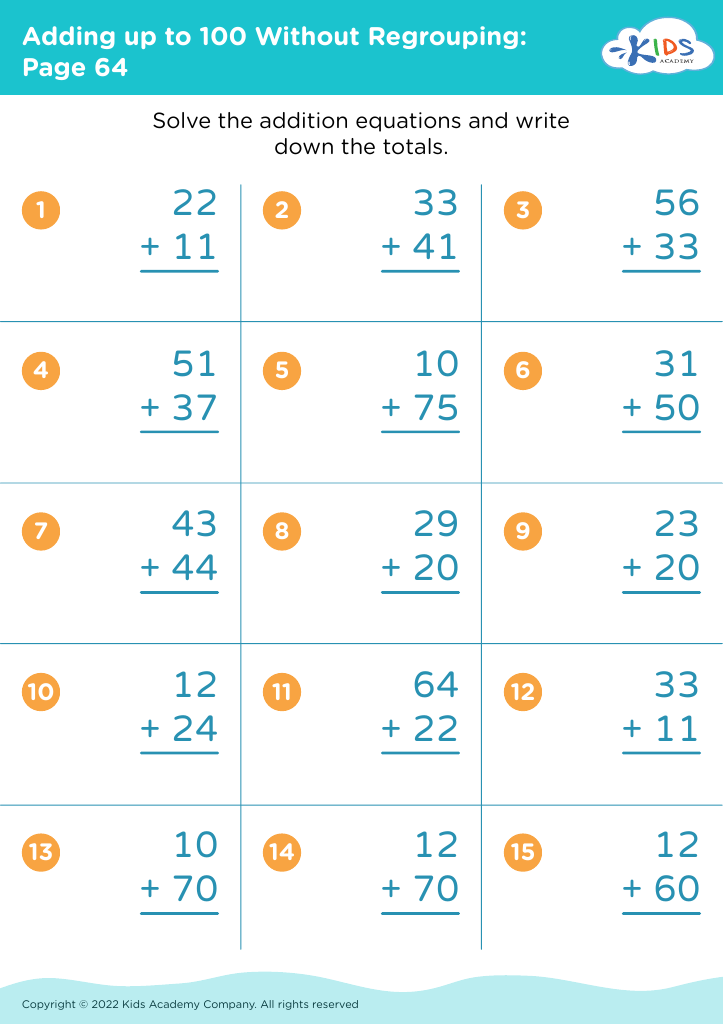
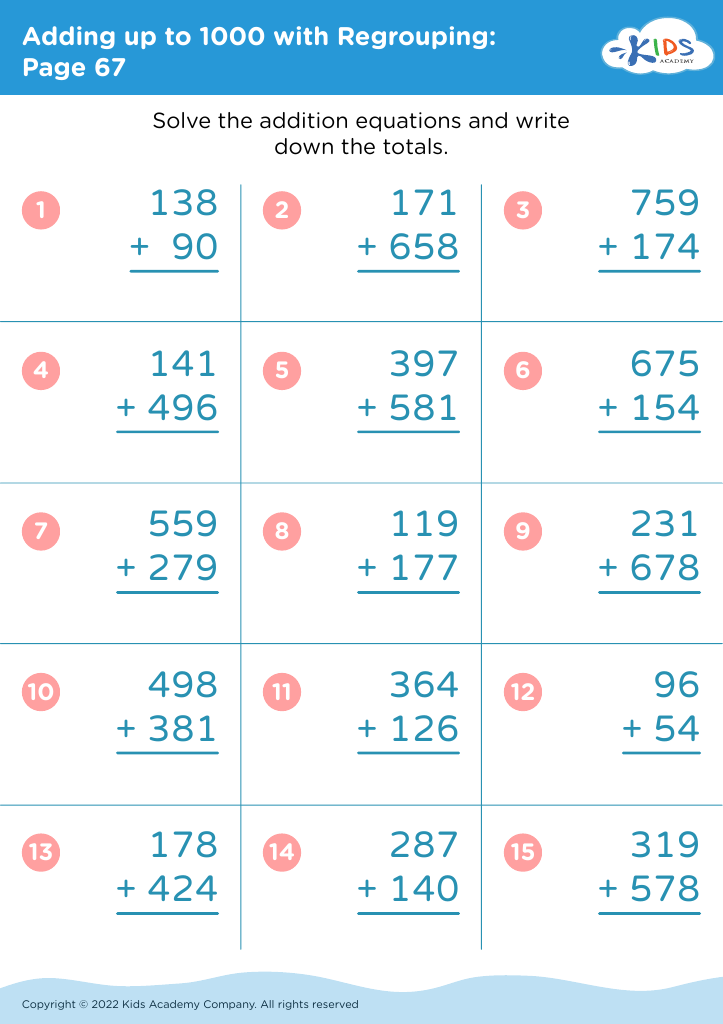
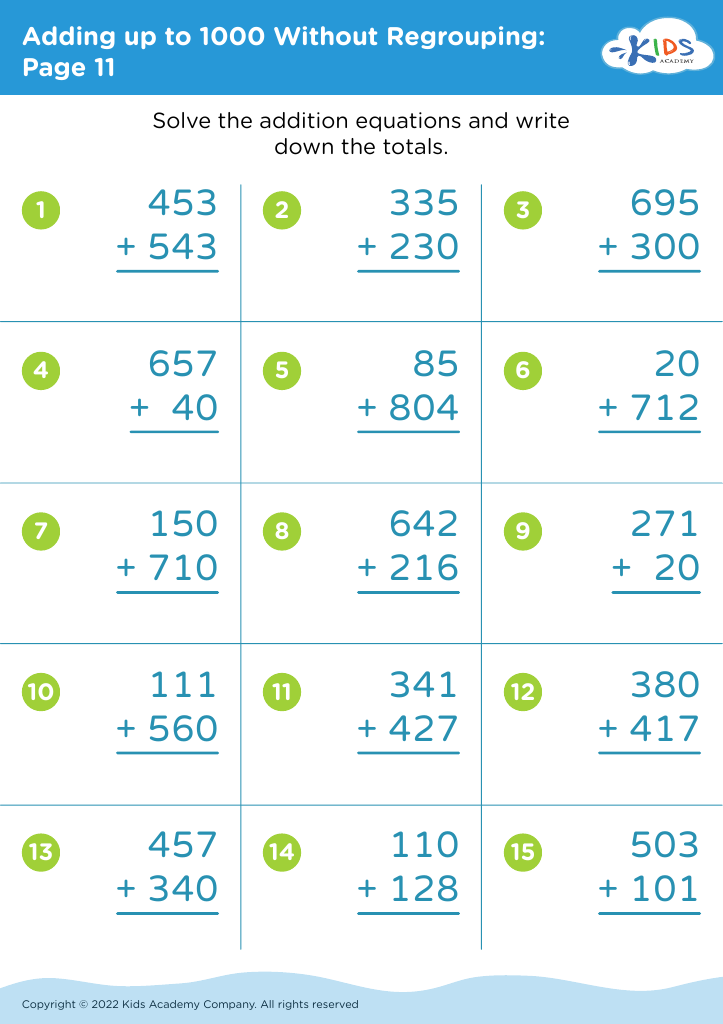
Enhance your child's math skills with our engaging Number Identification Addition Worksheets, specifically designed for ages 3-9. These worksheets provide a fun and interactive way for young learners to recognize numbers while honing their addition skills. With a variety of activities, children will practice counting, number matching, and simple addition problems in a playful format. Our resources are ideal for both classroom use and home learning, fostering a strong math foundation. Explore creative layouts and colorful visuals that capture your child’s attention and make learning enjoyable. Get started today and watch your child's confidence in math grow!
Favorites
With answer key
Interactive
Join Kids Academy for Free
Who is primarily going to use this learning content?








Number identification and addition are foundational skills critical for children ages 3-9, forming the building blocks for future math understanding. At this stage, children are developing their cognitive abilities, and mastering these skills enhances their confidence, problem-solving ability, and critical-thinking skills.
Parents and teachers play a crucial role in this developmental phase. Engaging children in number identification helps them recognize and understand the significance of numbers in everyday life, from counting objects to understanding time. Early familiarity with numbers sets the stage for smoother transitions to more complex mathematical concepts as they progress in school.
Additionally, introducing addition at this age fosters logical thinking. By learning to combine numbers, children practice reasoning and enhance their ability to approach problems methodically. For example, using visual aids or interactive games makes learning enjoyable and encourages active participation.
Moreover, strong numeric skills are correlated with academic success, helping children achieve better outcomes in science, technology, and beyond. Parents and teachers should care intimately about these skills, not just for immediate educational benefits, but also for long-term personal development, social interactions, and building a solid intellectual foundation for lifelong learning. Investing in early math education pays dividends throughout a child’s academic journey and beyond.








