Practice counting Addition Worksheets for Ages 3-9
6 filtered results
-
From - To
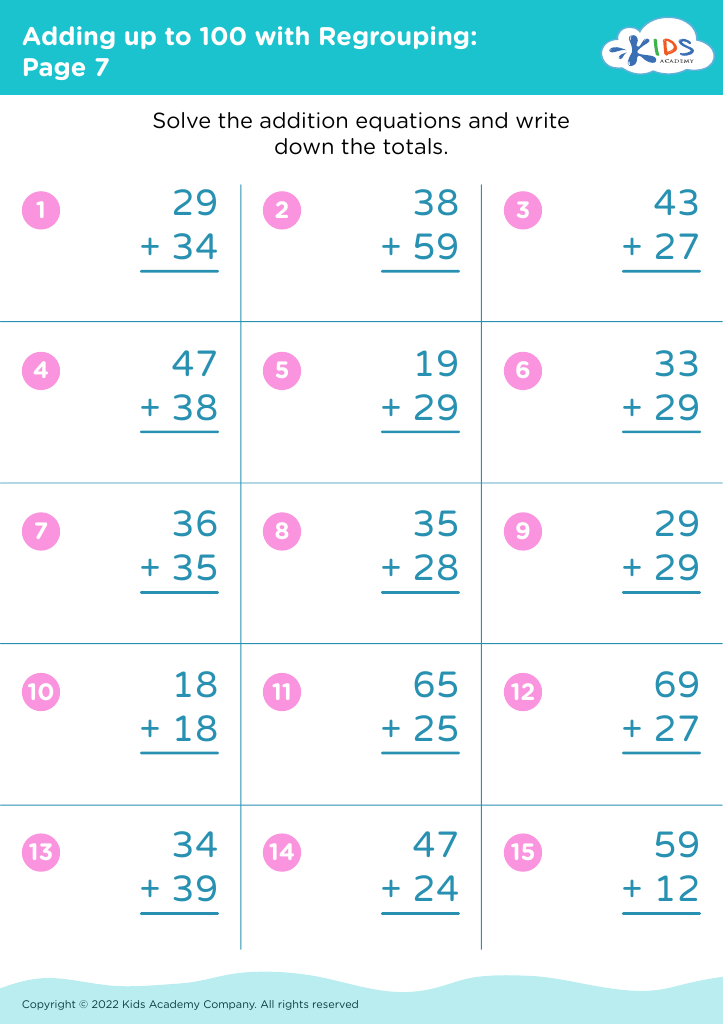
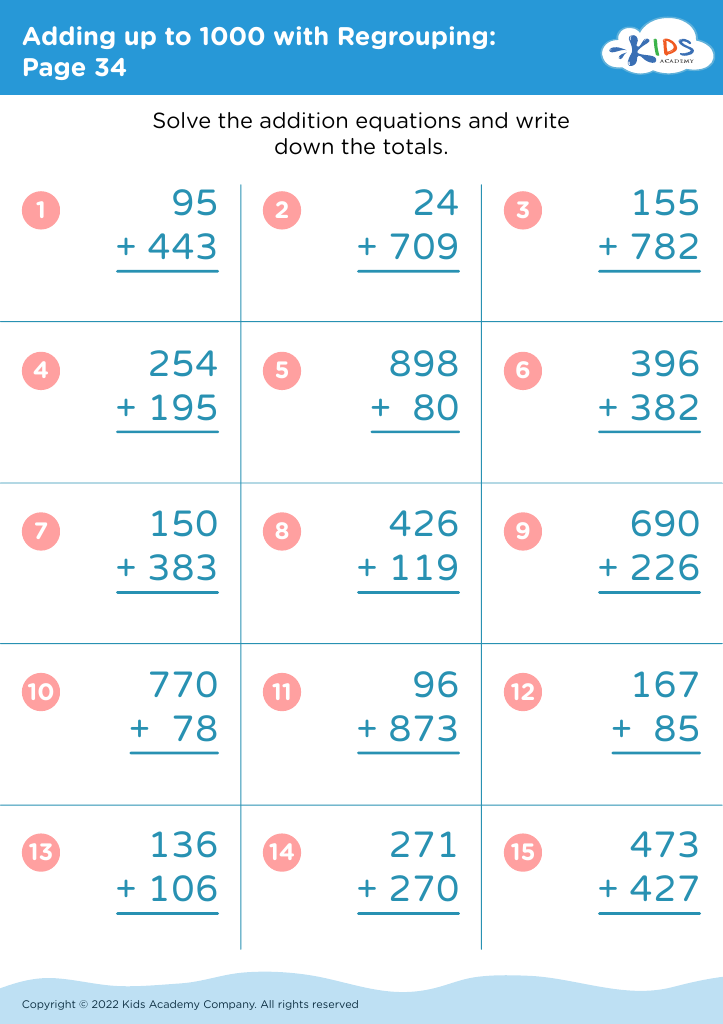
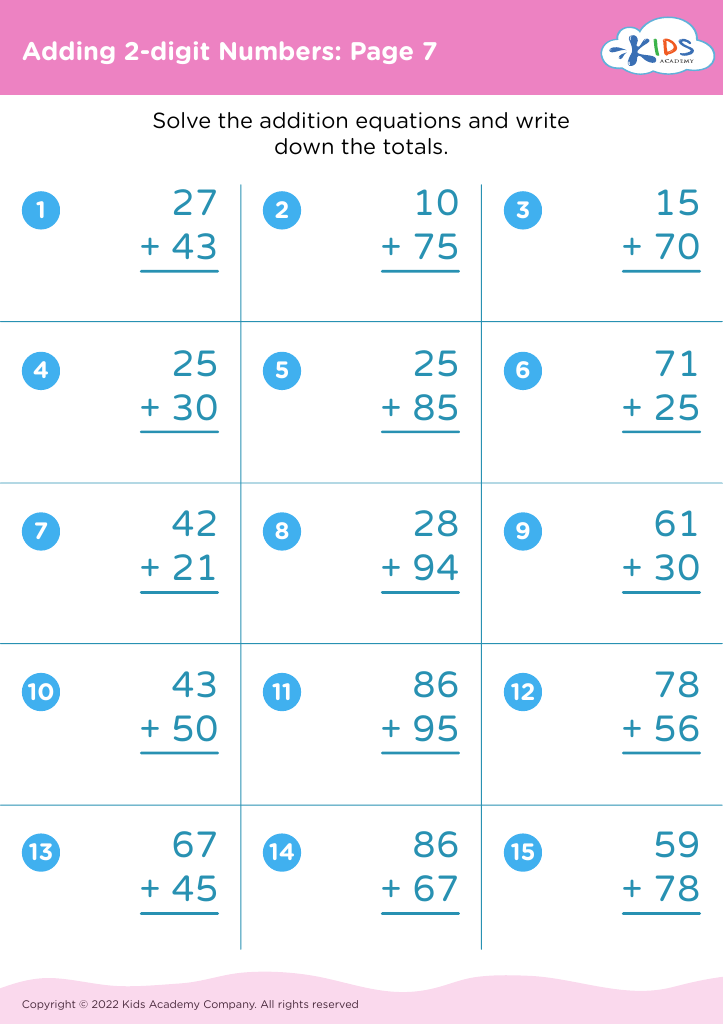
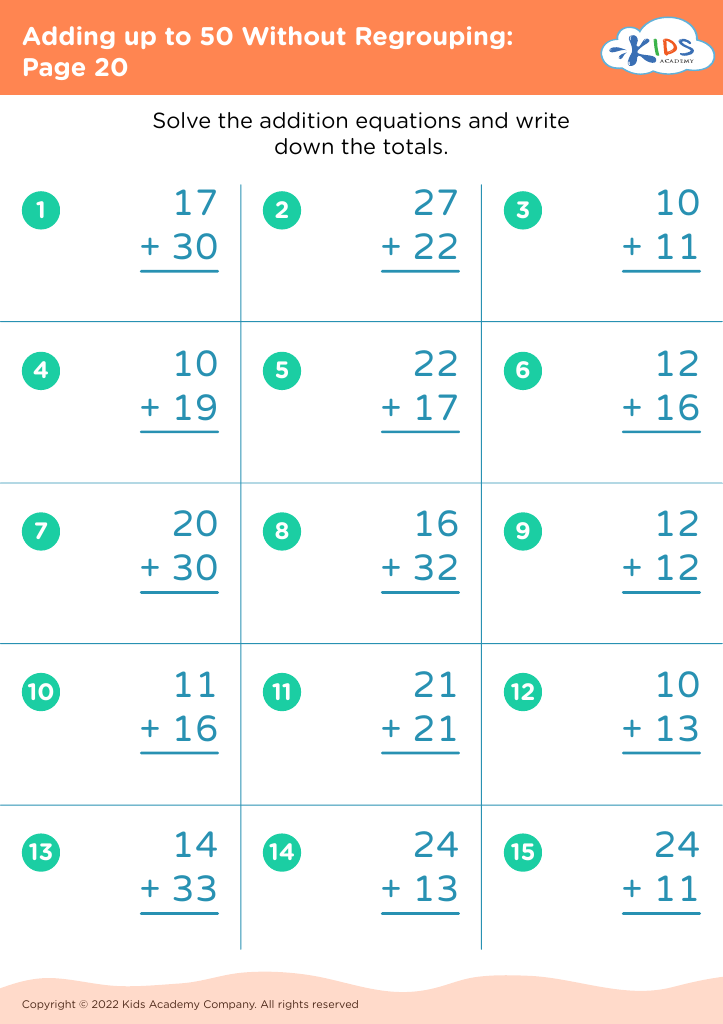
Welcome to our Practice Counting Addition Worksheets for Ages 3-9! Designed to enhance foundational math skills, these engaging worksheets help young learners master basic addition concepts through enjoyable activities. Perfect for preschool and early elementary students, our resources promote counting proficiency while building a strong understanding of number relationships. Each worksheet features vibrant illustrations and easy-to-follow exercises, making learning fun and interactive. Encourage your child to practice regularly, boosting their confidence and fluency in addition. Start their math journey today with our carefully crafted worksheets that cater to various learning needs – all aimed at nurturing lifelong arithmetic skills!
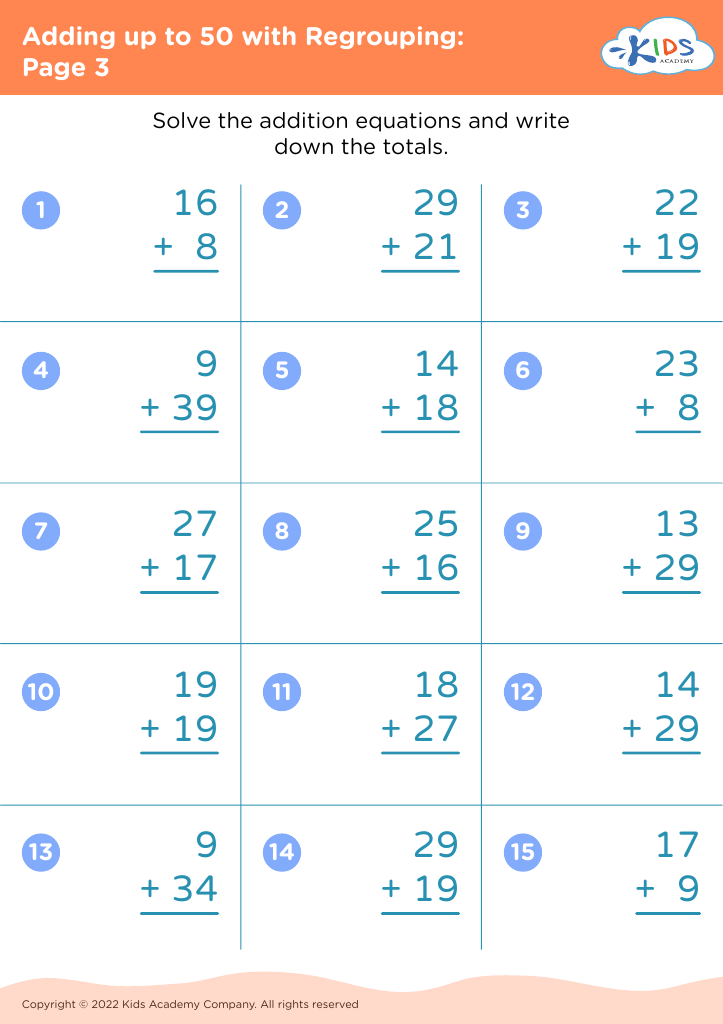
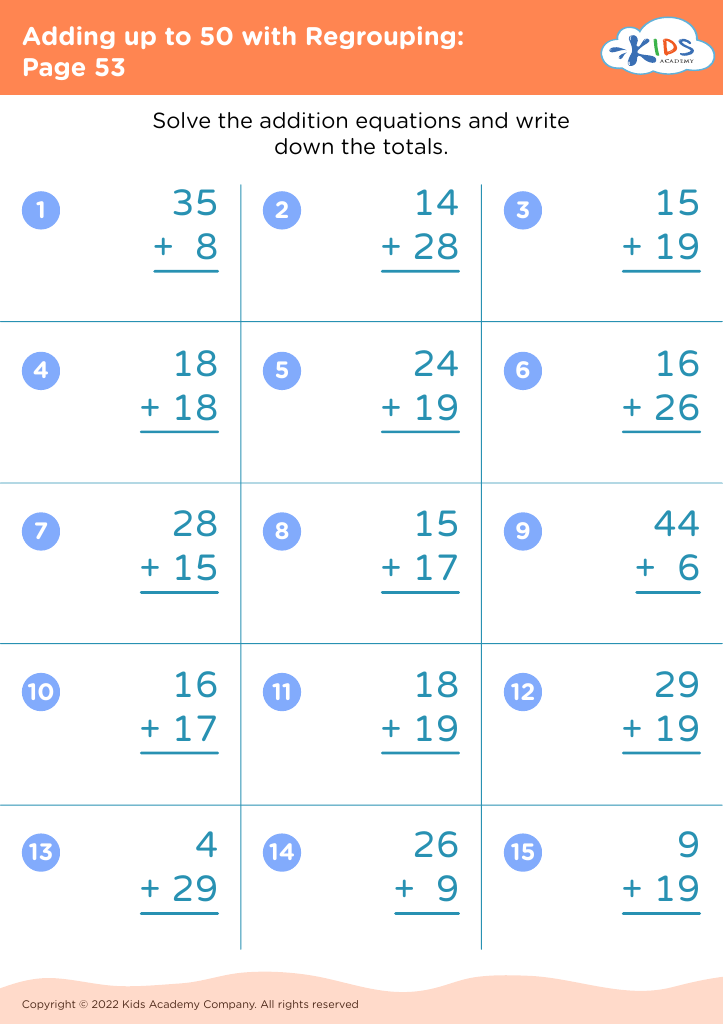








Parents and teachers should prioritize practicing counting and addition for children ages 3-9, as foundational math skills significantly impact a child's cognitive development and academic success. Early exposure to counting helps children understand numerical concepts, which are critical for later mathematical learning. By practicing counting, youngsters develop not only numeracy but also spatial awareness, pattern recognition, and problem-solving skills, which are essential for logical reasoning.
Addition, on the other hand, is one of the first operations children encounter in math. When children learn to add, they engage with the idea of combining quantities, a concept that links to real-life scenarios, such as sharing snacks or playing games. This hands-on practice makes math tangible and enjoyable, fostering a positive attitude towards the subject from an early age.
Moreover, consistent counting and addition practice build children's confidence and readiness for more complex mathematics in later grades. Engaging methods, like interactive games or everyday activities, turn learning into fun, collaborative experiences. As educators and caregivers, fostering these skills lays the groundwork for a child's lifelong relationship with learning, helping them develop critical thinking skills that will serve them in all areas of life.








