Simplifying Fractions Addition Worksheets for Ages 3-9
18 filtered results
-
From - To
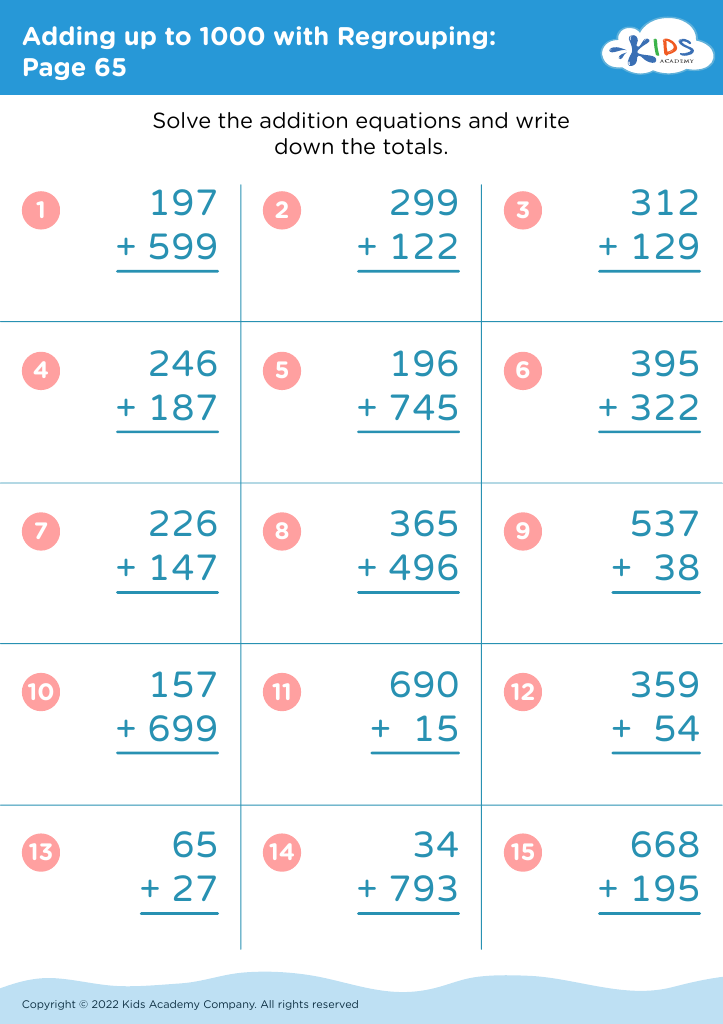
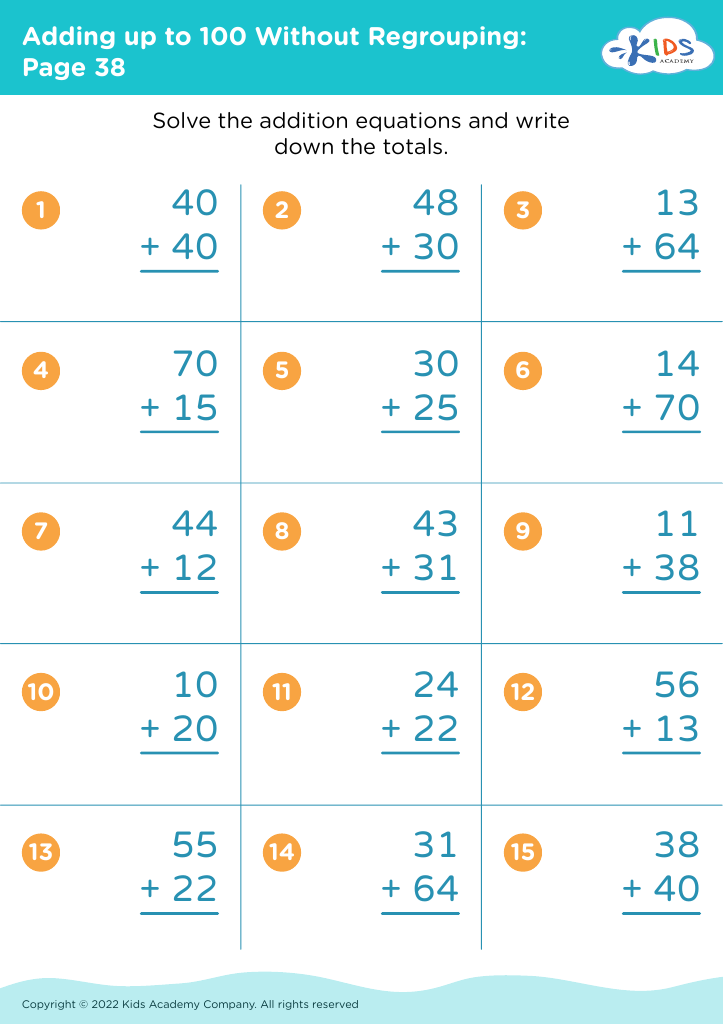
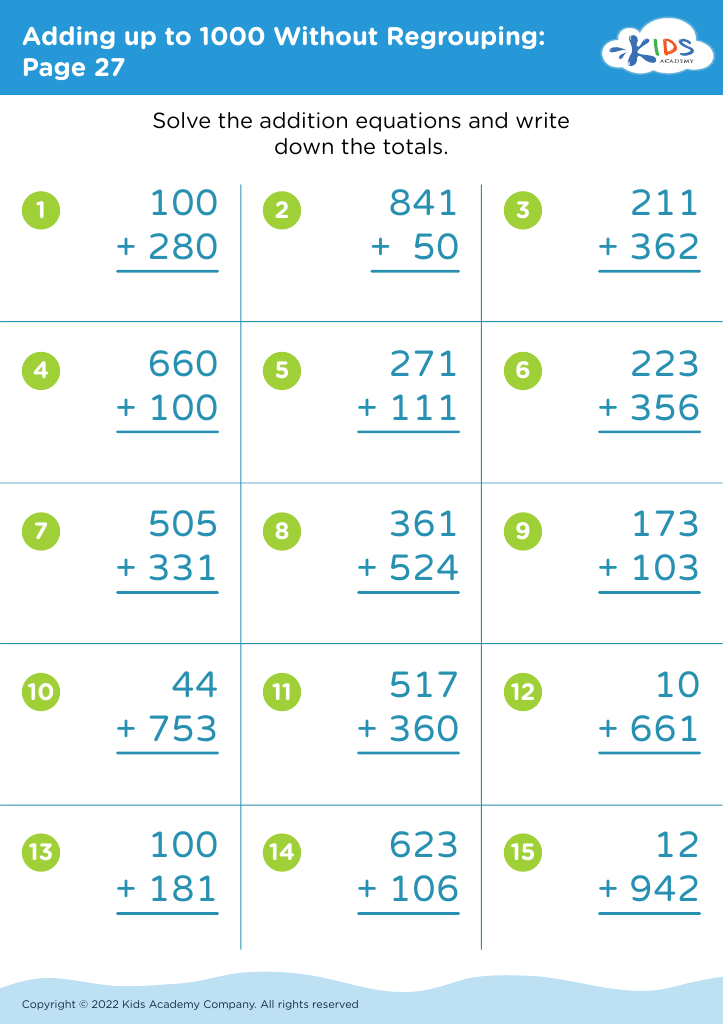
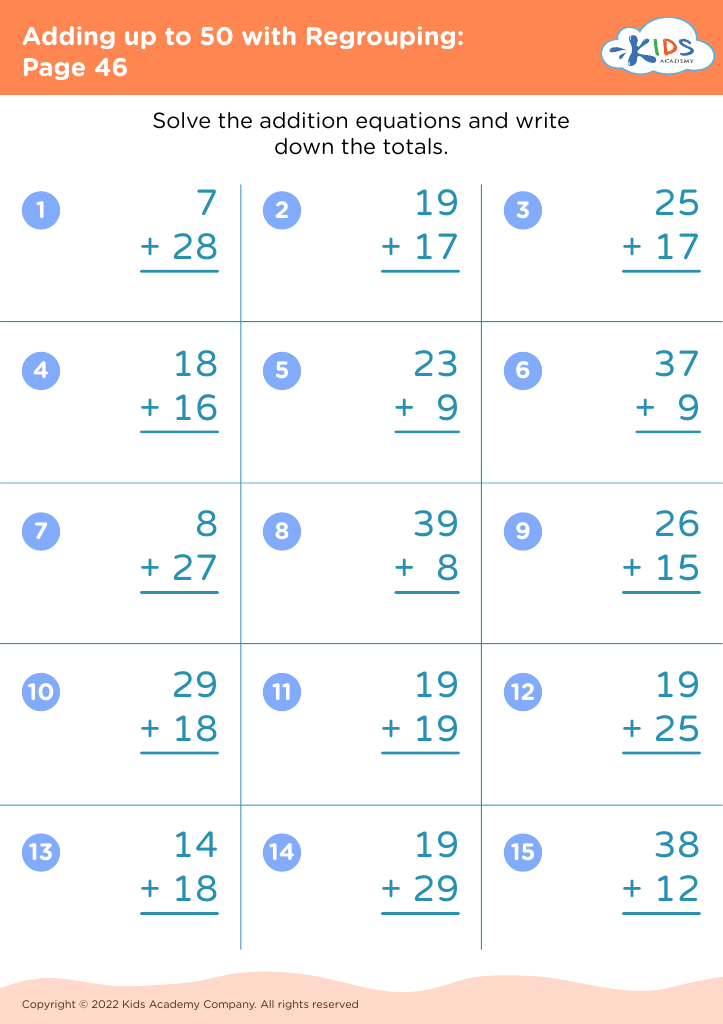
Introducing our "Simplifying Fractions Addition Worksheets" for children aged 3-9! These engaging and interactive worksheets are designed to make learning fractions fun and accessible. They provide young learners with step-by-step guidance to simplify and add fractions, building a strong mathematical foundation. The easy-to-follow exercises encourage critical thinking and enhance problem-solving skills while making complex concepts simpler through colorful visuals and relatable examples. Perfect for classroom use or at-home practice, our worksheets cater to varying skill levels, ensuring all children can progress at their own pace. Download now to spark a passion for math and boost your child’s confidence!
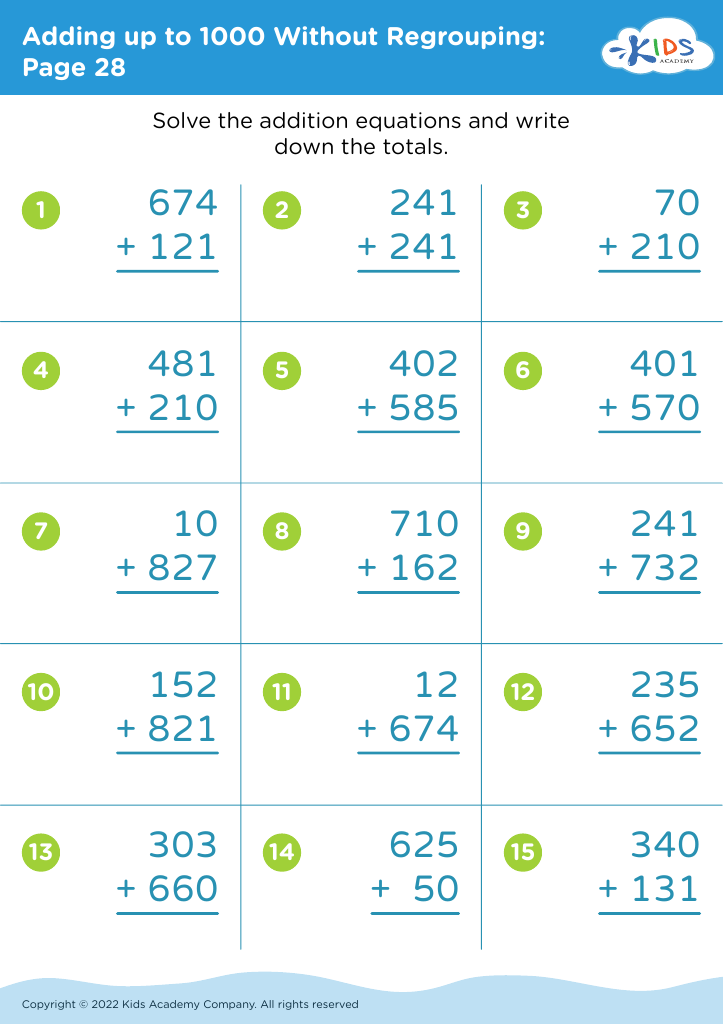
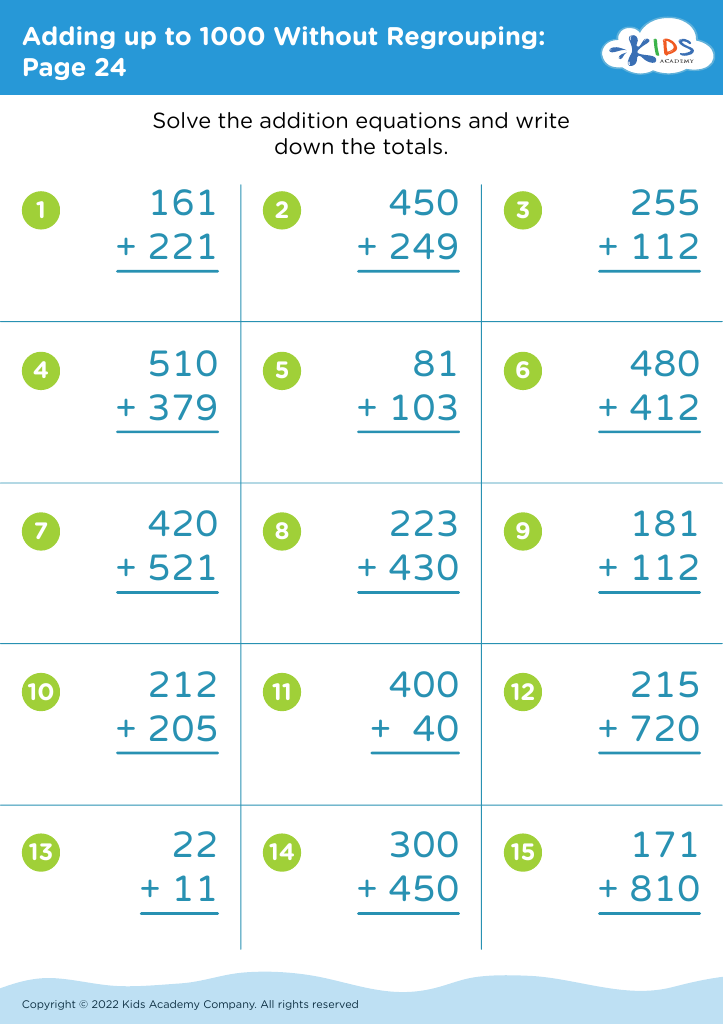








Simplifying fractions addition is a vital concept for young learners aged 3-9, as it lays the groundwork for more advanced mathematical skills. At this stage, children's brains are highly receptive to understanding foundational concepts in a tangible way. Teaching this topic can significantly enhance their numeracy and problem-solving abilities, which are essential for their academic journey.
Parents and teachers should prioritize simplifying fractions addition because it fosters critical thinking. When children learn to recognize and combine fractions, they develop a deeper understanding of numbers as more than just symbols; they begin to see relationships between whole parts and their sums. This comprehension promotes confidence in math, reducing anxiety associated with the subject as they progress.
Moreover, introducing fractions early can enhance spatial awareness and geometric thinking. Engaging children in activities that involve real-life scenarios, such as sharing food or dividing shapes, can make learning more relatable and enjoyable.
Additionally, a solid grasp of fractions paves the way for success in higher-level concepts, such as ratios, proportions, and algebra later on. By emphasizing this foundational skill, parents and teachers contribute to a more holistic educational experience, preparing children not just for tests, but for practical application of math in daily life.








