Understanding addition Addition Worksheets for Ages 3-9
8 filtered results
-
From - To
Discover "Understanding Addition Worksheets for Ages 3-9" from Kids Academy, designed to make math fun and engaging for young learners. Our worksheets simplify addition through visual aids, counting objects, and intuitive exercises, helping kids build a strong foundation in math. Perfectly suited for different learning stages, these printable resources cater to both preschoolers and primary school children. Support your child’s learning journey as they develop critical thinking and problem-solving skills. Explore our extensive collection at Kids Academy and transform addition into an exciting adventure that fosters confidence and a love for math.
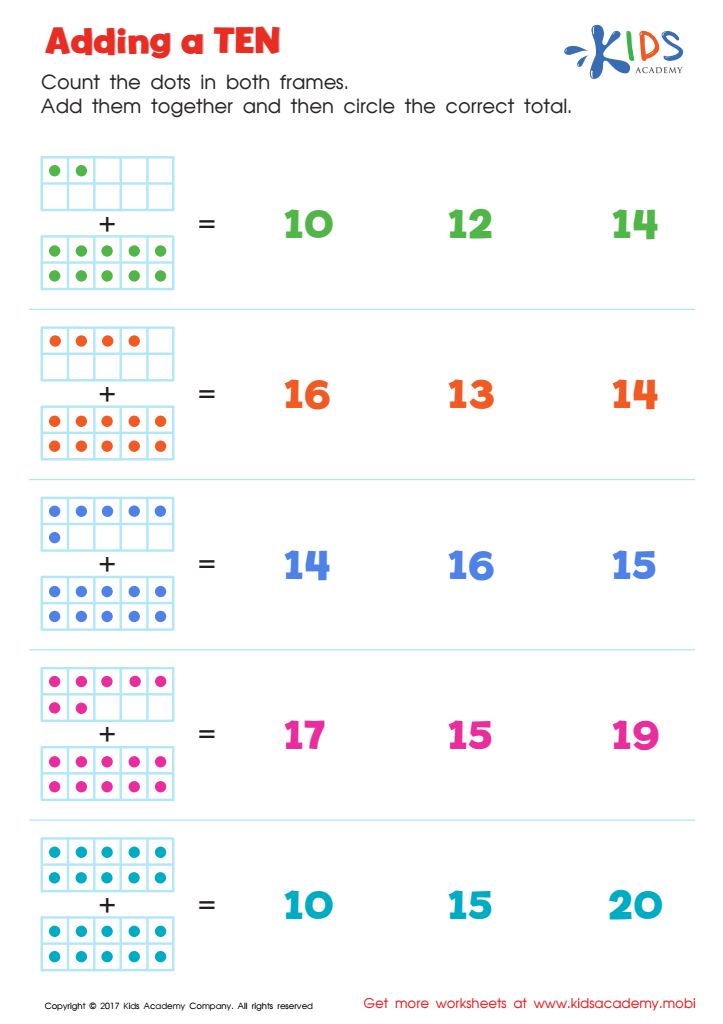
Adding a Ten Worksheet
 Assign to My Students
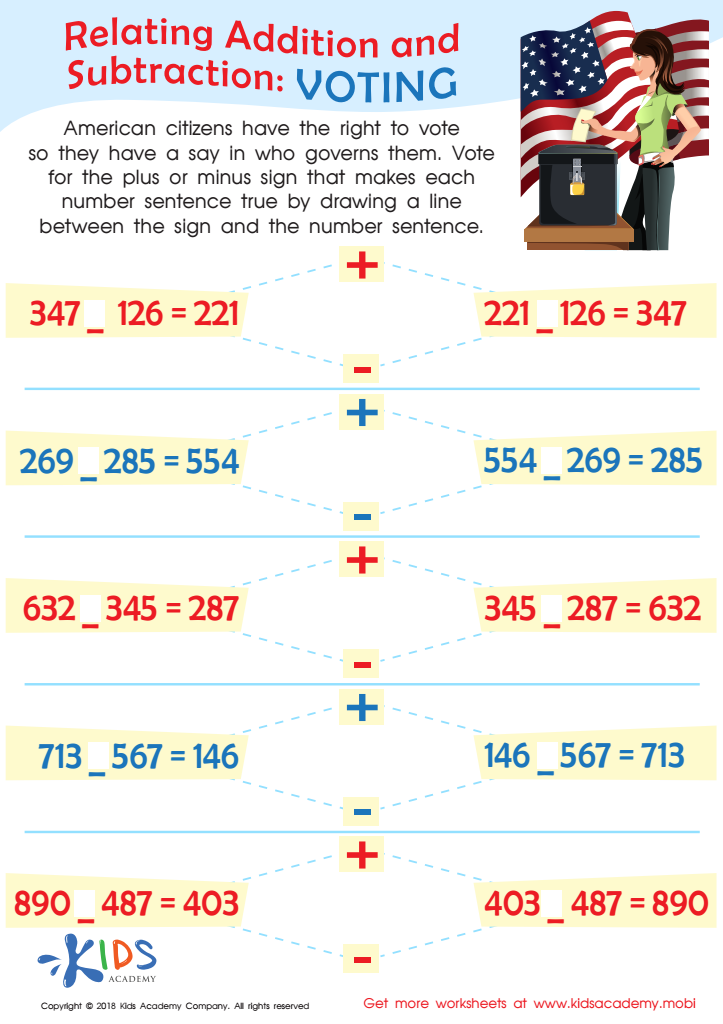
Voting Worksheet
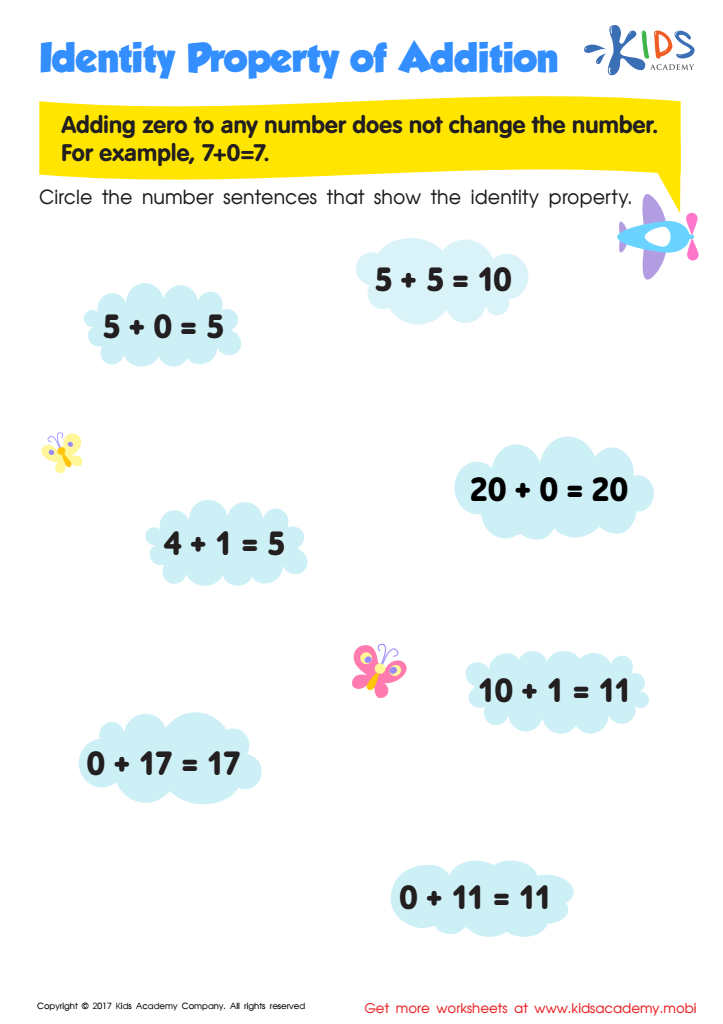
Identity Property of Addition Worksheet
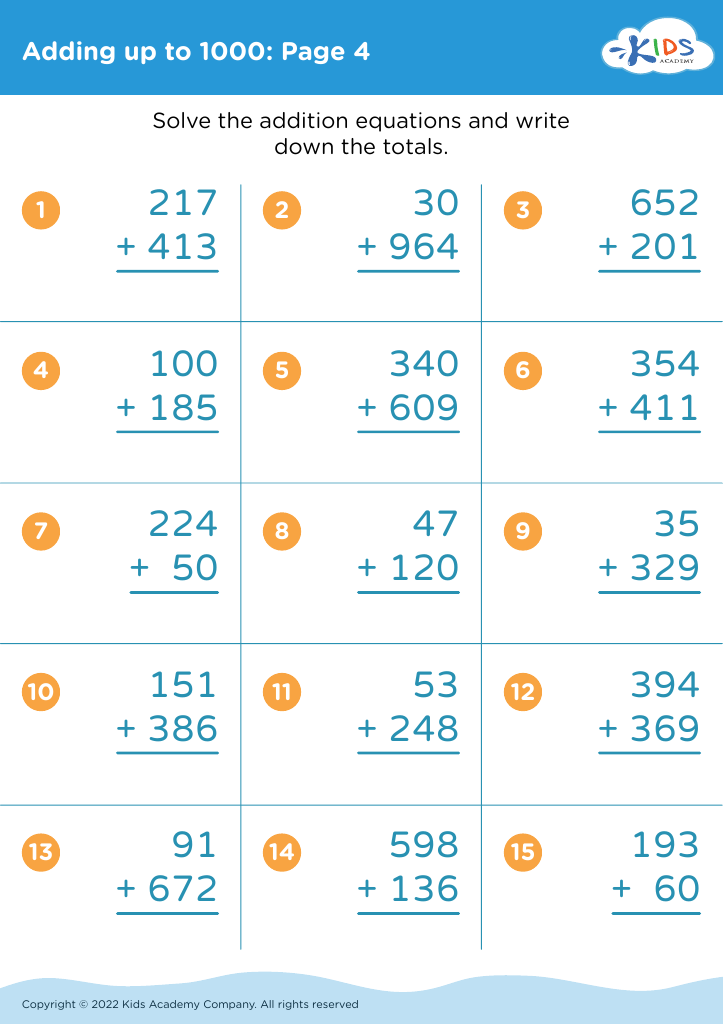
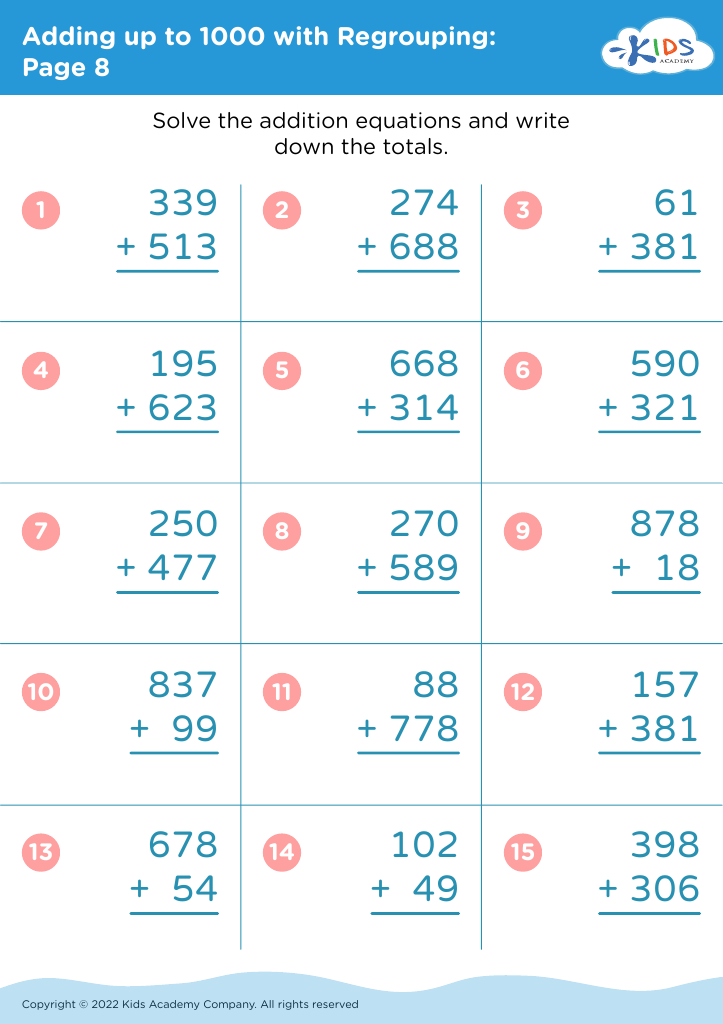
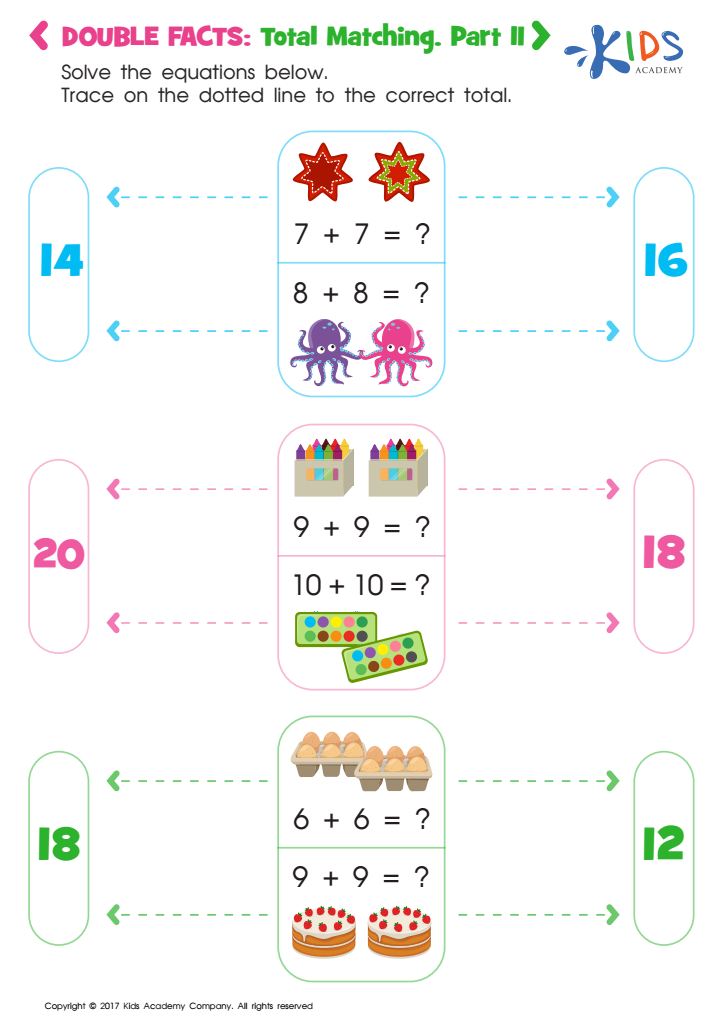
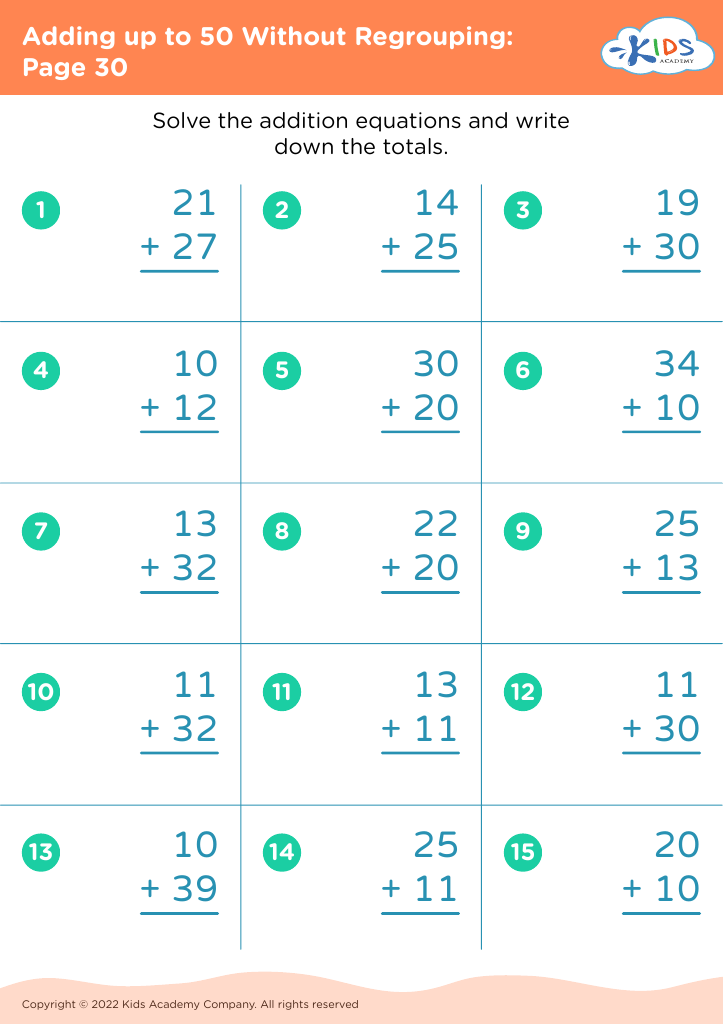
Double Facts: Total Matching 2 Worksheet








Understanding addition for children ages 3-9 is fundamental for several reasons that significantly impact their cognitive development and everyday life. Firstly, early exposure to addition helps build a strong mathematical foundation essential for tackling more complex topics in later academic years. When children grasp the concept of addition early, they find it easier to understand subtraction, multiplication, and division, which are integral parts of their future education.
Moreover, addition is not just about numbers but also about problem-solving and logical thinking. It encourages children to think critically, reason accurately, and make decisions based on quantitative information. These cognitive skills are crucial not only for mathematics but for science, technology, and even non-STEM subjects.
Additionally, understanding addition boosts children's confidence when they accomplish new problems and puzzles. This positive reinforcement makes them more enthusiastic and open to learning new concepts, creating a more engaging and enjoyable educational experience.
Practical life skills are another essential aspect; children use addition in daily activities like counting toys, sharing treats, or during playtime. These real-life applications help them see the value of what they're learning, making education feel more relevant and actionable. Thus, both parents and teachers should prioritize the comprehension of addition to nurture well-rounded, analytical, and confident individuals.








