Understanding money Addition Worksheets for Ages 3-9
3 filtered results
-
From - To
Empower young learners with essential financial skills using our "Understanding Money Addition Worksheets for Ages 3-9." These engaging, age-appropriate activities help children grasp the basics of addition using real-world money scenarios. Designed to build both mathematical proficiency and practical financial acumen, each worksheet guides kids through fun exercises involving coins and bills. Ideal for classroom use or at-home practice, these worksheets cater to various learning paces, ensuring every child can confidently navigate and enjoy the world of numbers and money. Prepare your child for a financially literate future with these expertly crafted educational resources.
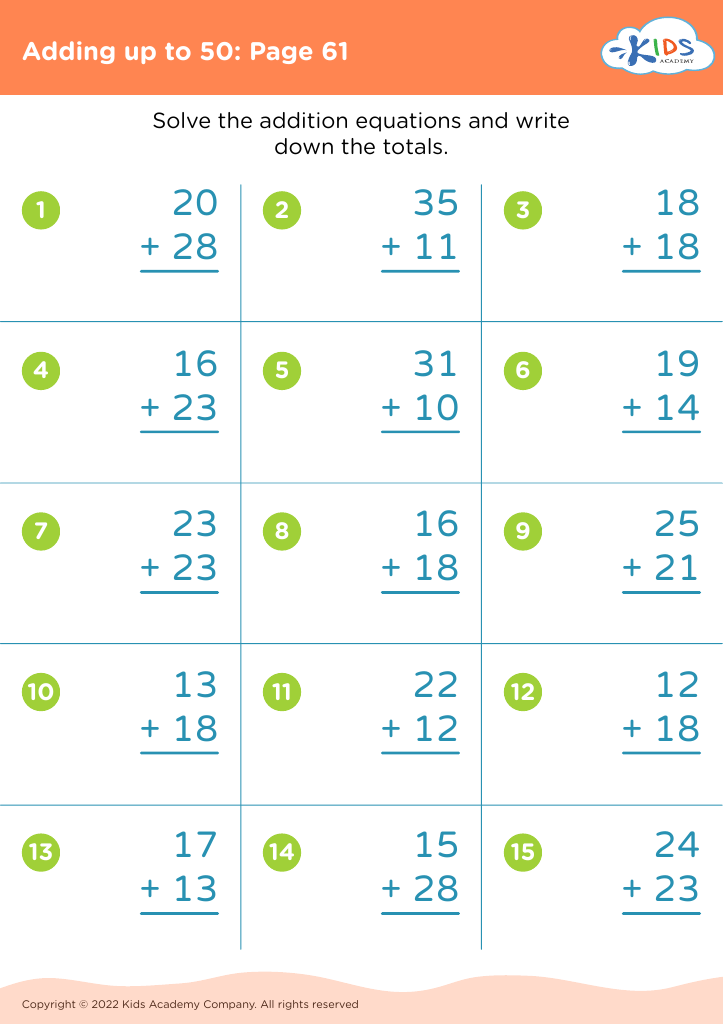
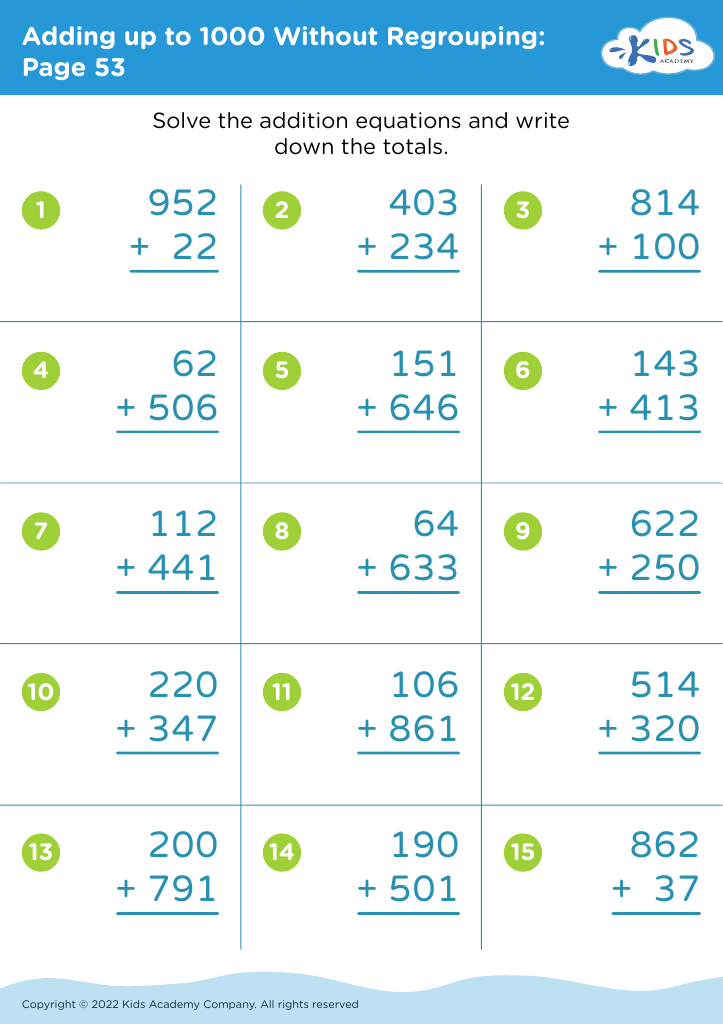
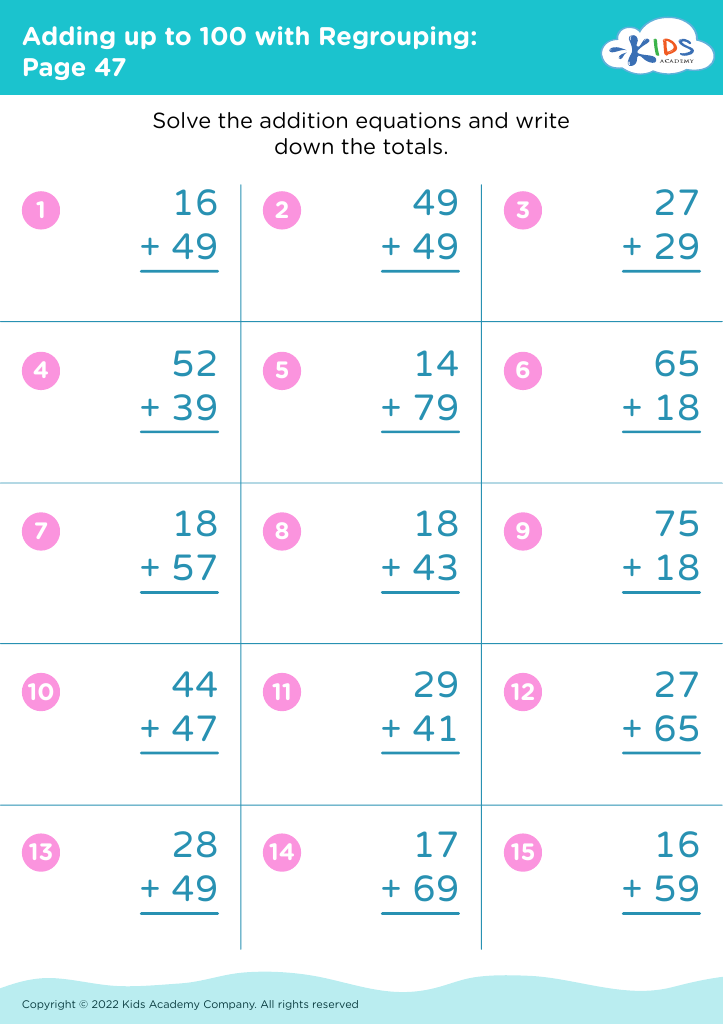








Understanding money addition at ages 3-9 is foundational for young children's future financial literacy and mathematical skills. First, learning money addition introduces basic arithmetic concepts in a practical context. When children count coins and notes, they engage in hands-on activities that make abstract math more tangible and relatable to everyday life.
Money addition also enhances problem-solving skills. As children learn to add different denominations, they develop strategies for combining numbers effectively and efficiently. This process encourages critical thinking and decision-making, crucial skills for academic success and real-world scenarios.
Moreover, early exposure to money management fosters financial responsibility. Children begin to grasp the value of money, learning concepts like saving, spending, and budgeting. These lessons cultivate responsible financial behavior, helping them make informed choices later in life.
Engaging in money-related activities also strengthens cognitive skills, including memory, attention, and sequencing. Handling money and calculating change require these abilities, reinforcing a child's overall cognitive development.
Finally, involving children in money addition activities provides an opportunity for positive, meaningful interactions between parents or teachers and children. These experiences can build a child's confidence, enhance their love for learning, and instill a lifelong curiosity about mathematics and finances. Therefore, prioritizing money addition education for young children is an investment in their academic, financial, and personal growth.








