Understanding sequencing Addition Worksheets for Ages 3-9
7 filtered results
-
From - To
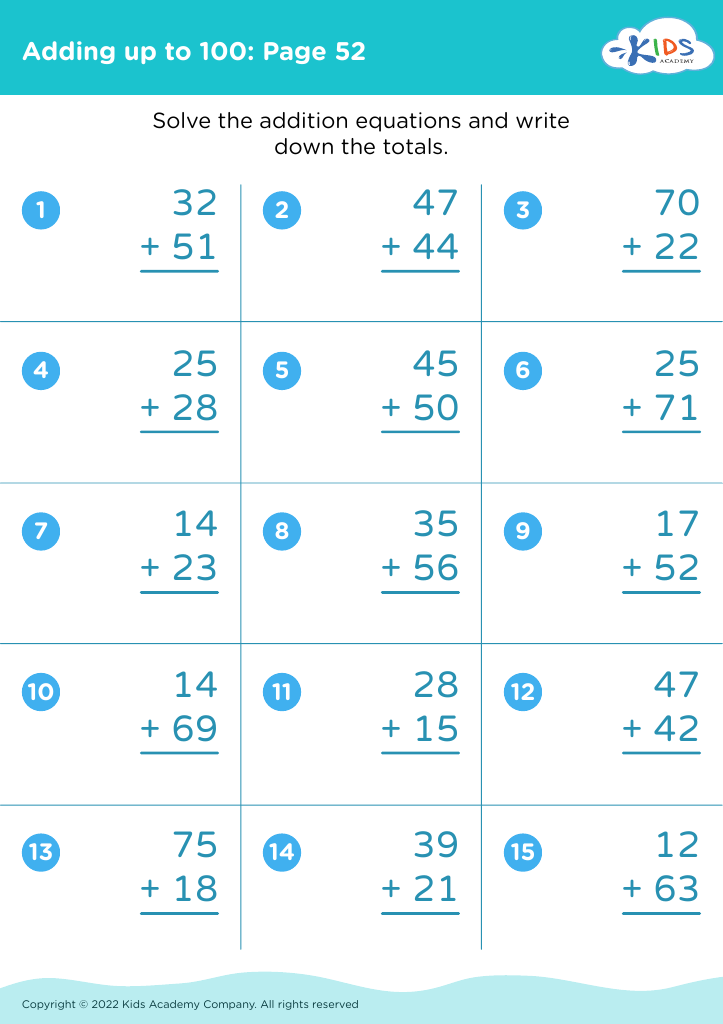
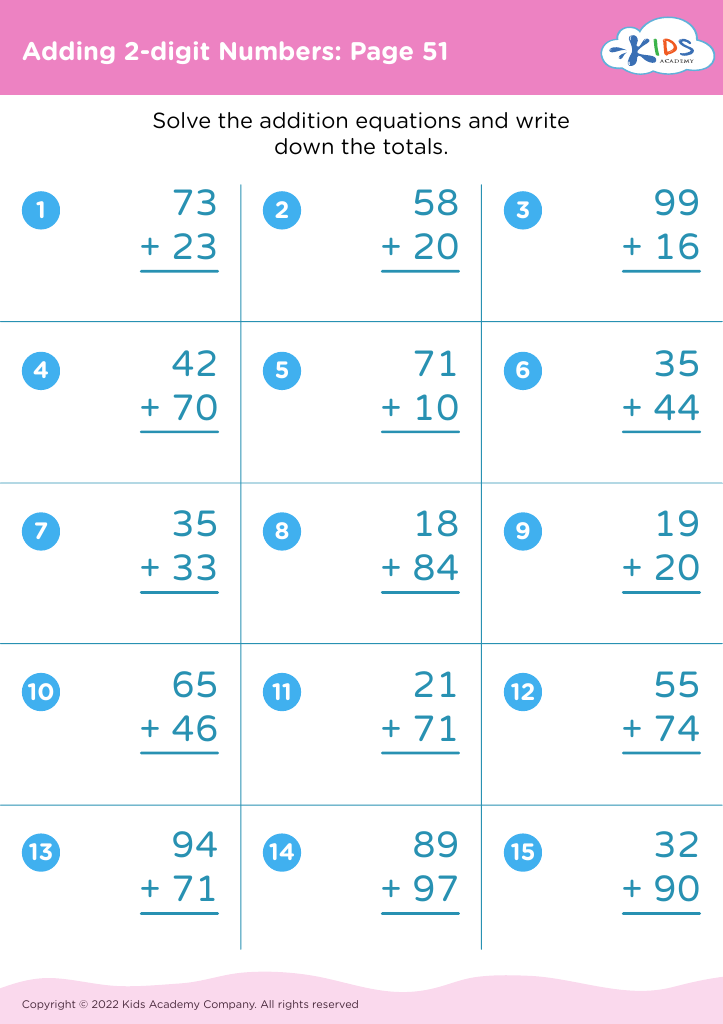
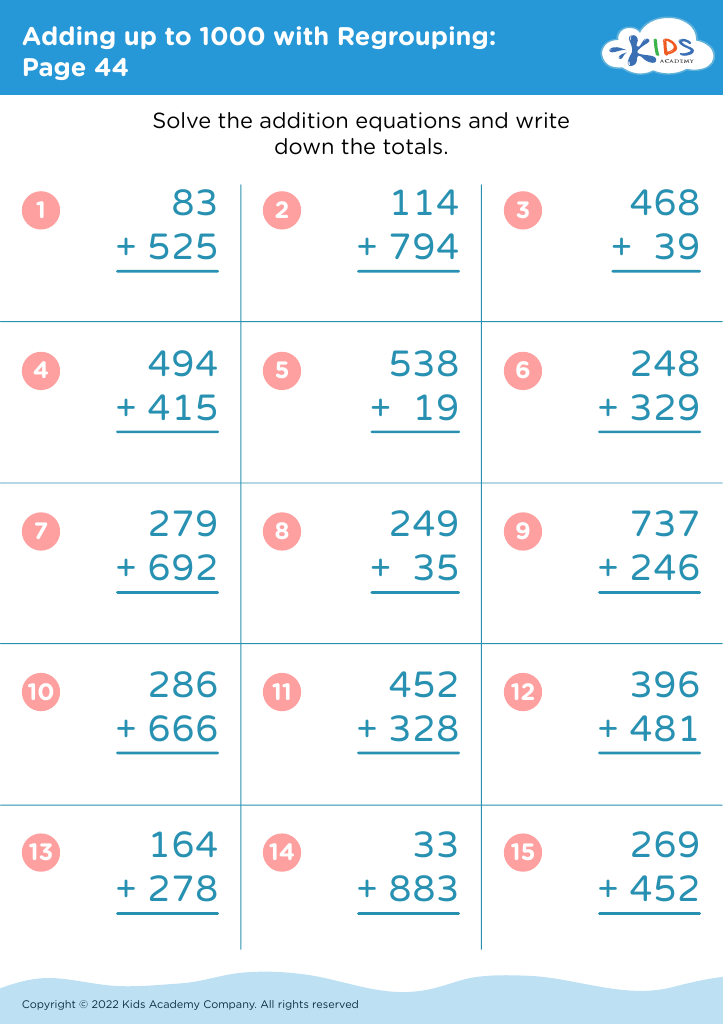
"Understanding Sequencing Addition Worksheets for Ages 3-9" offers young learners engaging activities to master basic addition and sequencing skills. These vibrant, printable worksheets are designed to enhance cognitive development and numerical fluency through fun, hands-on practice. Tailored for children aged 3-9, each worksheet incorporates age-appropriate challenges that simplify the concept of addition, enabling children to methodically sequence numbers and grasp the fundamentals of early math. With a focus on step-by-step learning, these resources provide a solid foundation for future arithmetic comprehension. Ideal for parents and educators aiming to foster a love for learning in a supportive environment.
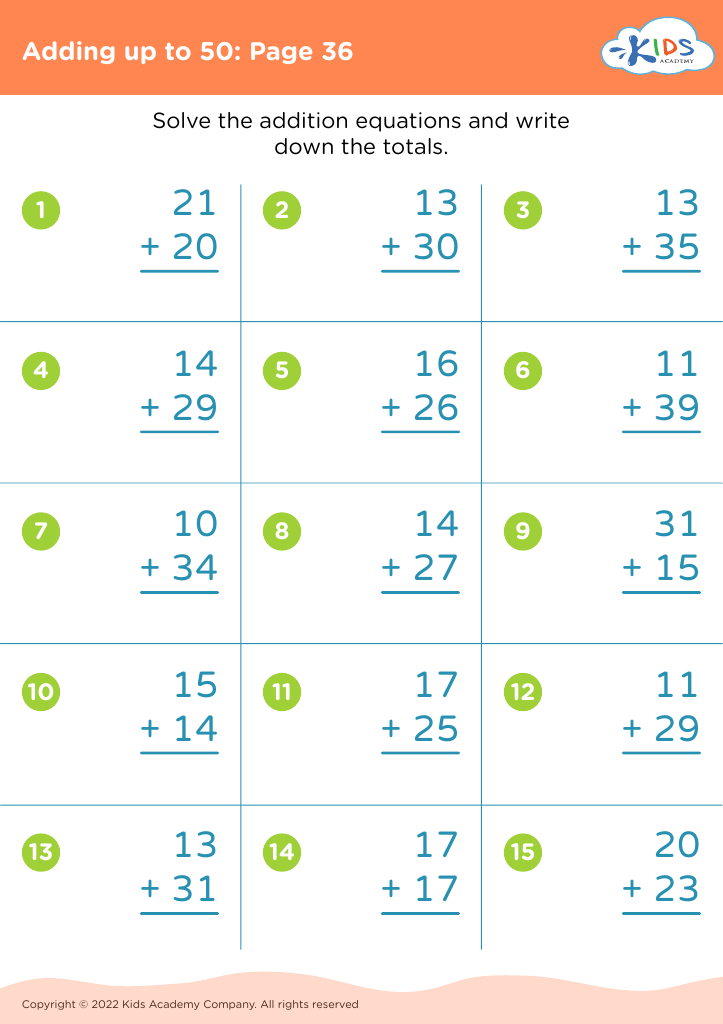
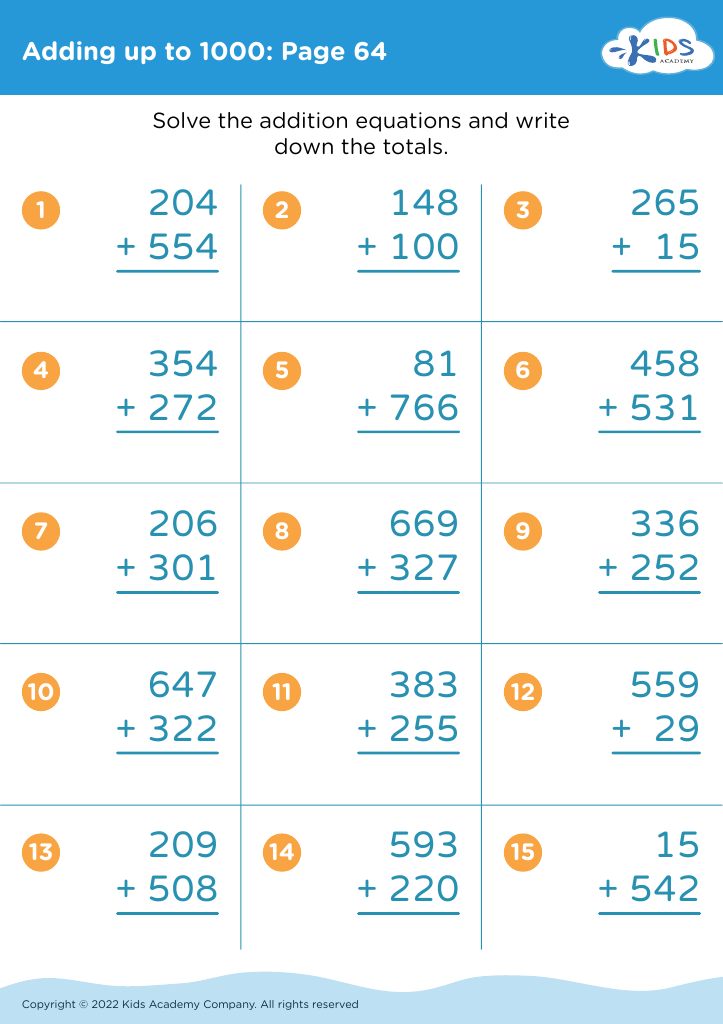
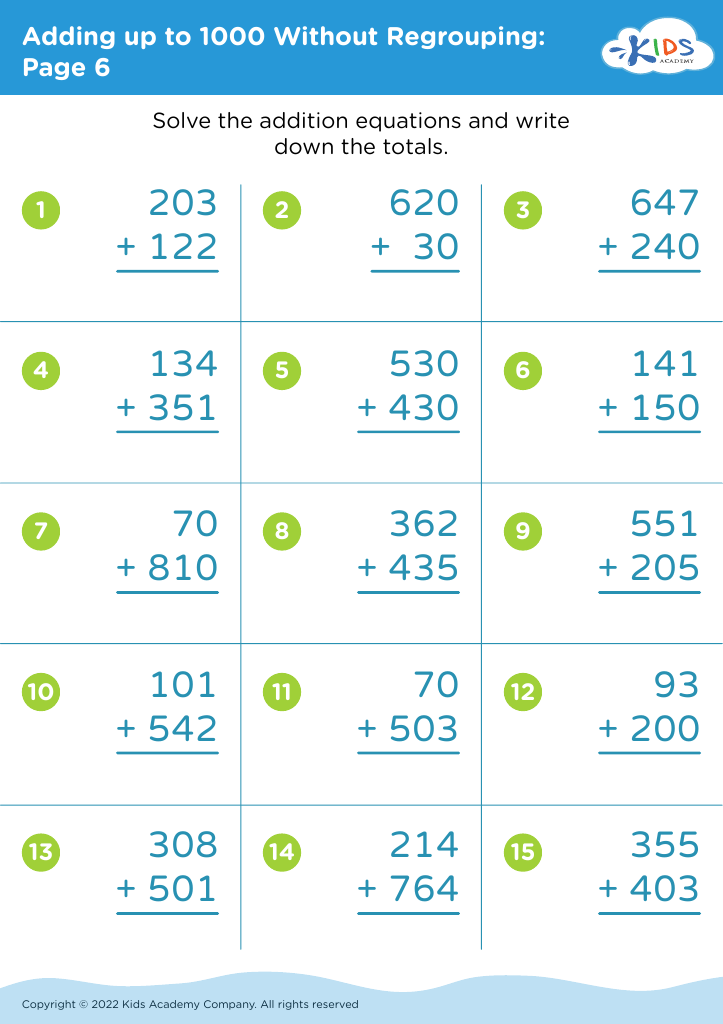
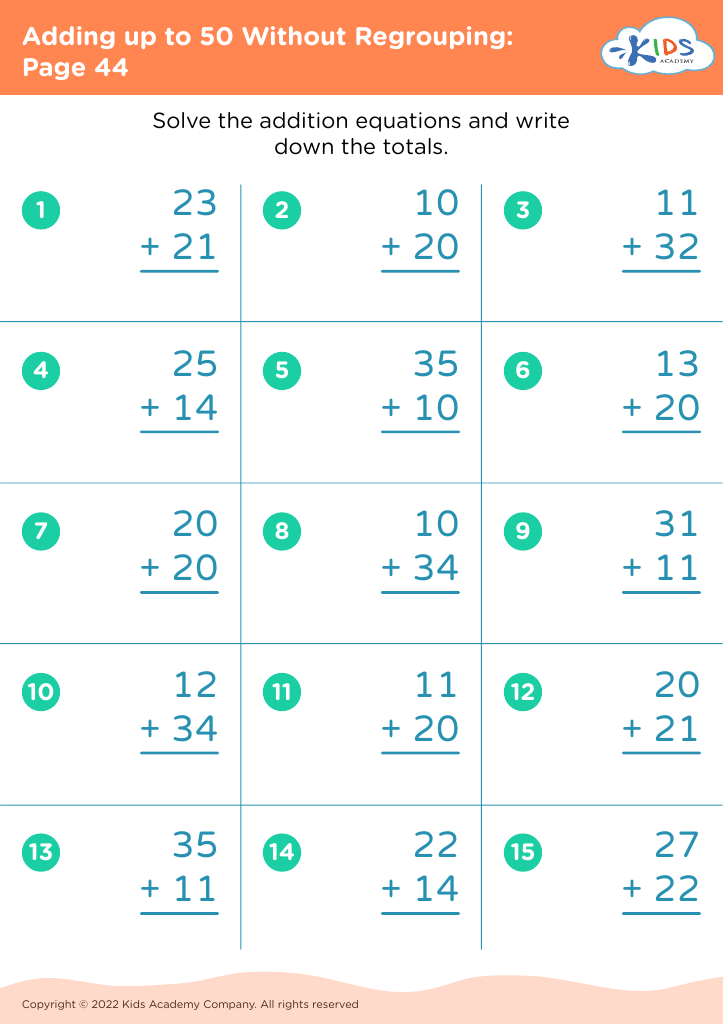








Understanding sequencing in addition is crucial for children ages 3-9, as it forms the foundation for their future mathematical learning and overall cognitive development. Sequencing helps children grasp the order in which numbers are added, which is essential for performing more complex calculations accurately as they grow older. By mastering sequencing, kids learn to predict outcomes, understand cause and effect, and develop logical thinking skills.
For the youngest learners, sequencing starts with simple activities like arranging objects in order. As they advance, these skills translate directly into their ability to add numbers sequentially. For instance, understanding that 2 + 3 = 5 doesn’t just require knowing the numbers but also the order in which they are added. Teachers and parents who prioritize these skills help children build stronger numerical fluency.
Moreover, sequencing addition aids in developing a child's attention span and memory. When children learn to follow steps in a specific sequence, they enhance their organizational skills, which are applicable in other areas of learning and everyday life.
In summary, parents and teachers should care about understanding sequencing addition because it lays the groundwork for both academic success and essential life skills, providing children with the tools they need for logical thinking and problem-solving.








