Basic Math Skills Comparison Worksheets for Ages 3-9
3 filtered results
-
From - To
Enhance your child's foundational math abilities with our "Basic Math Skills Comparison Worksheets for Ages 3-9". Designed to foster early numeracy, these worksheets engage young learners through fun and interactive comparison activities. Children will explore concepts such as greater than, less than, and equal to, building confidence in their mathematical reasoning. Each worksheet is thoughtfully crafted to accommodate varying skill levels, ensuring that every child can practice at their own pace. Perfect for both classroom and home learning, these resources will help your child develop essential math skills while cultivating a love for learning. Start their math journey today!
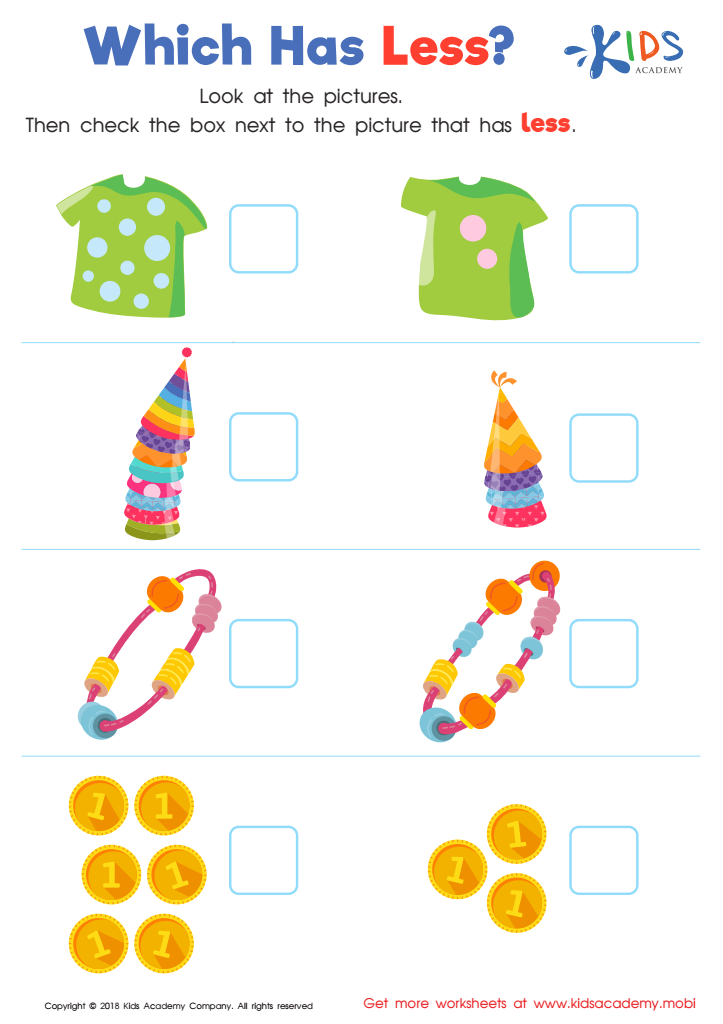
Which Has Less? Worksheet
 Assign to My Students
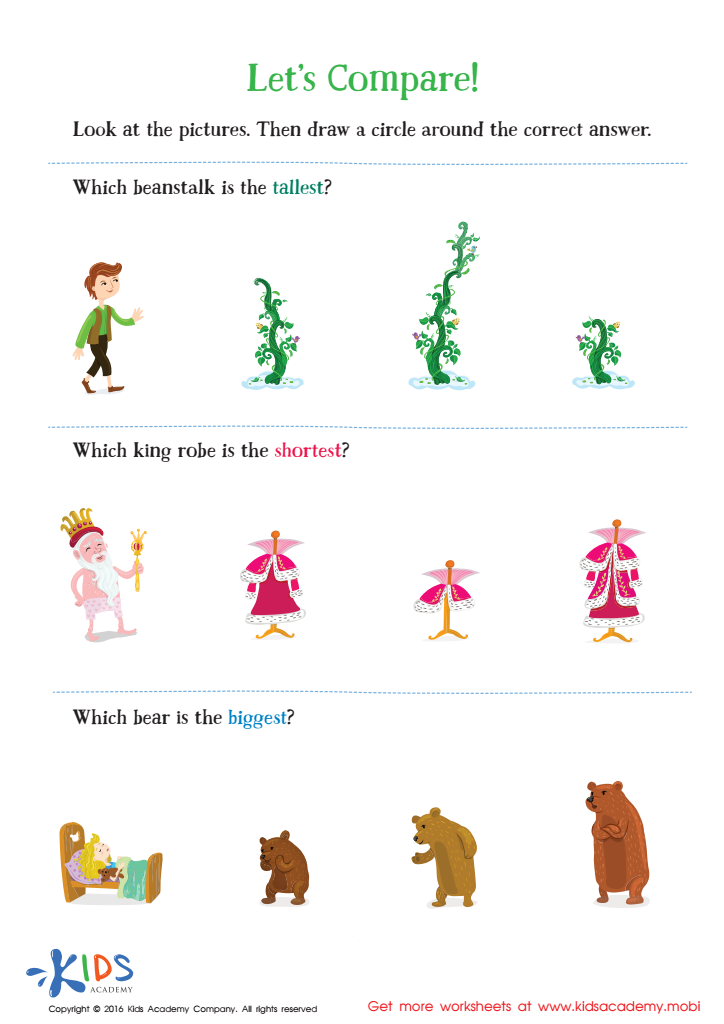
Fairy Tale Worksheet: Let's Compare
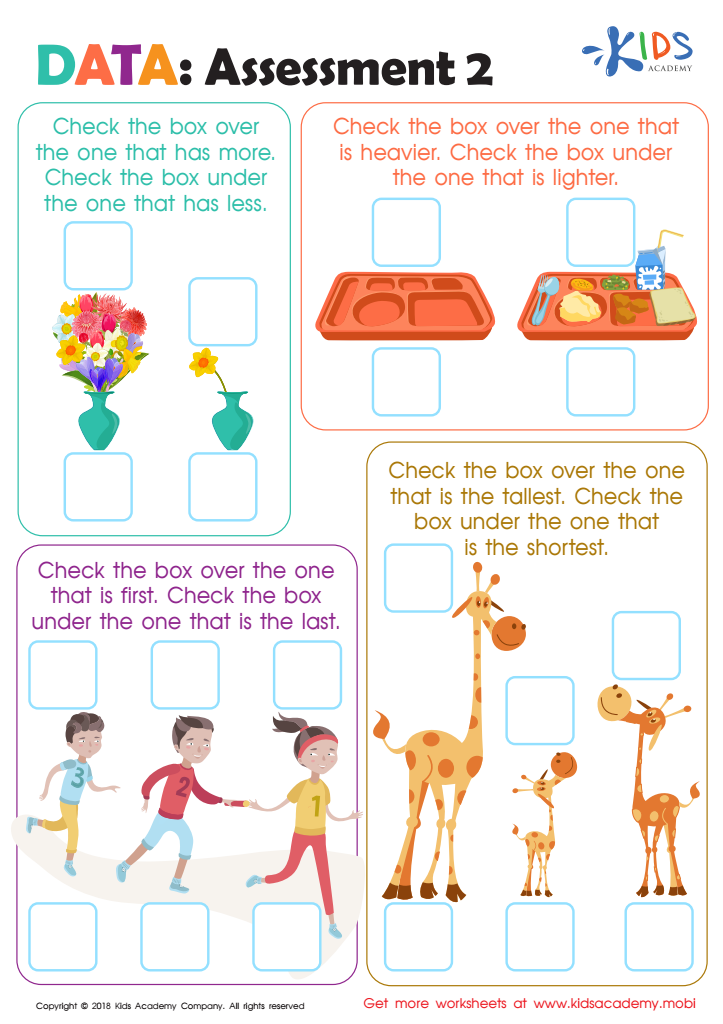
Data: Assessment 2 Worksheet





Parents and teachers should care about Basic Math Skills Comparison for ages 3-9 because these early years are crucial for cognitive development and laying a solid foundation for future learning. During this formative period, children are naturally curious and eager to explore new concepts. Mathematics introduces them to critical thinking, problem-solving, and reasoning skills, which are essential for success in academics and everyday life.
Comparing foundational math skills helps identify developmental milestones and areas where children may need extra support. It allows educators and parents to tailor learning experiences that cater to individual needs, ensuring that children are adequately challenged and motivated. This proactive approach can help prevent learning gaps, promoting self-confidence and enjoyment of math.
Furthermore, understanding where a child falls within the spectrum of basic math skills helps in setting realistic expectations and goals. It also informs collaborative strategies that parents and teachers can use to reinforce learning at home and in the classroom. Ultimately, nurturing strong math skills in children ages 3-9 primes them for lifelong learning, equipping them with the tools necessary to navigate an increasingly complex world.








