Counting practice Geometry Worksheets for Ages 3-9
7 filtered results
-
From - To
Counting Practice Geometry Worksheets for Ages 3-9 deliver a fun, educational experience, seamlessly blending basic geometry and counting skills. Designed to captivate young learners, these vibrant worksheets feature engaging activities with shapes, patterns, and numbers that reinforce early math concepts. Perfect for classroom or at-home learning, the resources support development in counting, shape recognition, and spatial reasoning. Tailored for ages 3-9, each worksheet is age-appropriate, ensuring a balanced challenge for preschoolers through early elementary students. Spark a love for math and geometry with these dynamic practice sheets, and watch your child's confidence and competence in math grow!
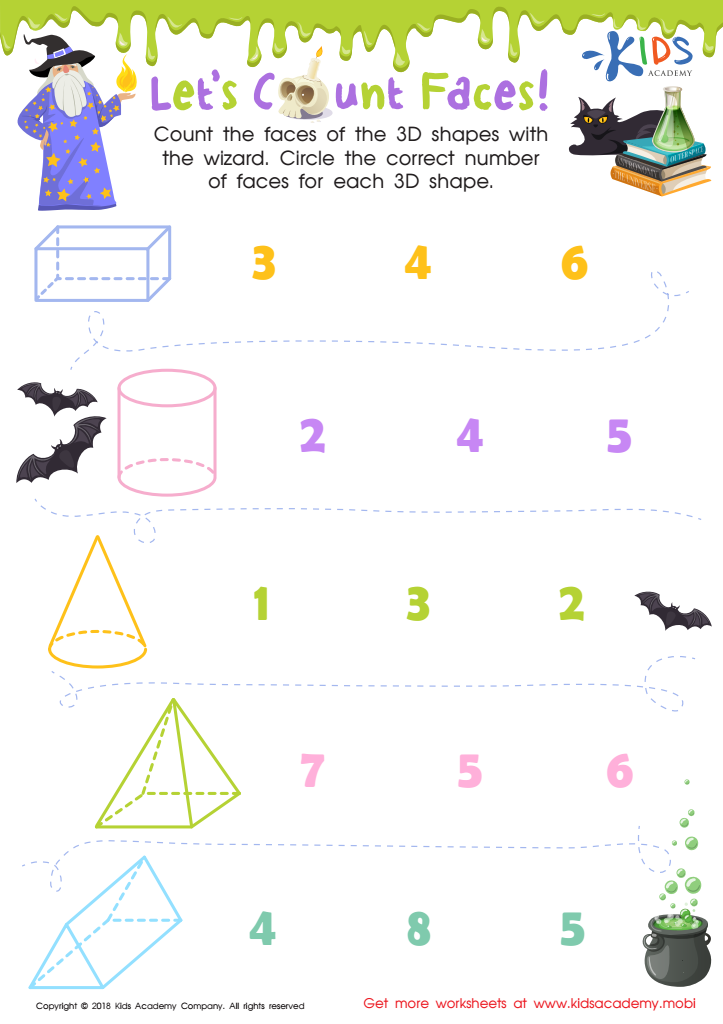
Let's Count Faces! Worksheet











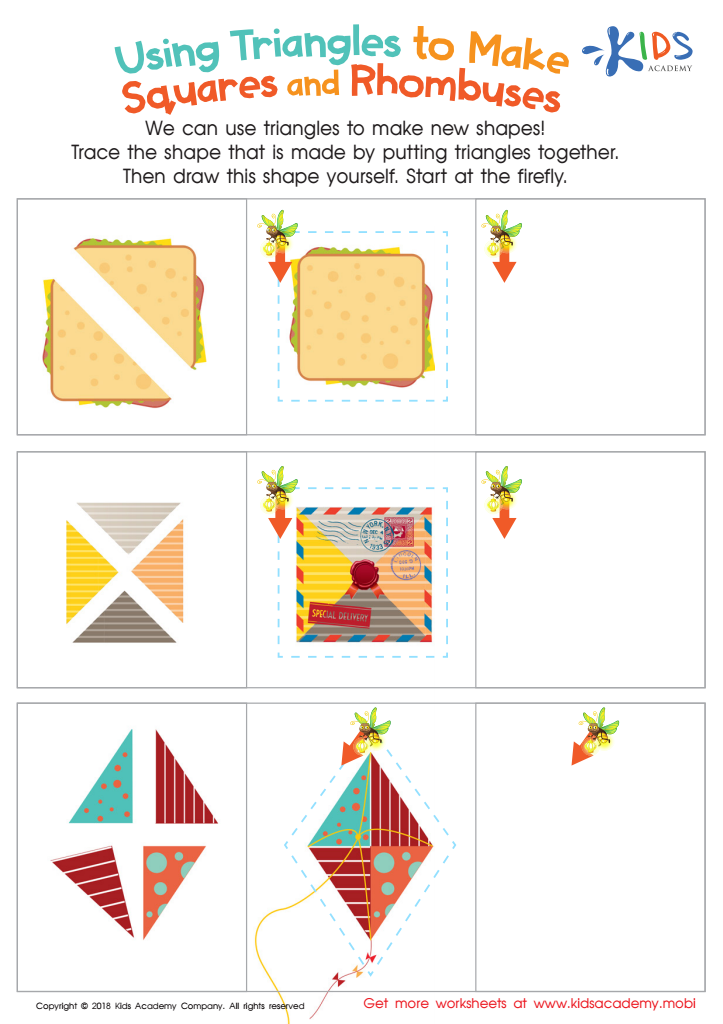
Using Triangles to Make Squares and Rhombuses Worksheet
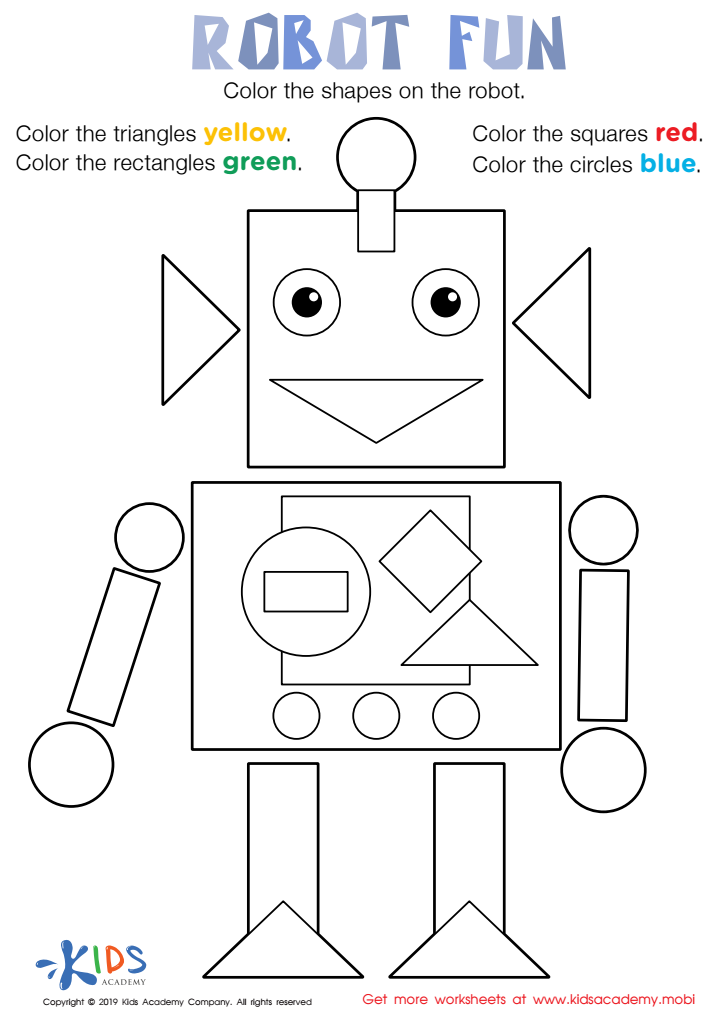
Robot Fun Worksheet
 Assign to My Students
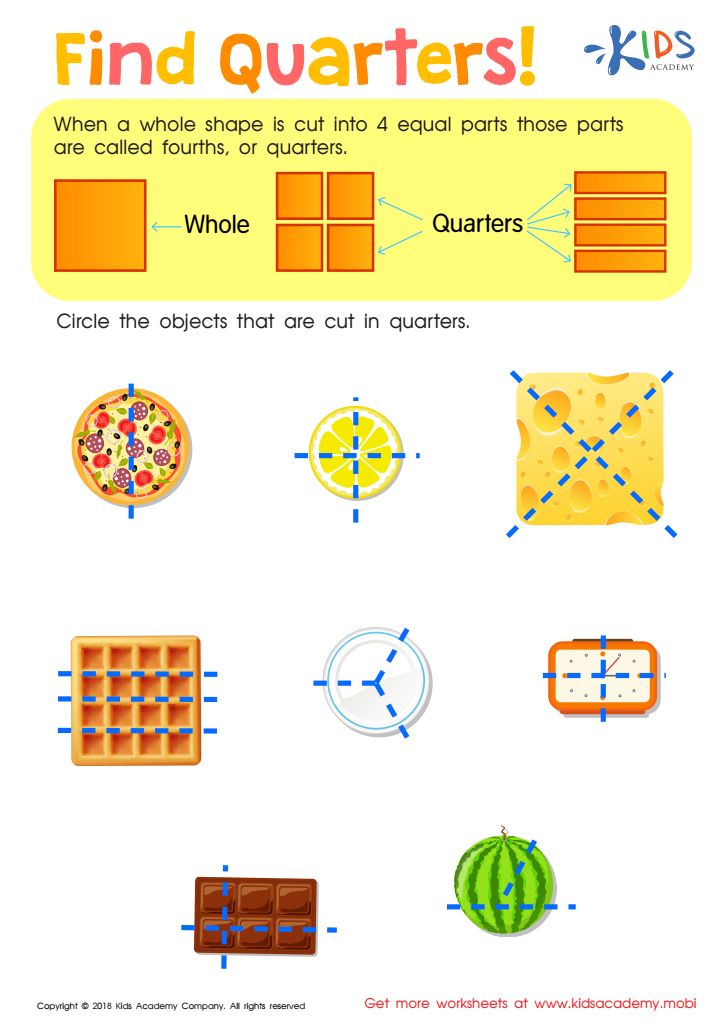
Find Quarters Worksheet
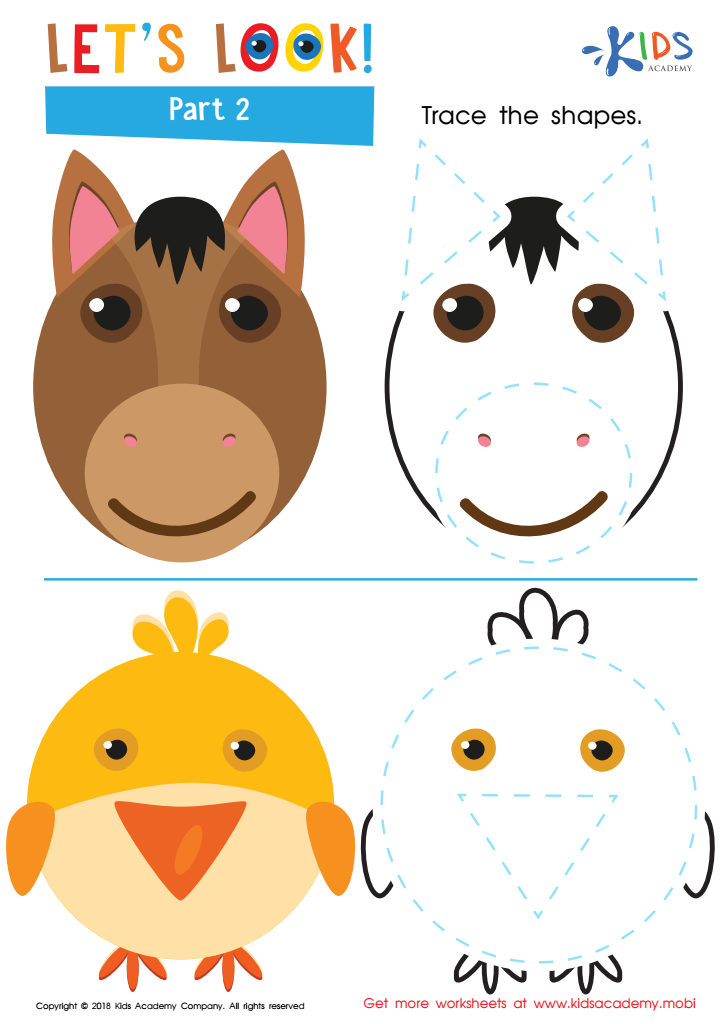
Let's Look! Part 2 Worksheet
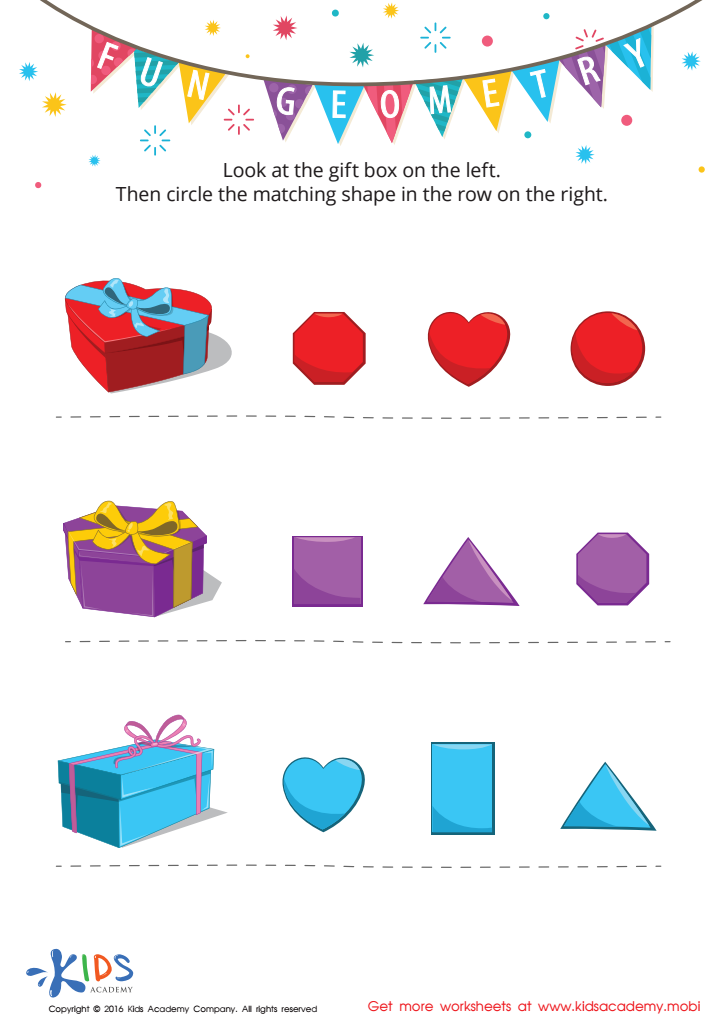
Fun Geometry Worksheet
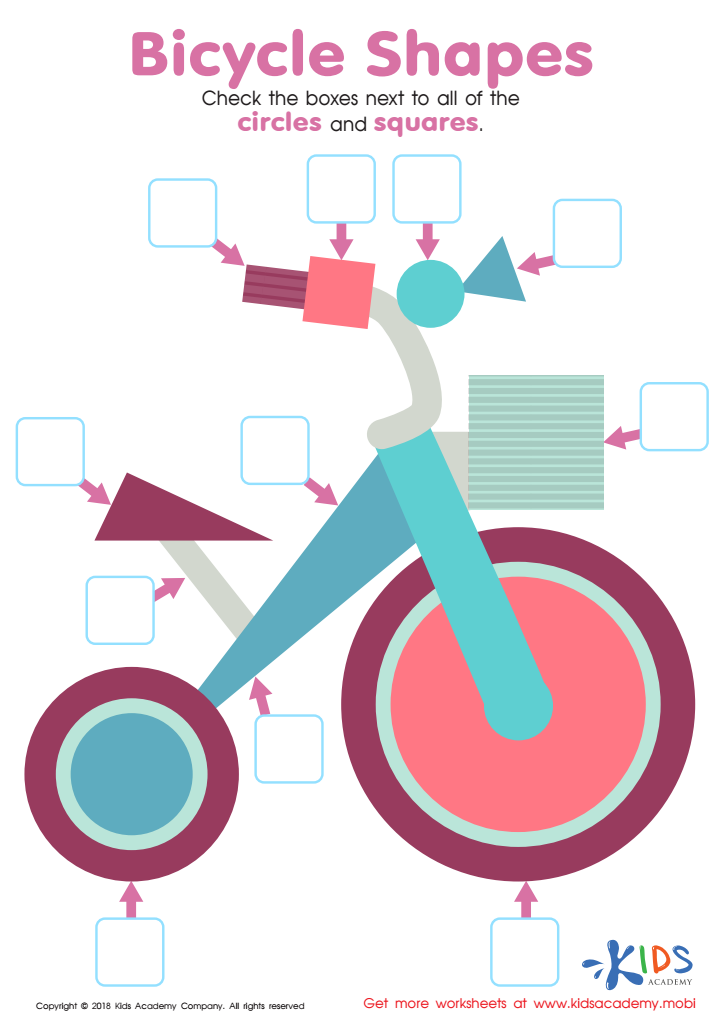
Bicycle Shapes Worksheet








Counting practice and early exposure to geometry hold immense significance for children aged 3-9. During these formative years, young minds are remarkably receptive to foundational mathematical concepts that can shape future academic successes. Parents and teachers must prioritize these practices to foster strong numeracy skills and spatial reasoning.
Counting practice builds a solid foundation for arithmetic skills. When children grasp counting sequences, they develop number sense—an understanding of the relationships between numbers. This fundamental skill is critical not only for basic math problems but also for more advanced math in later grades. Encouraging children to count objects, steps, or even days helps embed these concepts in everyday contexts, making learning both meaningful and engaging.
Geometry, on the other hand, introduces children to the properties of shapes and spatial awareness. Understanding geometry forms the basis for problem-solving and analytical thinking. When young children manipulate shapes and recognize patterns, they are also honing their abilities to observe, differentiate, and categorize—skills valuable in various life activities and other academic disciplines.
Collectively, early counting and geometry teachings nurture cognitive development, enhance fine motor skills, and support mental discipline. By integrating these practices into everyday learning, parents and teachers empower children to map a positive trajectory in mathematics, ensuring they are well-prepared and confident for future educational challenges.








