Filters

7 filtered results

Clear all filters
Favorites
With answer key
Interactive

7 filtered results

Difficulty Level

Grade


Discover a collection of engaging Logical Reasoning Geometry Worksheets tailored for children aged 3-9. Our worksheets are designed to develop essential early math skills through fun, interactive activities that challenge young minds. Students will explore geometric shapes, patterns, and spatial relationships, fostering critical thinking and problem-solving abilities. Each worksheet encourages creativity while reinforcing essential concepts, making learning enjoyable. Ideal for use in classrooms or at home, these resources support foundational math education and prepare children for future academic success. Dive into our vibrant, age-appropriate worksheets and watch your child thrive in their understanding of geometry and logical reasoning!

Check out this FREE Trial Lesson on Geometry for age 3-9!

Categorizing Shapes

Favorites
With answer key
Interactive
  • 3-9
  • Logical Reasoning
  • Geometry
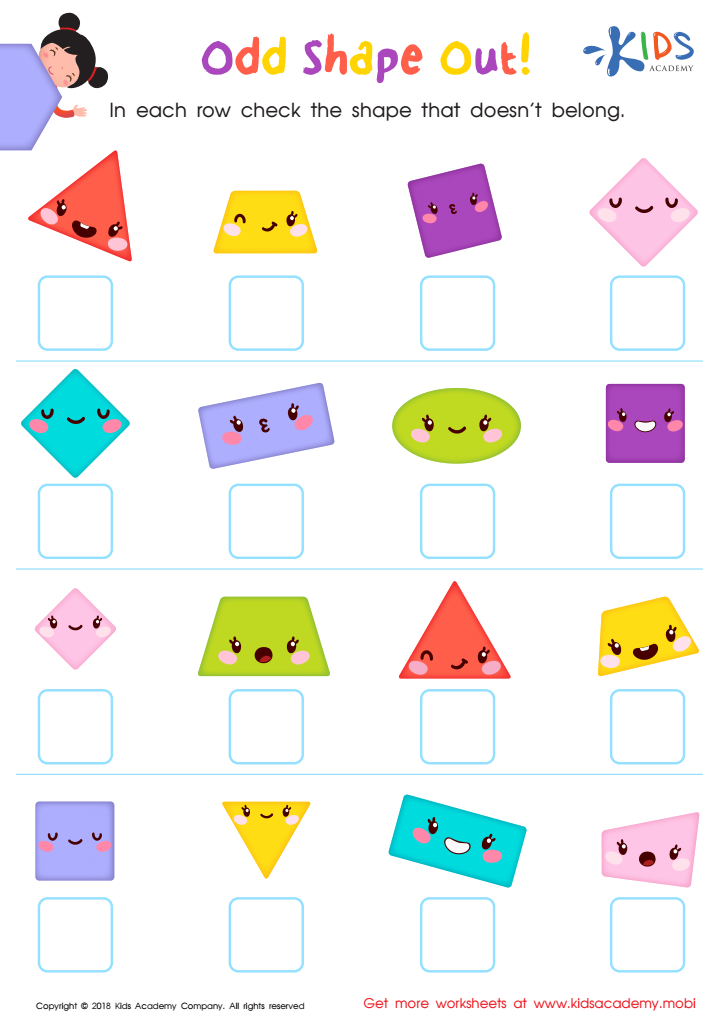
Odd Shape Out Worksheet for Grade 3

Odd Shape Out Worksheet for Grade 3

Time to test your child's shape knowledge! With this worksheet, help them find the odd shape out in each row and check the box under it. Print out the pdf and look through it with them – each row has four brightly colored shapes. See if they can spot any differences among them and then check the box below the shape that does not belong.
Odd Shape Out Worksheet for Grade 3
Worksheet
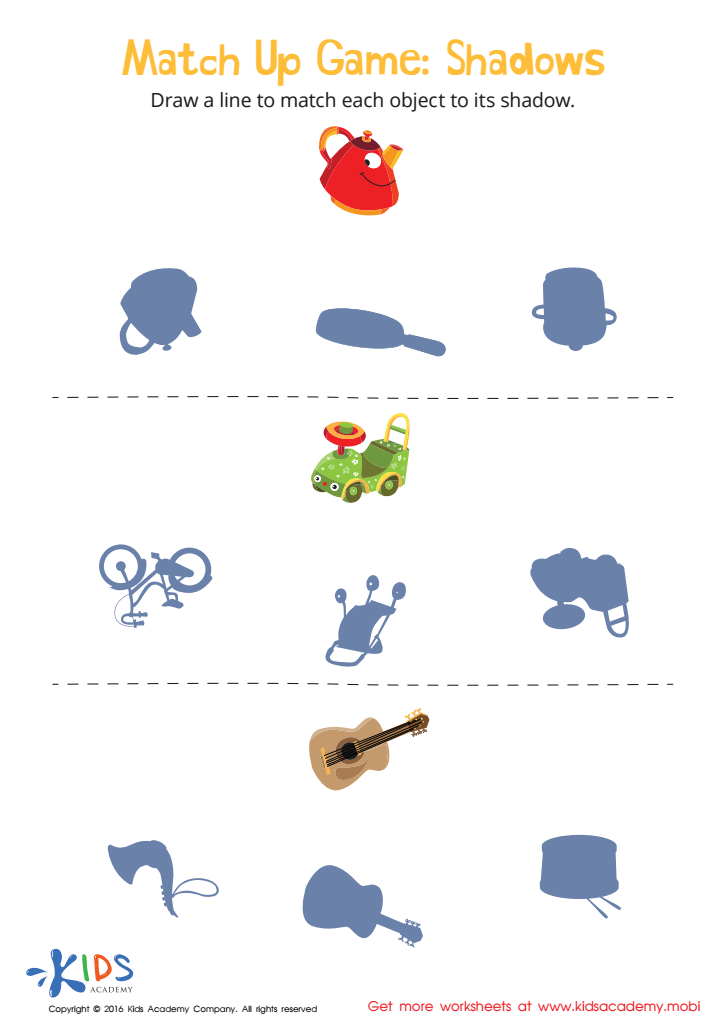
Match-up Worksheet for Toddlers

Shadows Worksheet

Shadows Worksheet
Worksheet
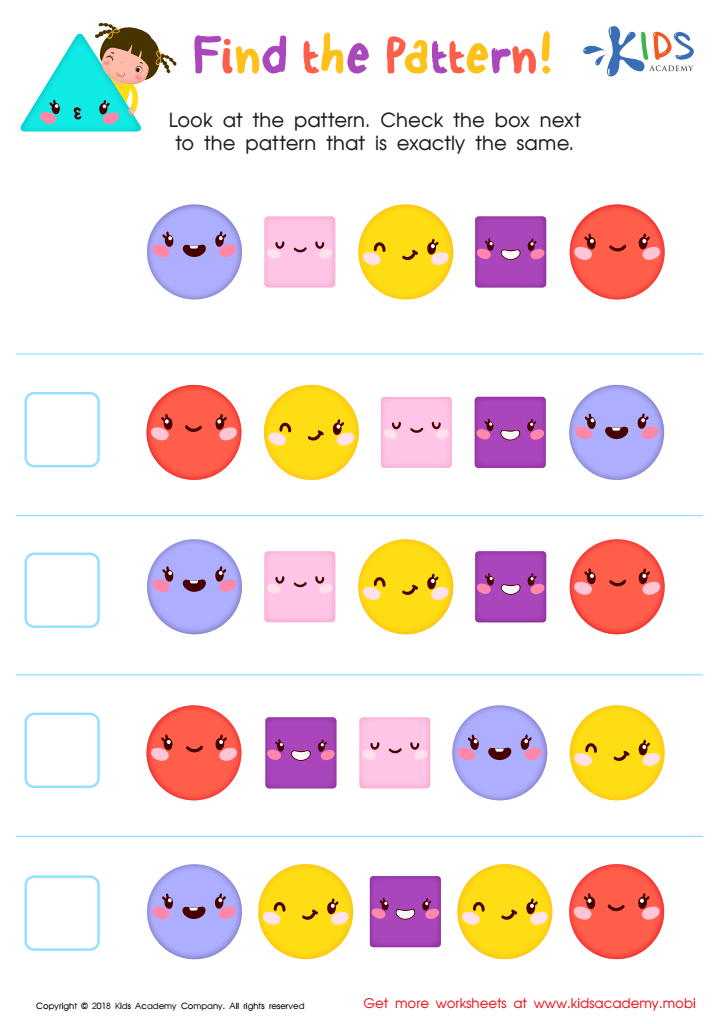
Find the Pattern Worksheet

Find the Pattern Worksheet

This colorful pattern worksheet is perfect for testing your kids' pattern recognition. The bright colors will keep them engaged, while they check the box next to the pattern that is the same. Ask your kids to identify the colors used and see how well they can spot similarities!
Find the Pattern Worksheet
Worksheet
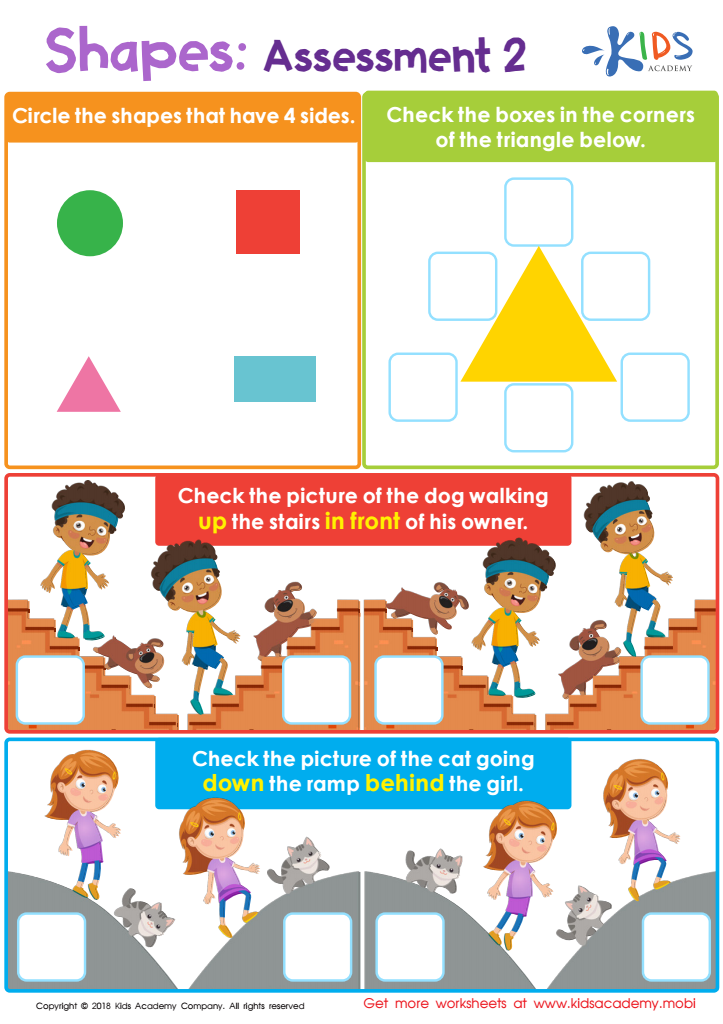
Shapes: Assessment 2 Worksheet

Shapes: Assessment 2 Worksheet

This geometry worksheet assesses a student's knowledge of shapes and positional words. They must identify shapes with 4 sides and corners on a triangle. The worksheet also tests understanding of words like "up", "front", "down" and "behind". Easily determine what your student knows about these concepts with this downloadable worksheet!
Shapes: Assessment 2 Worksheet
Worksheet
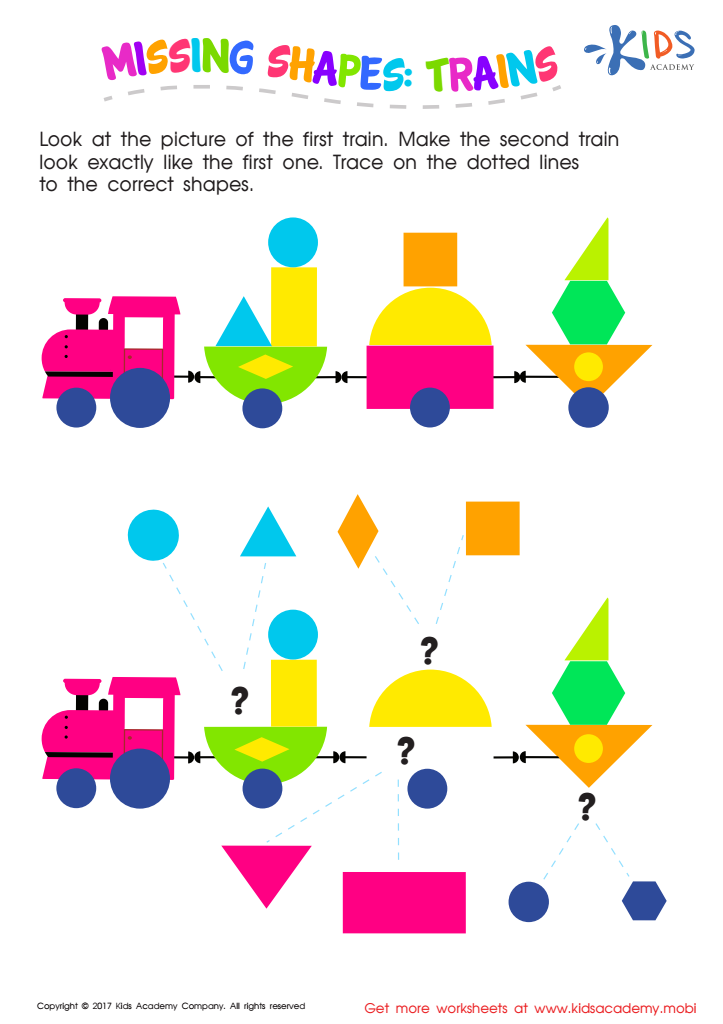
Missing Shapes: Trains Worksheet

Missing Shapes: Trains Worksheet

Before beginning, ask your child what the object in the picture is, the sound it makes and where it can be found. If they know, confidently move on. Help them make the second train look like the first by tracing dotted lines. Hold their hand for guidance.
Missing Shapes: Trains Worksheet
Worksheet
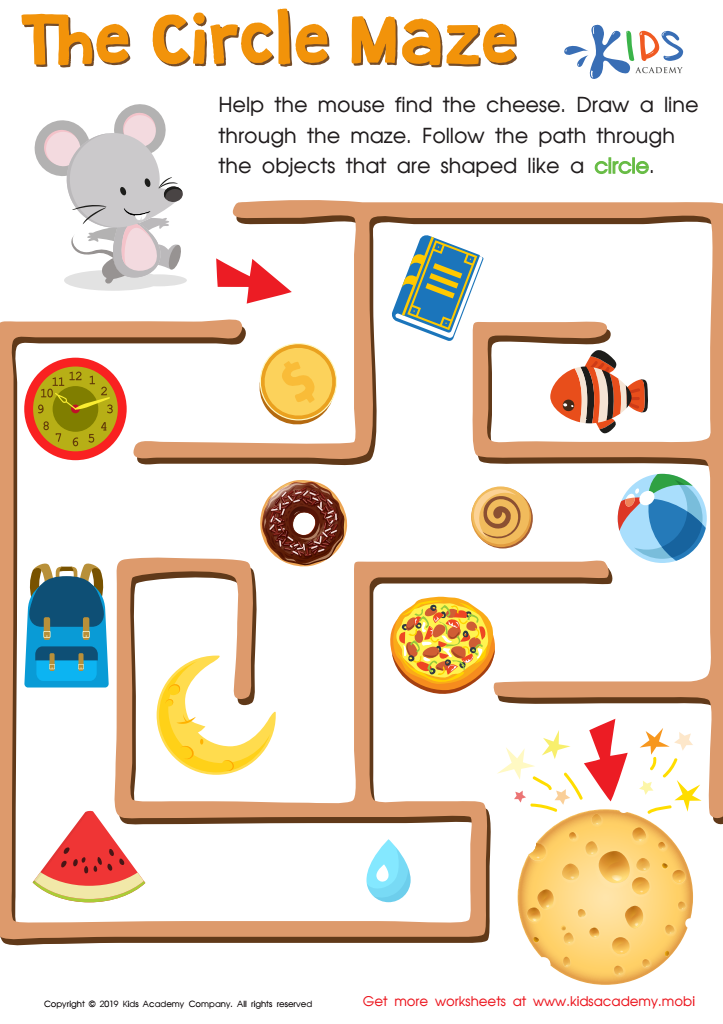
The Circle Maze Worksheet

The Circle Maze Worksheet

Kids can have fun learning shapes with this maze worksheet. They can help the mouse find its cheese by tracing the path of a circle through the maze. This printable is great for classroom learning or as an activity at home.
The Circle Maze Worksheet
Worksheet
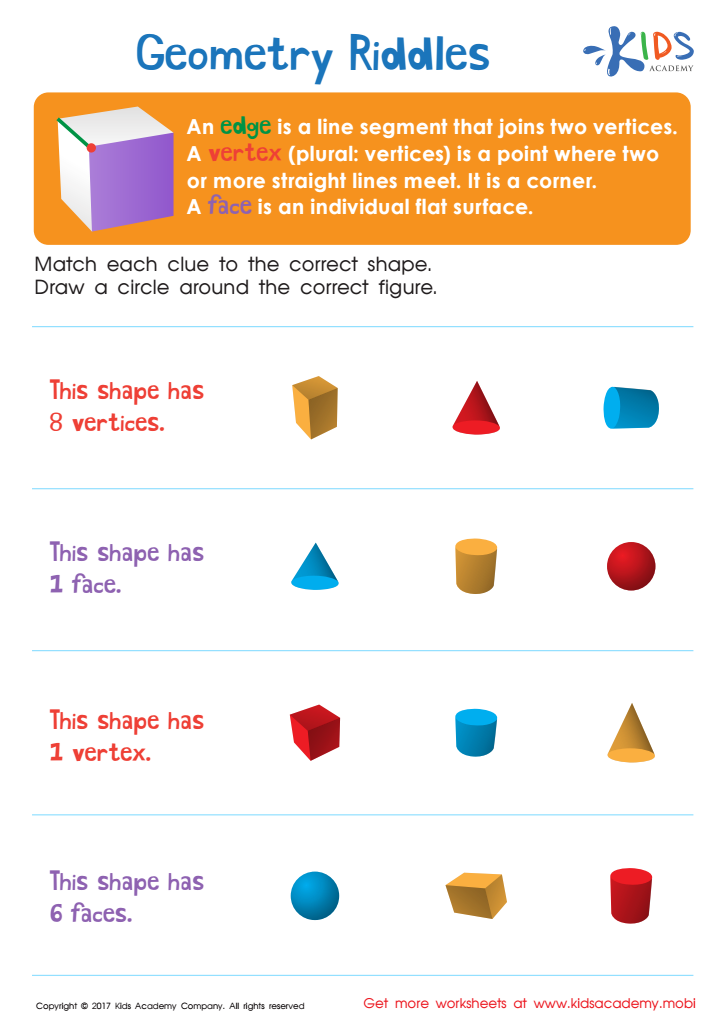
Geometry riddles worksheet

Geometry Riddles Printable

Review geometry terms with your child using this challenging worksheet of tricky riddles. Identifying and counting vertices, edges, and faces of shapes becomes fun as they solve the riddles!
Geometry Riddles Printable
Worksheet


Logical reasoning in geometry is a crucial component of early education for children aged 3-9 for several reasons. First, it lays the groundwork for critical thinking skills. Engaging with geometric concepts helps children learn how to analyze relationships between shapes, colors, and spatial orientation, fostering their ability to reason and solve problems in broader contexts.

Secondly, understanding geometry supports cognitive development. Activities like recognizing shapes, manipulating objects, and engaging in pattern recognition challenge kids to think abstractly, enhancing their overall intellectual growth. These skills are foundational for subjects like mathematics and science, which they will encounter later in their education.

Moreover, occupational skills such as visualization, organization, and attention to detail are nurtured through geometry. Early exposure helps build confidence in math-related tasks, reducing anxiety as they progress. For parents and teachers, promoting logical reasoning and geometric reasoning not only enriches classroom and home experiences but also prepares children for everyday situations—like planning, spatial awareness, and even art.

In summary, fostering logical reasoning in geometry equips children with essential skills for academic success and everyday problem-solving, enabling them to thrive in an increasingly complex world.