Spatial Orientation Geometry Worksheets for Ages 3-9
3 filtered results
-
From - To
Explore our engaging Spatial Orientation Geometry Worksheets designed for children aged 3 to 9! These worksheets provide a fun and interactive way for young learners to develop essential spatial awareness and geometric skills. With a variety of activities featuring shapes, angles, and positional vocabulary, children can enhance their understanding of how objects relate to one another in space. Suitable for homes and classrooms, our worksheets encourage critical thinking and promote cognitive development while keeping learning enjoyable. Perfect for educators and parents alike, these resources help set the foundation for future mathematical success. Dive into a world of geometry with Kids Academy today!
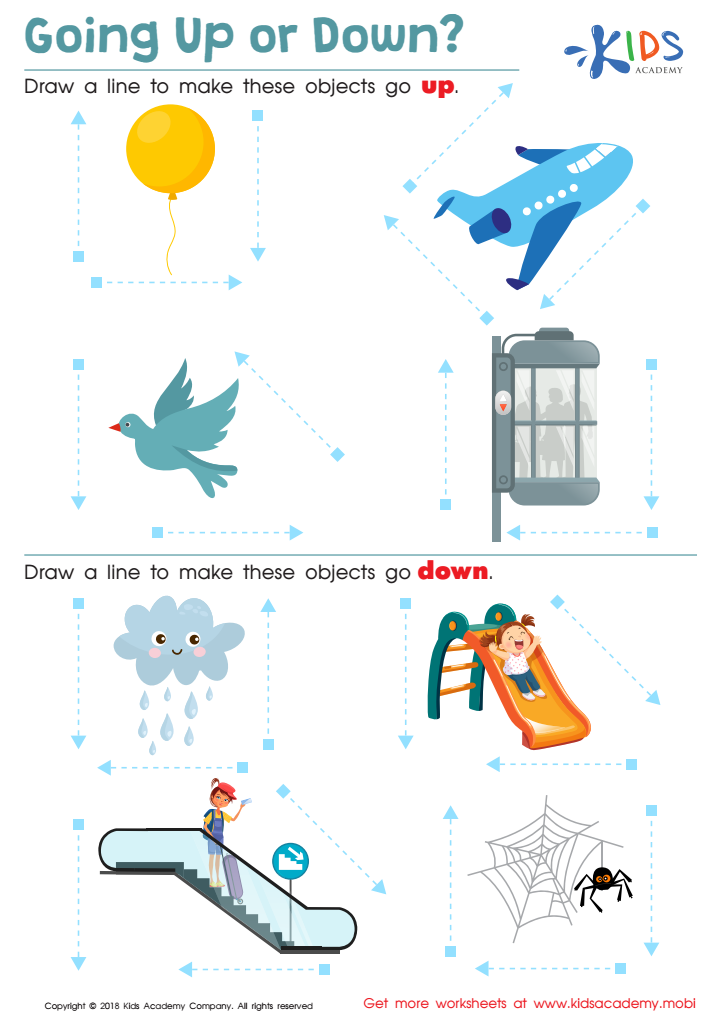
Going up or Down? Worksheet
 Assign to My Students











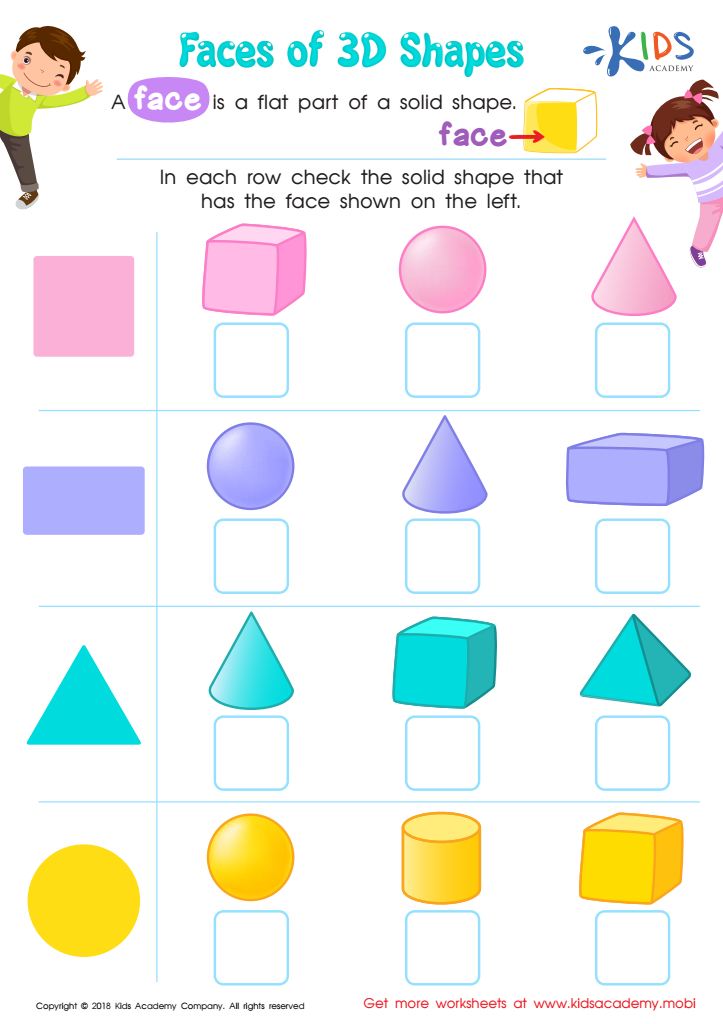
Faces of 3D Shapes Worksheet
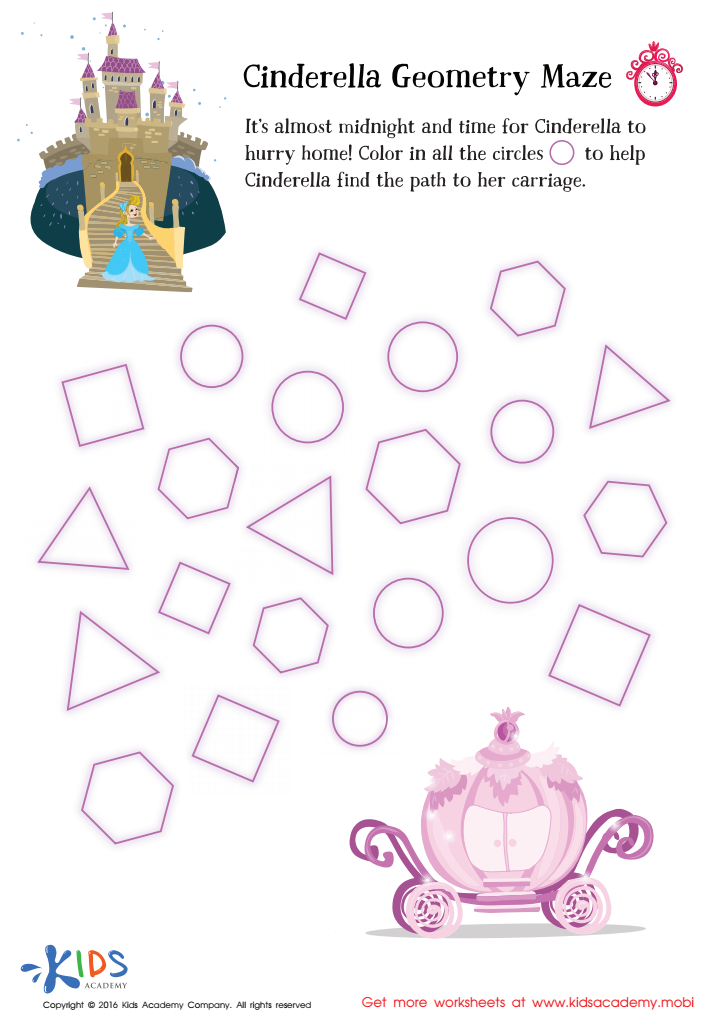
Cinderella Geometry Maze Worksheet








Spatial orientation geometry is a foundational aspect of early childhood education, significantly influencing cognitive development for children aged 3-9. Understanding spatial relationships helps children navigate their surroundings, improving their ability to interpret and interact with the world. When parents and teachers nurture this aspect of learning, they empower children with essential skills in problem-solving and critical thinking.
Engagement with spatial concepts lays the groundwork for future success in mathematics and science. Early experiences with shapes, patterns, and sizes encourage children to visualize spatial relationships, fostering creativity and innovation. As children learn to understand directions, distances, and locations, they enhance their ability to communicate ideas effectively and collaborate with others.
Moreover, spatial awareness adds to children's personal safety—helping them recognize their environments and avoid potential dangers. Encouraging activities such as building with blocks, playing with puzzles, or navigating obstacle courses not only supports spatial orientation but also promotes social interactions and physical coordination.
In conclusion, attention to spatial orientation geometry in early childhood empowers children with lifelong skills, enriching their academic paths and everyday experiences while fostering a sense of confidence in their capabilities. Parents and teachers play a pivotal role in igniting this profound learning journey.








