Understanding area Geometry Worksheets for Ages 3-9
3 filtered results
-
From - To
Explore our engaging "Understanding Area Geometry Worksheets" designed specifically for children aged 3-9! These interactive resources help young learners grasp the concept of area through colorful visuals and hands-on activities. Our worksheets introduce foundational geometry skills in a fun and age-appropriate manner, fostering early math comprehension. Kids will enjoy measuring, comparing, and calculating areas using various shapes, enhancing their spatial awareness and problem-solving abilities. These worksheets promote a love for learning while building essential skills. Perfect for teachers and parents looking to enrich math education, our worksheets offer an exciting way for children to explore the world of geometry!
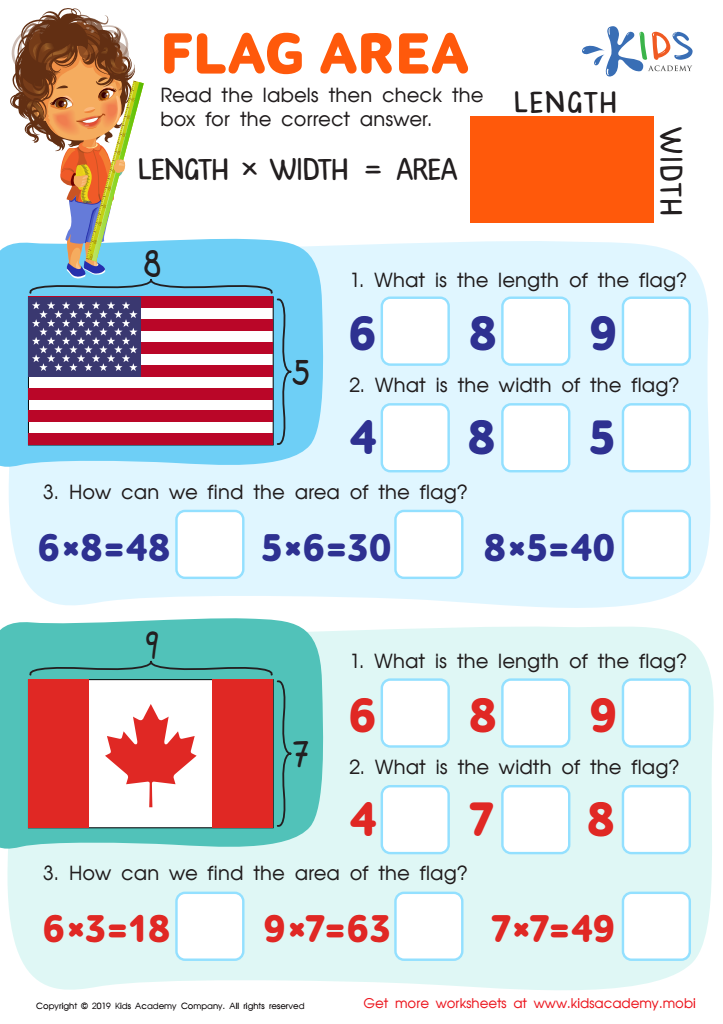
Flag Area Worksheet
 Assign to My Students











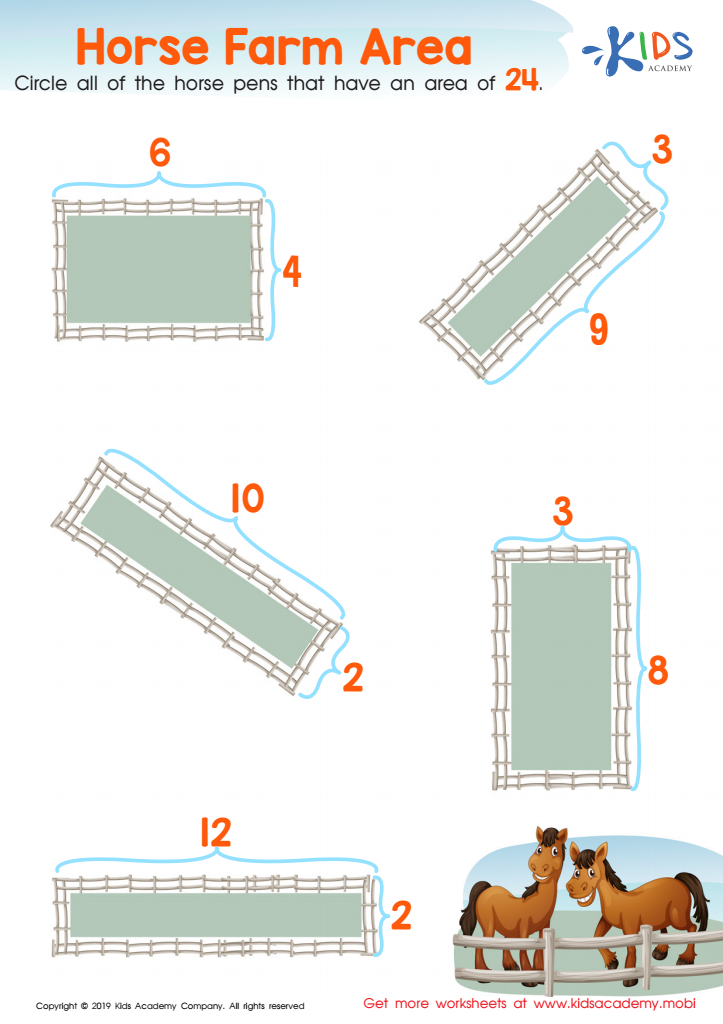
Horse Farm Area Worksheet
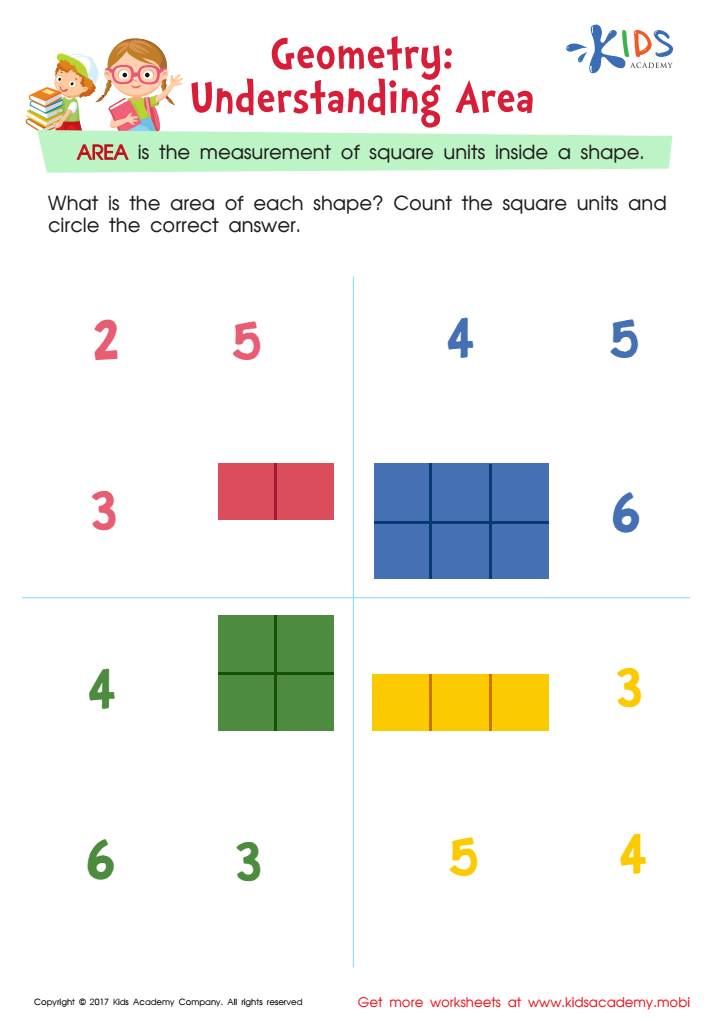
Understanding Area Worksheet








Understanding area and geometry is crucial for children aged 3-9 because it lays the foundation for their spatial awareness and mathematical skills. At this stage, children are naturally curious about the world around them, and geometry allows them to explore this curiosity in a structured way. By engaging with concepts such as shapes and areas, children can enhance their problem-solving abilities, improve their critical thinking, and acquire essential skills they will utilize in daily life.
Incorporating area and geometry into early education helps children visualize and manipulate objects, fostering a deeper understanding of sizes, comparisons, and measurements. These skills are not only essential for future math success but are also applicable in various domains, such as art, science, and engineering.
Moreover, teaching geometry through playful methods, such as puzzles and hands-on activities, makes learning enjoyable and relatable. Parents and teachers who prioritize these concepts are supporting cognitive development and preparing children for more advanced mathematical concepts they will encounter in later grades. Ultimately, promoting an early understanding of area and geometry equips children with the tools to navigate and interpret their environment confidently.








