Visual Learning Geometry Worksheets for Ages 3-9
5 filtered results
-
From - To
Discover our engaging Visual Learning Geometry Worksheets designed specifically for children ages 3-9! These interactive resources make learning geometry fun and easy, utilizing colorful visuals and shapes to captivate young learners. Our worksheets cover essential concepts such as shape recognition, spatial awareness, and basic geometric principles, fostering a strong foundation in math. Ideal for both classroom and home use, these materials support visual learners by integrating images and diagrams that enhance understanding. Encourage creativity and critical thinking as children explore the world of geometry through playful activities designed to boost confidence and skill development. Start your child's math journey today!
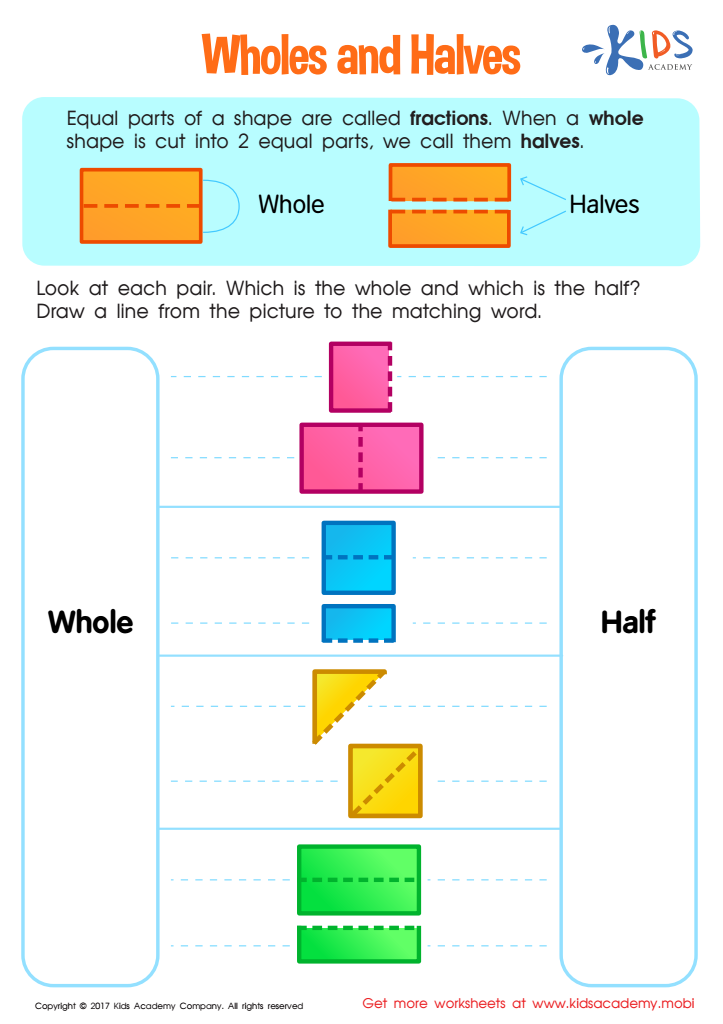
Wholes and Halves Worksheet
 Assign to My Students











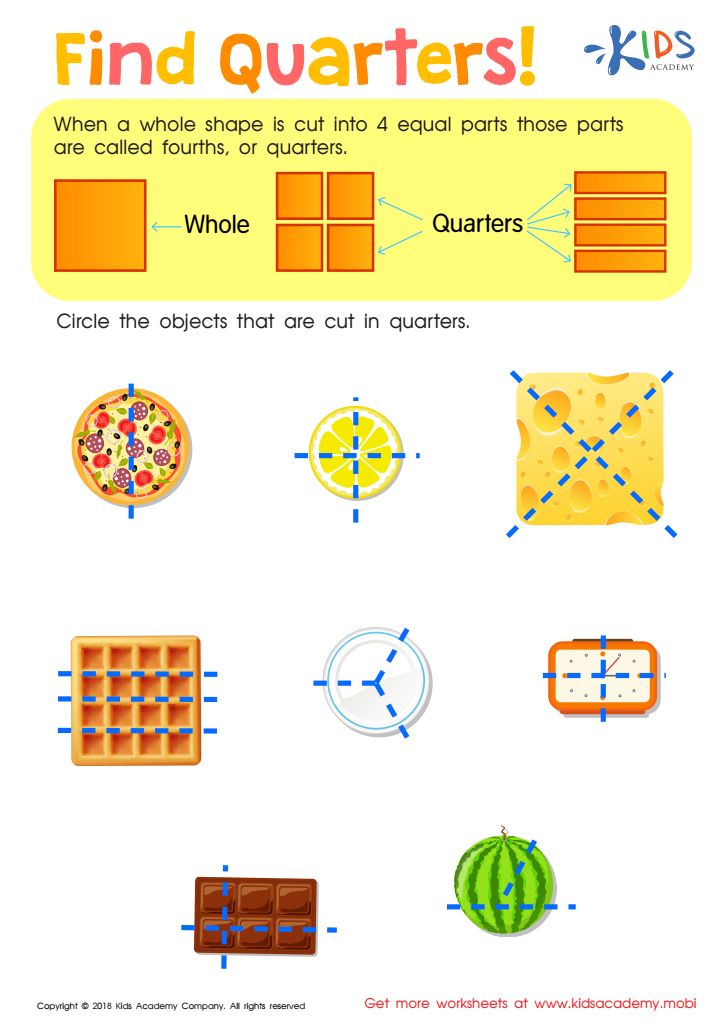
Find Quarters Worksheet
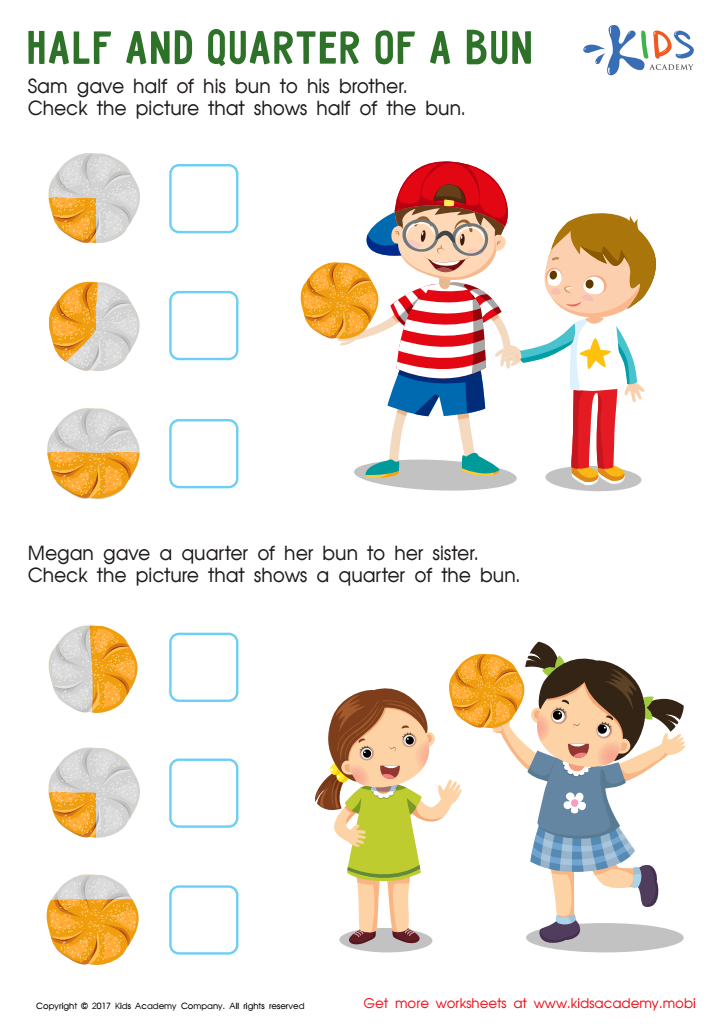
Half and Quarter of a Bun Worksheet
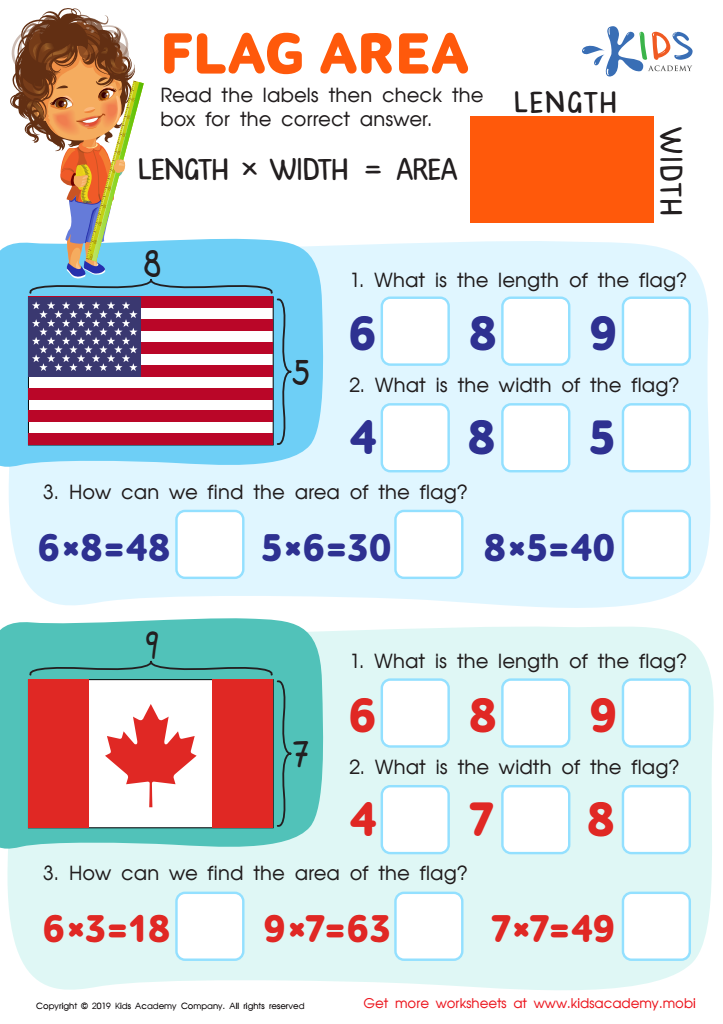
Flag Area Worksheet
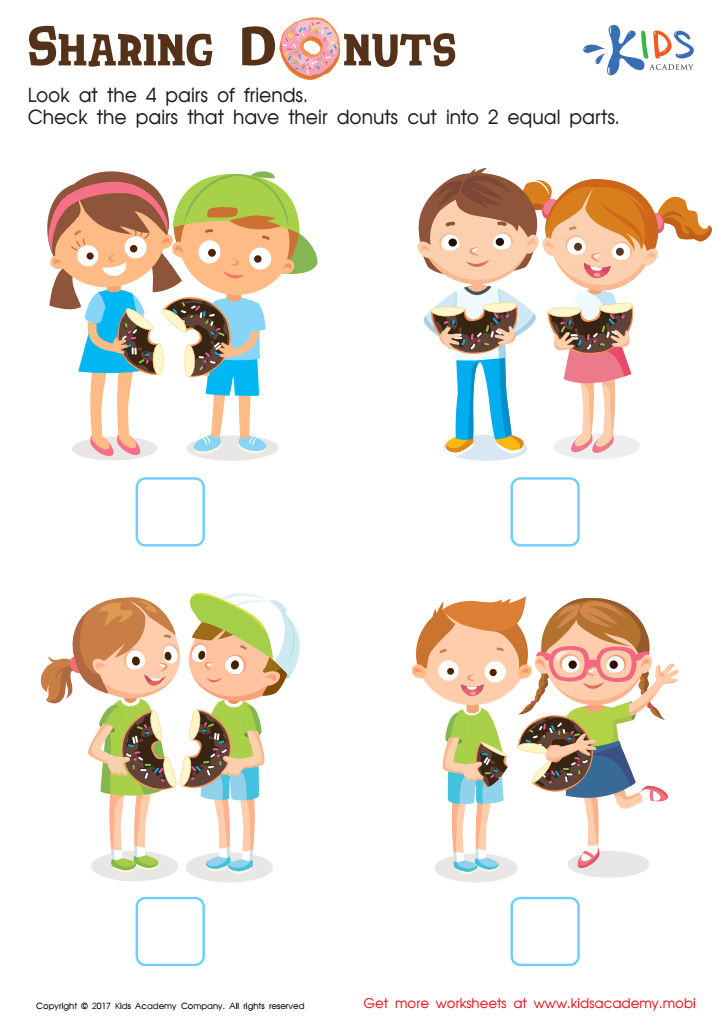
Sharing Donuts Worksheet








Visual learning geometry is crucial for children aged 3-9 as it lays the foundation for critical thinking and problem-solving skills. At this stage, children's cognitive abilities are rapidly developing, and introducing them to geometric concepts through visual means enhances their understanding and retention. Engaging with shapes, patterns, and spatial awareness using visual tools fosters their ability to recognize relationships and manipulate objects in their environment.
Parents and teachers should prioritize visual learning geometry because it encourages exploration and creativity. Tools like puzzles, blocks, and drawing activities not only make learning enjoyable but also enhance fine motor skills. As children interact with visual elements, they develop confidence in their abilities, laying the groundwork for more complex mathematical concepts in later years.
Moreover, visual learning caters to diverse learning styles, ensuring that all children can grasp geometrical ideas effectively. Incorporating these concepts early on helps demystify mathematics, shifting perceptions from fear to curiosity.
By engaging in visual learning geometry, parents and teachers empower young learners to connect shapes with the world around them, ultimately cultivating a love for math and an appreciation for its relevance in daily life. This foundational skill set will serve them well in both academic pursuits and real-world applications.








