
Vocabulary expansion Geometry Worksheets for Ages 3-9
3 filtered results
Difficulty Level
Grade
Age
-
From - To
Subject
Activity
Standards
Unlock the world of geometry with our engaging Vocabulary Expansion Geometry Worksheets designed for children ages 3-9! These interactive worksheets are perfect for young learners to explore essential geometric terms and concepts in a fun and captivating way. Each worksheet promotes vocabulary growth by presenting colorful visuals and hands-on activities that make learning exciting. From identifying shapes to understanding spatial relationships, these resources foster crucial math skills while expanding language comprehension. Perfect for parents and teachers alike, our worksheets provide a solid foundation in geometry, ensuring kids build confidence and competence in their early math journey. Start enhancing their vocabulary today!
Favorites
With answer key
Interactive
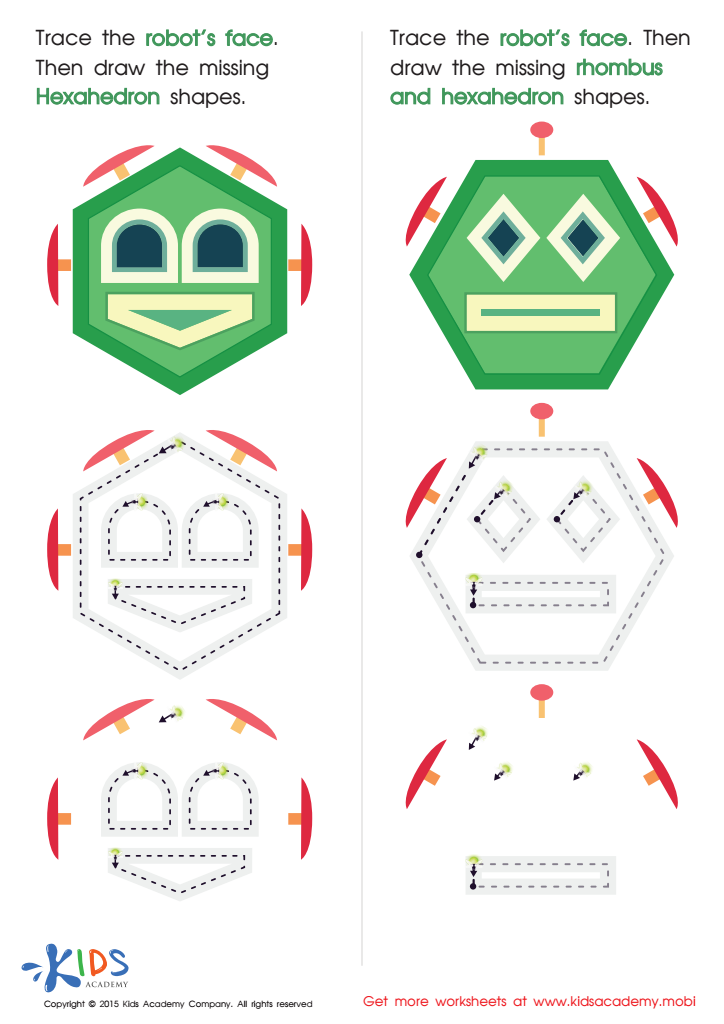
Practice Drawing Hexahedrons And a Rhombus Worksheet
Trace the Robot's face, draw hexahedron and rhombus shapes, then trace again. Our tracing shapes worksheets make it easy for kids to learn geometry. Get more materials from Kids Academy to practice all the shapes.
 Assign to My Students
Practice Drawing Hexahedrons And a Rhombus Worksheet
Worksheet











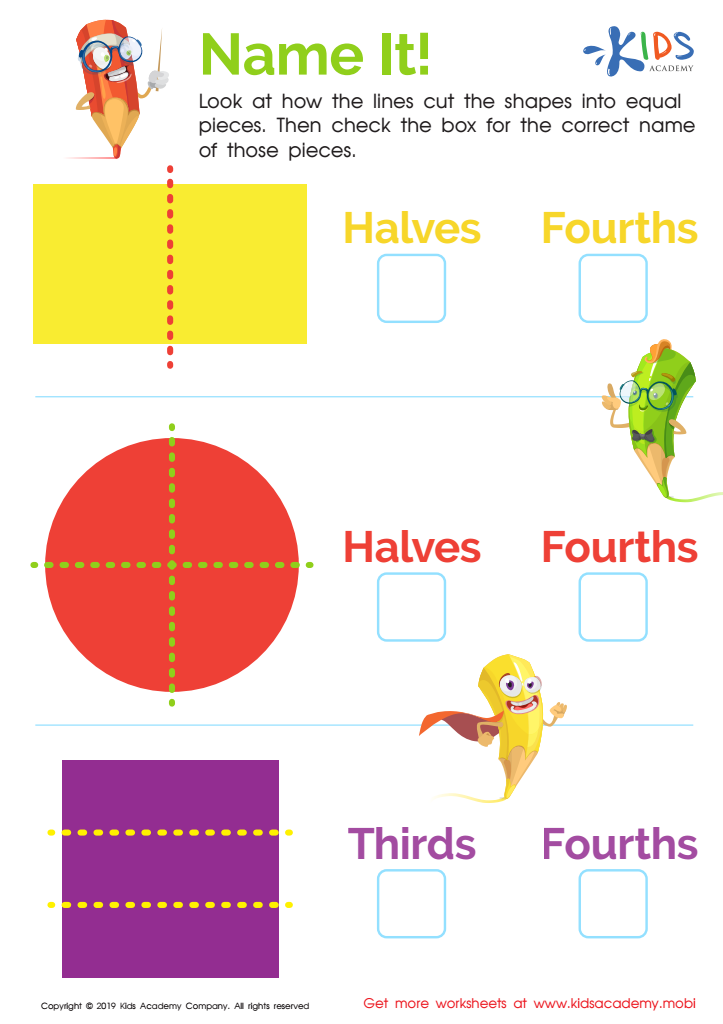
Name It! Worksheet
When teaching fractions, help children understand that they are groups divided into equal pieces. Introduce denominators and numerators with pictures to illustrate. Use this free fraction worksheet with colourful shapes divided into halves, thirds, and fourths to help them identify the fractions.
Name It! Worksheet
Worksheet
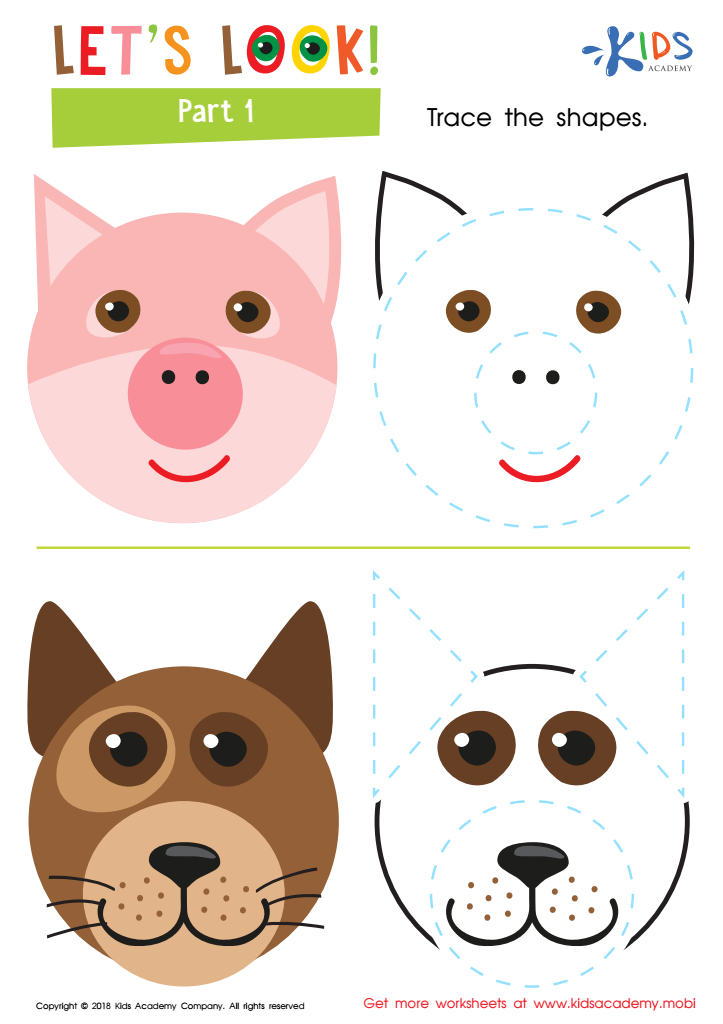
Let's Look! Part 1 Worksheet
If your kids love animals or have a pet at home, they'll get a kick out of this tracing worksheet. It tests their ability to imitate shapes, starting with a pig and followed by a dog. Beside each of these pictures is a space for tracing the shapes. Unleash your child's creativity and see what they come up with!
Let's Look! Part 1 Worksheet
Worksheet
Join Kids Academy for Free
Who is primarily going to use this learning content?








Vocabulary expansion in geometry for children aged 3-9 is crucial for several reasons. First, at this early developmental stage, children are naturally curious and rapidly absorbing language and concepts. Introducing geometric vocabulary not only enriches their language skills but also helps them articulate spatial relationships, shapes, and patterns they encounter in their world.
Understanding geometric terms like “angle,” “triangle,” “parallel,” and “symmetry” lays the groundwork for more complex mathematical concepts later. This foundational vocabulary supports problem-solving skills and critical thinking as children learn to describe, analyze, and navigate their environments.
Moreover, engaging with geometry promotes cognitive development and helps enhance visual-spatial skills, which are essential for various academic disciplines, including science and art. Parents and educators can create interactive learning experiences through games, puzzles, and discussions that not only teach children terms but also stimulate their imagination.
Lastly, fostering a strong geometric vocabulary can boost children's confidence in mathematics, making them more eager to engage with the subject. A solid comprehension of geometric language sets the stage for lifelong learning and helps children see the connections between math and everyday life, promoting a holistic educational approach.








