Problem-solving practice Numbers Worksheets for Ages 3-9
3 filtered results
-
From - To
Enhance your child's math skills with our Problem-Solving Practice Numbers Worksheets, designed specifically for ages 3-9. These fun and engaging worksheets help young learners to develop critical thinking and problem-solving abilities through various age-appropriate exercises. From simple counting and number recognition to more complex addition and subtraction challenges, each worksheet is crafted to promote concentration and analytical skills. Perfect for both home and classroom settings, our resources make learning enjoyable and effective. Give your child the essential tools to excel in math and build a strong foundation for future academic success.
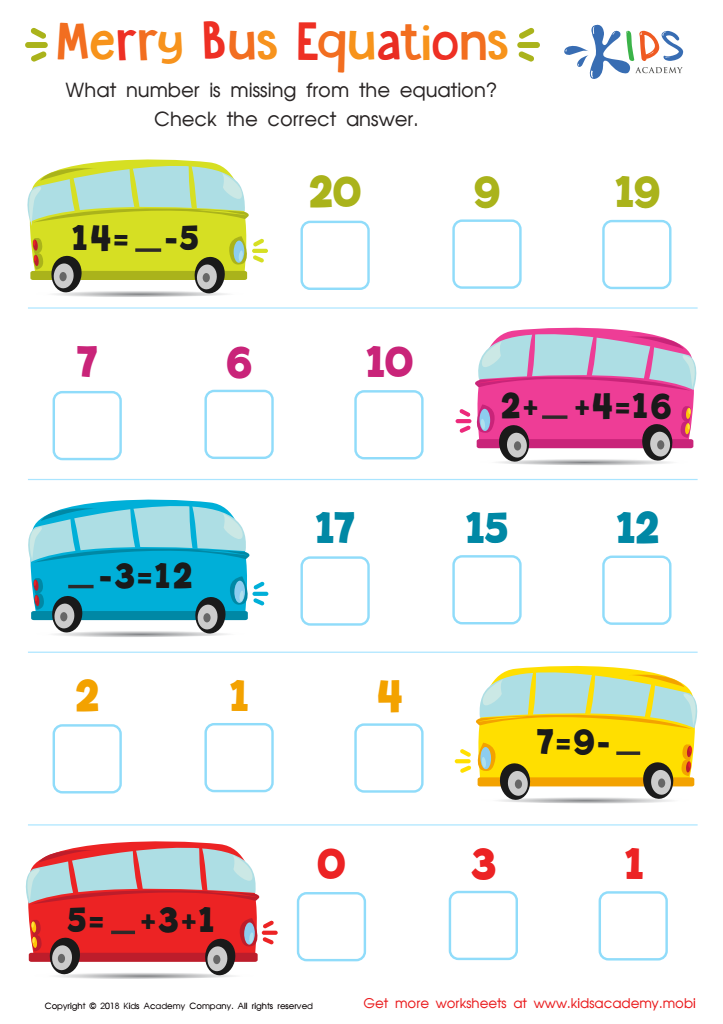
Merry Bus Equations Worksheet
 Assign to My Students
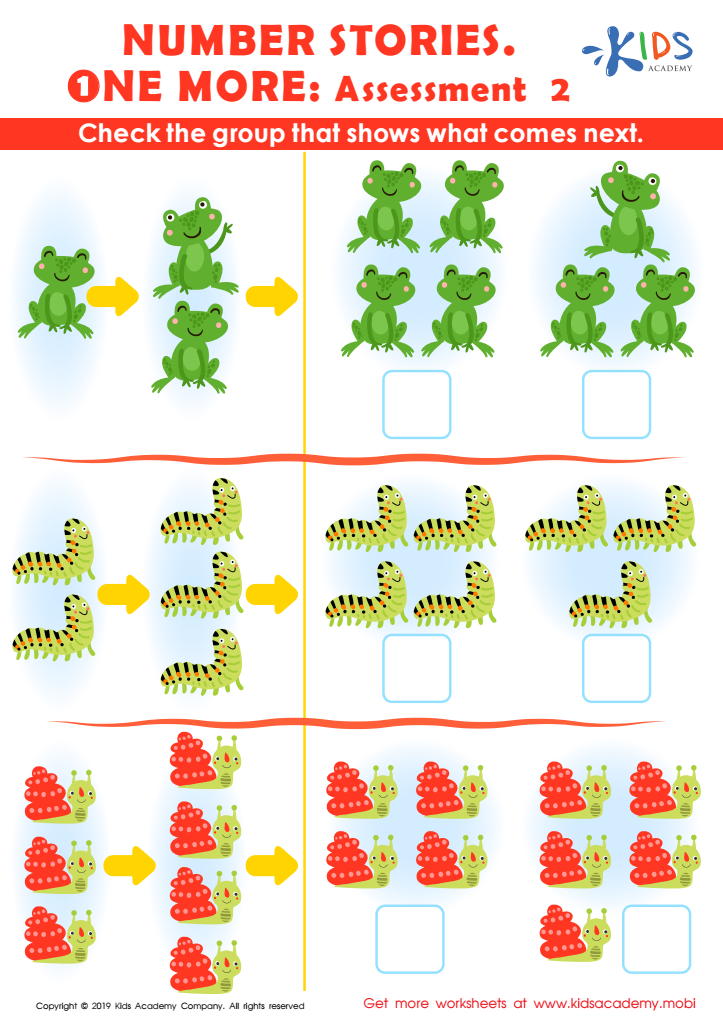
Number Stories One More – Assessment 2 Worksheet
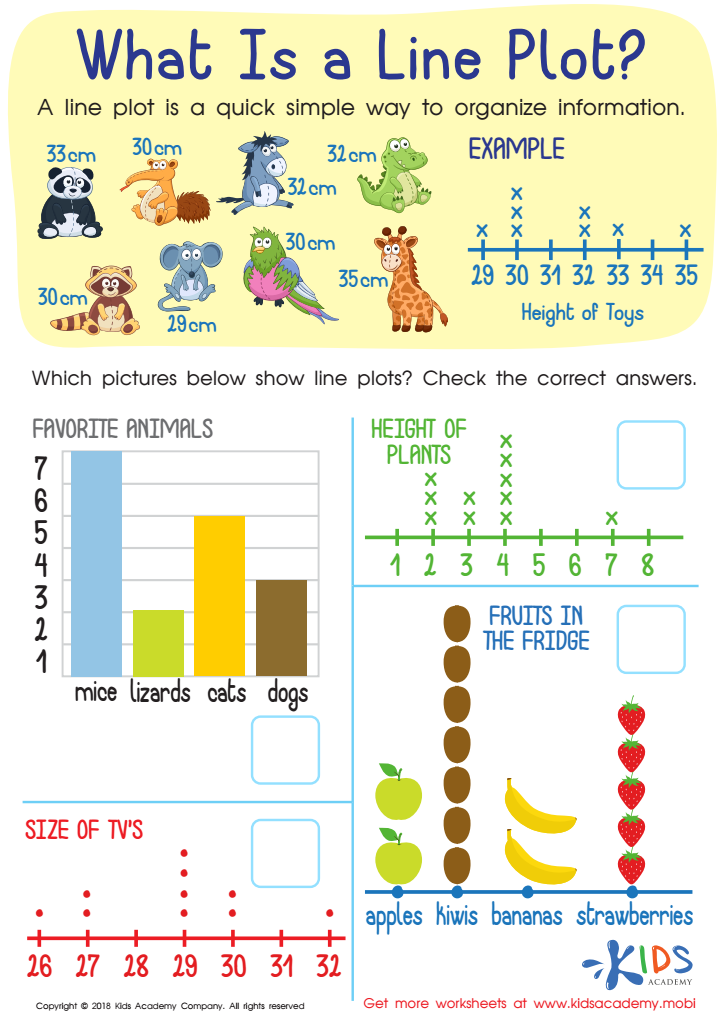
What Is a Line Plot? Worksheet








Parents and teachers should prioritize problem-solving practice with numbers for children ages 3-9 because these skills lay the foundation for critical thinking, resilience, and future academic success. During these formative years, children's brains are particularly receptive to new concepts. Engaging with numbers through problem-solving not only strengthens their mathematical abilities but also enhances their logical reasoning and cognitive development.
When children practice problem-solving with numbers, they learn to approach challenges methodically, think analytically, and develop strategies to find solutions. These skills are essential, not just for mathematics, but for everyday decision-making and future learning. Activities like counting, simple arithmetic, and visual puzzles introduce children to patterns and sequences, which are crucial building blocks for more complex math concepts they'll encounter later in their education.
Moreover, problem-solving practice fosters a growth mindset. Children learn that making mistakes is part of the process and that perseverance leads to improvement. This attitude is invaluable for overcoming academic and personal obstacles throughout life.
Incorporating problem-solving with numbers at an early age also promotes a positive attitude towards math, reducing anxiety and building confidence. As children see their skills grow, they are more likely to approach new challenges with enthusiasm and curiosity, setting the stage for lifelong learning and success.








