Sorting skills Numbers Worksheets for Ages 3-9
5 filtered results
-
From - To
Discover our engaging Sorting Skills Numbers Worksheets designed for children aged 3-9! These fun and interactive worksheets help young learners develop essential sorting abilities through numbers. Kids will enjoy categorizing and organizing different numerical values, enhancing their cognitive skills while building a strong mathematical foundation. Our resources are tailored to various skill levels, ensuring every child can learn at their own pace. With colorful visuals and age-appropriate activities, these worksheets make learning enjoyable and effective. Perfect for home or classroom use, our Sorting Skills Numbers Worksheets will boost your child's confidence and understanding of numbers. Start the sorting adventure today!
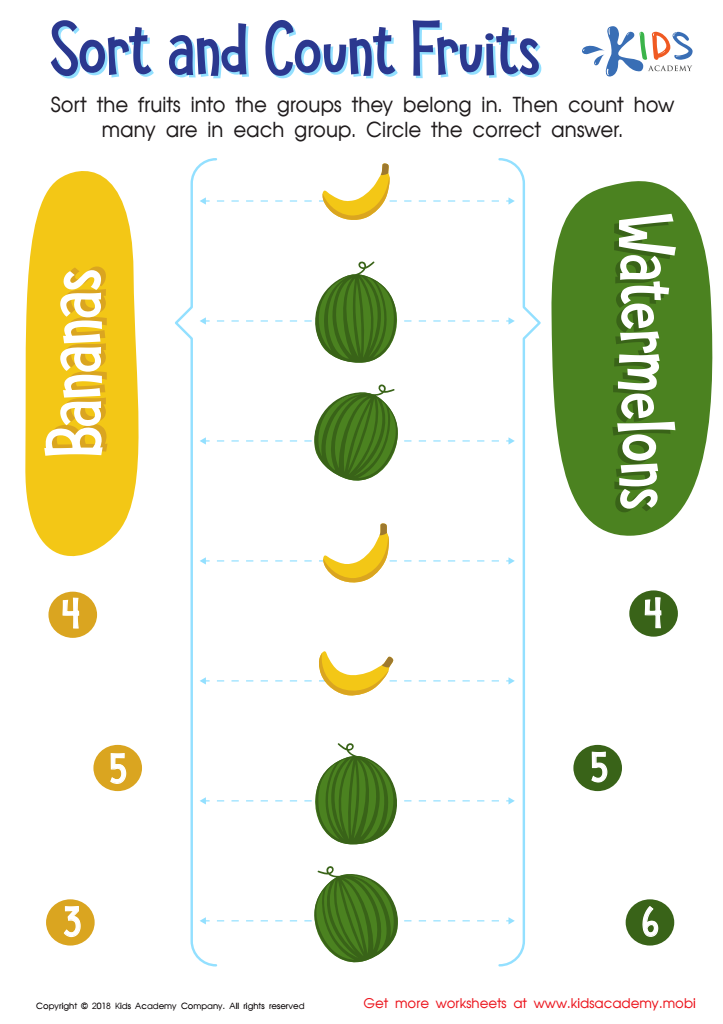
Sort and Count Fruits Worksheet
 Assign to My Students
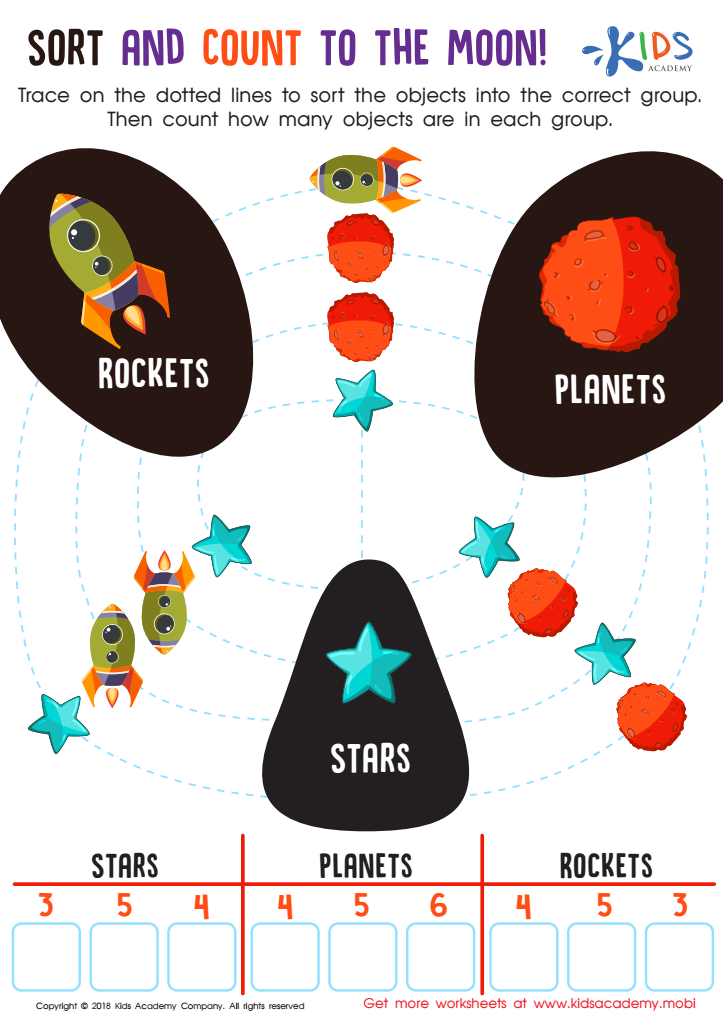
Sort and Count to the Moon Worksheet
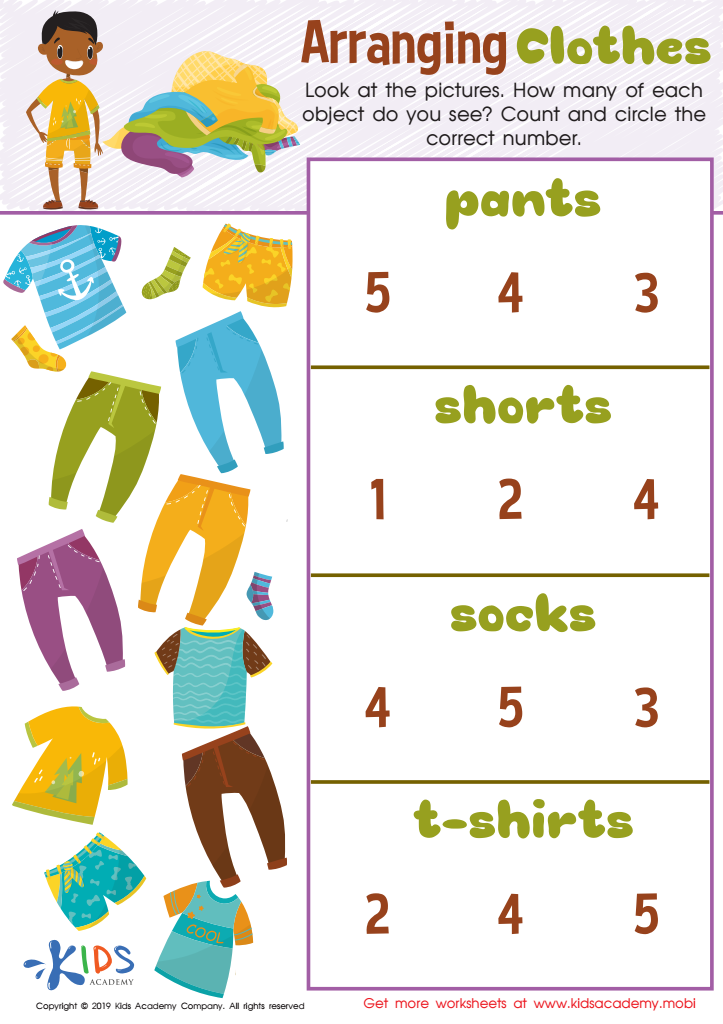
Arranging Clothes Worksheet
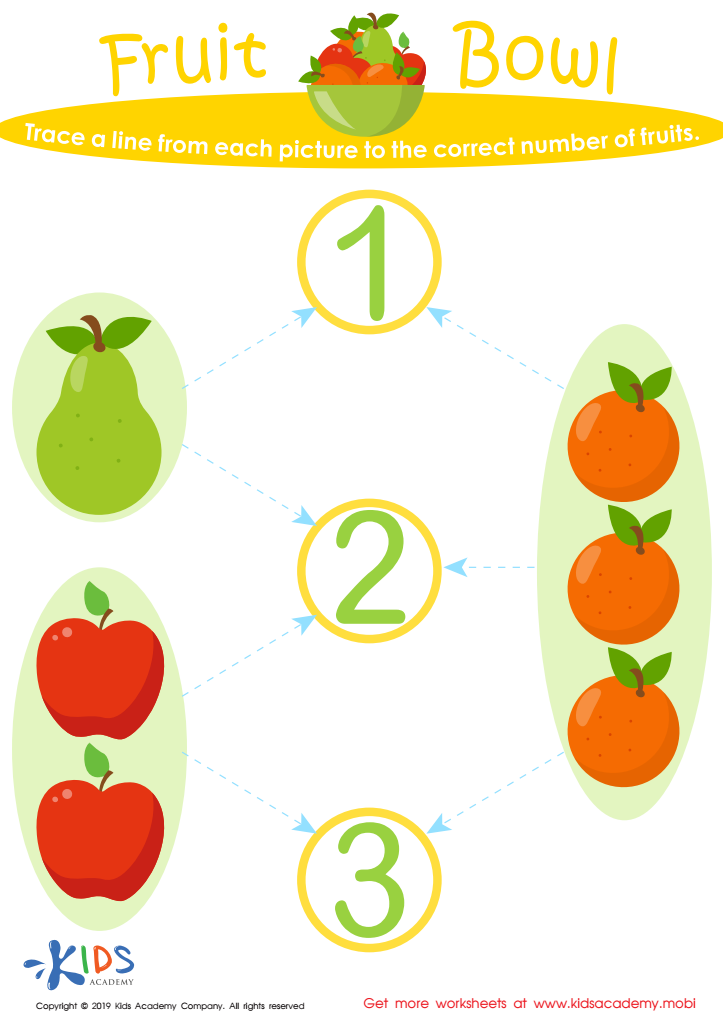
Fruit Bowl Worksheet
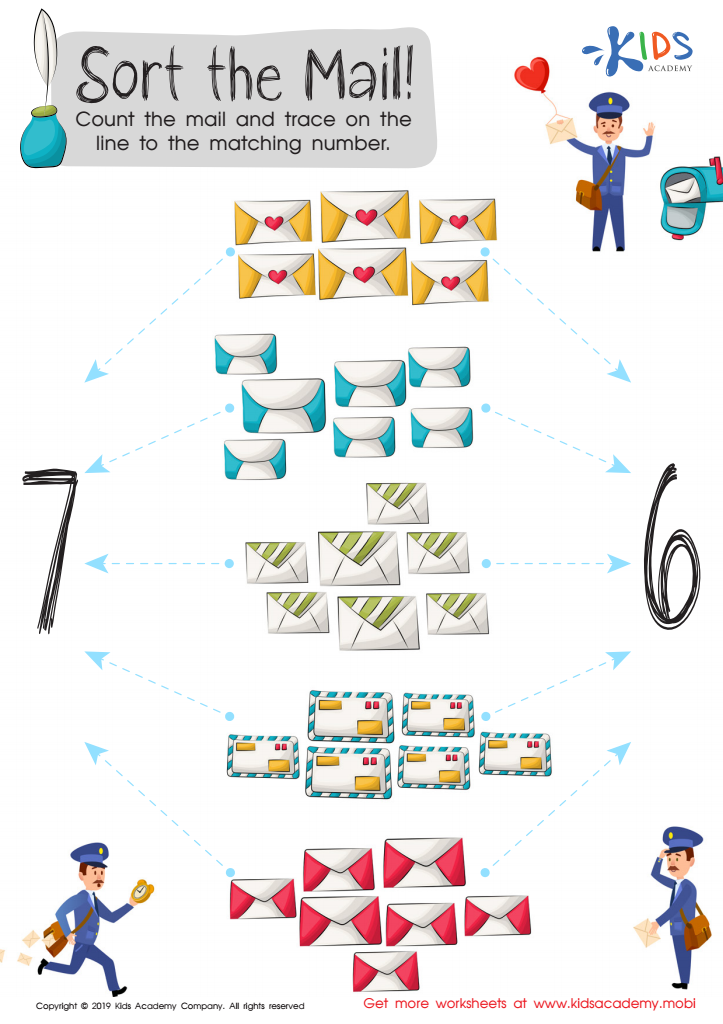
Sort the Mail Worksheet








Sorting skills in numbers are crucial for children aged 3-9, as they lay the foundation for critical mathematical concepts and cognitive development. During this formative stage, children are naturally curious about their environment and are eager to categorize and organize information. Teaching sorting skills helps them classify numbers, understand patterns, and develop essential logical thinking abilities.
Firstly, sorting familiarizes children with the concepts of quantity and number relationships, helping them grasp concepts such as more or less, which are fundamental in math. As children sort numbers by various attributes—like size, color, or amount—they also improve their ability to make comparisons and draw conclusions, which are vital skills for problem-solving.
Moreover, sorting activities often enhance fine motor skills and Boost their attention span. When children engage in hands-on sorting tasks, they develop patience and perseverance, traits that are important for lifelong learning. Additionally, these activities foster social skills when children work together, discussing strategies and sharing their observations, thus enhancing language development.
Incorporating sorting skills in early education not only prepares children academically but also equips them with critical thinking skills and social abilities essential for future success. Therefore, both parents and teachers must prioritize these activities in early learning environments.








