Spatial reasoning Numbers Worksheets for Ages 3-9
3 filtered results
-
From - To
Enhance your child's spatial reasoning skills with our engaging Numbers Worksheets designed for ages 3-9. These interactive worksheets provide fun activities to help young learners understand numerical concepts while developing essential spatial awareness. From identifying shapes to solving puzzles, our resources encourage critical thinking and problem-solving abilities. Perfect for homeschooling or classroom use, these worksheets cater to various learning styles. Invest in your child's education with our easy-to-use, printable activities that make learning numbers exciting! Explore our collection today and help your child build a strong foundation in mathematics while nurturing their spatial reasoning skills. Fun learning starts here!
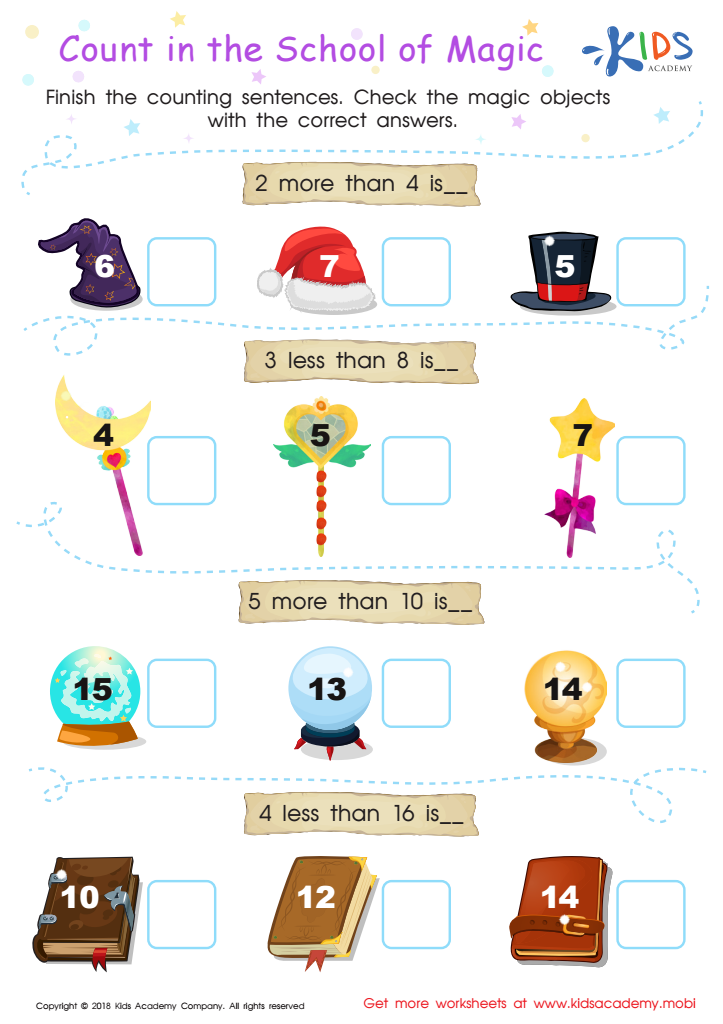
Count in the School of Magic Worksheet
 Assign to My Students
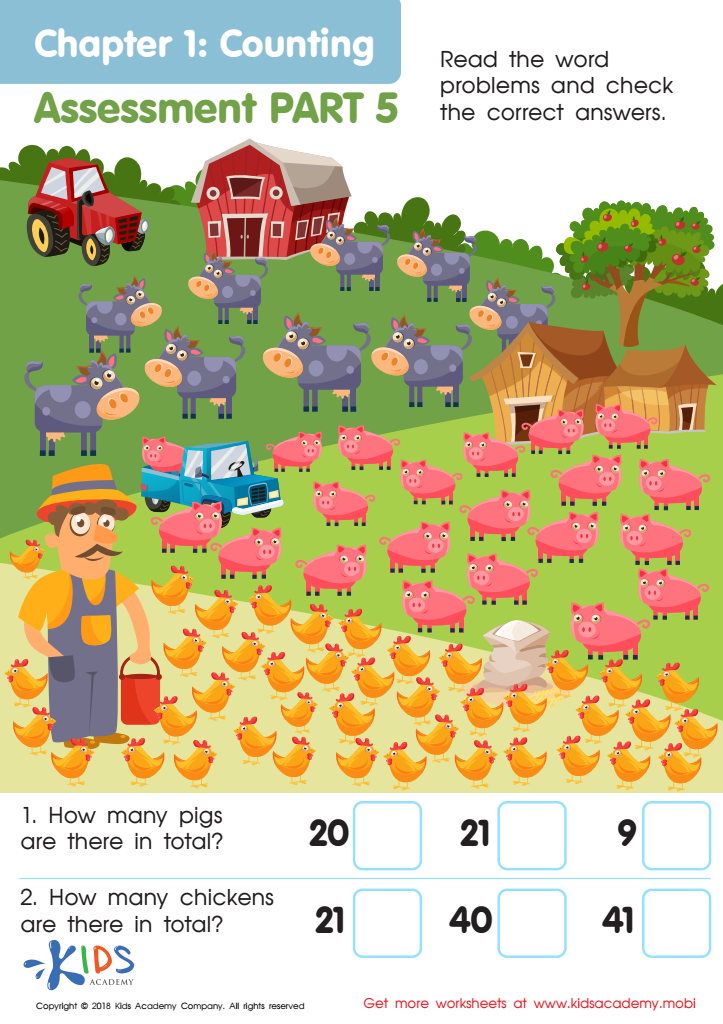
Counting: Assessment 5 Worksheet
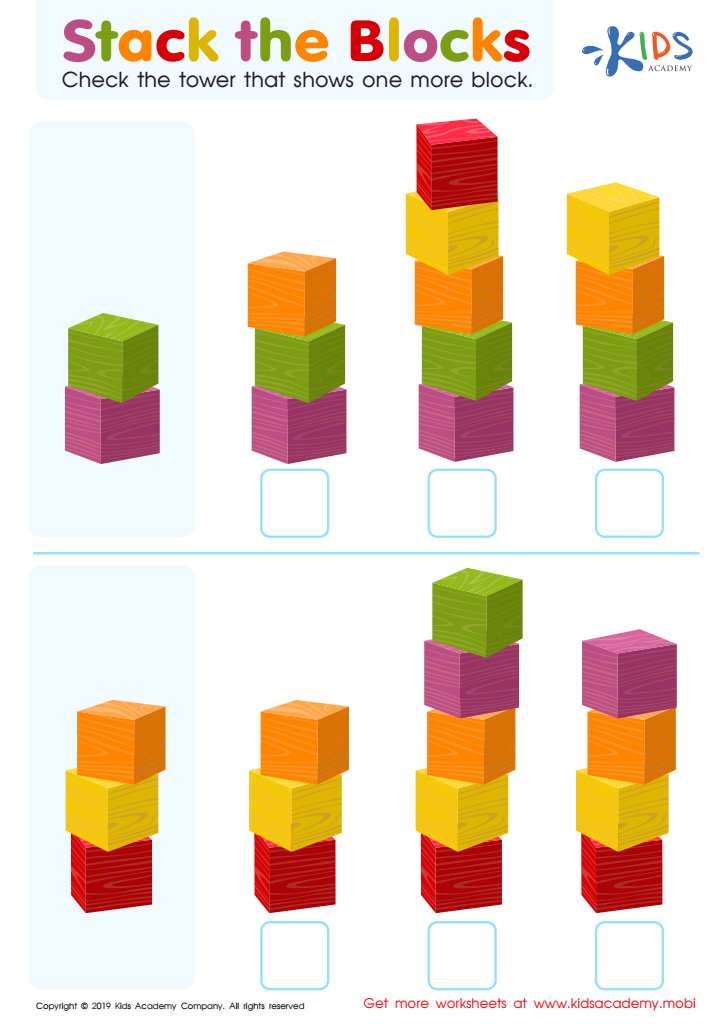
Stack the Blocks Worksheet








Spatial reasoning is a crucial cognitive skill that manifests during early childhood, intensifying between ages 3-9. This ability allows children to visualize and manipulate shapes, understand relationships between objects, and navigate their environments effectively. Parents and teachers should prioritize spatial reasoning as it lays the foundation for advanced mathematical skills, critical thinking, and problem-solving abilities.
Research shows a strong correlation between spatial reasoning and success in STEM (Science, Technology, Engineering, and Mathematics) subjects. As children learn to visualize 2D and 3D objects, they enhance their capacity to understand geometric concepts, measurement, and even basic arithmetic. For instance, recognizing patterns and spatial relationships contributes significantly to their ability to solve mathematical problems later in life.
Furthermore, spatial skills are integral to children's everyday experiences, from playing with blocks and puzzles to participating in sports. Engaging in activities that foster spatial awareness, such as drawing, constructing, and interactive games, can promote creativity and confidence. By focusing on spatial reasoning during these formative years, parents and teachers empower children to develop essential life skills that not only improve academic performance but also facilitate critical real-world applications in various fields.








