Addition of fractions Math Worksheets for Ages 3-9
3 filtered results
-
From - To
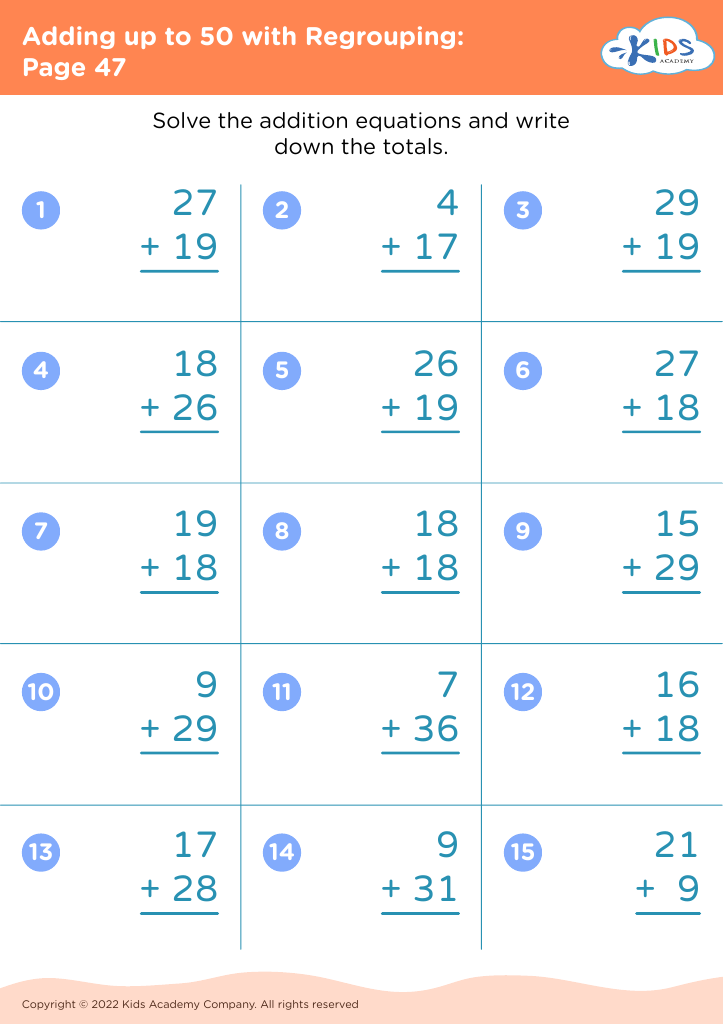
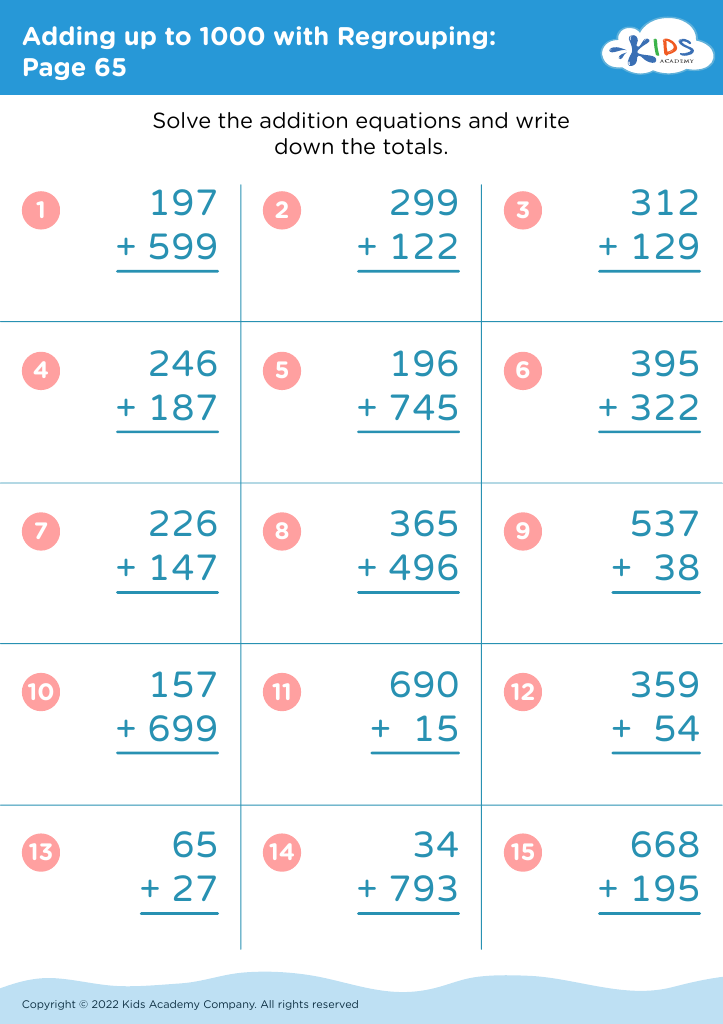
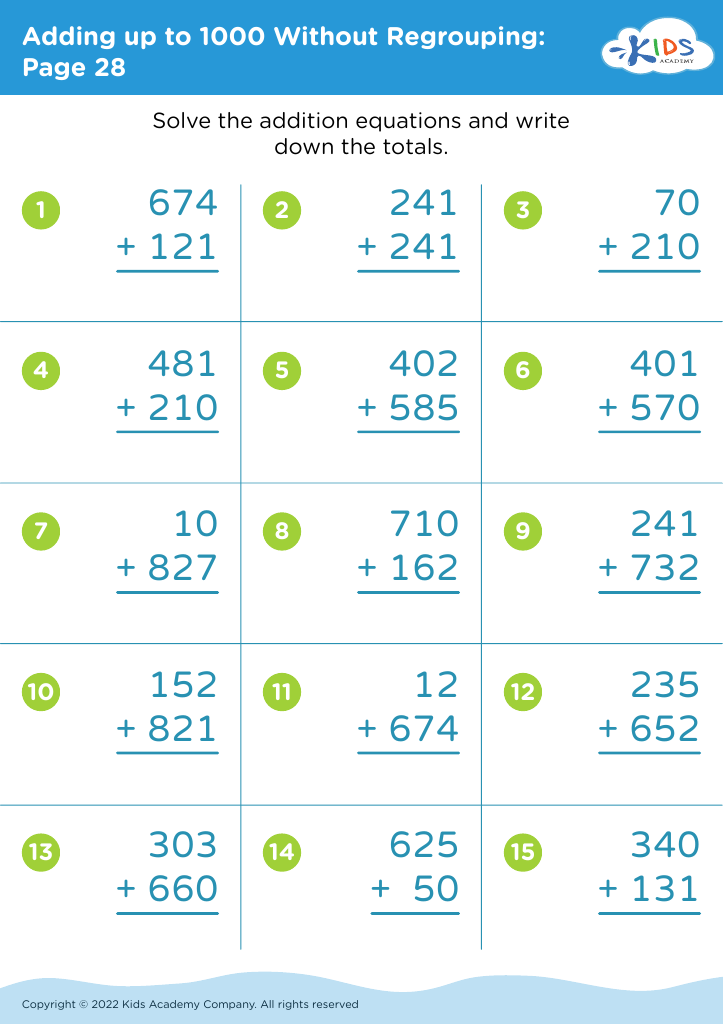
Discover our engaging "Addition of Fractions Math Worksheets" designed for children ages 3-9. Crafted by educators, these worksheets simplify fraction addition through vibrant visuals, fun activities, and step-by-step guidance. Perfect for home or classroom, each sheet reinforces fundamental concepts, building confidence and mastery in young learners. Tailored to different skill levels, they ensure a progressive learning experience, enhancing critical thinking and problem-solving skills. With these worksheets, your child can joyfully navigate the world of fractions and lay a strong mathematical foundation. Help your child succeed in math with our expertly designed fraction addition resources today!








Parents and teachers should care about the addition of fractions for children aged 3-9 because it forms a foundational element of mathematical literacy and problem-solving skills. During these early years, children are developing their understanding of numbers and how they relate to each other. Learning to add fractions not only builds upon basic arithmetic but also introduces concepts of parts and wholes, fostering a deeper understanding of proportional relationships.
Addition of fractions helps children grasp real-world applications, such as measuring ingredients in cooking or sharing items equally among friends, making math practical and relatable. Additionally, proficiency in fraction addition enhances their capability to comprehend more complex math concepts they will encounter in later grades, like algebra and geometry.
Introducing these concepts early, in an engaging and supportive way, can remove the intimidation often associated with fractions. This builds mathematical confidence and encourages a positive attitude toward future learning. Educators and parents partnering to reinforce this skill can provide consistent and diverse practice, ensuring children develop competency and flexibility in their mathematical thinking.
Overall, caring about and supporting the addition of fractions helps equip children with essential skills they will use throughout their academic journey and in everyday life, laying a robust groundwork for ongoing success in mathematics.








