Filters

111 filtered results

Clear all filters
Favorites
With answer key
Interactive

111 filtered results

Difficulty Level

Grade


Check out this FREE Trial Lesson on Math for age 3-9!

Writing Number Sentences for Addition Picture Problems

Favorites
With answer key
Interactive
  • 3-9
  • Animal recognition
  • Math
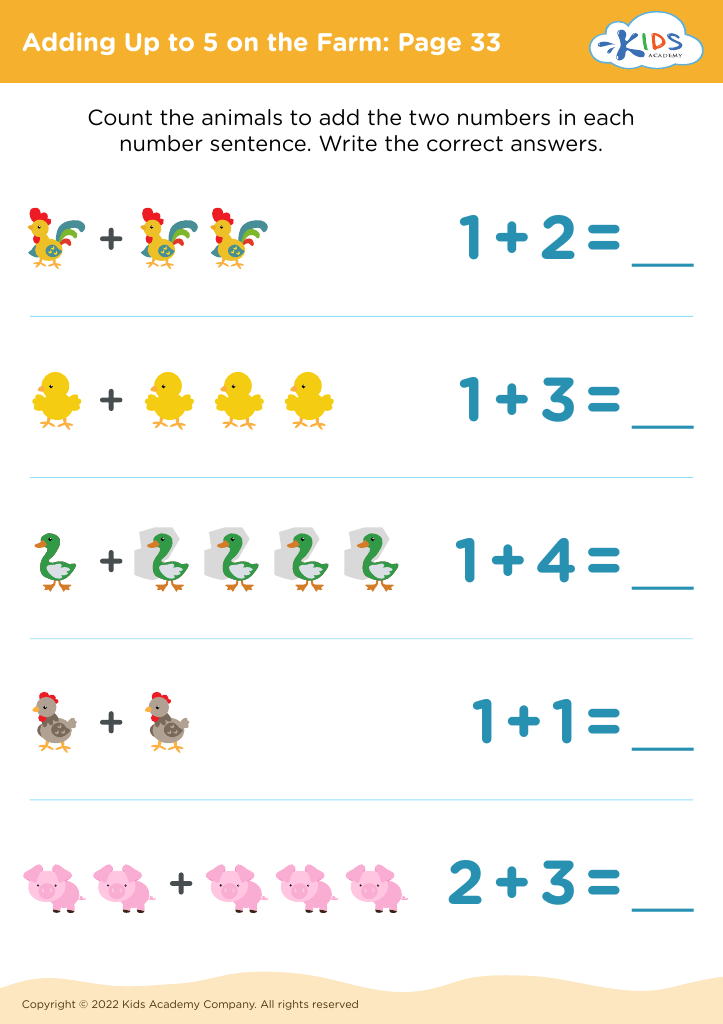
Adding Up to 5 on the Farm: Page 33
Worksheet
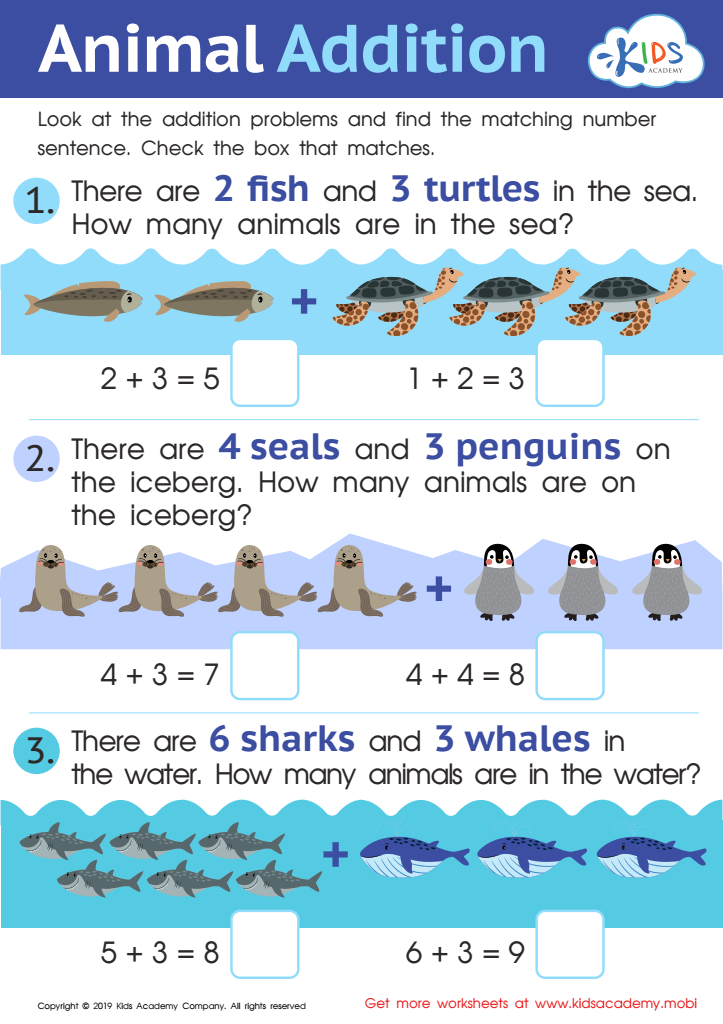
Animal Addition Worksheet

Animal Addition Worksheet

Get your kids learning addition and subtraction with this fun worksheet! Show them that solving equations can be enjoyable and help them match number sentences to the correct boxes. By doing this together, you'll create a positive learning experience that your kids won't forget.
Animal Addition Worksheet
Worksheet
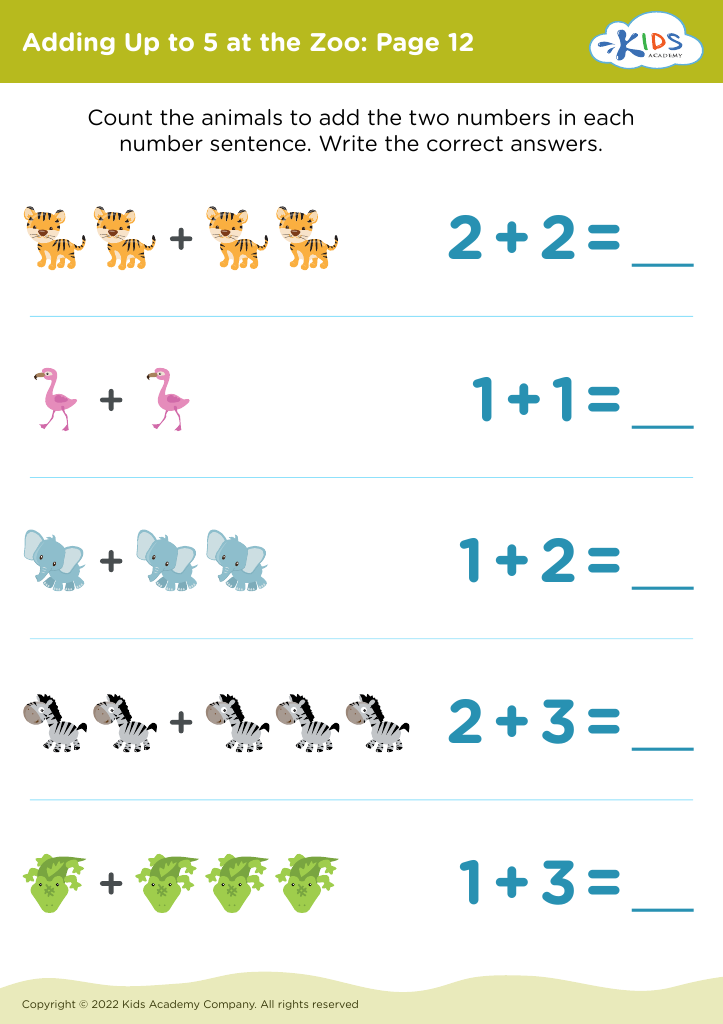
Adding Up to 5 at the Zoo: Page 12
Worksheet
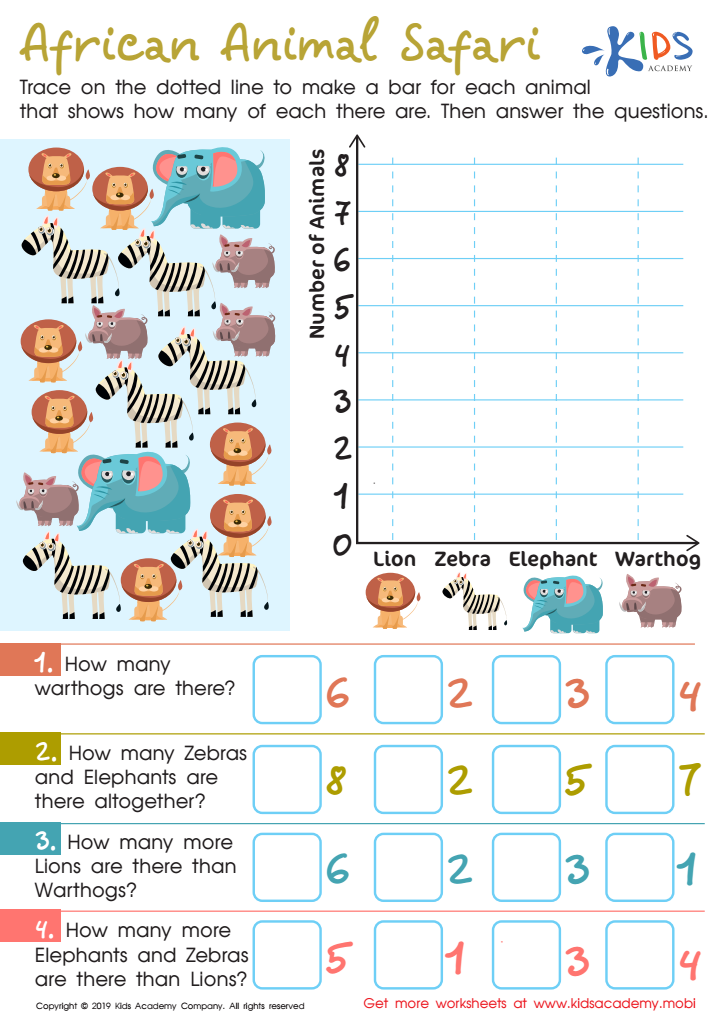
African Animal Safari Worksheet
African Animal Safari Worksheet
Help students learn geography and math, with this worksheet. Examine the graph and ask your students questions. Have them answer using the graph and addition/subtraction exercises. This can help them name continents, countries, and animals unique to each.
African Animal Safari Worksheet
Worksheet
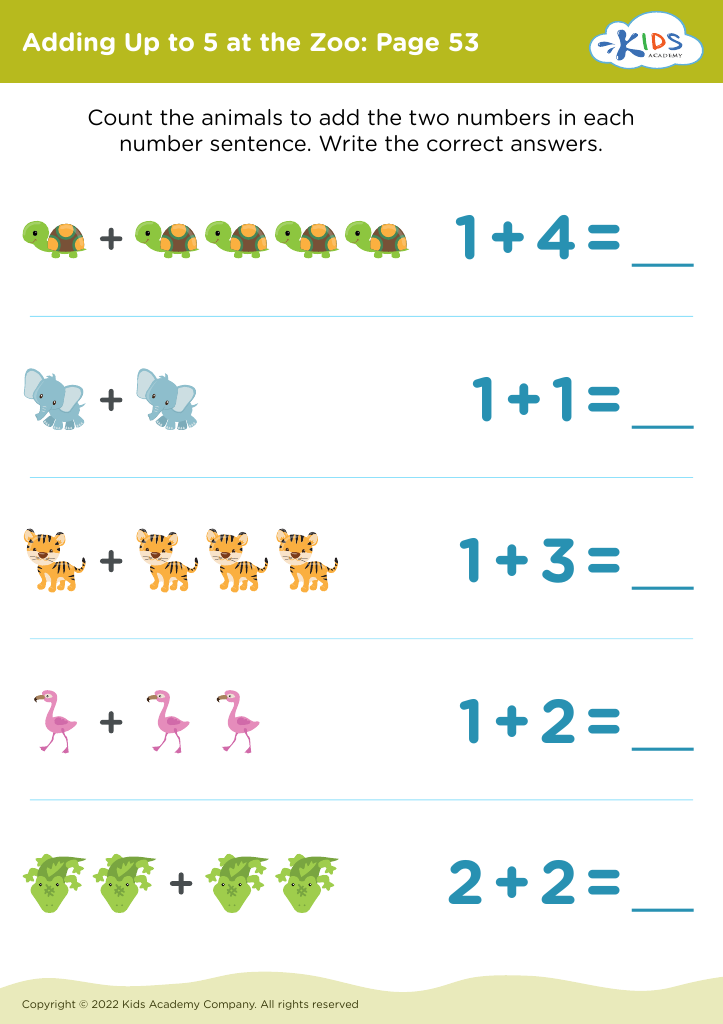
Adding Up to 5 at the Zoo: Page 53
Worksheet
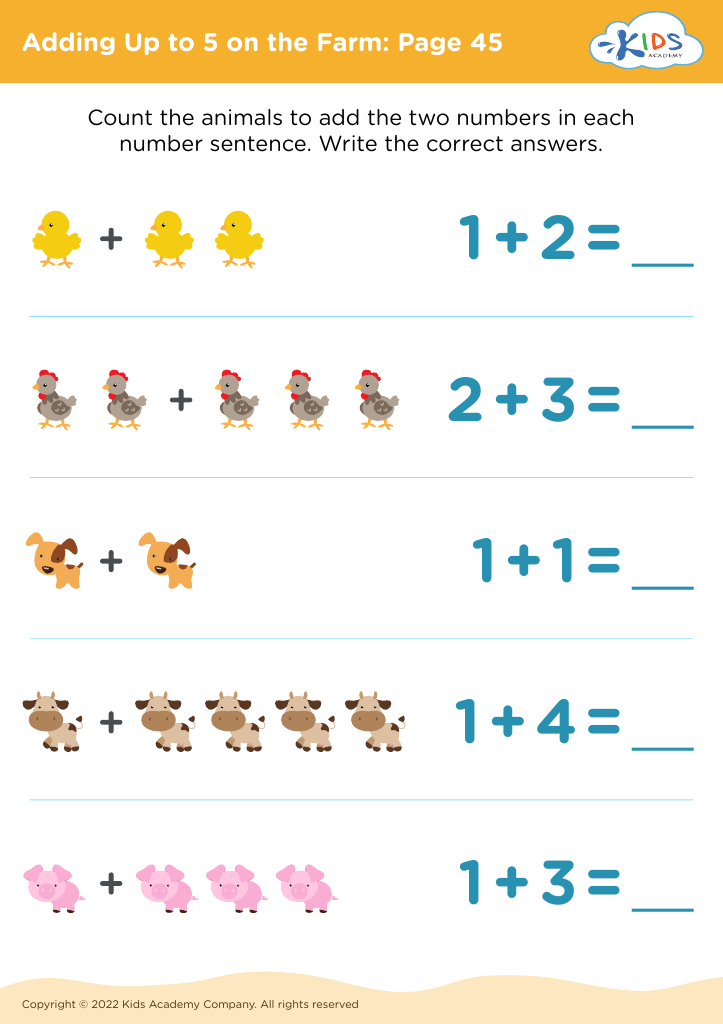
Adding Up to 5 on the Farm: Page 45
Worksheet
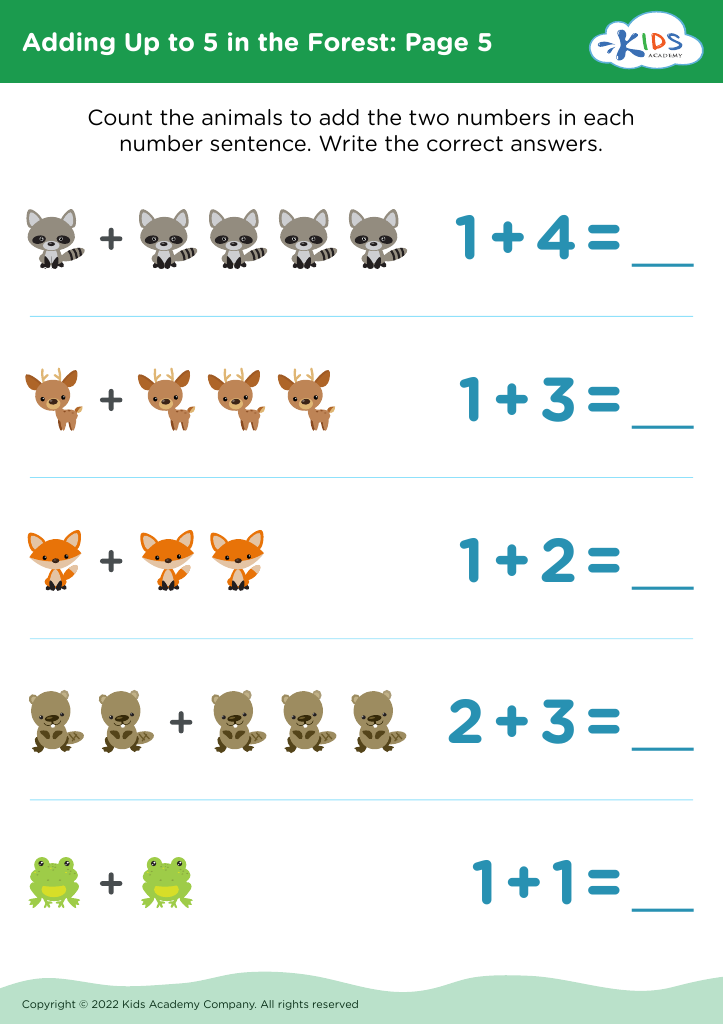
Adding Up to 5 in the Forest: Page 5
Worksheet
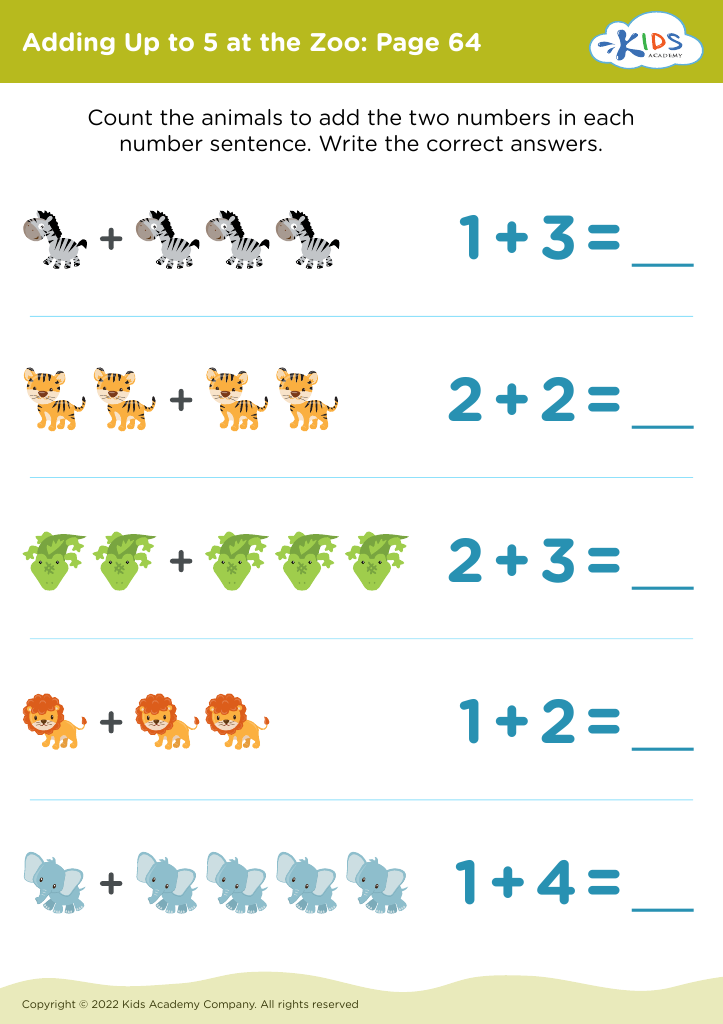
Adding Up to 5 at the Zoo: Page 64
Worksheet
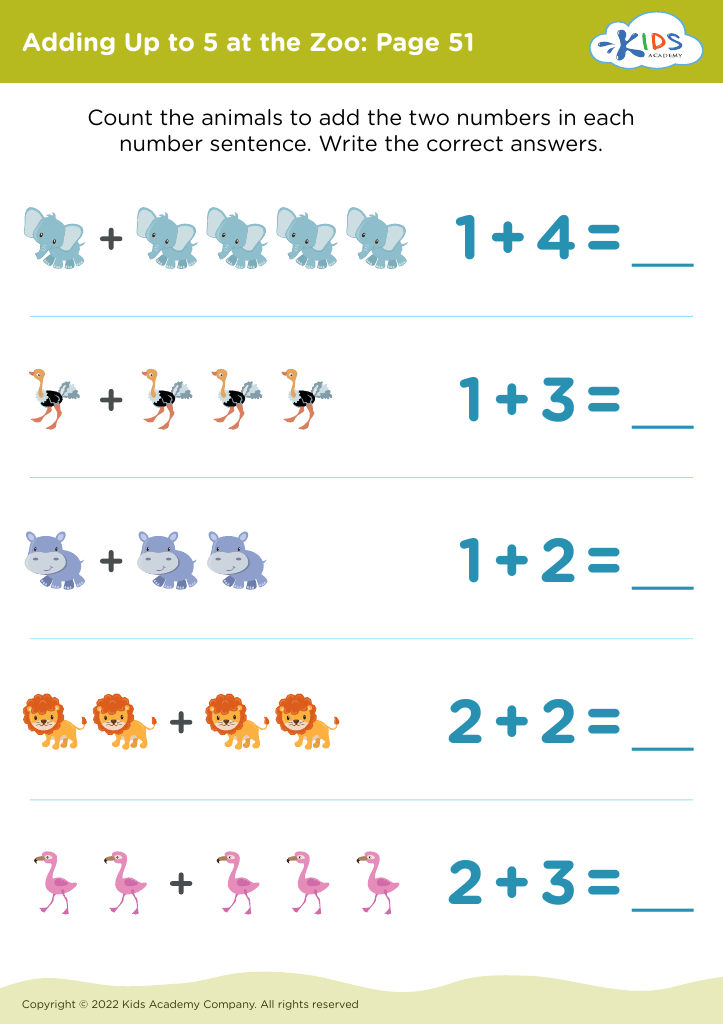
Adding Up to 5 at the Zoo: Page 51
Worksheet
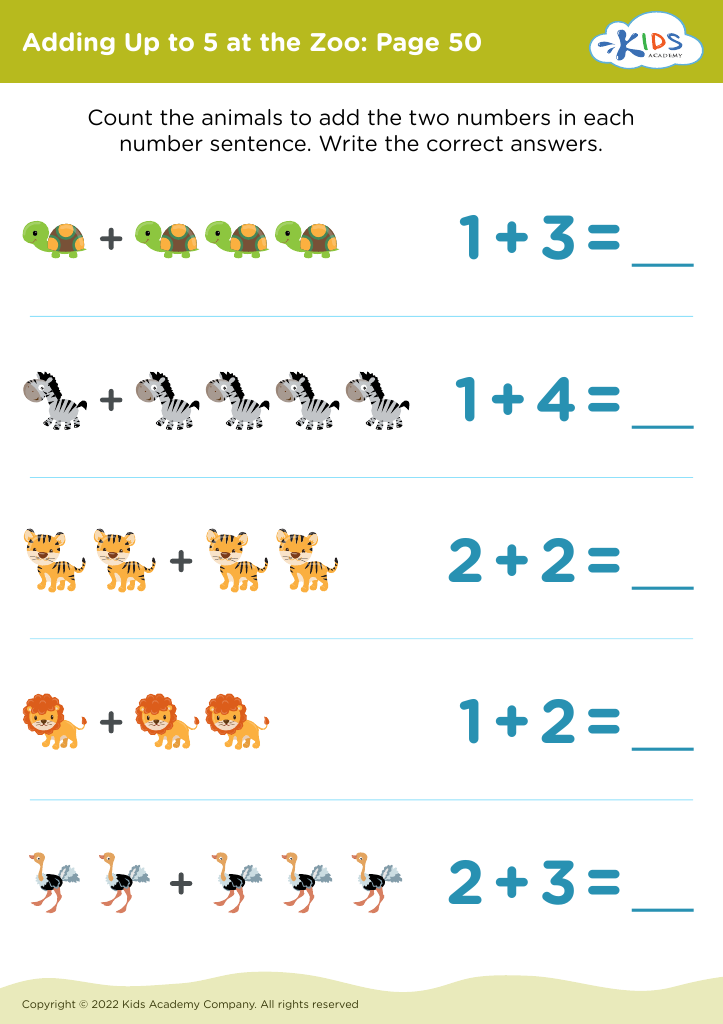
Adding Up to 5 at the Zoo: Page 50
Worksheet
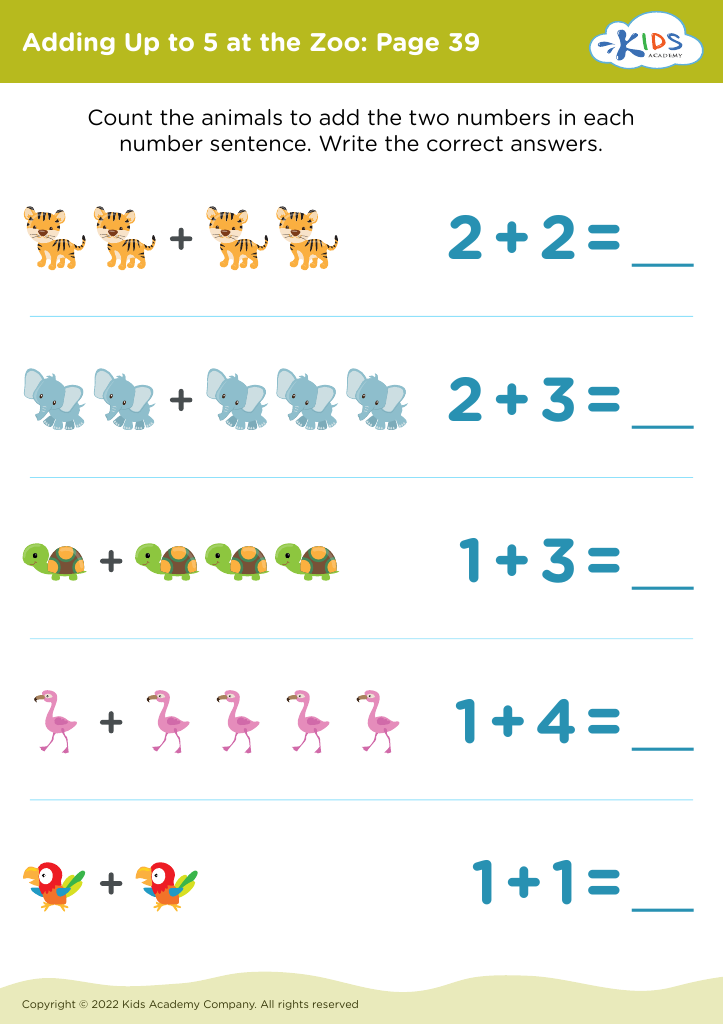
Adding Up to 5 at the Zoo: Page 39
Worksheet
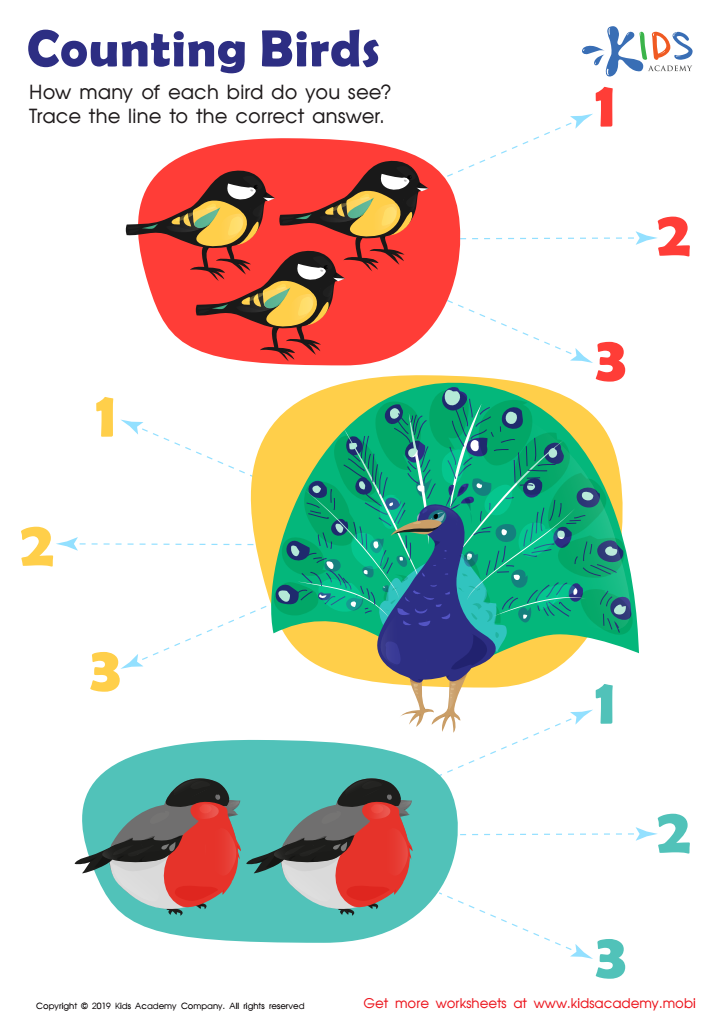
Counting Birds Worksheet

Counting Birds Worksheet

Kids love counting! With each number they learn, they can make a one-to-one representation with an item. The more practice they get, the better. Try this counting worksheet with traceable lines, to give your children practice and work on their fine motor skills. They will enjoy connecting the picture to the right number, and will feel like mathematicians with each success!
Counting Birds Worksheet
Worksheet
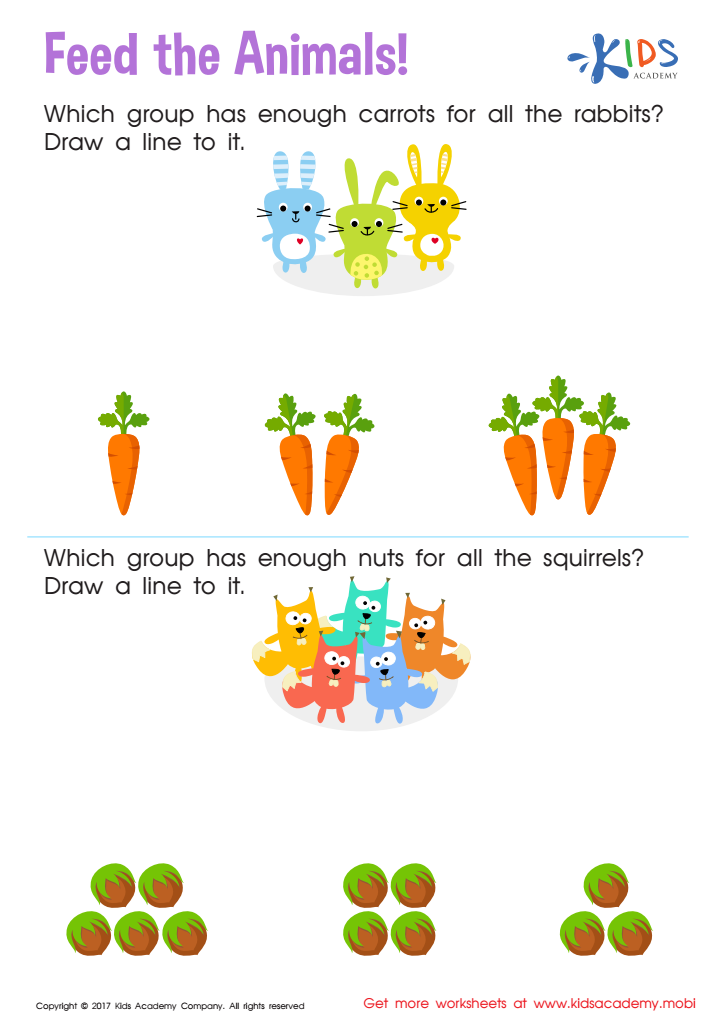
Count and Match: Feed the Animals Worksheet

Count and Match: Feed the Animals Worksheet

Learning and growing involves more than just numbers, phonics and comparison. This Feed the Animals worksheet helps kids to exercise their reasoning skills. They must work out how many rabbits and carrots there are, and then repeat the process for the squirrels. This encourages problem solving and counting skills.
Count and Match: Feed the Animals Worksheet
Worksheet
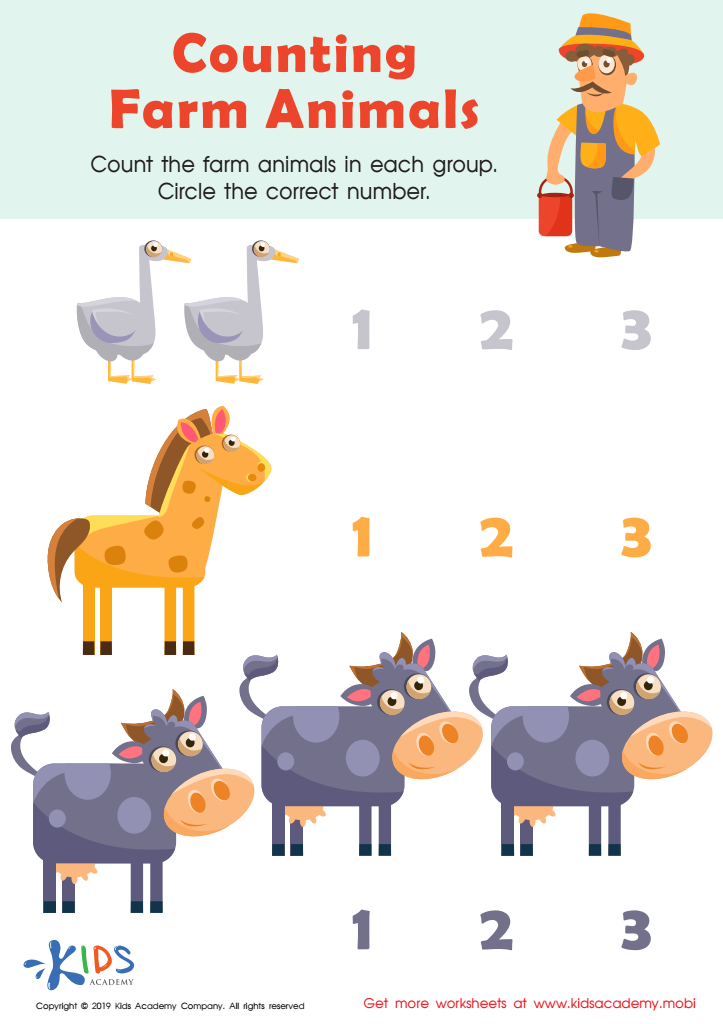
Counting Farm Animals Worksheet

Counting Farm Animals Worksheet

Kids love farms! That's why this free farm animals counting worksheet is great for building number sense and counting skills. Have your young mathematician count the pictures, then circle the corresponding number. It's a fun and meaningful way to practice counting.
Counting Farm Animals Worksheet
Worksheet
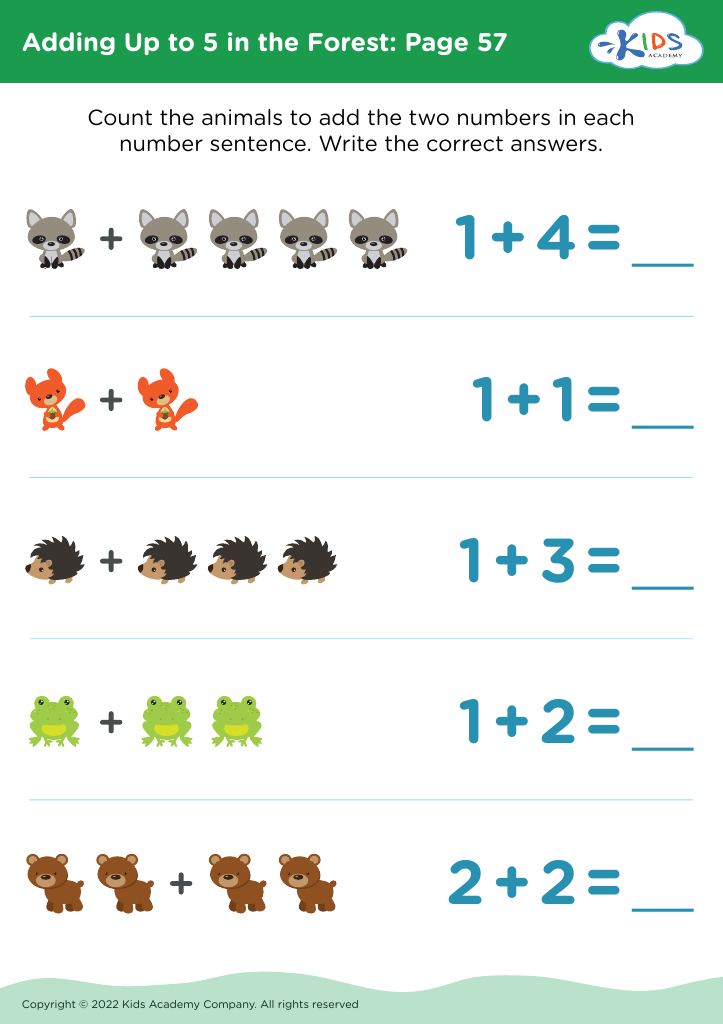
Adding Up to 5 in the Forest: Page 57
Worksheet


... 4 5

Animal recognition math is a multifaceted educational tool for children ages 3-9 that encompasses several developmental benefits. First, it fosters foundational numeracy skills by using animals as engaging, relatable images to illustrate counting, addition, and subtraction. For young learners, associating abstract numbers with tangible objects like animals strengthens memory retention and conceptual understanding, making math both fun and accessible.

Additionally, integrating animals into math activities can stimulate a child’s curiosity and interest in the natural world, promoting interdisciplinary learning. This approach not only enhances their cognitive skills but also enriches vocabulary and general knowledge about biology.

While navigating these activities, children also develop critical thinking and problem-solving skills. Identifying animals and involving them in math problems requires observation, categorization, and logical reasoning, which are fundamental cognitive skills that support broader academic success.

Furthermore, animal recognition math can be highly inclusive, catering to diverse learning styles. Visual learners benefit from pictorial representations, while tactile learners can engage through hands-on activities like matching animal figures to numbers.

In sum, parents and teachers should prioritize animal recognition math for its robust contribution to early cognitive, linguistic, and analytical skill development, all while fostering a sense of curiosity and excitement about both math and the animal kingdom.