Basic math learning Math Worksheets for Ages 3-9
3 filtered results
-
From - To
Discover engaging Basic Math Learning Worksheets designed for children ages 3-9 on Kids Academy! Our printable worksheets focus on foundational math skills including counting, addition, subtraction, shapes, patterns, and more. Created with young learners in mind, these activities blend fun and education, ensuring young mathematicians develop confidence and a love for numbers. Tailored to fit various learning levels, our resources support gradual progression while keeping kids captivated and motivated. Ideal for parents and teachers, these worksheets are a great way to strengthen math skills at home or in the classroom. Unlock your child's mathematical potential today!
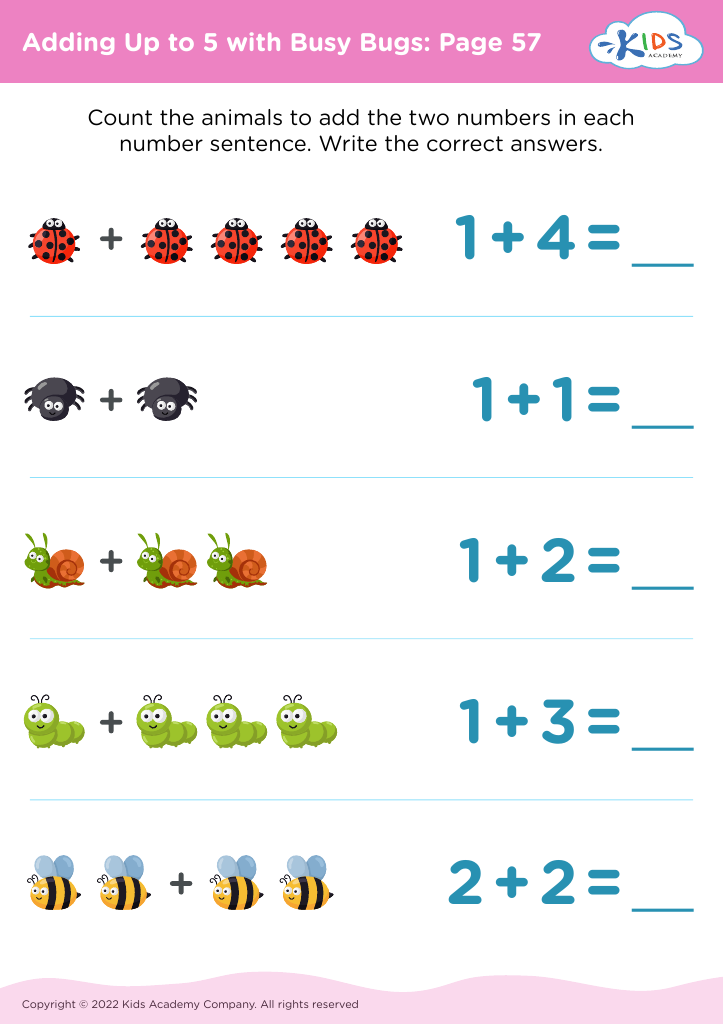
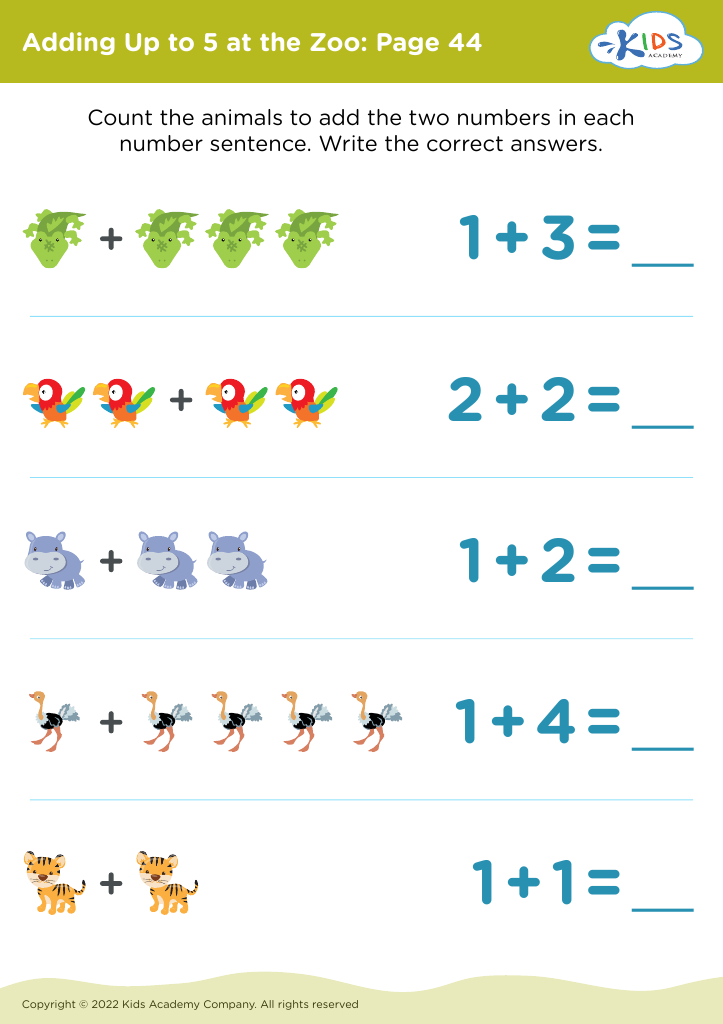
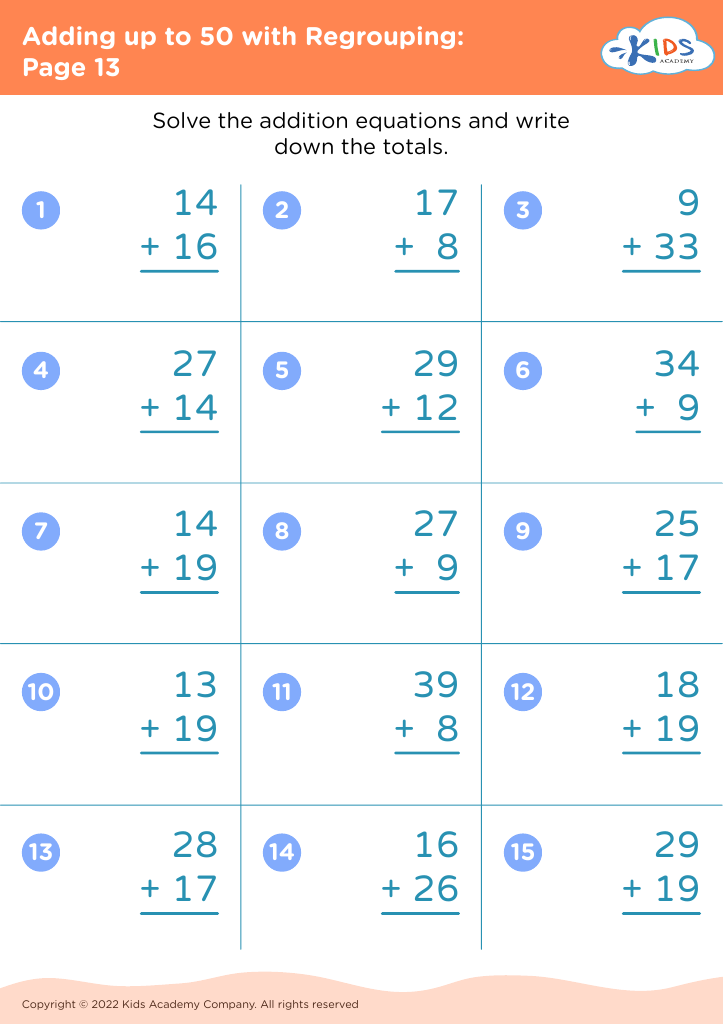







Early math skills form the foundation for a child's future success in not only mathematics, but also related areas such as science, technology, and problem-solving. For children aged 3-9, parents and teachers can significantly impact their developmental trajectory by nurturing basic mathematical concepts. During these formative years, children are highly receptive to new information and experiences, making it an optimal period for cultivating skills like counting, pattern recognition, and spatial awareness.
Understanding basic math helps children develop critical thinking and analytical skills. These abilities are invaluable as they promote logical reasoning and the capability to approach problems methodically. Math learning at this stage also fosters confidence. As children master foundational concepts, they are more likely to approach advanced topics with a positive attitude and a belief in their own competence.
Moreover, early math proficiency is a predictor of academic achievement in later years. Studies show that children who enter kindergarten with strong math skills perform better not just in mathematics but across other subjects, including reading. By investing time and effort into early math education, parents and teachers set children on a path of academic and lifelong success. Therefore, prioritizing basic math learning can offer numerous long-term benefits, making it a crucial focus during early childhood education.








