
Cognitive Development Math Worksheets for Ages 3-9
186 filtered results
Difficulty Level
Grade
Age
-
From - To
Subject
Activity
Standards
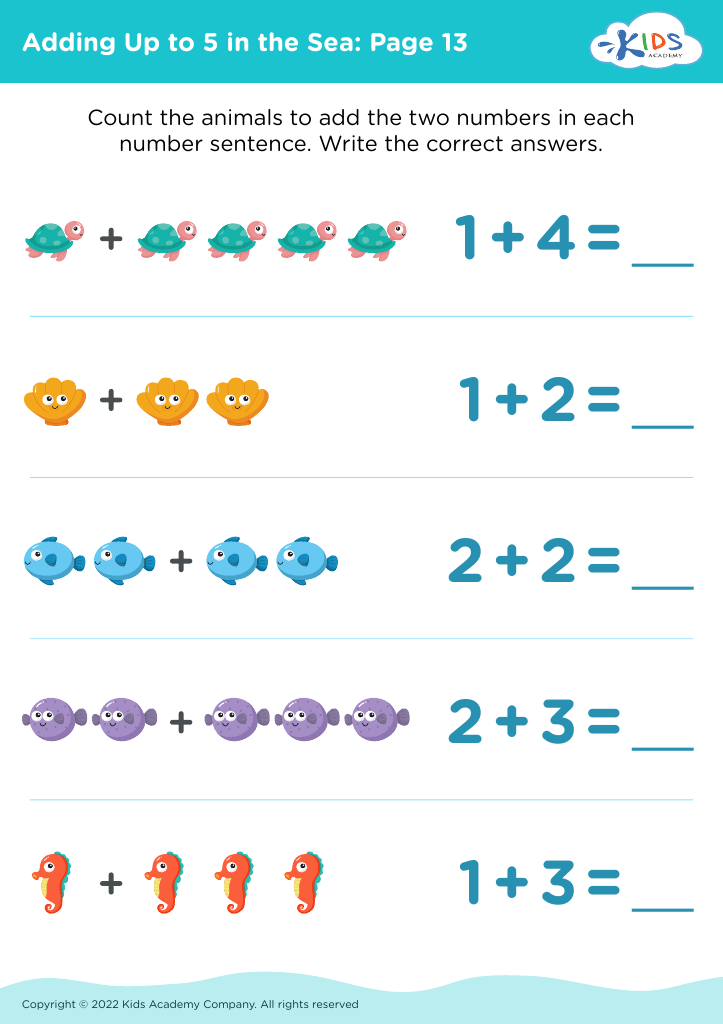
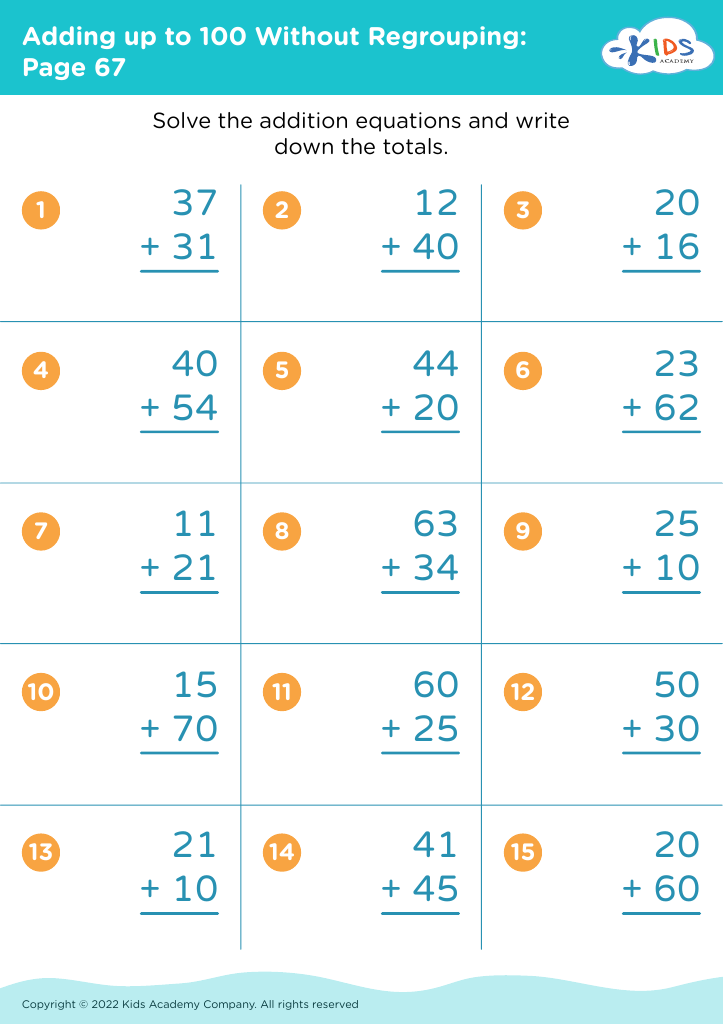
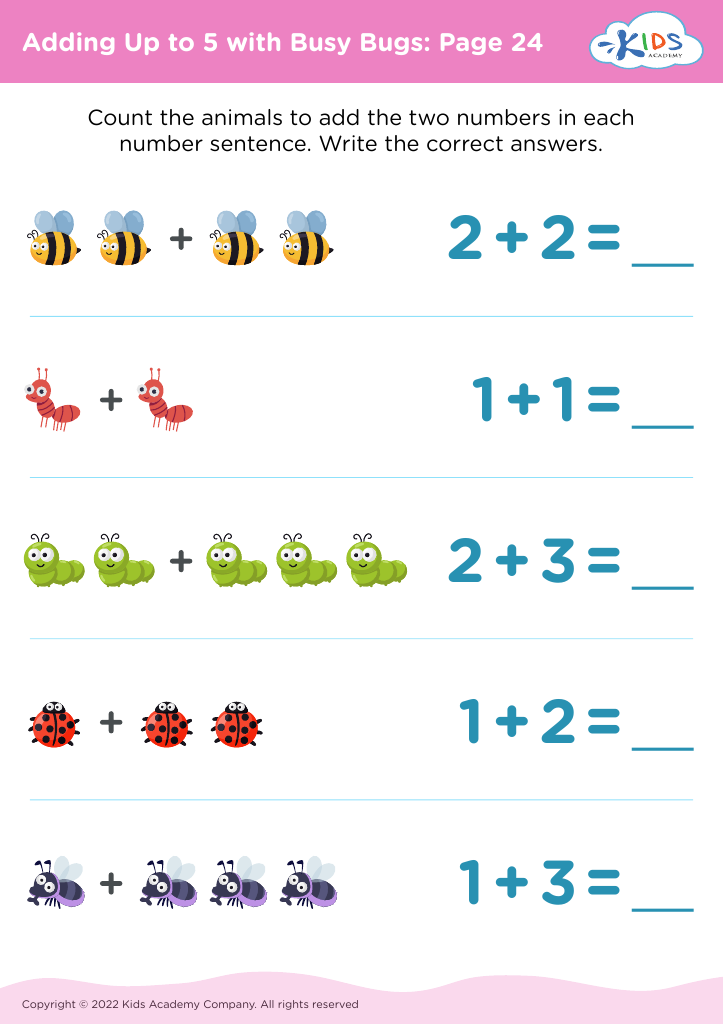
Unlock the potential of young minds with our Cognitive Development Math Worksheets for ages 3-9. Designed to stimulate critical thinking and problem-solving skills, our engaging worksheets cover essential math concepts tailored to each developmental stage. Each resource combines fun activities with educational content, promoting numerical understanding and mathematical reasoning. Perfect for home or classroom use, these worksheets support intellectual growth and boost your child's academic confidence. From counting and patterns to addition and subtraction, our printable materials pave the way for a successful learning journey. Empower your child today with activities that entertain and educate.
Favorites
With answer key
Interactive
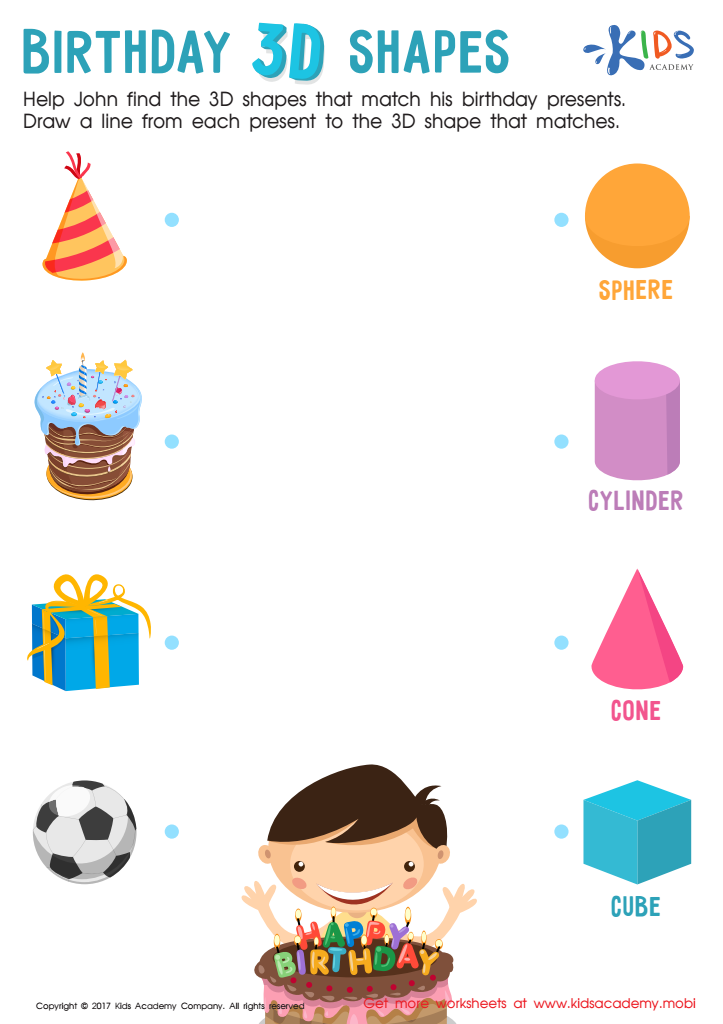
Birthday 3D Shapes Worksheet
It's John's birthday and he needs your help. Ask your kids to draw a line from each present to the matching 3D shape. First, check they understand the difference between 2D and 3D shapes. Then, they can help John figure out which 3D shape matches each present.
 Assign to My Students
Birthday 3D Shapes Worksheet
Worksheet
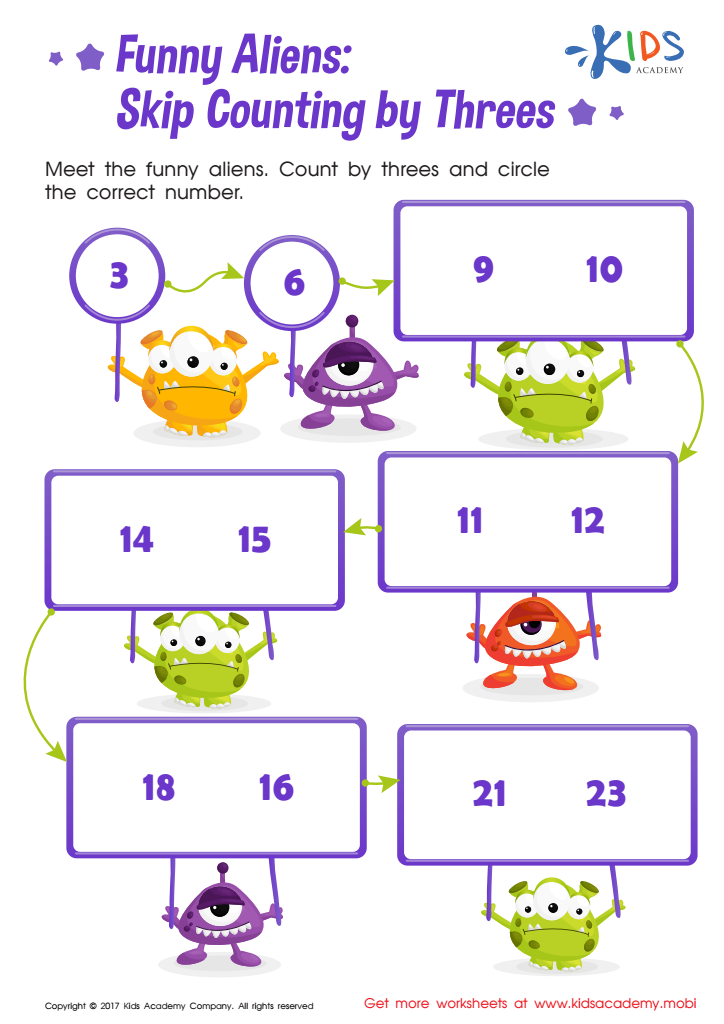
Skip Counting by 3s: Funny Aliens Printable
Blast off to outer space learning fun with this skip counting by 3 worksheet!
Skip Counting by 3s: Funny Aliens Printable
Worksheet
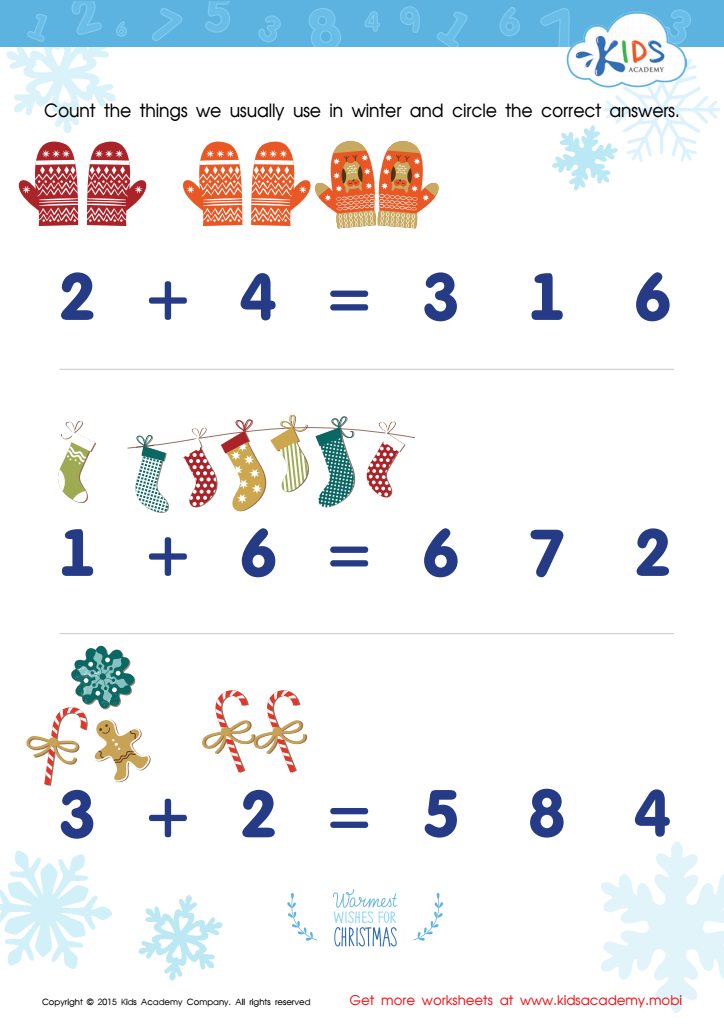
Count Winter Things Worksheet
This chilly winter afternoon, help your kid warm up with Kids Academy's free math worksheet - full of bright pictures and addition practice. Let them count the things and write in the numbers for a great brain training and math head start. Get more free math worksheets here. (80 words)
Count Winter Things Worksheet
Worksheet
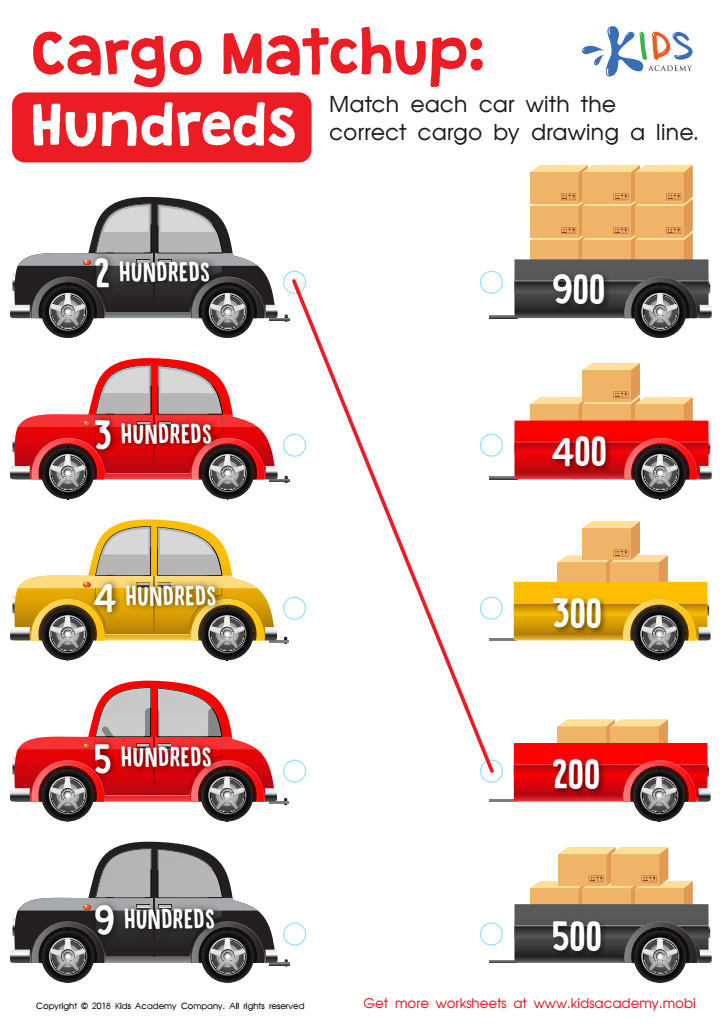
Cargo Matchup: Hundreds Worksheet
Introduce your child to counting in the hundreds using this simple worksheet. Match each car to its correct cargo by drawing a line. If they can count 1-100, they can learn to count in the hundreds! Help them master this skill with the worksheet and they'll be counting away in no time.
Cargo Matchup: Hundreds Worksheet
Worksheet
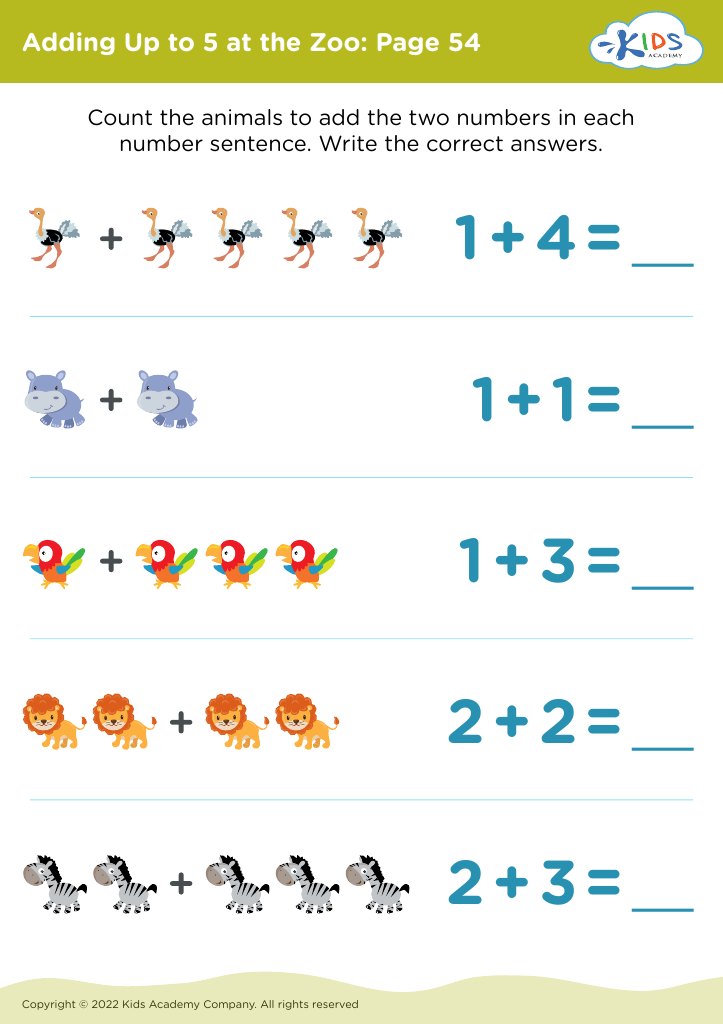
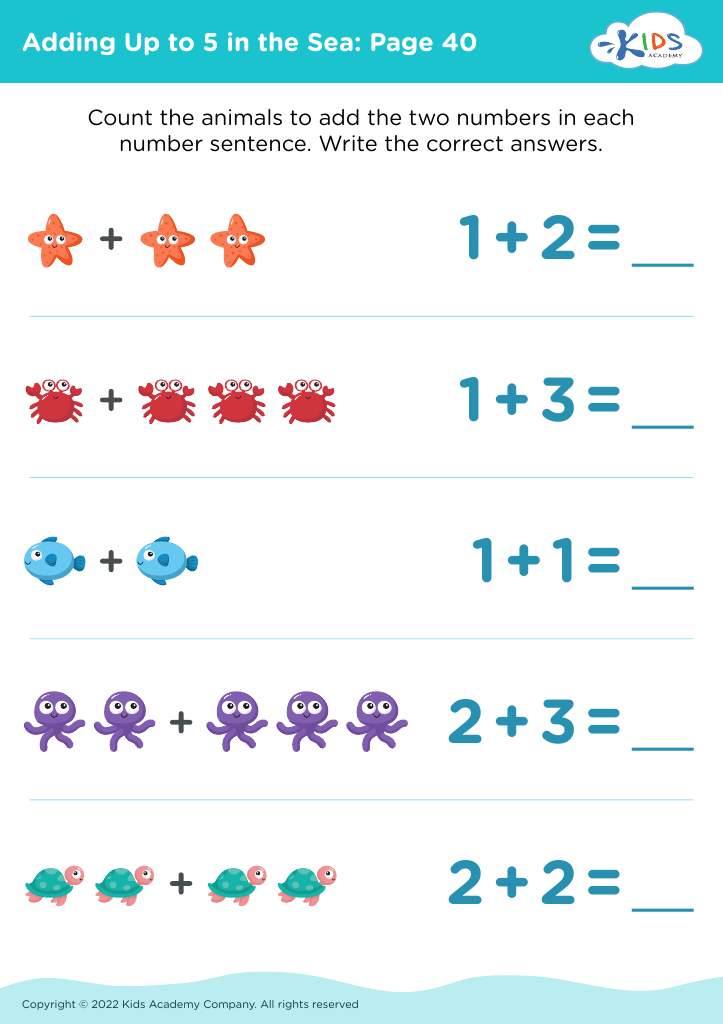
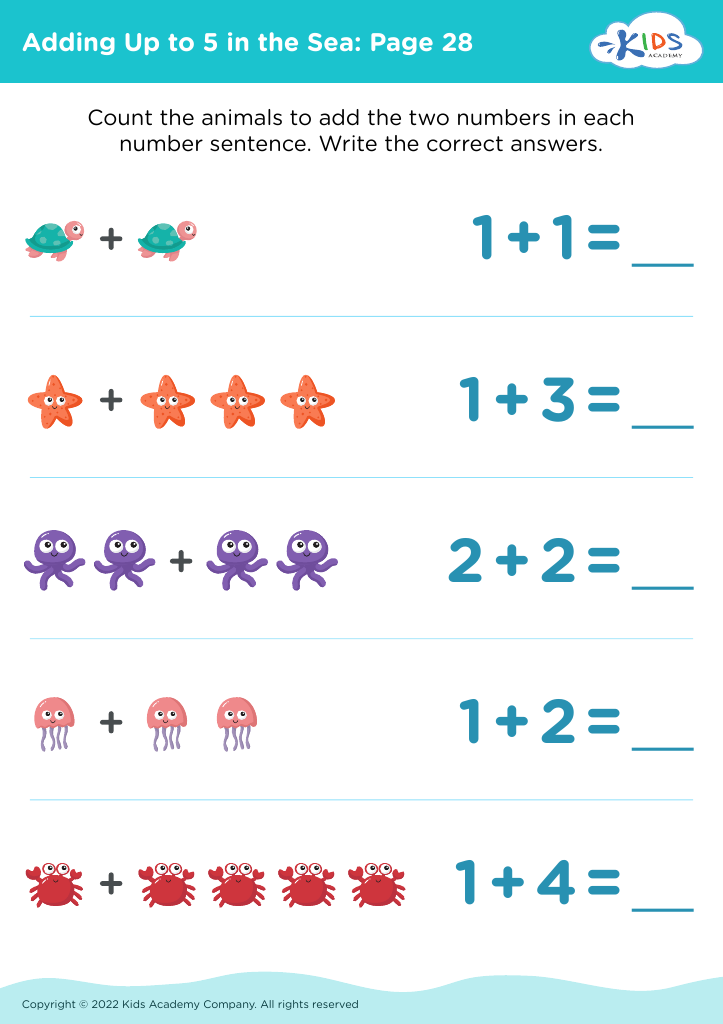
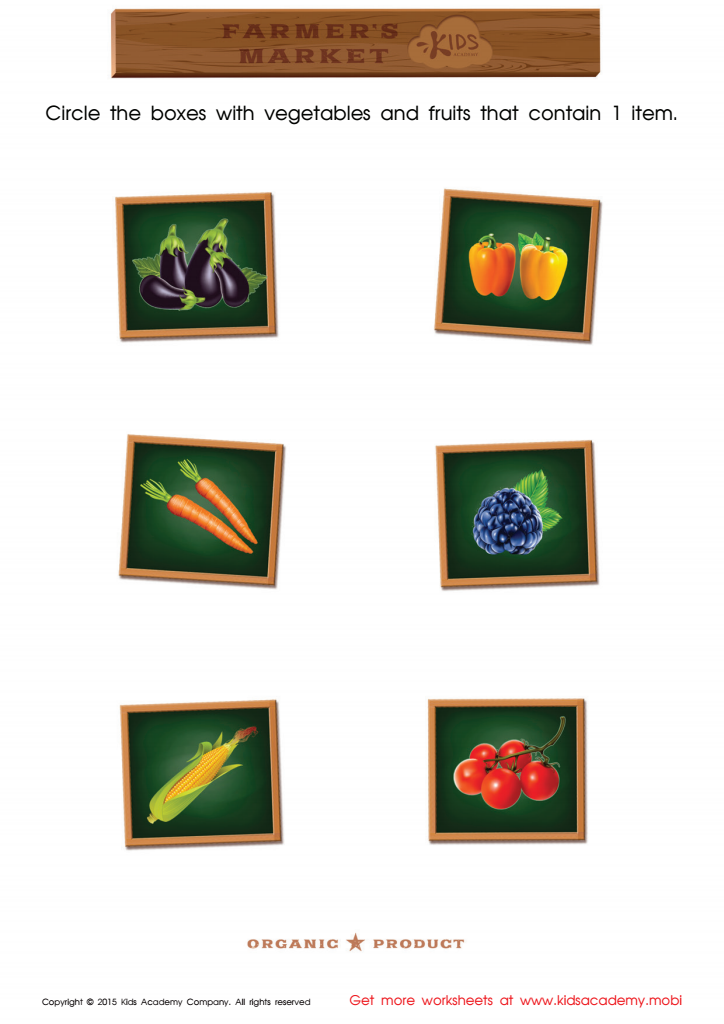
Count and Match Boxes with Vegetables
Print one and help your kid sharp his counting skills. With a variety of veggies to count, such as raspberries and eggplants, your little mathematician will have lots of fun.
Count and Match Boxes with Vegetables
Worksheet
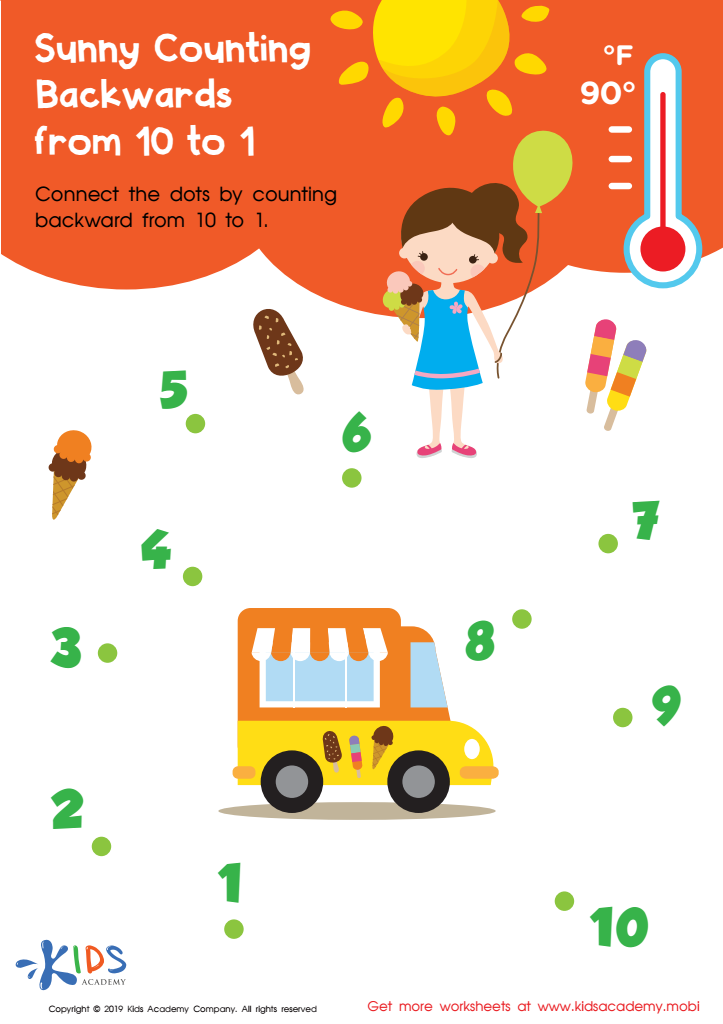
Sunny Counting Backwards from 10 to 1 Worksheet
Ask your kids what they like to do in summer heat. Look at the worksheet and ask them to identify the items in the picture. Count the numbers together then help them with connecting the dots from 10 to 1. It's a fun activity for the little girl, just like your kids.
Sunny Counting Backwards from 10 to 1 Worksheet
Worksheet
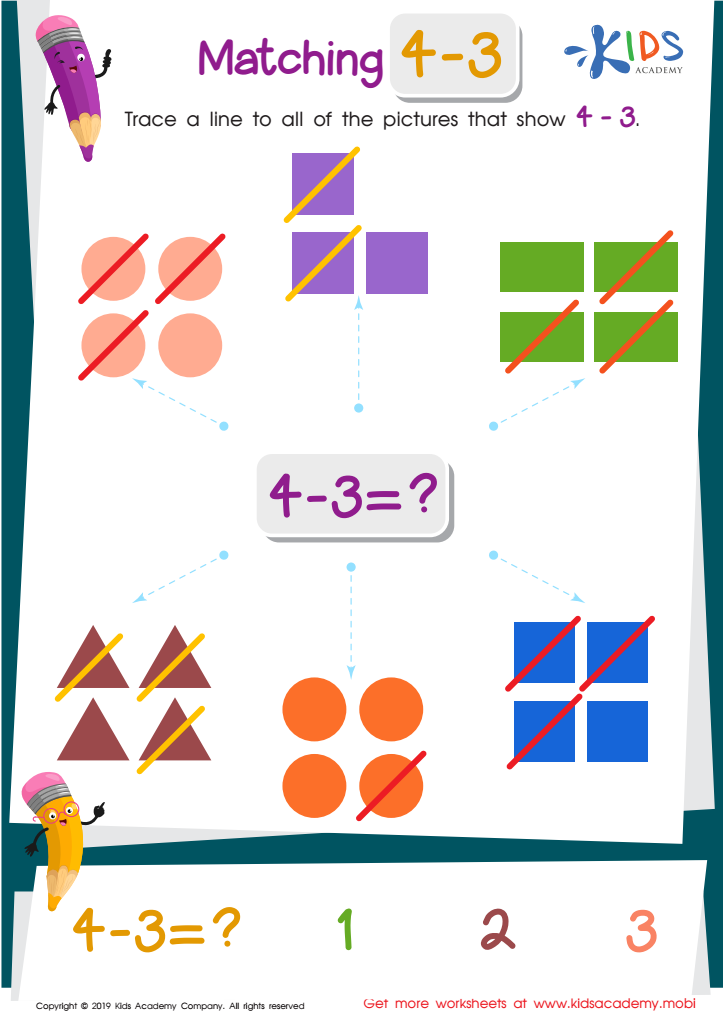
Matching 4 – 3 Worksheet
Help your kids master basic math concepts like addition and subtraction with fun exercises. Test their understanding with simple problems. For example, in this worksheet, ask them to count the objects in each picture and draw a line to the pictures that show 4 - 3 = 1. This will help them get better at solving equations.
Matching 4 – 3 Worksheet
Worksheet
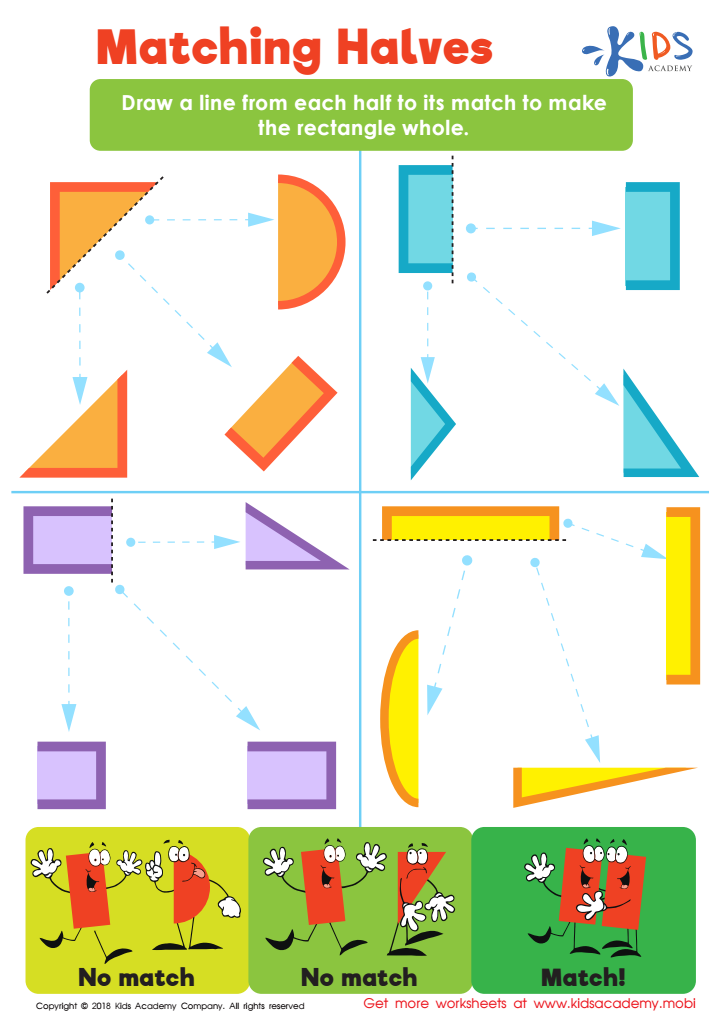
Matching Halves Worksheet
See how your child fares in matching two halves to form a complete rectangle. Provide them with four options, and ask them to draw a line connecting the two correct halves. Put their shape knowledge to the test with this simple worksheet!
Matching Halves Worksheet
Worksheet
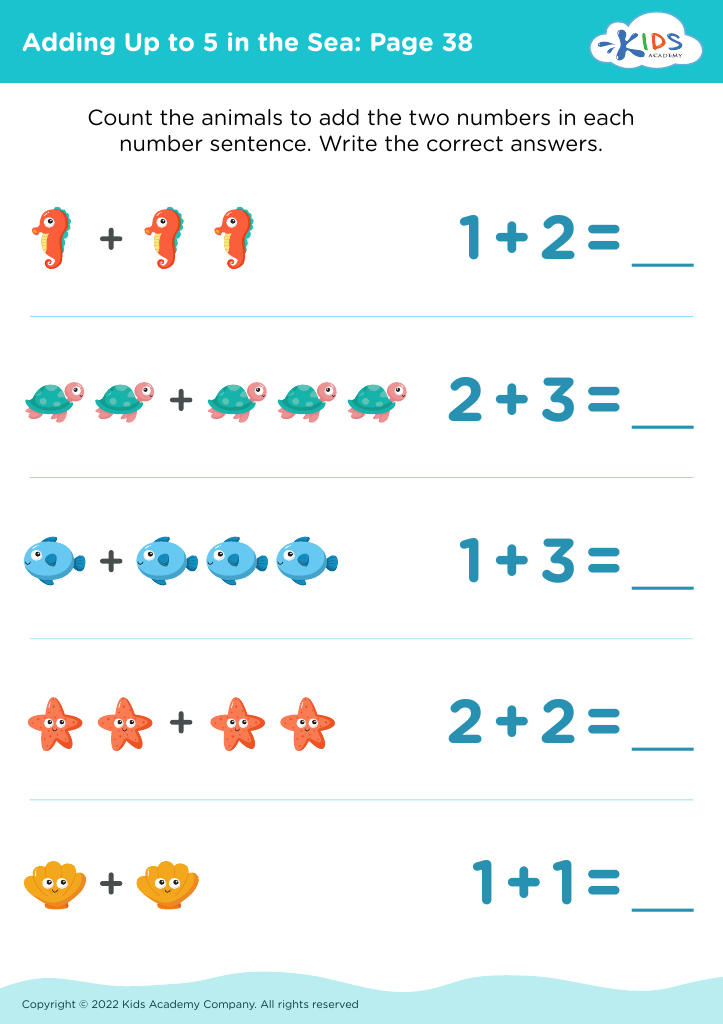
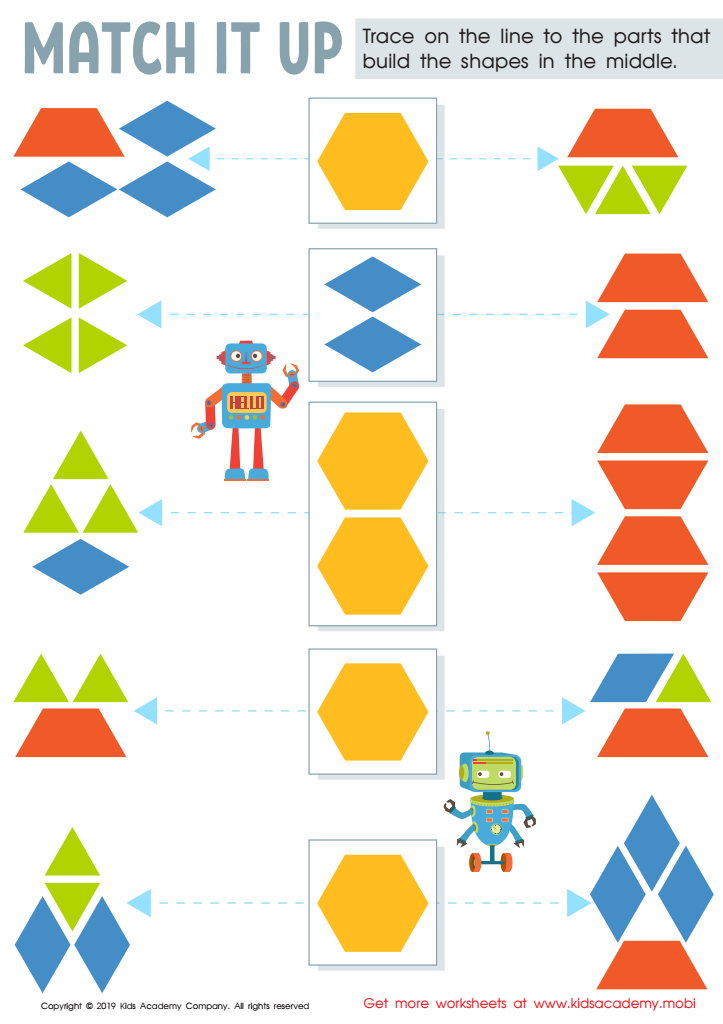
Match It up Worksheet
If your kids are into robots, they'll be thrilled to work on this worksheet. Ask them to name shapes they know, and help them draw and identify these shapes. Look at the shapes in the middle, and the sides. Finally, help your kids trace the lines to build the shapes in the middle.
Match It up Worksheet
Worksheet
Join Kids Academy for Free
Who is primarily going to use this learning content?






Cognitive development in math for children ages 3-9 is crucial as it lays the foundation for their logical thinking, problem-solving abilities, and future academic success. During these formative years, children’s brains are exceptionally receptive, making it an optimal period for learning basic mathematical concepts such as counting, sorting, recognizing patterns, and understanding shapes.
Engaging kids in math activities from an early age enhances their number sense, which is the fundamental ability to understand and work with numbers. This not only prepares them for more complex math in later grades, but also improves their critical thinking and reasoning skills. For example, simple tasks like sorting objects by size or color help develop categorization skills and reasoning, while playing with building blocks introduces them to spatial awareness.
Moreover, early math skills are strongly correlated with later academic achievement, not just in mathematics but in other subjects as well. By fostering a positive and fun experience with math early on, parents and teachers can build confidence and reduce math anxiety. This creates a solid and enthusiastic attitude toward learning, ensuring that children are not left behind in a subject that is pivotal for their long-term educational development and everyday life skills.
In essence, prioritizing cognitive development in math for young children is not just about learning numbers. It’s about nurturing a comprehensive skill set that supports their growth as innovative thinkers and capable learners.








