Comparing object weights Math Worksheets for Ages 3-9
3 filtered results
-
From - To
Unlock your child's potential with our "Comparing Object Weights Math Worksheets" tailored for ages 3-9. Our engaging and interactive worksheets help young learners develop essential measurement skills by comparing the weights of various objects. Fun activities and colorful illustrations captivate children’s interest, making learning enjoyable. Perfectly designed to suit early grade curriculums, these worksheets enhance critical thinking and problem-solving skills. Through hands-on practice, kids gain confidence in understanding weight concepts, preparing them for more advanced math challenges ahead. Give your child a head start with Kids Academy’s expertly crafted worksheets. Start exploring and watch your child thrive!
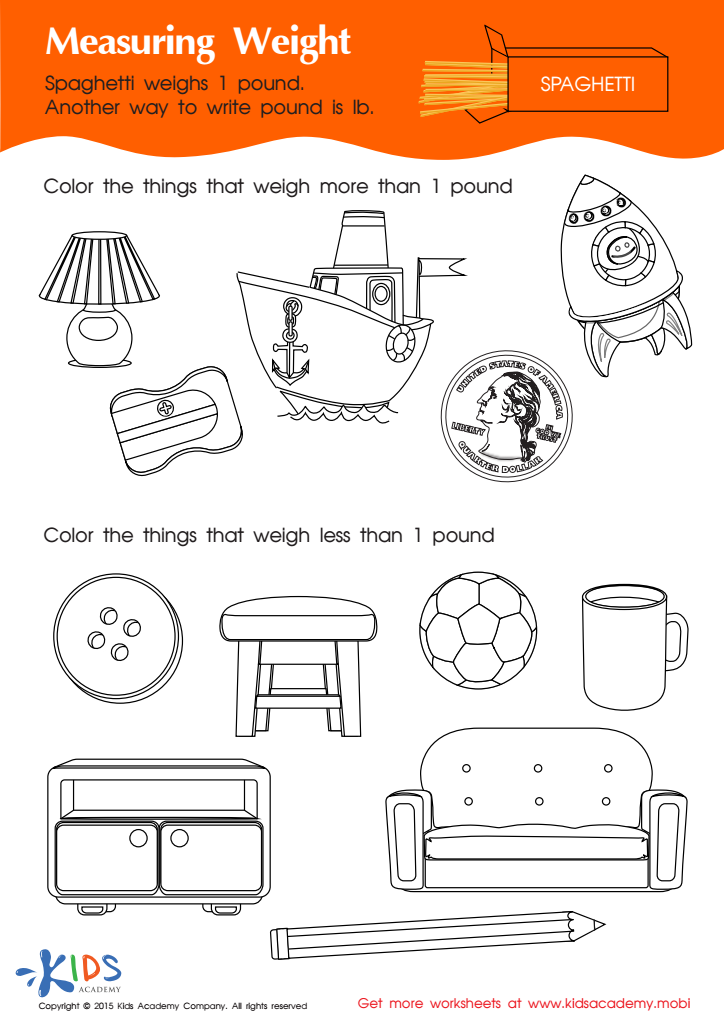
 Assign to My Students
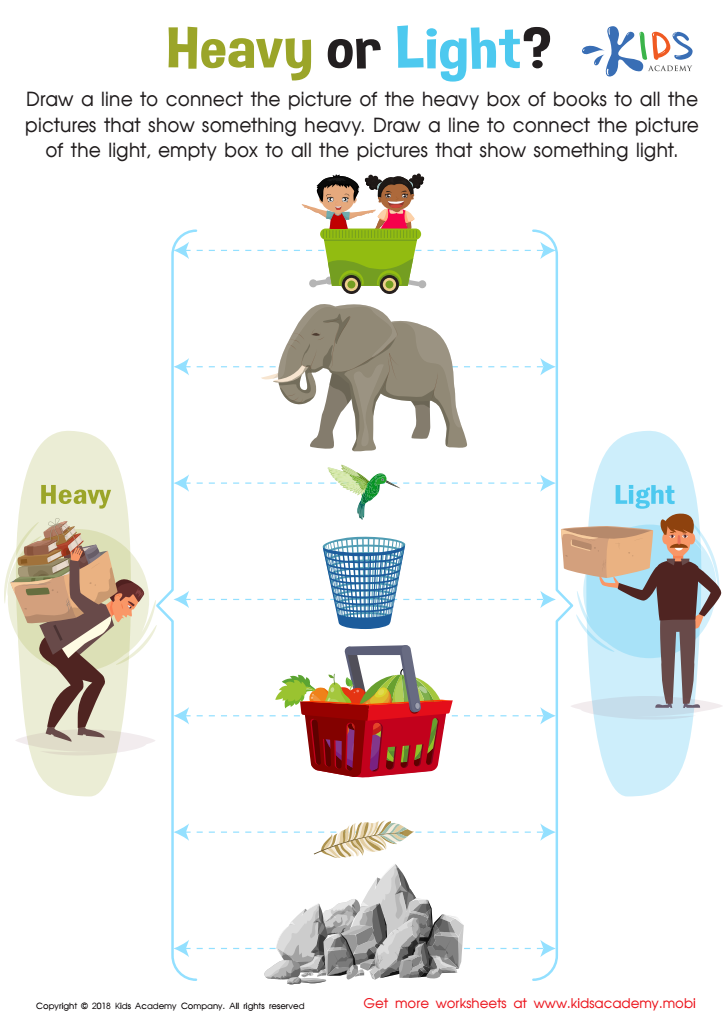
Heavy or Light? Worksheet
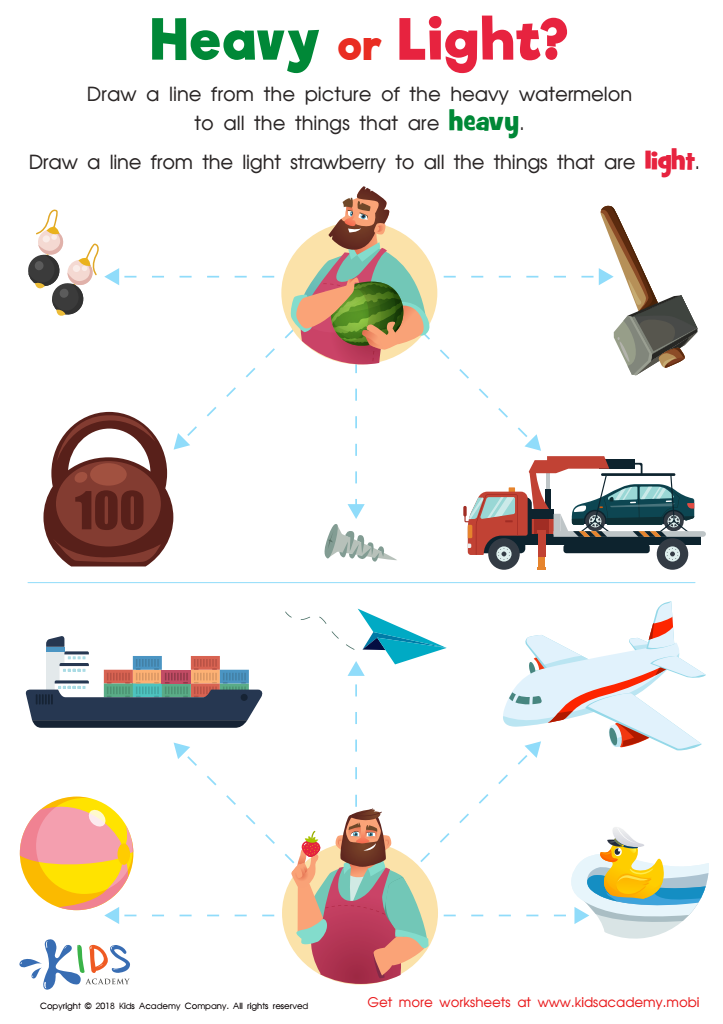
Heavy or Light? Worksheet






Understanding and comparing object weights is a fundamental skill in early math education for children aged 3-9. This foundational concept helps young learners grasp basic principles of measurement, which are directly applicable to both daily life and more complex mathematical reasoning in later years. It fosters critical thinking by encouraging children to make observations, predictions, and comparisons, enhancing their cognitive development.
When parents and teachers invest time in teaching weight comparison, they prepare children for real-world problem-solving situations. For instance, understanding which grocery bag is heavier can help children develop practical life skills. It also bridges the gap to more advanced subjects like science and engineering, where weighing and measuring are essential.
In educational settings, comparing weights can be a tactile and engaging activity. By using everyday objects, teachers make learning interactive and contextually relevant. These activities strengthen fine motor skills and coordination as children handle and manipulate objects. Additionally, early exposure to concepts like "heavier" and "lighter" builds a child's descriptive vocabulary and linguistic abilities.
Furthermore, fostering a positive attitude towards learning math from a young age sets the stage for academic success. Thus, incorporating weight comparison in early education enriches a child's learning experience, equipping them with critical thinking skills and a solid mathematical foundation.








