
Comparing weights Math Worksheets for Ages 3-9
4 filtered results
Difficulty Level
Grade
Age
-
From - To
Subject
Activity
Standards
Discover a comprehensive collection of comparing weights math worksheets designed specifically for children ages 3-9! Our engaging and colorful printables help young learners develop essential math skills by comparing and contrasting the weights of various objects. Through fun, hands-on activities, kids will strengthen their understanding of concepts like heavier, lighter, and equal weights. These worksheets cater to different learning levels and are perfect for classroom use or at-home practice, helping children build a solid foundation in math while keeping them entertained. Download our comparing weights worksheets today and watch your child's confidence and abilities grow!
Favorites
With answer key
Interactive
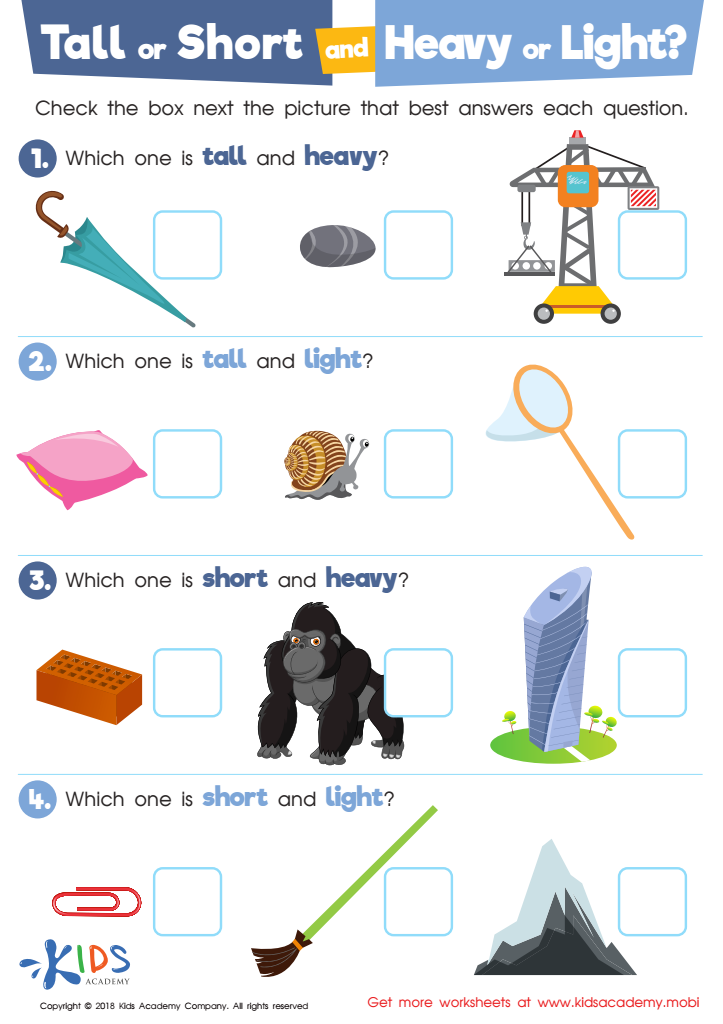
Tall or Short and Heavy or Light? Worksheet
Young children can find basic measurement concepts tricky. This PDF introduces them to the appropriate vocabulary for describing heavy, light, tall and short items, by using familiar pictures. It helps them accurately select which items fit each category.
 Assign to My Students
Tall or Short and Heavy or Light? Worksheet
Worksheet
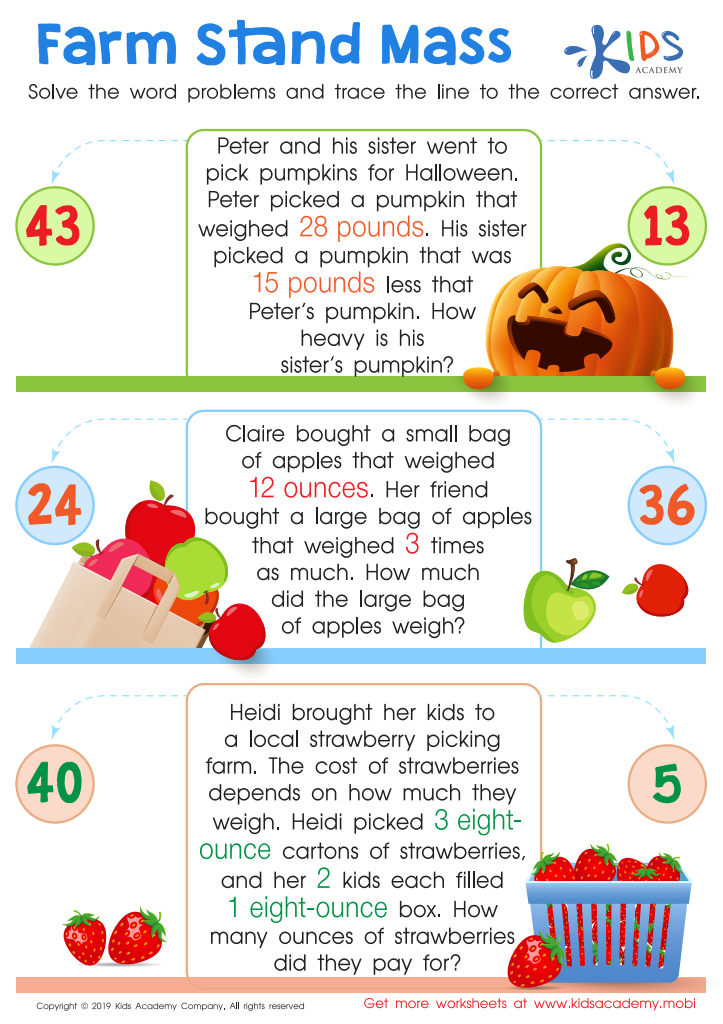
Farm Stand Mass Worksheet
Engage your kids in a fun learning adventure! Encourage them to practice what they learn in school using this worksheet. Look at the picture and read the problem together. Help them solve it and trace the line to the answer. Make learning enjoyable and your kids will be more motivated!
Farm Stand Mass Worksheet
Worksheet
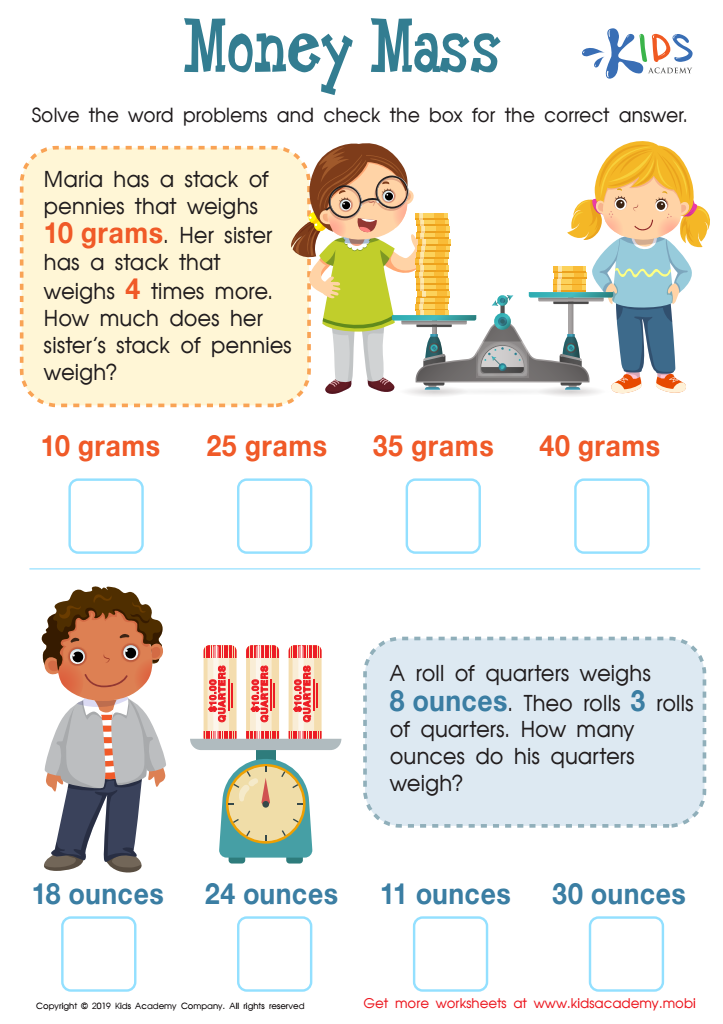
Money Mass Worksheet
By regularly working on math with your kids, they will become more confident. Ensure they understand the word problems in this printout, and help them solve it. Check the box for the correct answer of each to verify their work. With this practice, they will gradually get used to math and make progress.
Money Mass Worksheet
Worksheet
Join Kids Academy for Free
Who is primarily going to use this learning content?








Comparing weights is an essential aspect of early mathematics education for children ages 3-9. Engaging young learners in weight comparison activities helps develop foundational skills in measurement, critical thinking, and reasoning. Understanding weights fosters early numeracy, introducing children to concepts of more or less, heavier or lighter, and helps lay the groundwork for arithmetic and problem-solving skills later.
Weight comparison activities are often hands-on and interactive, making learning both fun and experiential. Children might use balance scales, compare the heft of different objects, or even use non-standard units like blocks or toys. Such tactile and visual experiences enhance cognitive development and allow kids to grasp abstract concepts more concretely.
Additionally, comparing weights helps children comprehend and navigate the physical world around them. It could influence their understanding of everyday situations, such as determining if their backpack is too heavy or comparing the weight of fruits while grocery shopping.
For educators and parents, encouraging weight comparison tasks can also promote language development. Children learn descriptive words like "heavier," "lighter," "balance," and express their thought processes verbally.
By integrating comparing weights into daily activities, parents and teachers can provide a rich, multimodal learning environment that encourages curiosity, exploration, and a love for learning.








