Enhance your child's fine motor skills with our engaging Math Worksheets designed for ages 3-9! These worksheets offer a fun and interactive way to build essential motor abilities while introducing basic math concepts. Each activity promotes hand-eye coordination, dexterity, and precision through practices like tracing, cutting, and coloring. Kids will enjoy working on counting, shape recognition, and simple addition in a creative manner. Perfect for teachers and parents alike, these worksheets align with developmental milestones, making learning both effective and enjoyable. Access a variety of printable resources that ensure your child develops crucial fine motor skills in tandem with foundational math knowledge!

Check out this FREE Trial Lesson on Math for age 3-9!

Short and Long Vowel Sort

Favorites
With answer key
Interactive
  • 3-9
  • Fine motor skills development
  • Math
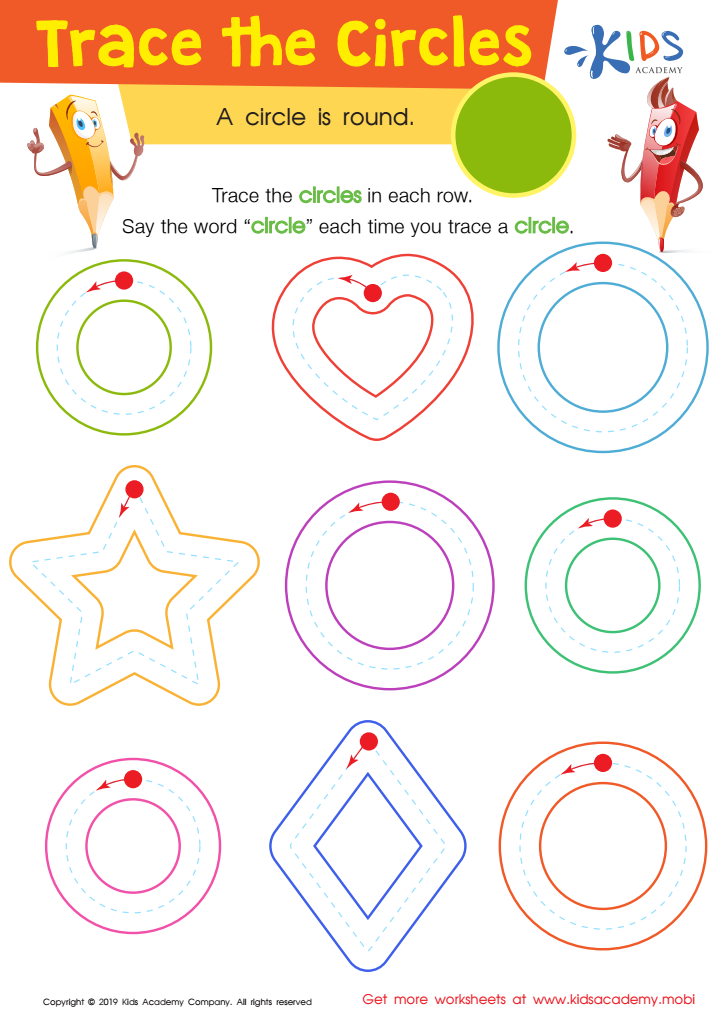
Trace The Circles Worksheet

Trace The Circles Worksheet

Preschoolers and kindergarteners love learning shapes! This worksheet provides practice in naming and tracing circles. Students say "circle" each time they trace one. It's a fun way to help kids learn math vocabulary and develop fine motor skills. Enjoy this printable and get ready to master circles!
Trace The Circles Worksheet
Worksheet
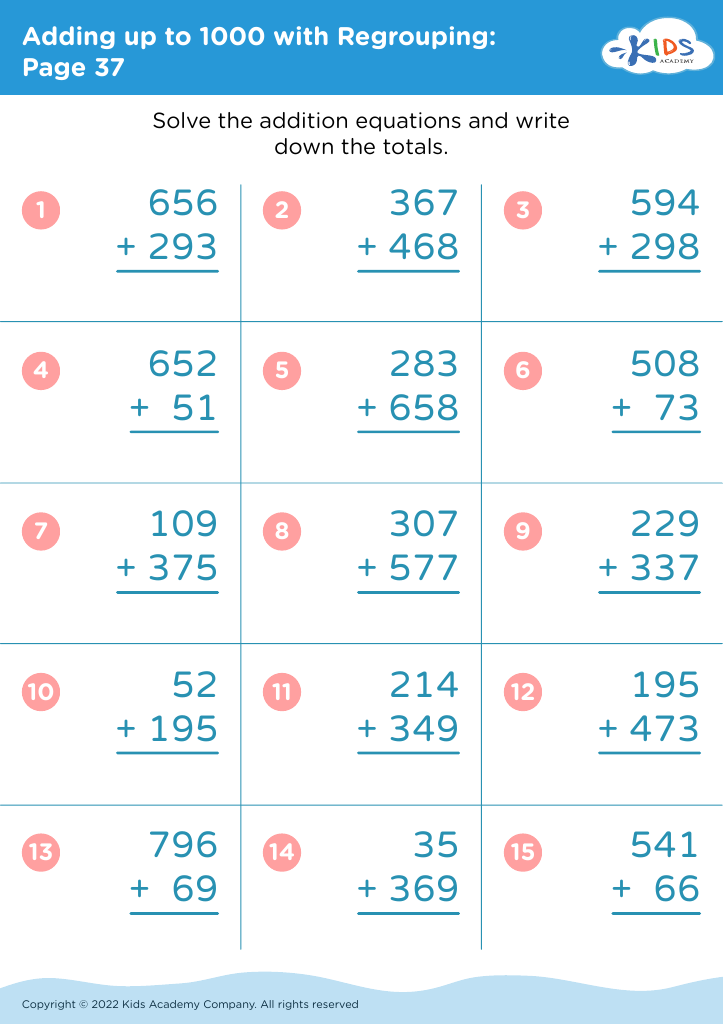
Adding up to 1000 with Regrouping: Page 37
Worksheet
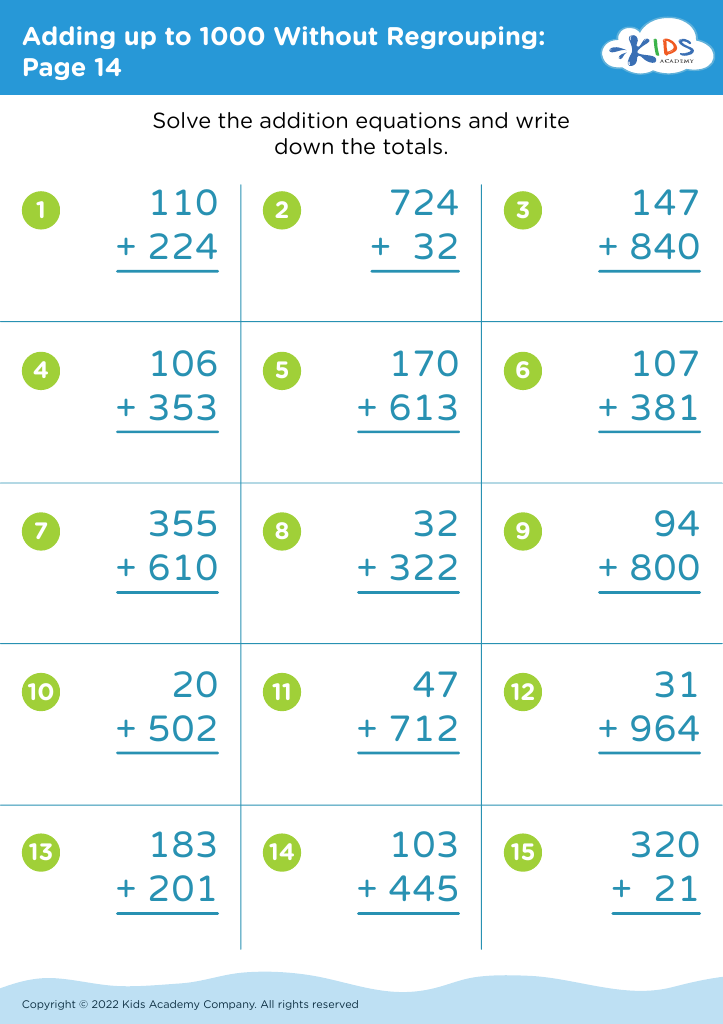
Adding up to 1000 Without Regrouping: Page 14
Worksheet
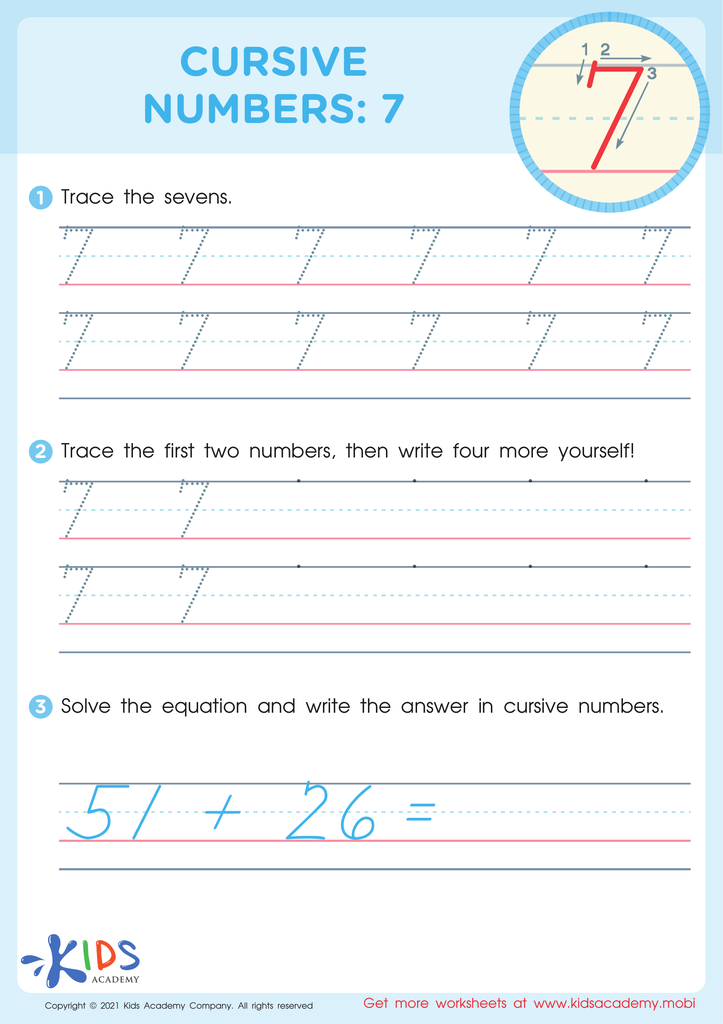
Cursive Numbers: 7 Worksheet

Cursive Numbers: 7 Worksheet

Kids learn best with engaging and easy-to-understand materials. This tracing worksheet is ideal for developing kids' writing skills, with two exercises to help them write the number 7. The first involves tracing the 6s provided and the second asking them to write four cursive 7s independently.
Cursive Numbers: 7 Worksheet
Worksheet
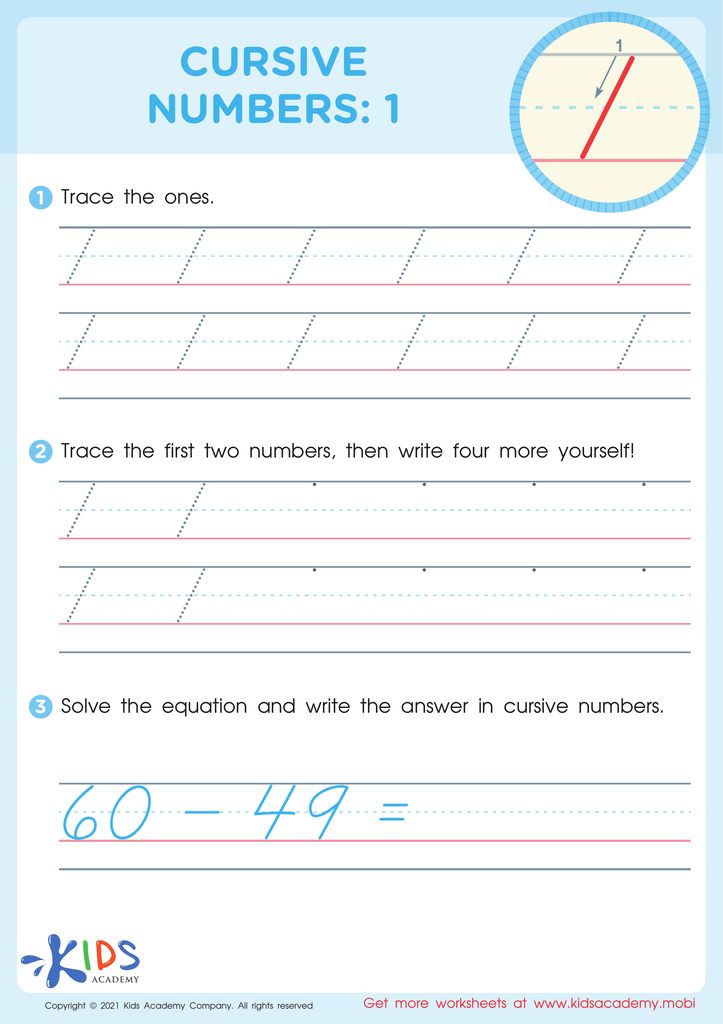
Cursive Numbers: 1 Worksheet

Cursive Numbers: 1 Worksheet

Math and handwriting are connected! Try these traceable worksheets to help your children learn cursive numbers. The tracing lines make it easy to follow, plus there's a simple subtraction exercise at the bottom for them to try. This is perfect for kids who struggle with handwriting and gives them a fun way to practice.
Cursive Numbers: 1 Worksheet
Worksheet
Cutting Rectangles with Little Sunshine Worksheet
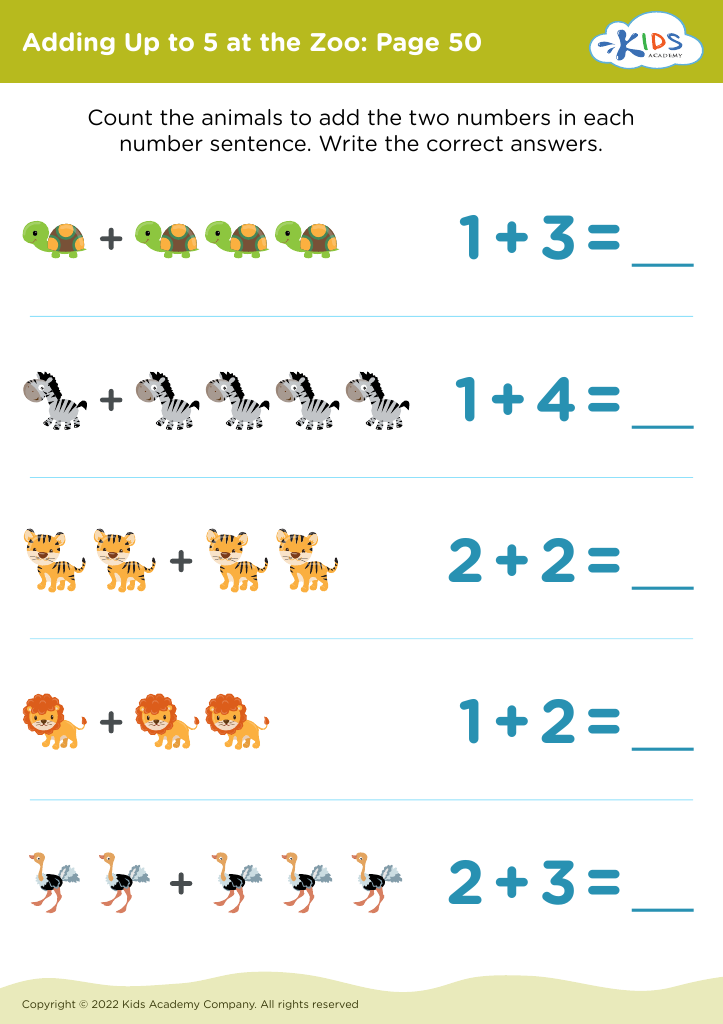
Cutting Rectangles with Little Sunshine Worksheet

Introduce Little Sunshine to your students. Help them to cut rectangles into two or four equal parts by tracing the dotted lines. It's easy - the lines divide them evenly. Encourage your students to help Little Sunshine complete the task!
Cutting Rectangles with Little Sunshine Worksheet
Worksheet
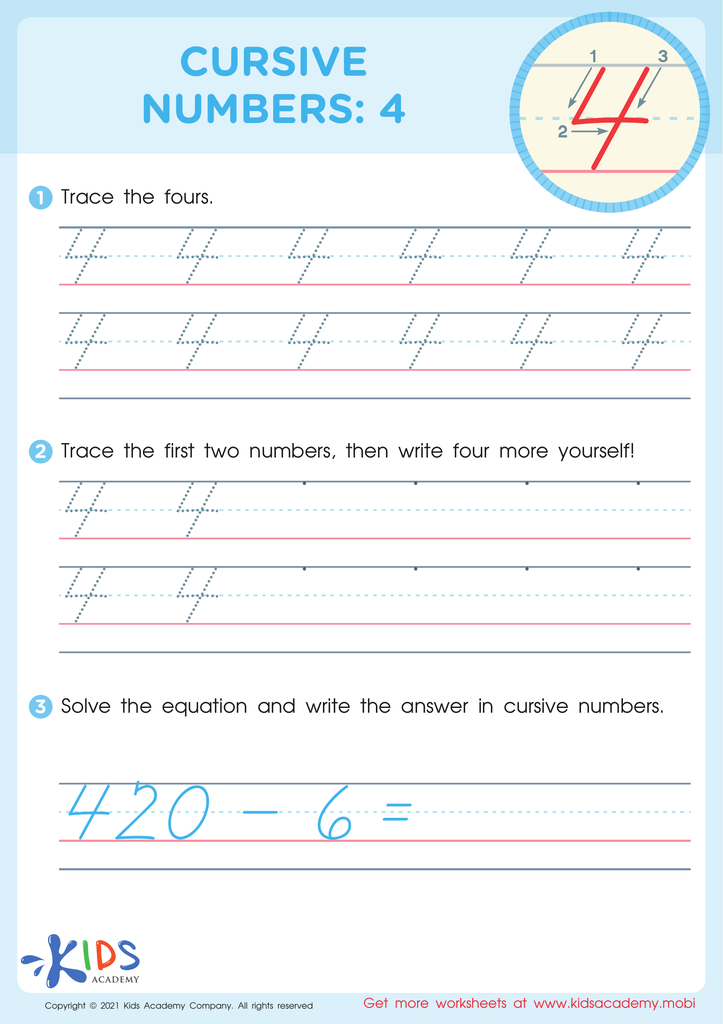
Adding Up to 5 at the Zoo: Page 50
Worksheet
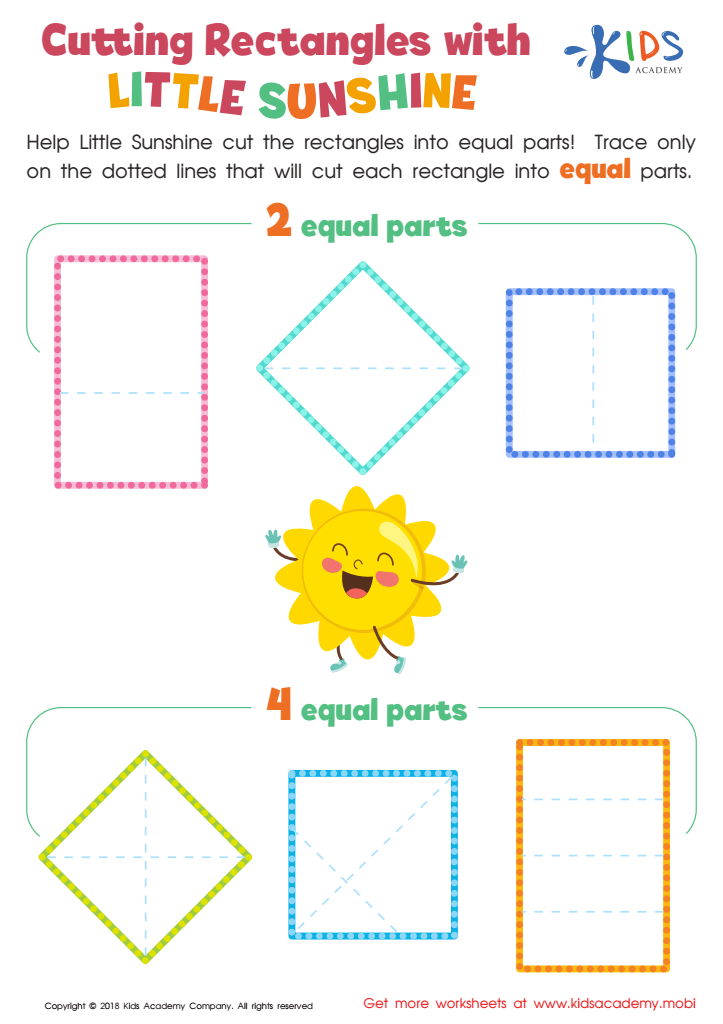
Cursive Numbers: 4 Worksheet


Cursive Numbers: 4 Worksheet

Math is challenging, and teaching cursive alongside it can be overwhelming. Make lessons enjoyable and your child will be more likely to stay engaged. Utilize worksheets to practice tracing the number 4 in cursive. With regular practice, your child can learn to write the number on their own.
Cursive Numbers: 4 Worksheet
Worksheet


Fine motor skills development is crucial for children aged 3 to 9, particularly in the context of math proficiency. These skills encompass small, precise movements that are essential not only for mastering basic tasks like writing and drawing but also for more complex activities such as manipulating objects and counting. Encouraging fine motor skill development helps children build the hand-eye coordination and dexterity necessary for effective mathematical exploration, such as manipulating counting blocks or using measuring tools.

Moreover, there is a strong link between fine motor skills and cognitive development. As children engage in activities that require the use of their hands—like cutting, threading beads, or assembling puzzles—they also enhance their problem-solving abilities. Engaging in these tasks develops children's spatial awareness and understanding of quantities, which are foundational components of mathematical concepts.

Watching children develop these skills can provide teachers and parents with insight into their cognitive growth and encourage a more positive attitude towards math as an integrated, hands-on subject. By prioritizing fine motor skills, caregivers support their children's overall learning journey, laying a strong foundation for lifelong mathematical understanding and proficiency.