Check out this FREE Trial Lesson on Math for age 3-9!

T

Favorites
With answer key
Interactive
  • 3-9
  • Fraction simplification
  • Math
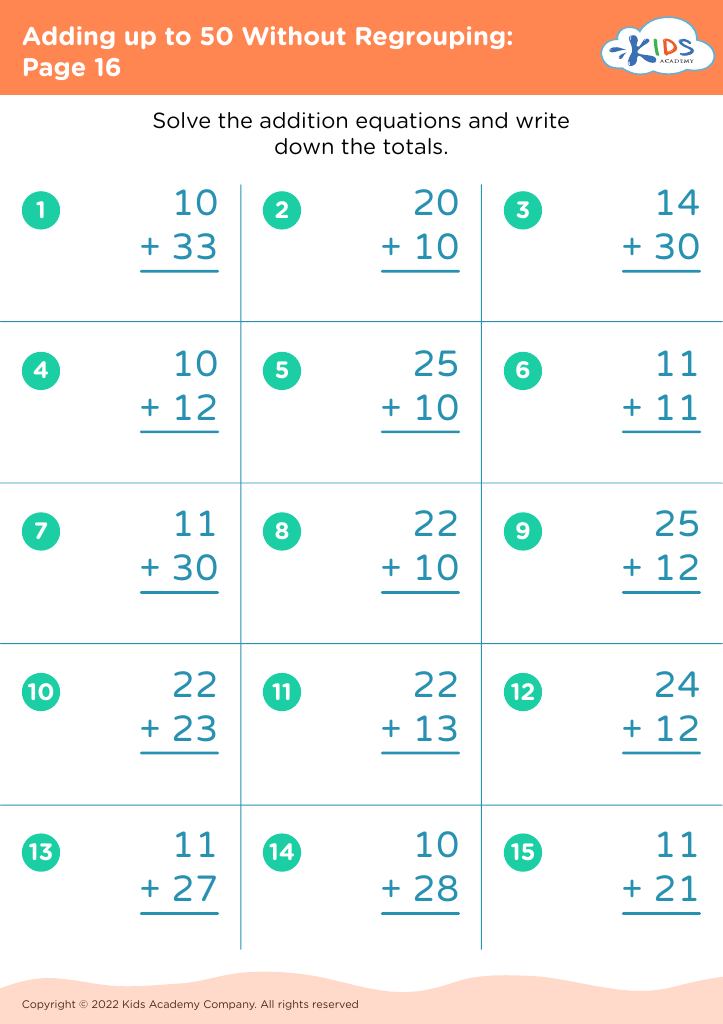
Adding up to 50 Without Regrouping: Page 16
Worksheet
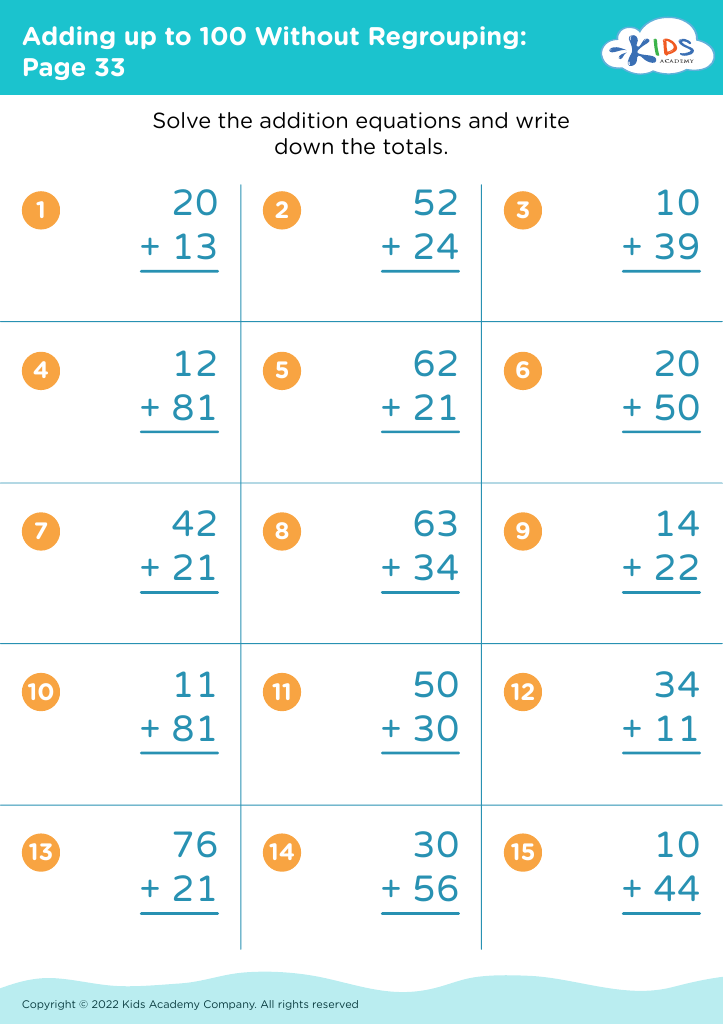
Adding up to 100 Without Regrouping: Page 33
Worksheet
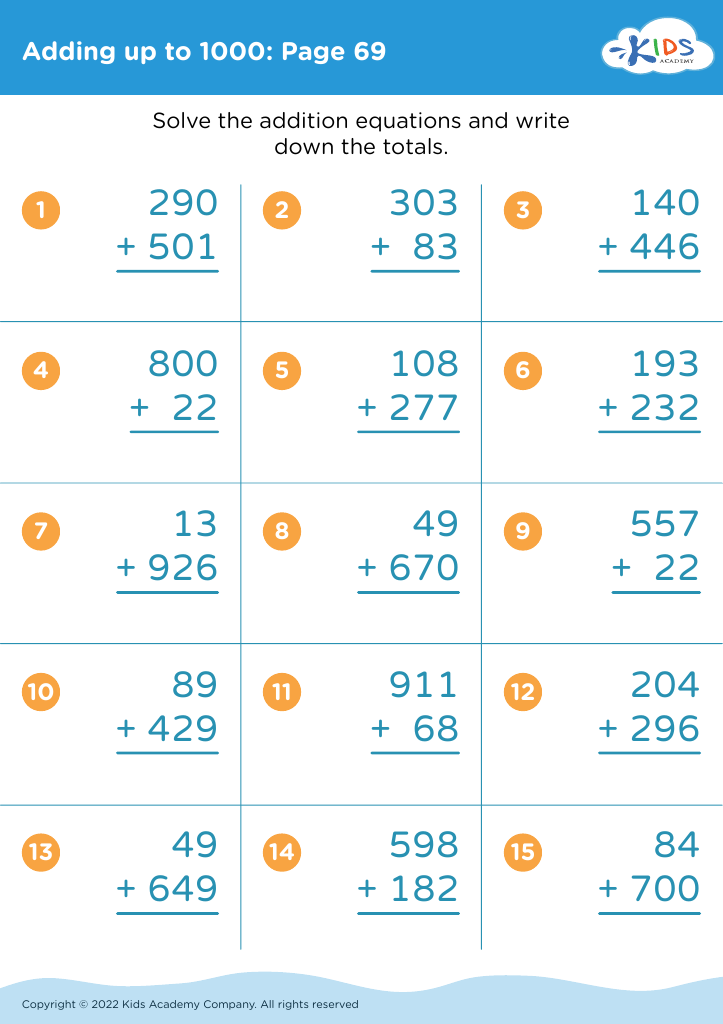
Adding up to 1000: Page 69

Adding up to 1000: Page 69

Adding up to 1000: Page 69
Worksheet
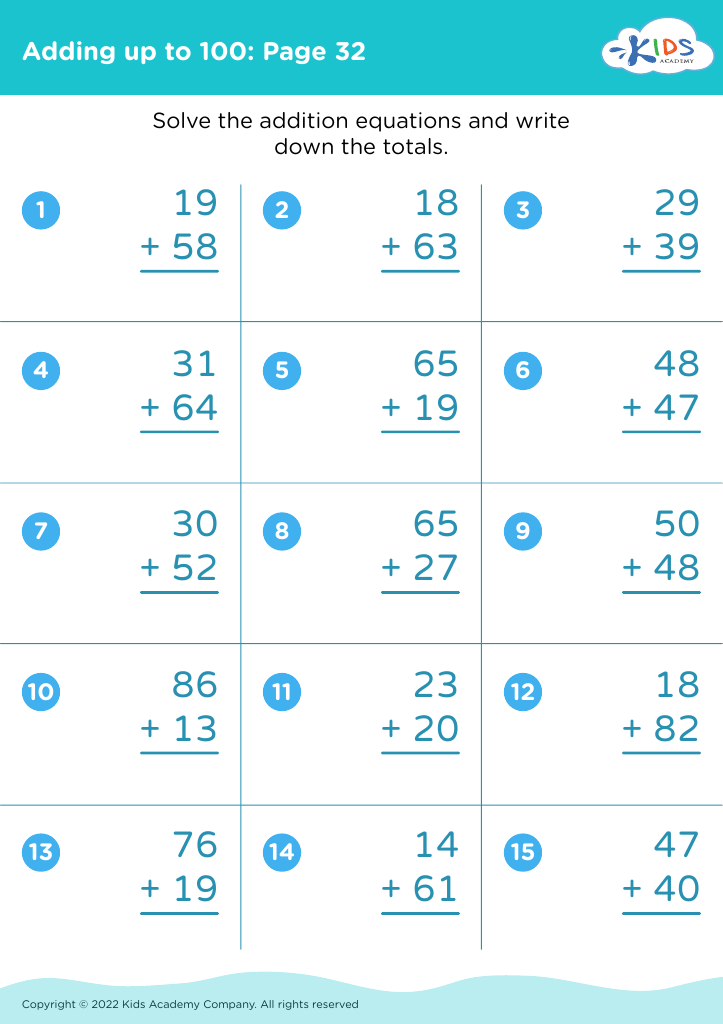
Adding up to 100: Page 32

Adding up to 100: Page 32

Adding up to 100: Page 32
Worksheet
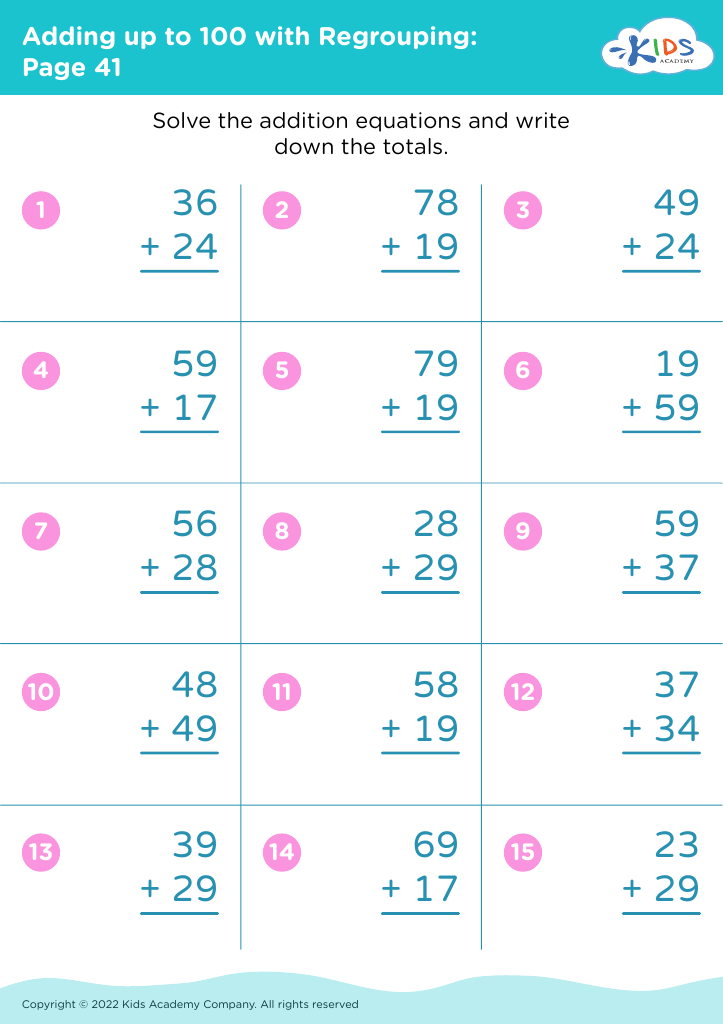
Adding up to 100 with Regrouping: Page 41
Worksheet
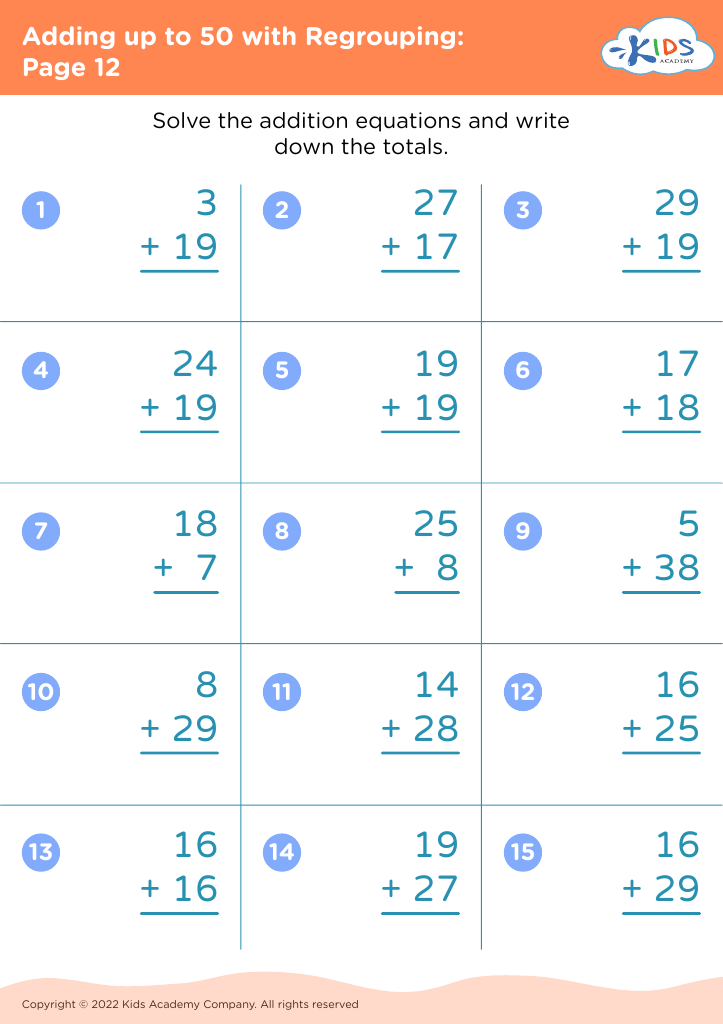
Adding up to 50 with Regrouping: Page 12
Worksheet
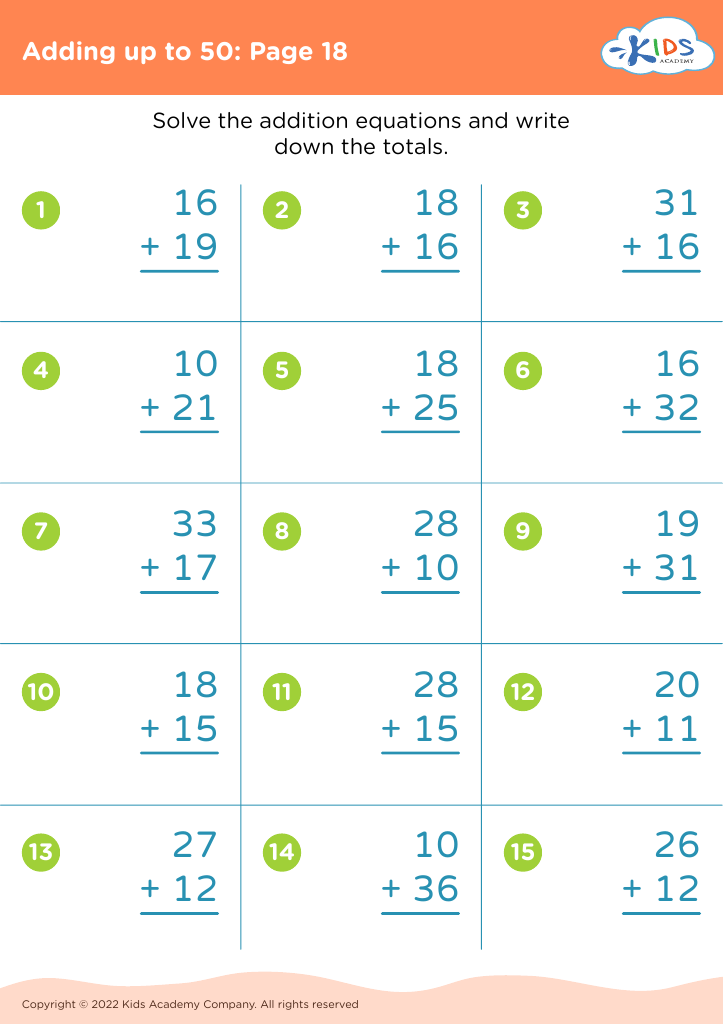
Adding up to 50: Page 18

Adding up to 50: Page 18

Adding up to 50: Page 18
Worksheet
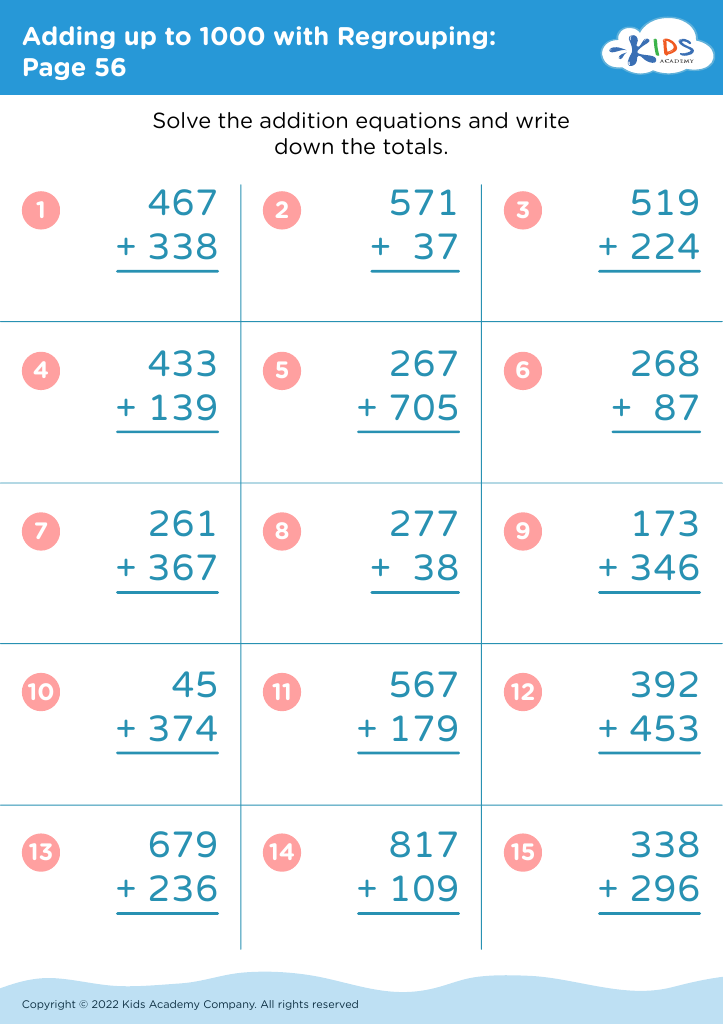
Adding up to 1000 with Regrouping: Page 56
Worksheet
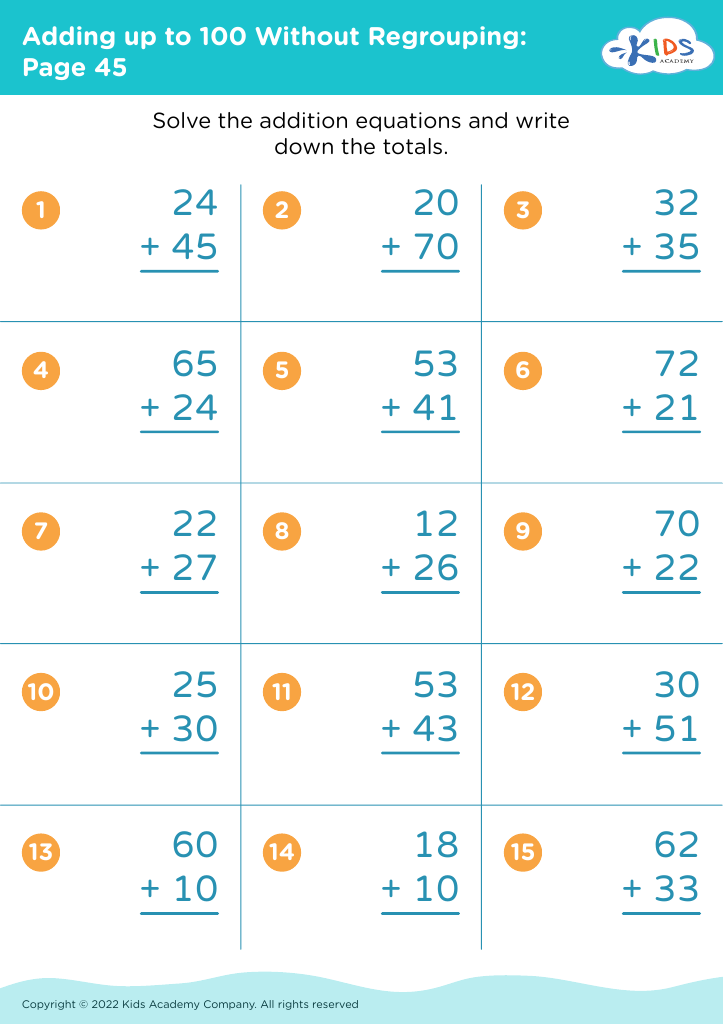
Adding up to 100 Without Regrouping: Page 45
Worksheet
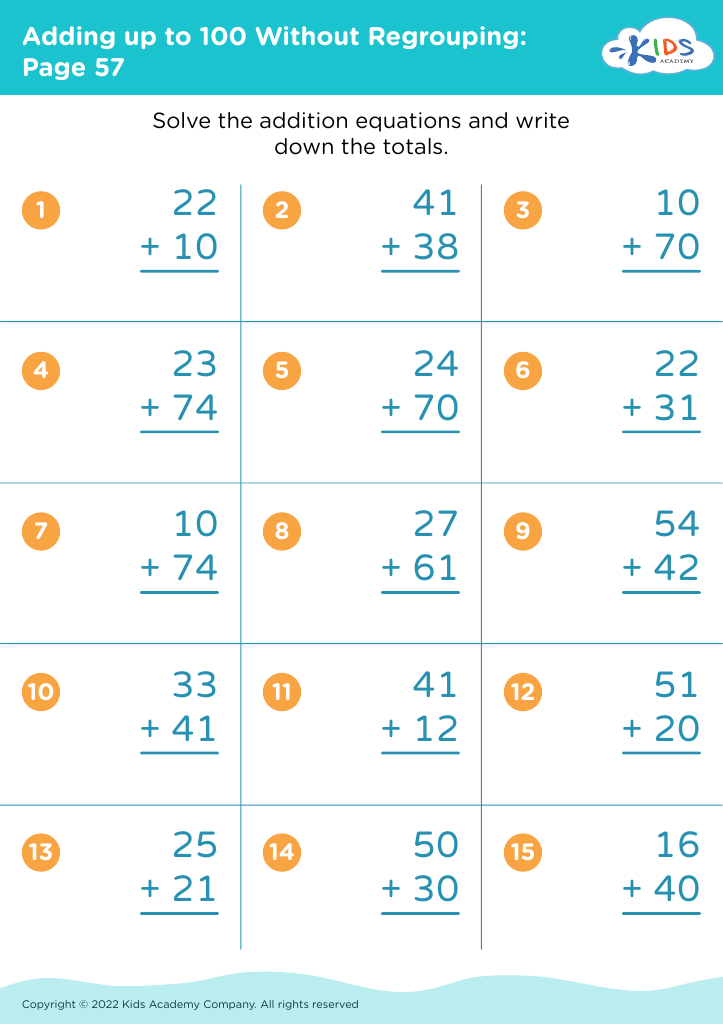
Adding up to 100 Without Regrouping: Page 57
Worksheet
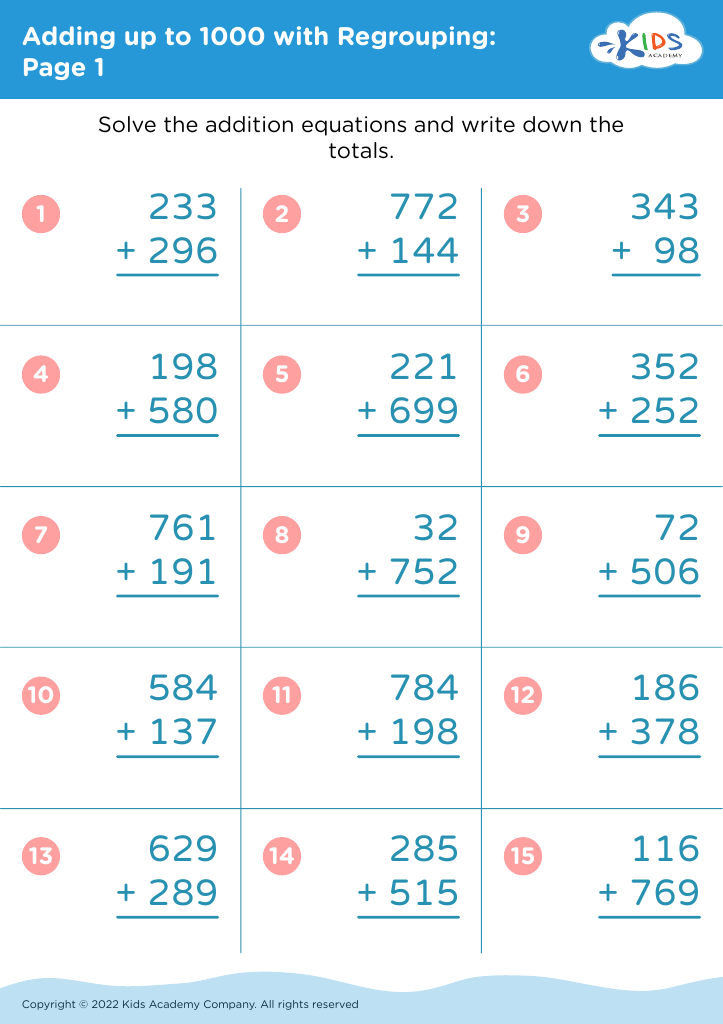
Adding up to 1000 with Regrouping: Page 1
Worksheet
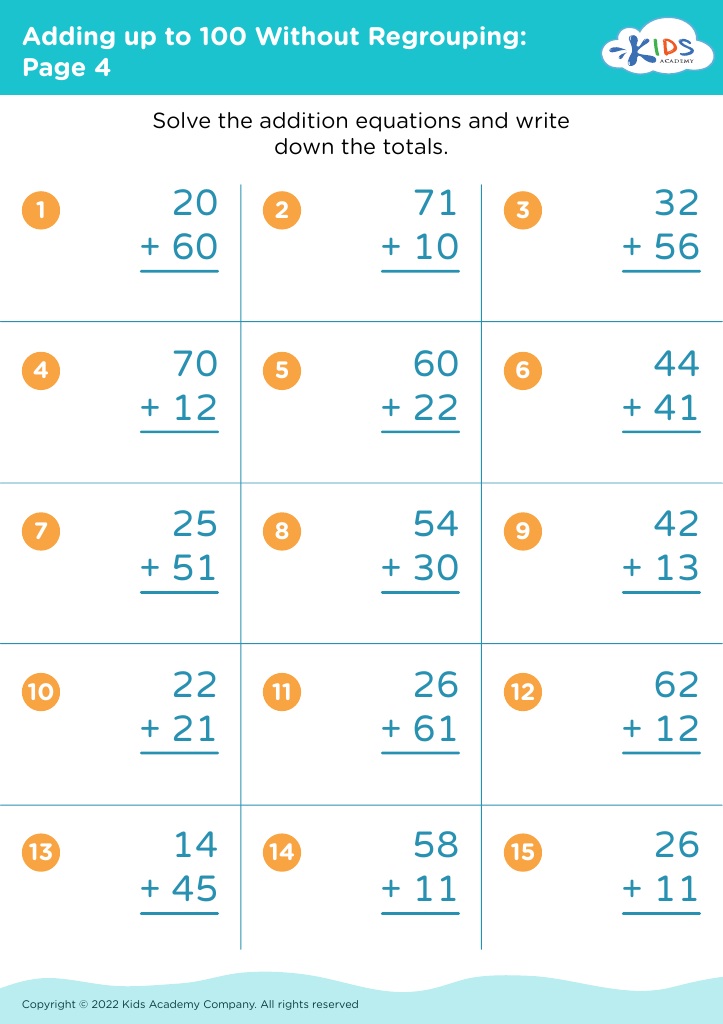
Adding up to 100 Without Regrouping: Page 4
Worksheet
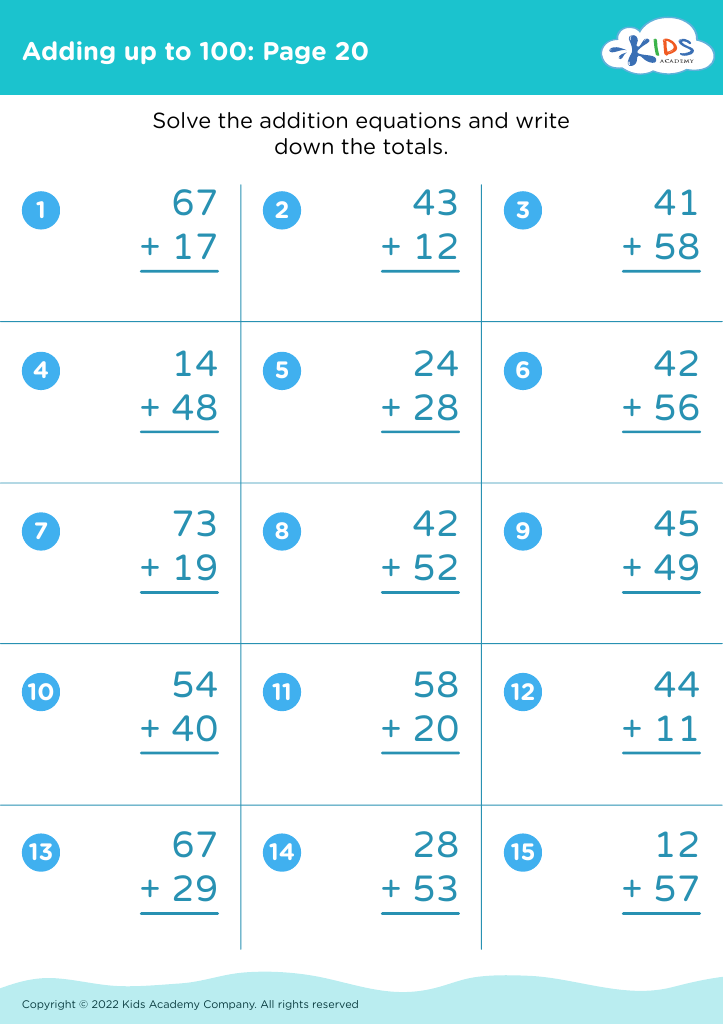
Adding up to 100: Page 20

Adding up to 100: Page 20

Adding up to 100: Page 20
Worksheet
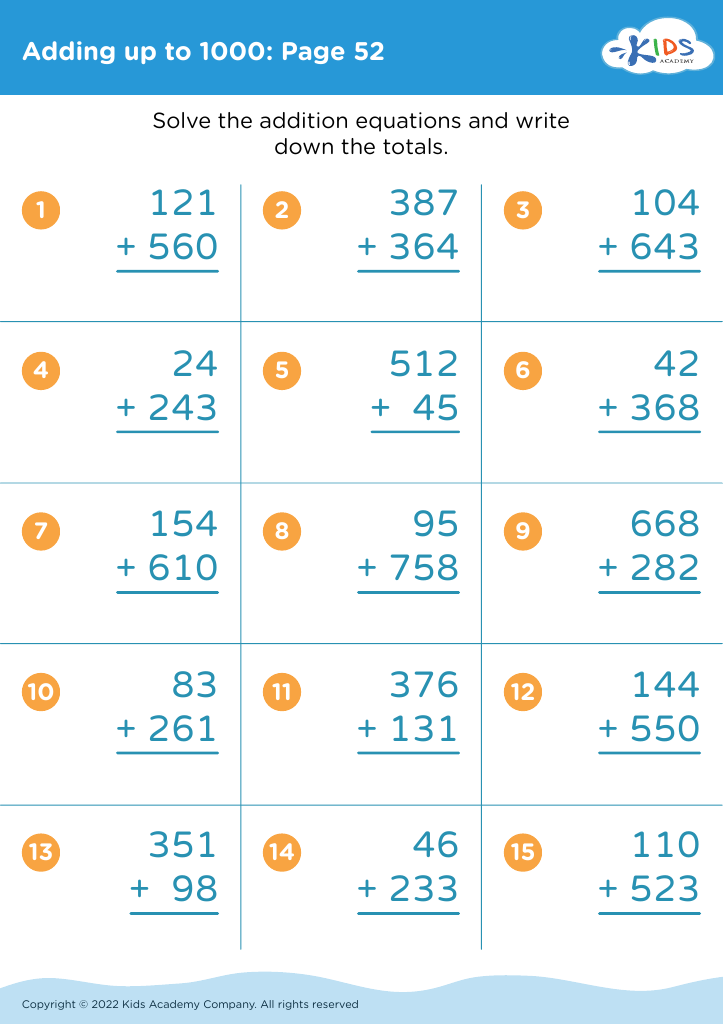
Adding up to 1000: Page 52

Adding up to 1000: Page 52

Adding up to 1000: Page 52
Worksheet
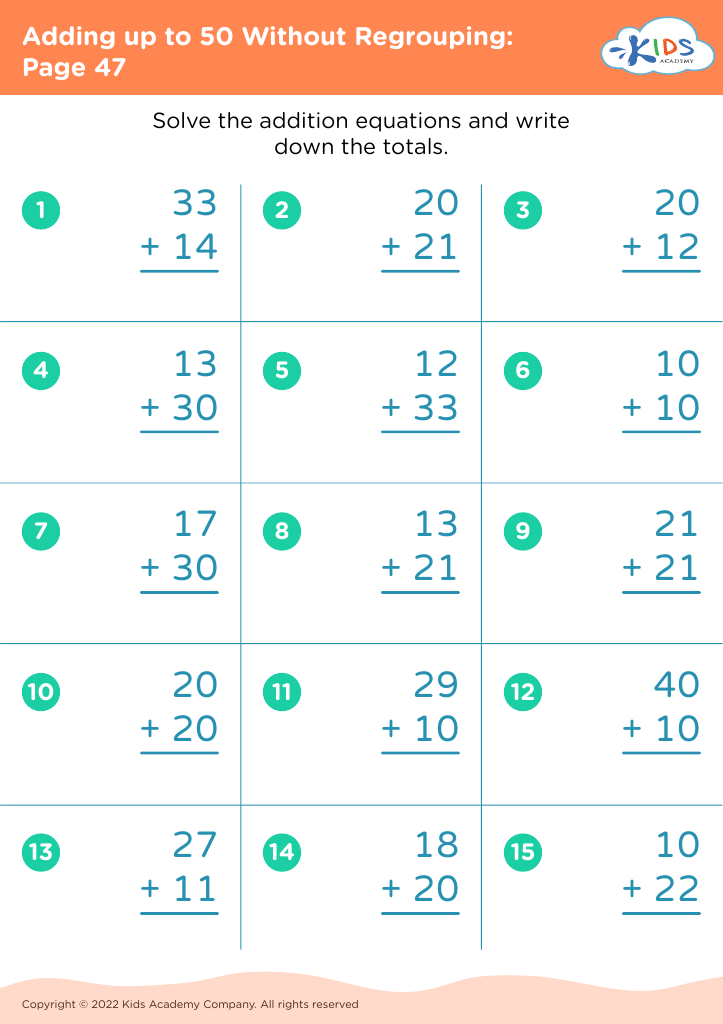
Adding up to 50 Without Regrouping: Page 47
Worksheet
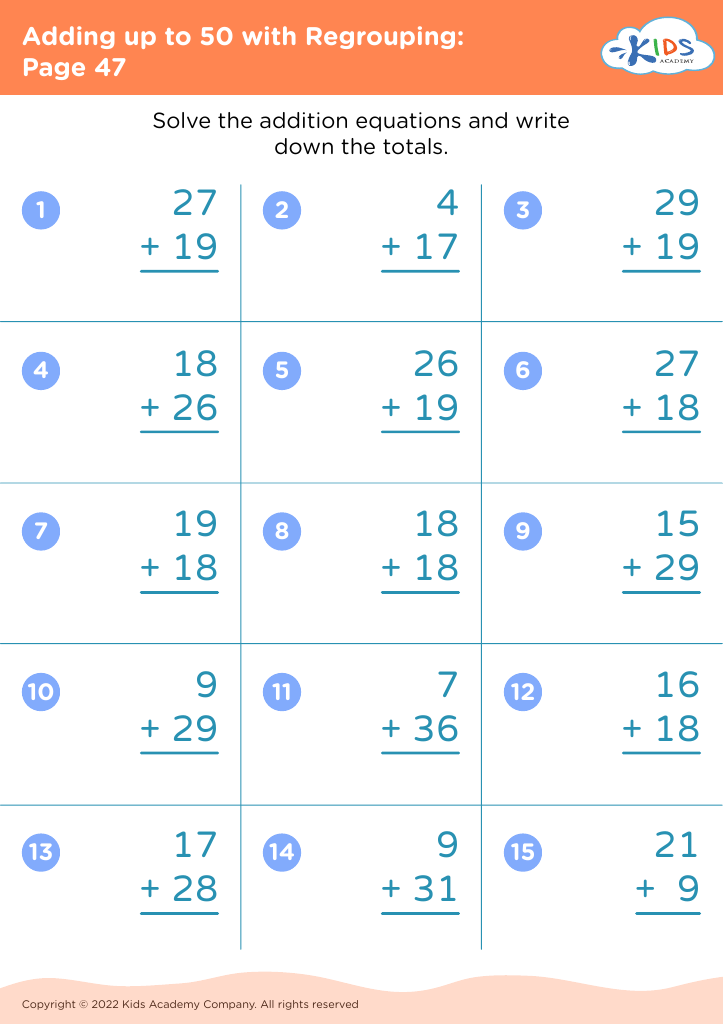
Adding up to 50 with Regrouping: Page 47
Worksheet
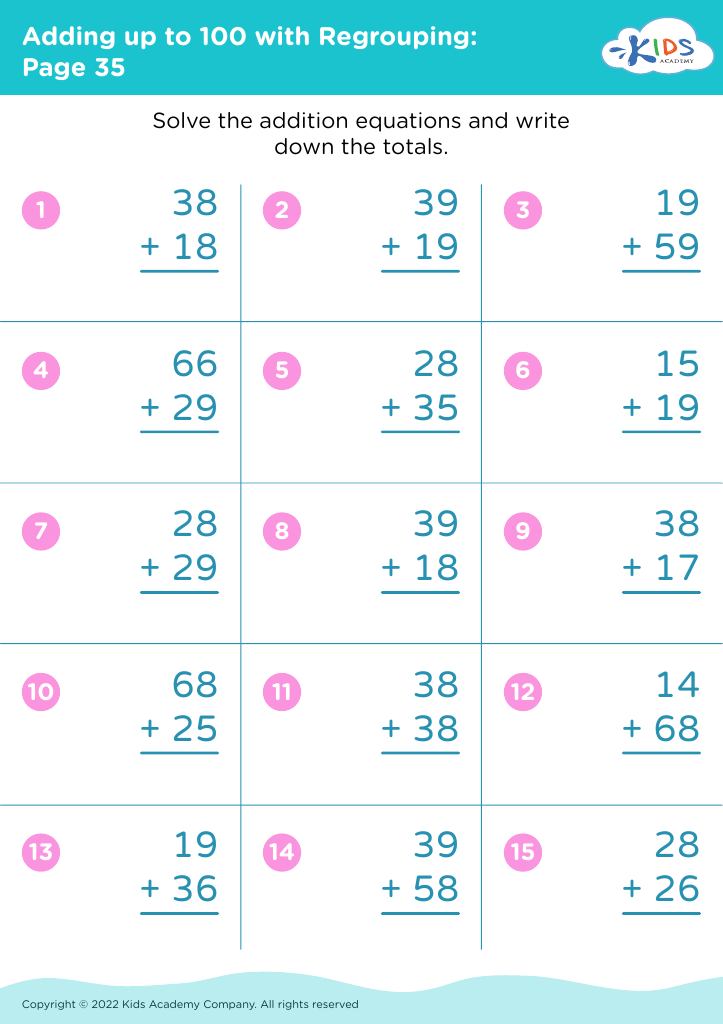
Adding up to 100 with Regrouping: Page 35
Worksheet
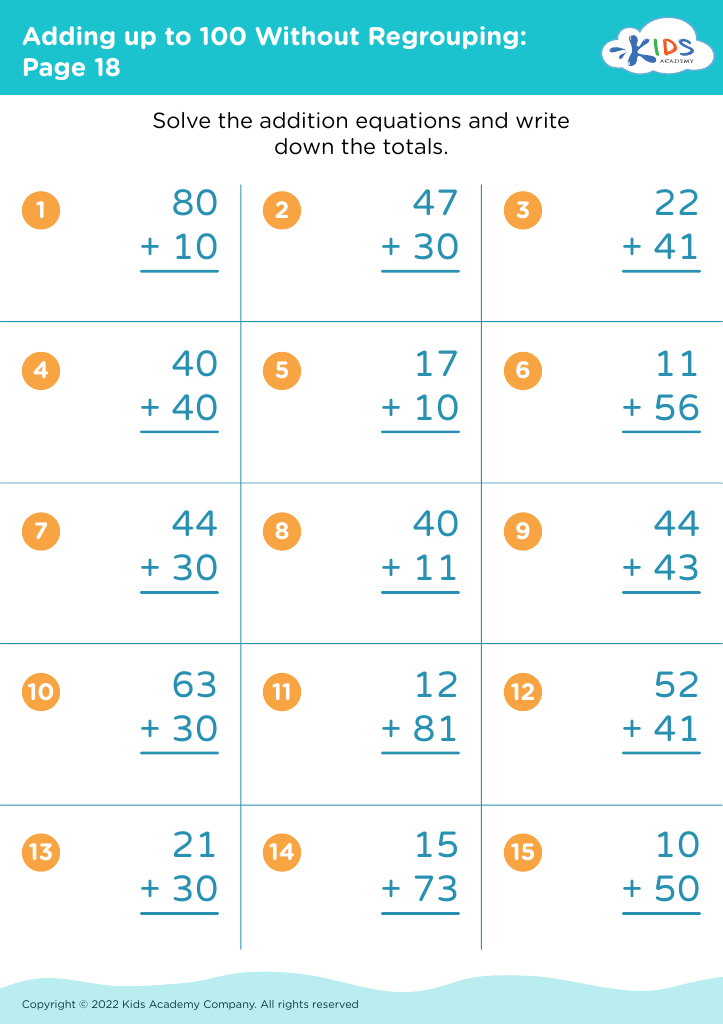
Adding up to 100 Without Regrouping: Page 18
Worksheet
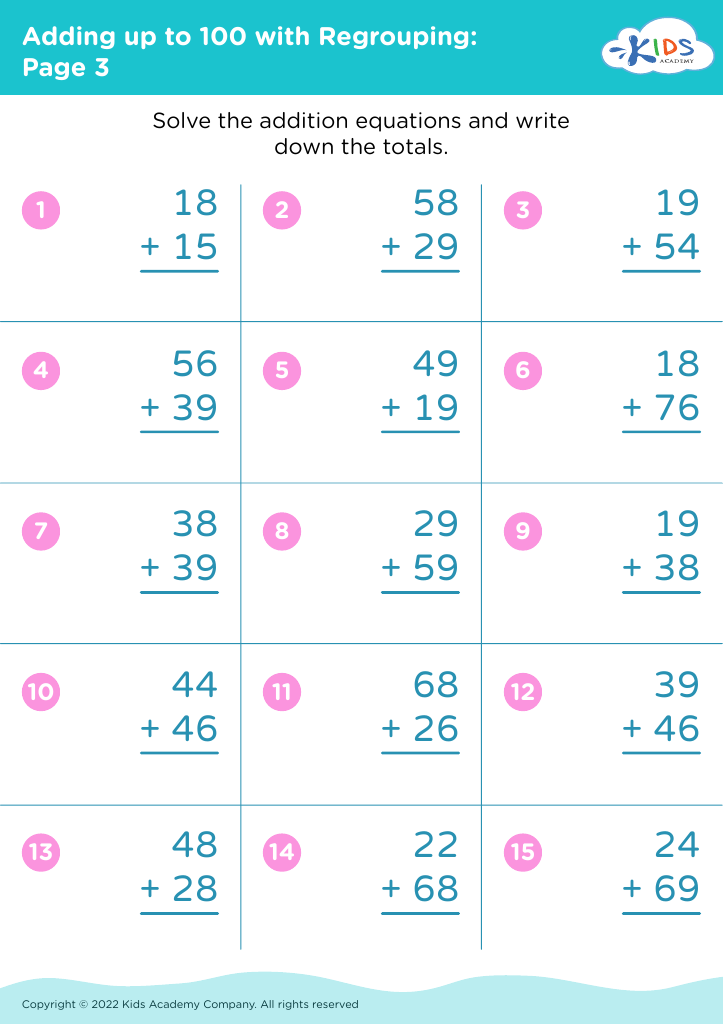
Adding up to 100 with Regrouping: Page 3
Worksheet
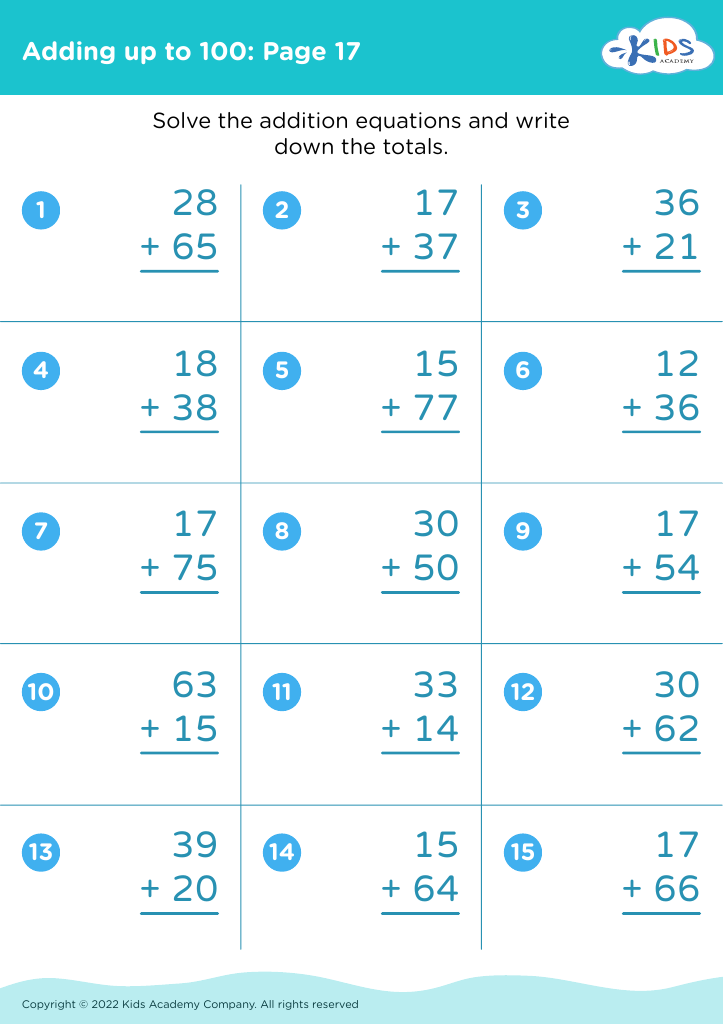
Adding up to 100: Page 17

Adding up to 100: Page 17

Adding up to 100: Page 17
Worksheet
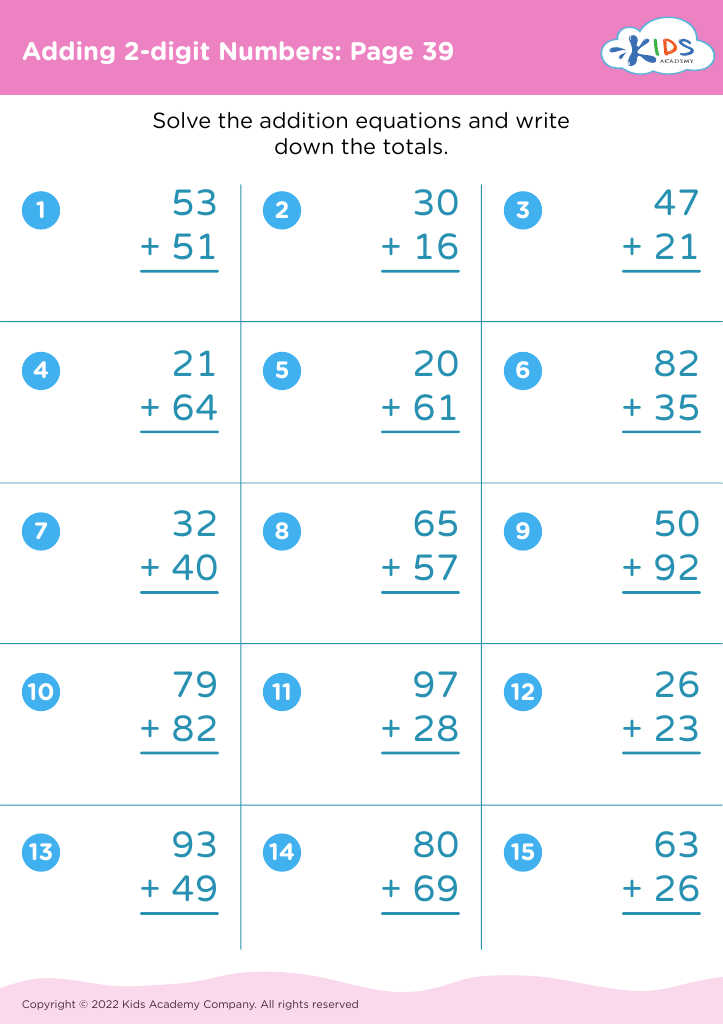
Adding 2-digit Numbers: Page 39

Adding 2-digit Numbers: Page 39

Adding 2-digit Numbers: Page 39
Worksheet
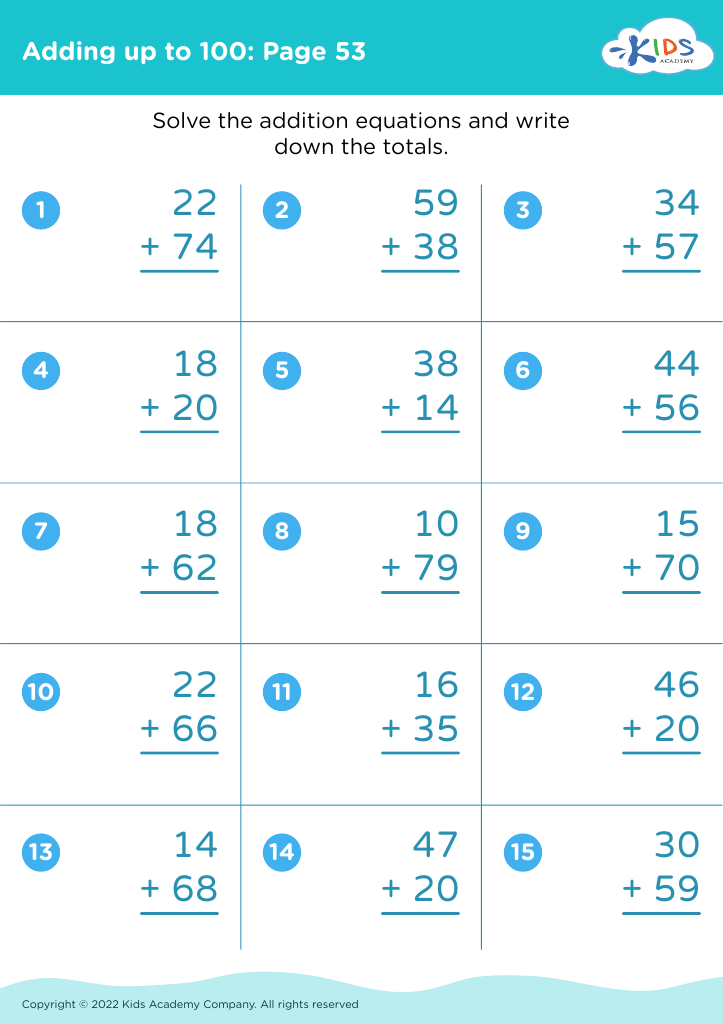
Adding up to 100: Page 53

Adding up to 100: Page 53

Adding up to 100: Page 53
Worksheet
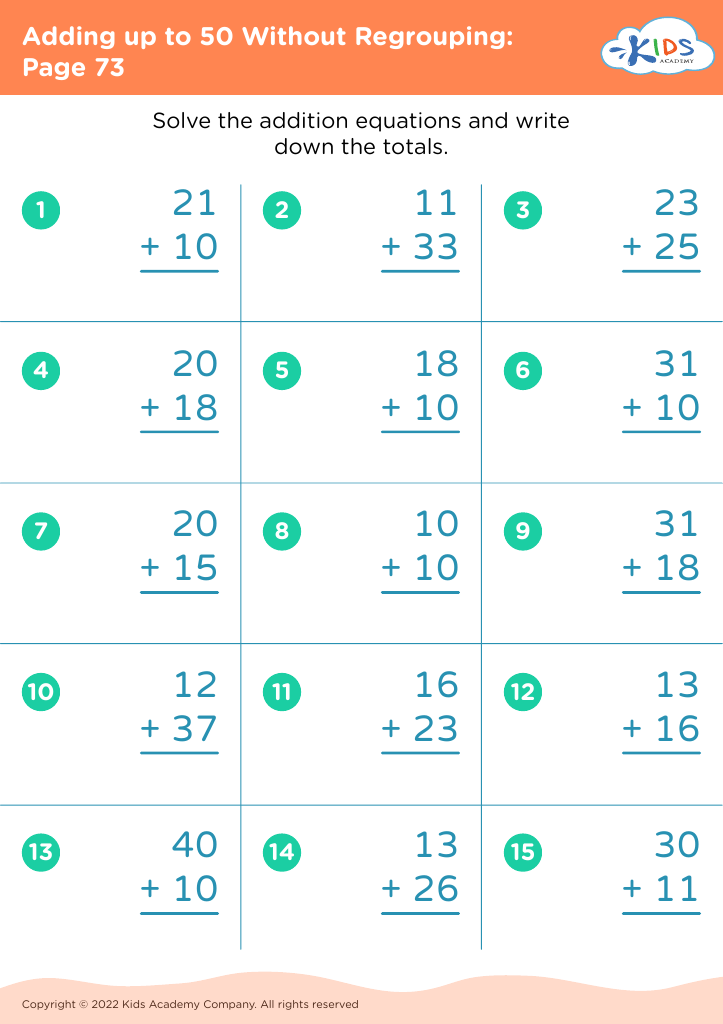
Adding up to 50 Without Regrouping: Page 73
Worksheet
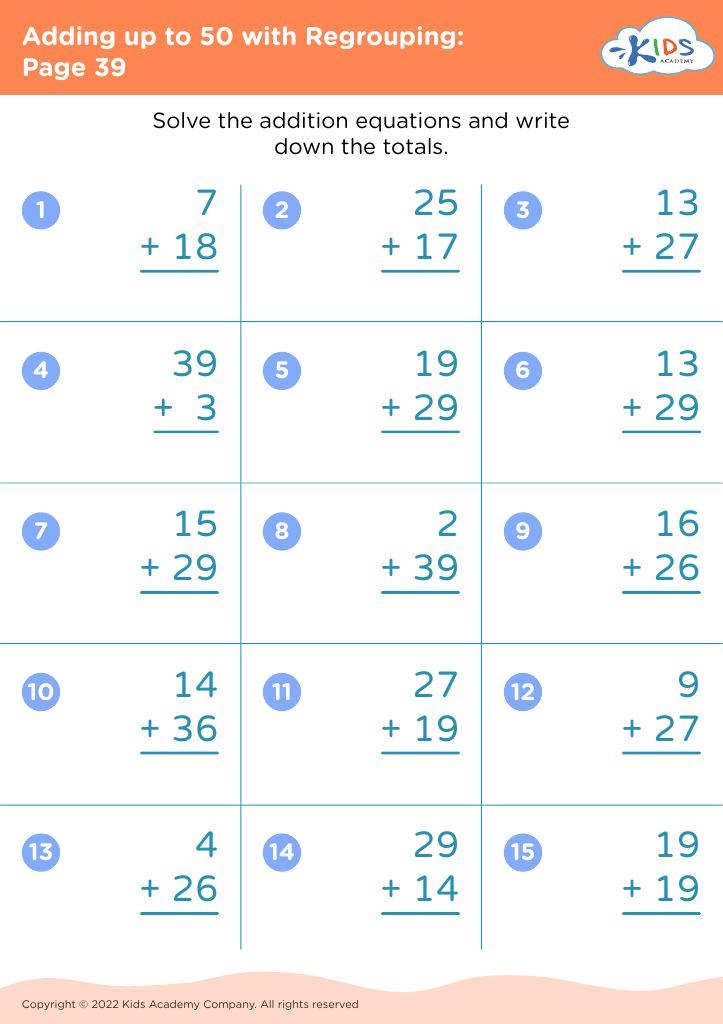
Adding up to 50 with Regrouping: Page 39
Worksheet


Fraction simplification is a foundational skill in mathematics that is crucial for children aged 3-9. For parents and teachers, understanding and facilitating this skill has numerous benefits. Firstly, it strengthens children's number sense and enhances their ability to recognize relationships between numbers, laying the groundwork for more complex mathematical concepts later on.

Additionally, engaging with fractions helps develop critical thinking and problem-solving skills. During simplification, children learn how to analyze and manipulate numbers, a skill that transcends math and applies to everyday life situations – whether cooking, dividing, or budgeting. Simplifying fractions can also build persistence and patience, as children practice and encounter challenges.

Moreover, fraction simplification introduces early learners to the concept of equivalency, fostering an understanding of fairness and sharing which is part of social learning. Encouraging parents and teachers to focus on this skill nurtures not only academic success but also social-emotional skills, demonstrating how math is interwoven with real-world applications and relationships. By embedding fraction simplification into early education, we equip children with essential tools for future learning in mathematics and life, creating a strong educational foundation that promotes confidence and curiosity.