Identify shapes Math Worksheets for Ages 3-9
11 filtered results
-
From - To
Discover fun, engaging, and educational math worksheets designed for kids aged 3-9 at Kids Academy. Our Identify Shapes collection helps young learners easily recognize and name various shapes through colorful, interactive activities and exercises. Each worksheet is expertly crafted to build foundational geometry skills while sparking curiosity and creativity. These printable resources are perfect for classroom use or at-home practice, ensuring kids practice key concepts in an enjoyable way. Boost your child's confidence in math and shapes with Kids Academy’s expertly designed, age-appropriate worksheets. Explore now and watch them excel in their early-learning journey!
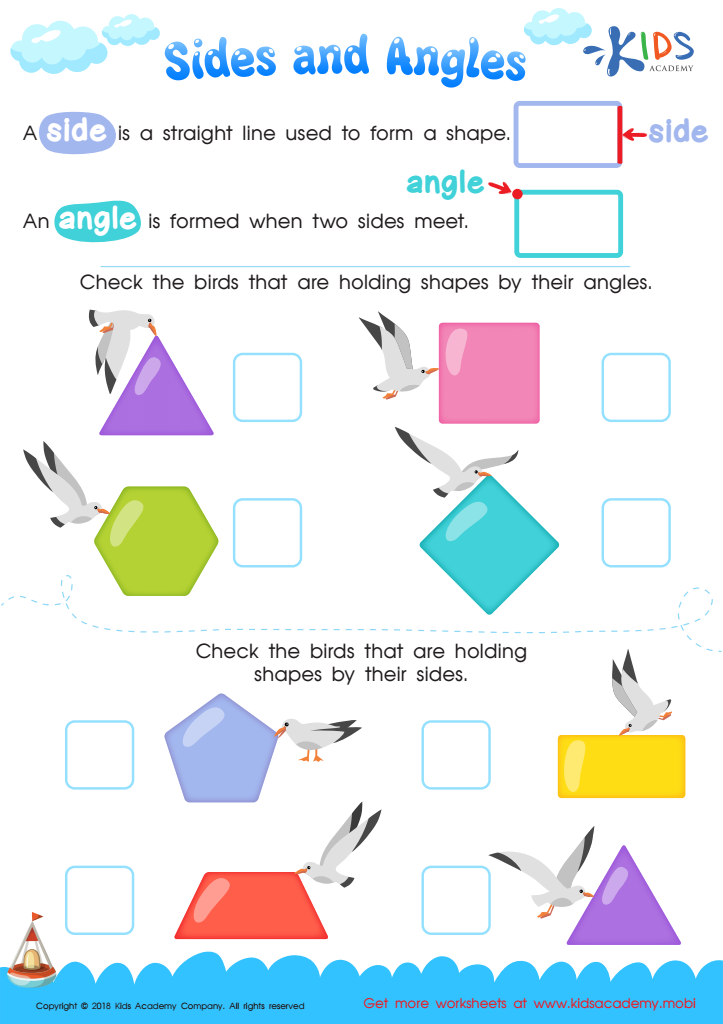
Sides and Angles Worksheet
 Assign to My Students
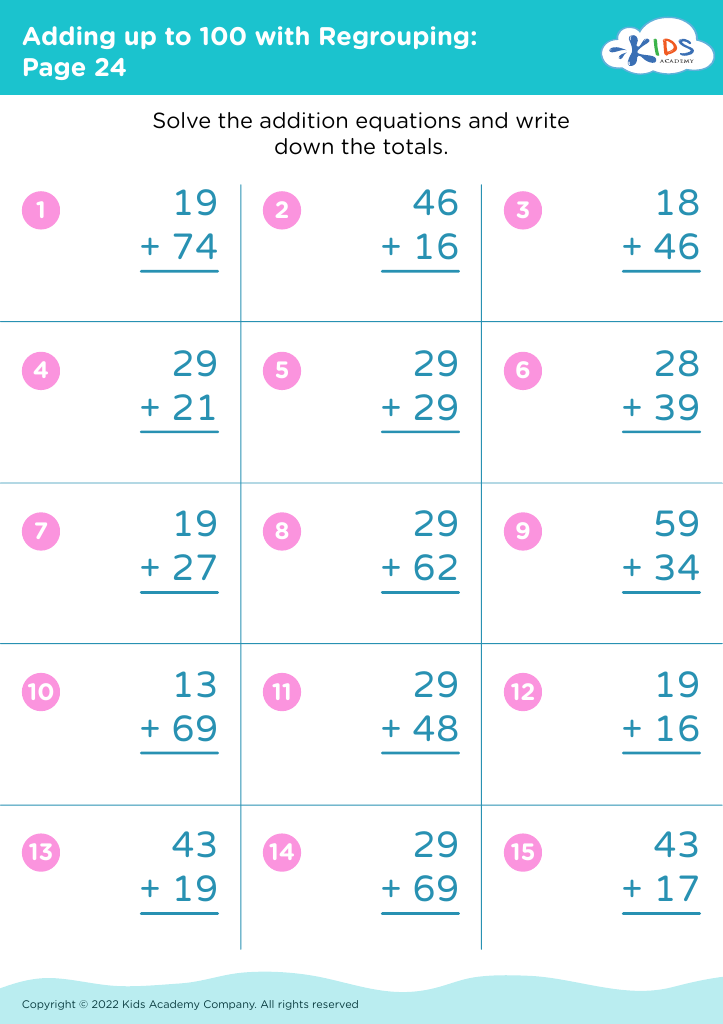
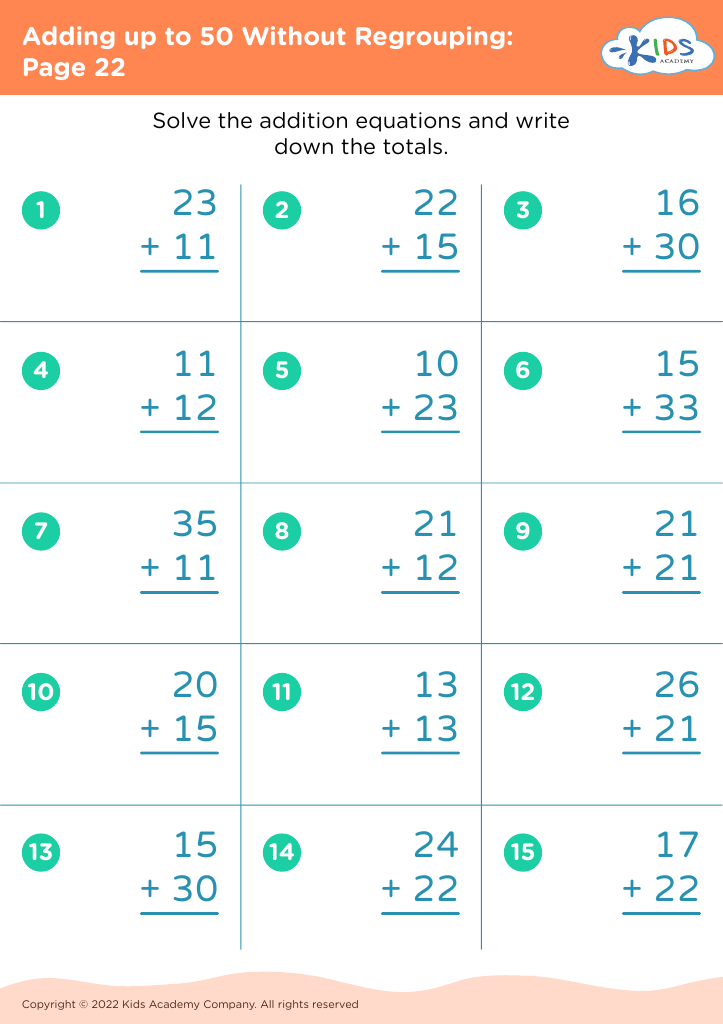
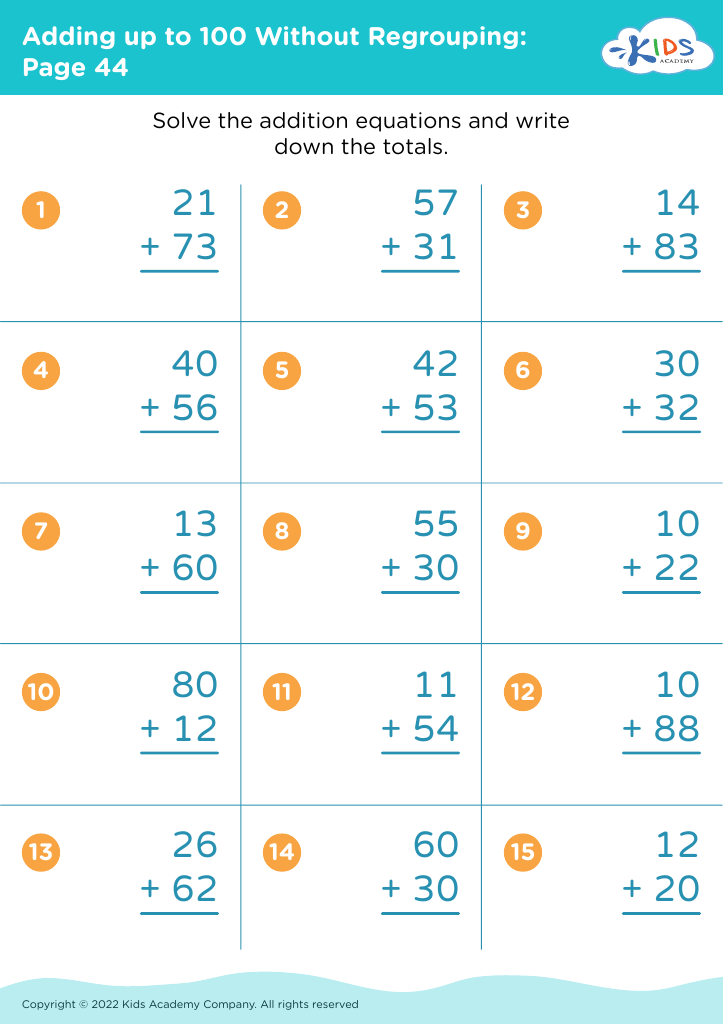


.jpg)



Identifying shapes is a fundamental aspect of early childhood mathematics that plays a crucial role in a child's cognitive development. During the ages of 3-9, children are rapidly developing essential skills such as visual-spatial awareness, problem-solving, and logical reasoning. Recognizing different shapes helps children in understanding the basic properties of objects in their environment, enhancing their observation and classification abilities. For example, distinguishing between squares and rectangles introduces them to the concept of angles and sides, which underpins more complex geometric ideas they will learn later.
Moreover, knowledge of shapes also supports language development. When children describe shapes, they practice using descriptive words and reinforce their vocabulary. This verbal expression aids in clearer communication and better understanding of instructions in both academic and real-world settings.
Early shape identification activities also set a foundation for more advanced mathematical concepts, including symmetry, fractions, and area. Engaging with shapes through playful and hands-on activities captivates young learners' interest and encourages a positive attitude toward math. Therefore, parents and teachers should prioritize shape-related activities to foster a well-rounded growth trajectory in their children's educational journey. Through these foundational experiences, children gain confidence and curiosity, which can propel their success in lifelong learning and various disciplines.








