Mental math improvement Math Worksheets for Ages 3-9
7 filtered results
-
From - To
Enhance your child's math skills with our engaging Mental Math Improvement Worksheets, specially designed for ages 3-9. These worksheets foster a fun learning environment, encouraging children to boost their mental calculation abilities through interactive activities. Covering essential topics such as addition, subtraction, and number recognition, our carefully crafted exercises promote critical thinking and problem-solving. Ideal for both classroom and home use, these worksheets cater to different skill levels, helping each child progress at their own pace. Equip your young learner with the foundational skills they need for future math success. Explore our collection today for a smarter, brighter tomorrow!
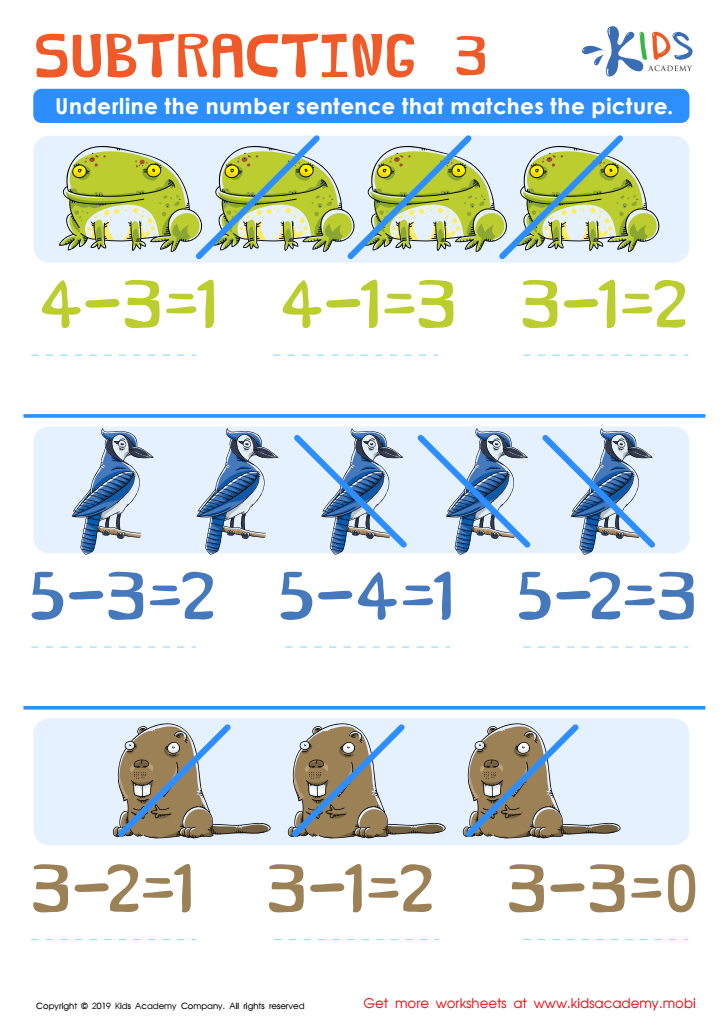
Subtracting 3 Worksheet
 Assign to My Students
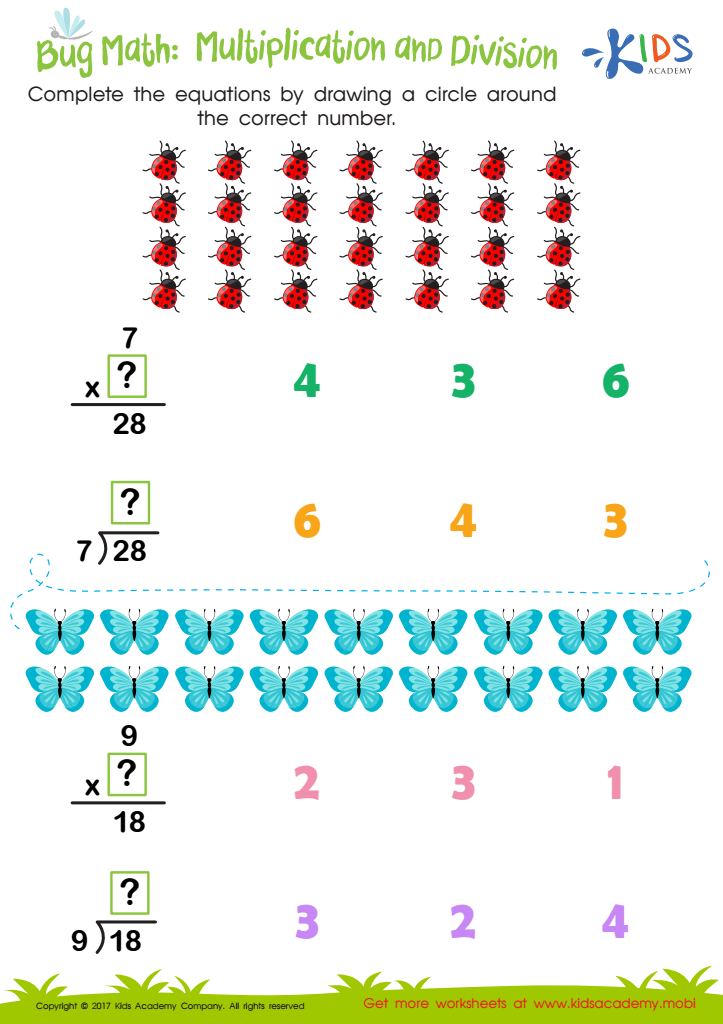
Multiplication and Division Worksheet
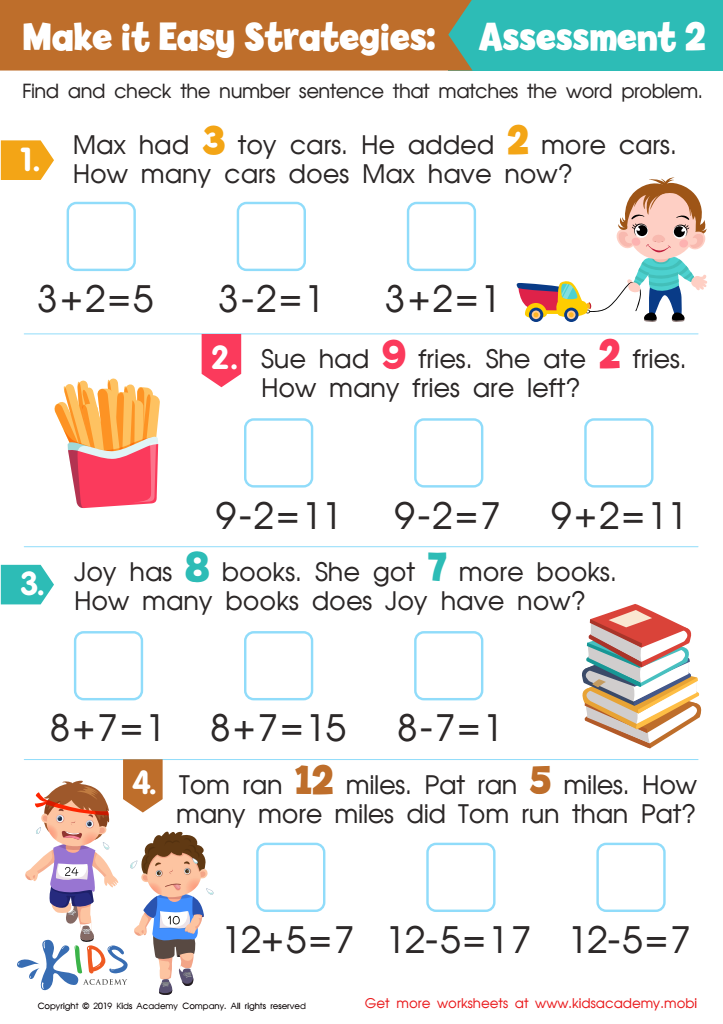
Make it Easy Strategies: Assessment 2 Worksheet
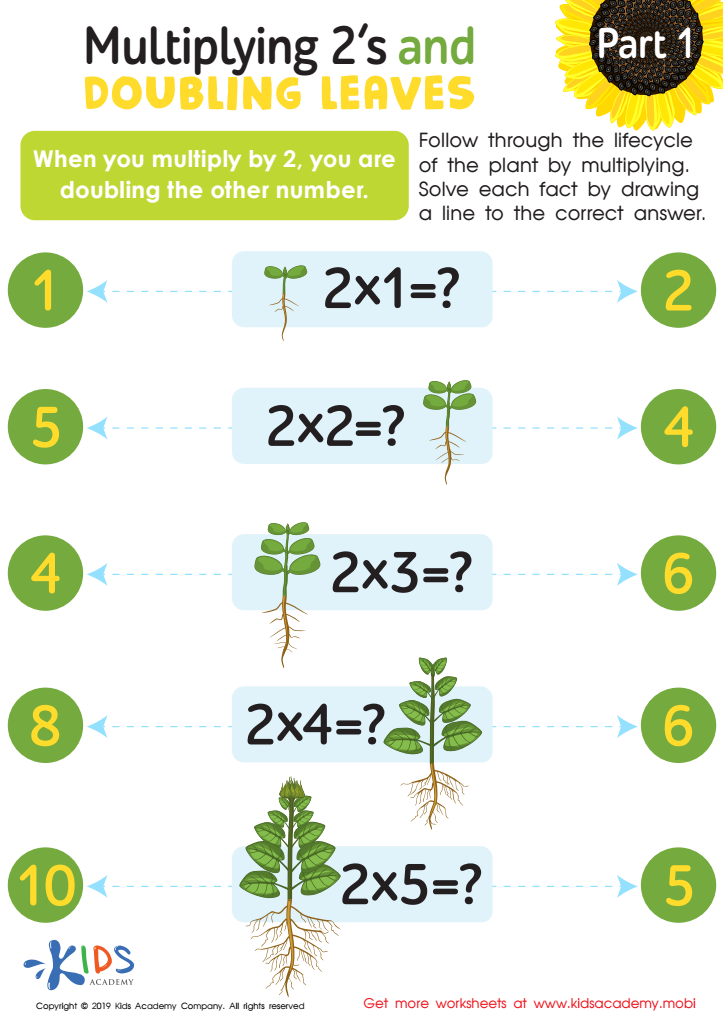
Multiplying 2’s and Doubling Leaves Part 1 Worksheet
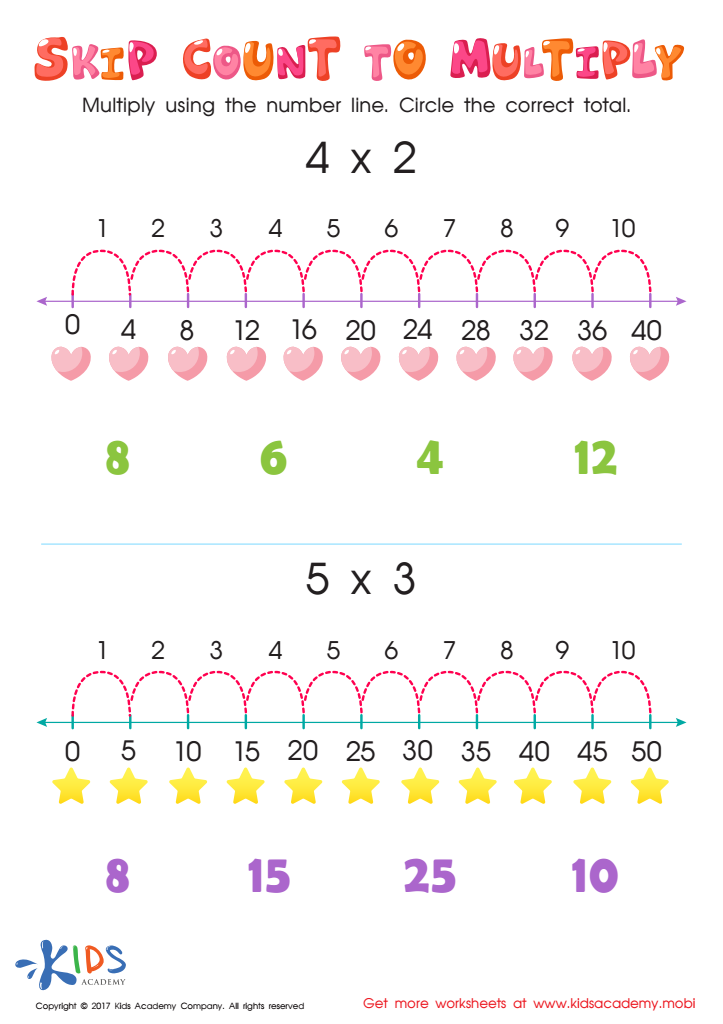
Skip Count Multiplication Worksheet





%20(1).jpg)

Mental math skills are crucial for children aged 3-9 as they lay the foundation for mathematical understanding and problem-solving abilities. Parents and teachers should care about improving mental math for several reasons. Firstly, developing these skills early enhances children's number sense, which is essential for grasping more complex mathematical concepts in the future.
Moreover, mental math promotes cognitive development by engaging critical thinking and reasoning. When children learn to perform calculations in their heads, they become more adept at recognizing patterns and relationships in numbers, enhancing their overall analytical abilities. This can boost their confidence in math and encourage a positive attitude toward the subject.
Additionally, mental math encourages flexibility and creativity in problem-solving. Children learn to approach problems in multiple ways, finding efficient solutions and making connections across various mathematical concepts. This flexibility is vital not just in mathematics but in everyday life situations requiring quick decision-making.
Further, increasing mental math proficiency can have significant implications for academic performance, as it helps students perform better on standardized tests and in-class assessments. Overall, fostering mental math skills equips children with the tools they need for lifelong success in mathematics and beyond.








