Number sequence learning Math Worksheets for Ages 3-9
3 filtered results
-
From - To
Discover engaging Number Sequence Learning Math Worksheets designed specifically for children aged 3-9 at Kids Academy. This collection of high-quality, printable worksheets focuses on enhancing counting skills, number recognition, and logical thinking by guiding young learners through fun and interactive number sequences. Whether your child is just starting to count or has begun understanding patterns, these worksheets make learning math enjoyable and effective. Tailored to different skill levels, they aim to build a strong mathematical foundation in an entertaining way. Perfect for both home and classroom use, help your child develop essential early math skills with our well-crafted resources.
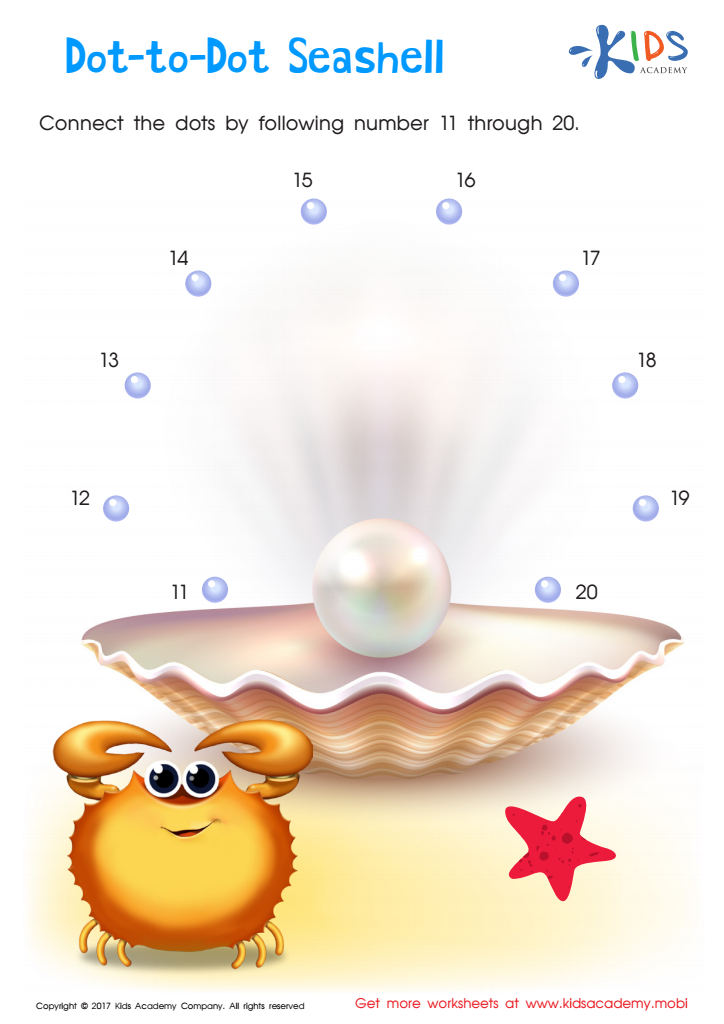
Ordering 11–20: Dot–to–dot Seashell Printable
 Assign to My Students

Counting on the City Skyline: Dot-to-Dot Worksheet



.jpg)




Understanding number sequences is foundational in the early years of mathematical learning for children aged 3-9. First, grasping the concept of sequences lays the groundwork for numerical literacy. It helps children to recognize patterns, an essential skill in all branches of math including addition, subtraction, multiplication, and even more complex operations they encounter later on. By learning number sequences, kids can start comprehending the concepts of counting not just forwards, but also backwards, enhancing their arithmetic skills.
For parents and teachers, focusing on number sequence learning is crucial because it nurtures critical thinking and problem-solving abilities. When children recognize patterns, they are better equipped to make predictions and logical connections, pivotal skills in both academic and everyday contexts. Furthermore, mastery of number sequences allows children to develop a sense of order and structure, making sense of the world around them.
Additionally, early success in number sequencing builds confidence. This positive reinforcement can boost a child's overall attitude towards math, a subject that many find challenging as they progress through school. Therefore, investing time and effort into teaching number sequencing at an early age can yield long-term academic benefits and enhance overall cognitive development. For these reasons, parents and teachers should prioritize activities that include number sequence learning in early education.








