Recognizing shapes Math Worksheets for Ages 3-9
35 filtered results
-
From - To
Welcome to our "Recognizing Shapes Math Worksheets" page, designed specifically for children ages 3-9! These engaging resources help young learners identify and understand various shapes, laying the foundation for essential math skills. Our worksheets feature fun and interactive exercises, including coloring, matching, and tracing activities that make learning shapes an enjoyable experience. Perfect for both classroom and home use, these worksheets cater to different learning levels, ensuring every child can thrive. Encourage your child's mathematical journey while fostering creativity and problem-solving skills through our comprehensive shape recognition activities. Explore our collection today and watch your child's confidence soar!
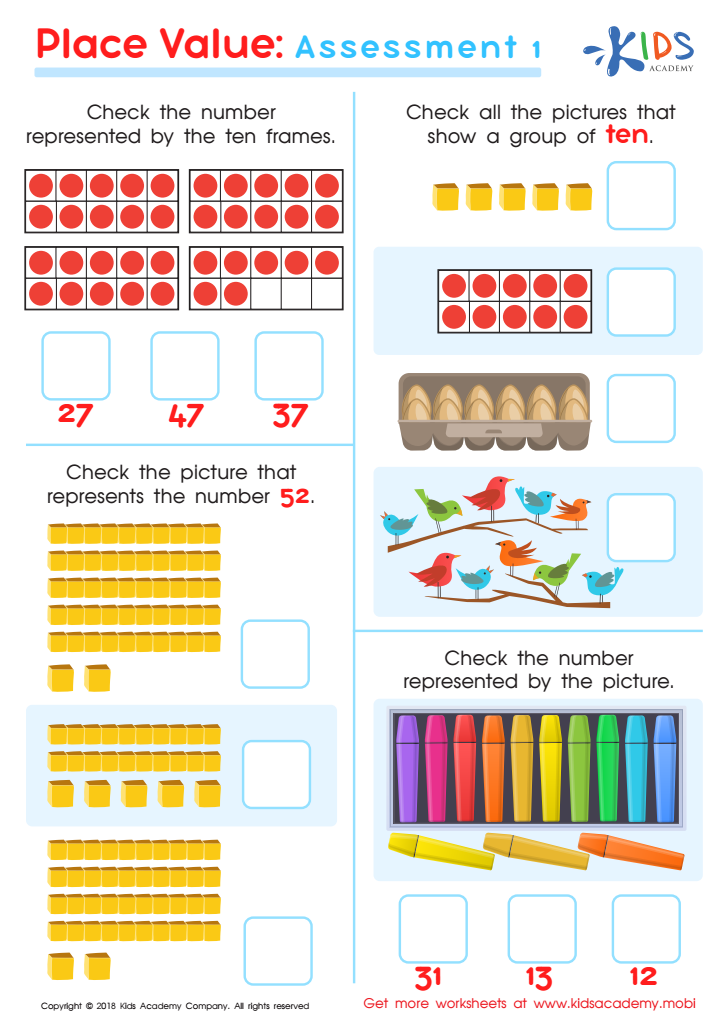
Place Value: Assessment 1 Worksheet
 Assign to My Students
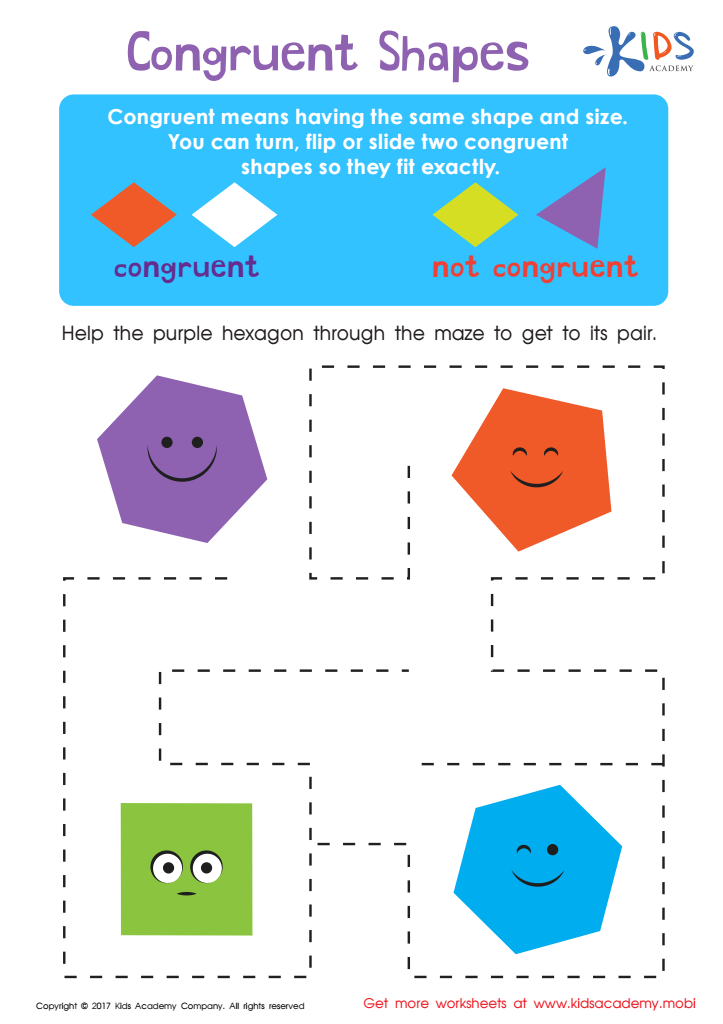
Congruent Shapes Worksheet
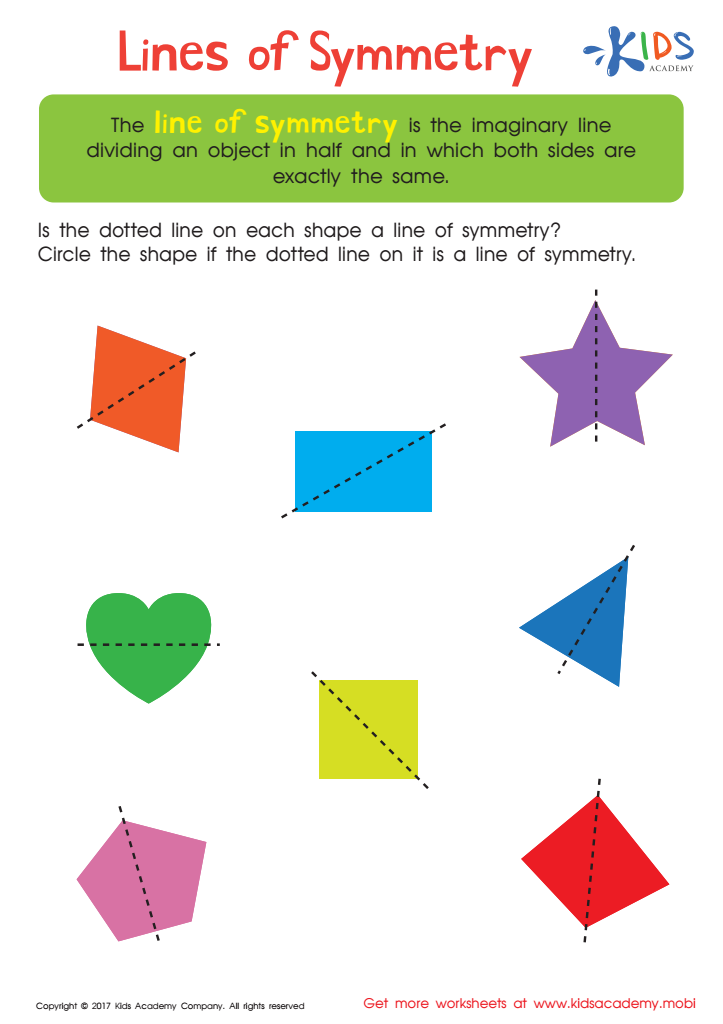
Lines of Symmetry Printable
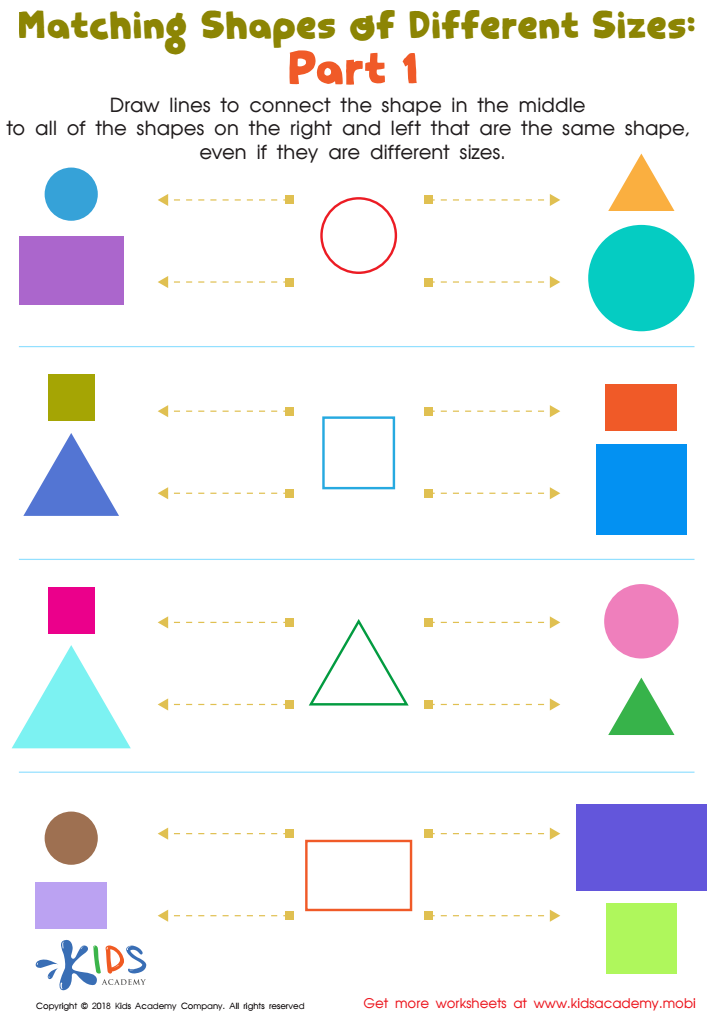
Geometry: part 1 Worksheet
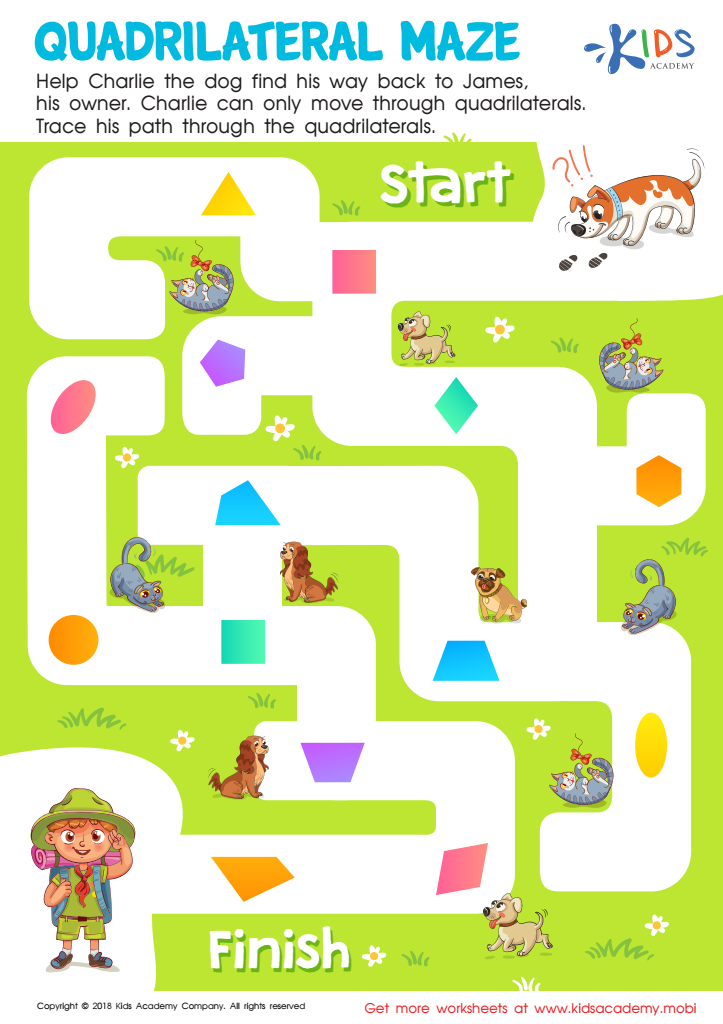
Quadrilateral Maze Worksheet



%20(1).jpg)



.jpg)
Recognizing shapes is a fundamental mathematical skill that lays the foundation for a child’s overall cognitive development, particularly in children aged 3-9. For parents and teachers, understanding the significance of this skill is crucial for fostering a love for math and improving problem-solving abilities.
Firstly, shape recognition enhances spatial awareness. When children learn to identify different shapes—such as circles, squares, and triangles—they begin to understand their properties and how they relate to objects in the real world. This knowledge supports further concepts in geometry, which they will encounter in later grades.
Secondly, shape recognition aids in the development of fine motor skills. Activities like drawing, cutting, and building with shapes promote hand-eye coordination, essential for writing and other tasks.
Furthermore, shape recognition encourages critical thinking. By comparing and contrasting shapes, children learn to categorize and make connections, building their analytical abilities.
Finally, incorporating shape recognition into everyday activities makes learning fun. Engaging children through games and creative projects fosters a positive attitude toward math, setting the stage for lifelong learning. By prioritizing shape recognition, parents and teachers can significantly contribute to a child's readiness for future academic challenges and daily problem-solving experiences.








