Shape comparison Math Worksheets for Ages 3-9
4 filtered results
-
From - To
Explore our engaging Shape Comparison Math Worksheets, designed for children ages 3-9! These fun and interactive worksheets enable young learners to develop essential comparison skills by identifying shapes based on size, color, and type. Each worksheet features vibrant visuals and age-appropriate activities that promote hands-on learning while improving cognitive and observational abilities. Whether at home or in the classroom, these worksheets encourage creativity and confidence in mathematical understanding. Perfect for early learners, parents, and educators, our shape comparison activities make math enjoyable and effective. Download now to enhance your child's learning journey and boost their shape recognition skills!
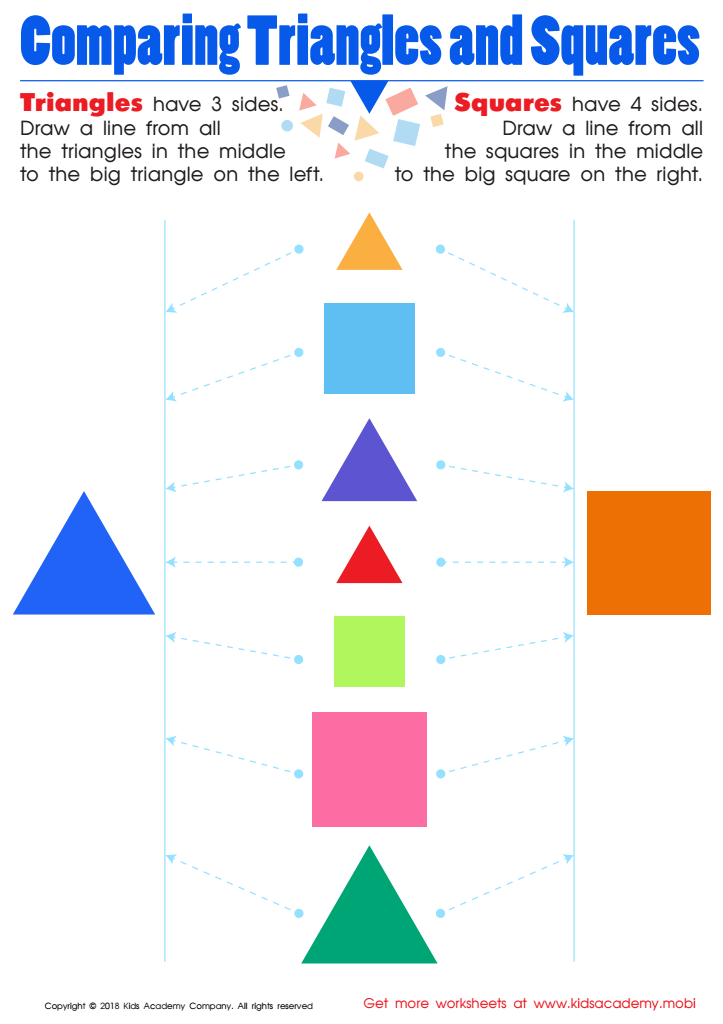
Comparing Triangles Squares Worksheet
 Assign to My Students
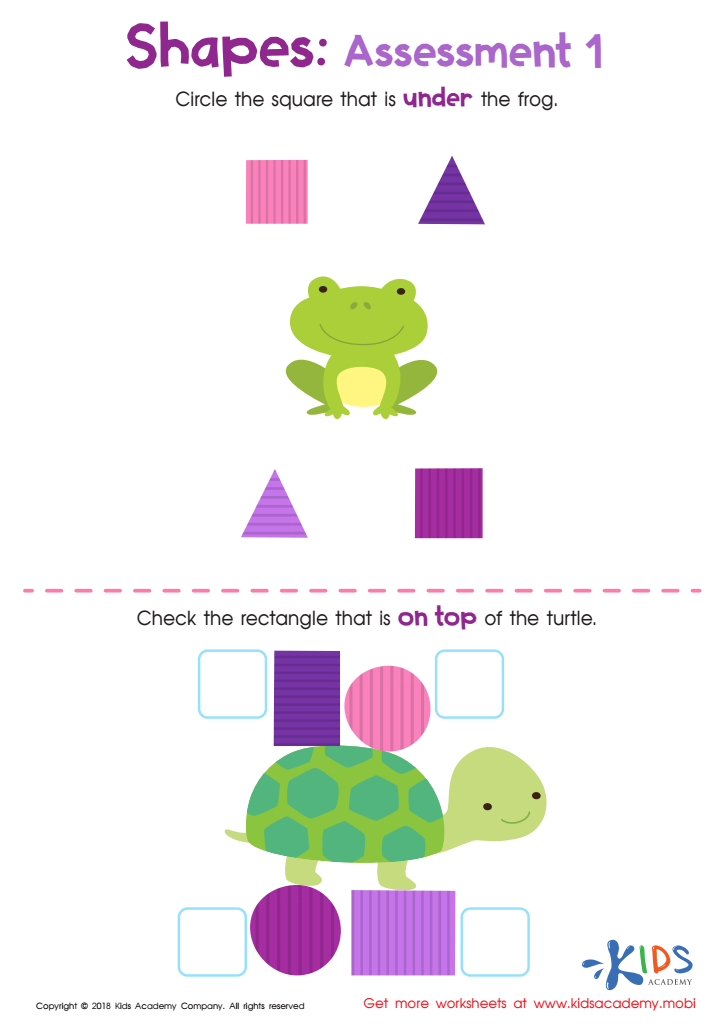
Geometry – Assessment 1 Worksheet
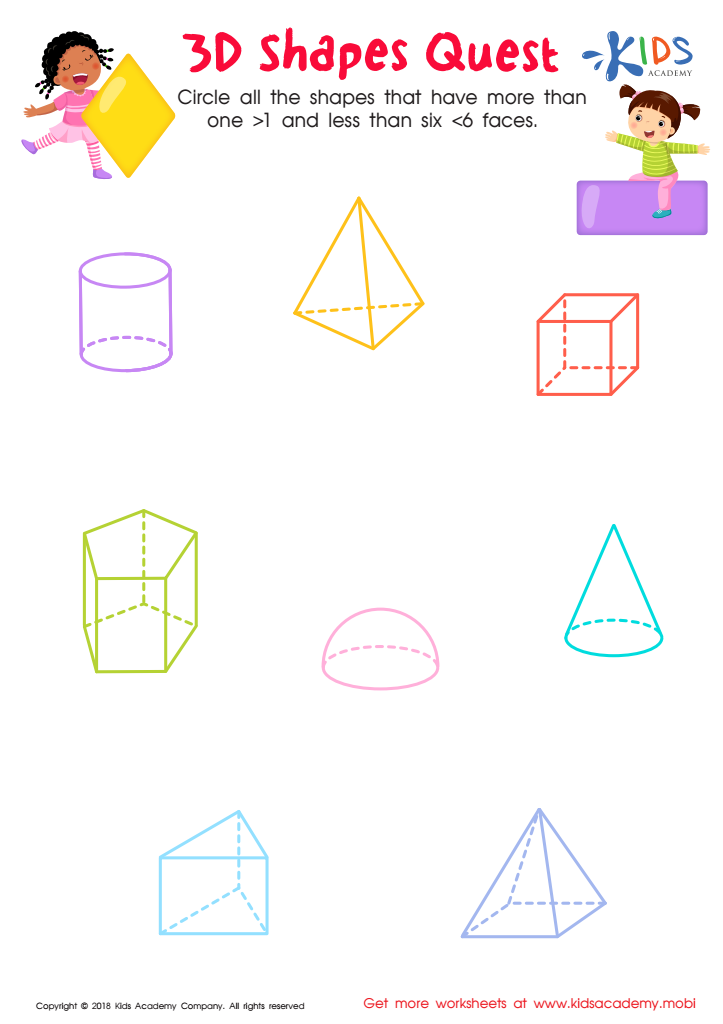
3D Shapes Quest Worksheet
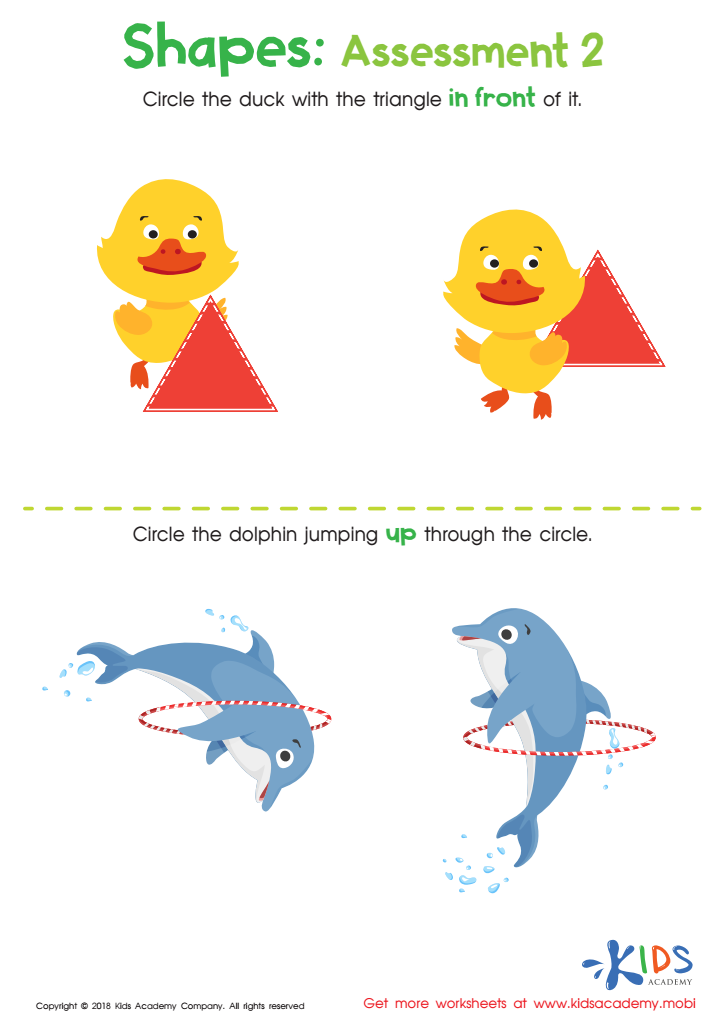
Geometry – Assessment 2 Worksheet







Shape comparison is an essential early math skill that lays the foundation for a child’s cognitive development. For children aged 3-9, understanding and comparing shapes fosters critical thinking and problem-solving abilities. Parents and teachers should prioritize this learning as it enhances visual-spatial awareness, a skill crucial for later understanding geometry, measurement, and real-world spatial relationships.
At this stage, children learn to identify and differentiate between shapes based on attributes such as size, color, and geometric properties. Shape comparison encourages language development; children learn necessary vocabulary—such as "smaller," "larger," and "similar”—which enriches their communication skills. Engaging in shape-focused activities can also stimulate creativity, allowing children to explore and manipulate objects, thus promoting hands-on learning experiences.
Furthermore, mastering shape comparison helps establish a strong mathematical foundation that is linked to later academic success. It promotes confidence as children become adept at making observations and drawing conclusions based on their comparisons. Ultimately, when parents and teachers emphasize shape comparison, they contribute to the holistic development of a child, supporting not just their mathematical abilities, but also their overall cognitive, social, and emotional growth.








