
Understand number relationships Math Worksheets for Ages 3-9
3 filtered results
Difficulty Level
Grade
Age
-
From - To
Subject
Activity
Standards
Discover our "Understand Number Relationships" math worksheets designed for children aged 3-9! These engaging and interactive resources help young learners grasp essential math concepts through fun activities. Our worksheets focus on teaching number comparisons, patterns, and simple equations, laying a solid foundation for future math skills. Each activity is tailored to promote critical thinking and problem-solving abilities, making learning enjoyable and effective. With colorful illustrations and age-appropriate challenges, our worksheets are perfect for parents and educators alike. Empower your child’s mathematical understanding and boost their confidence with our thoughtfully crafted worksheets today! Start exploring now for a brighter mathematical future!
Favorites
With answer key
Interactive
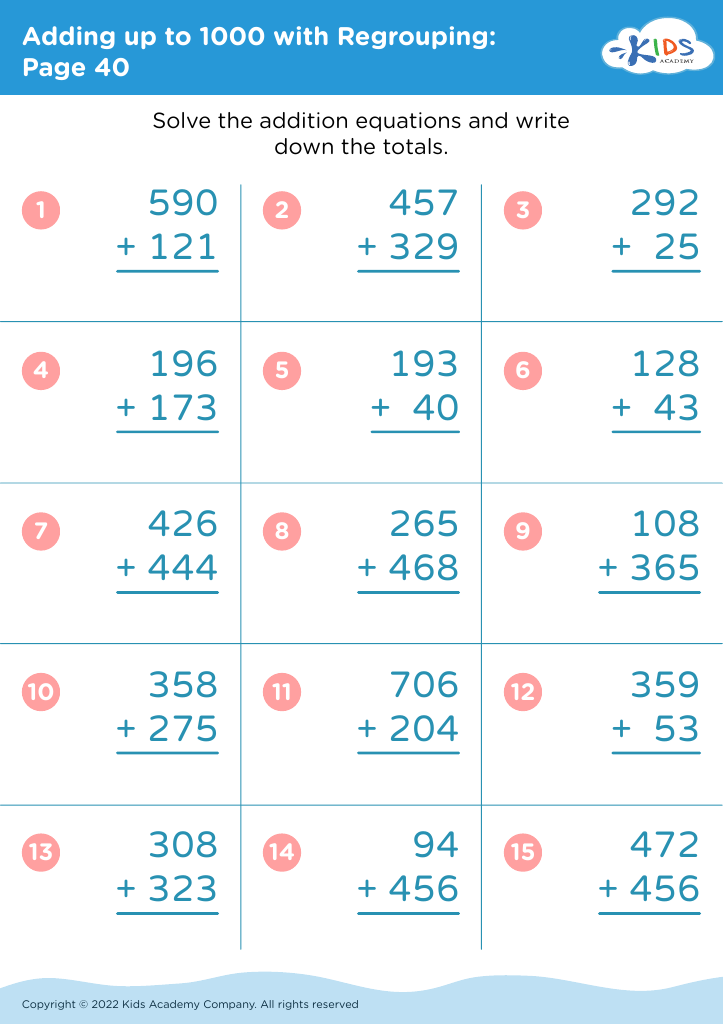
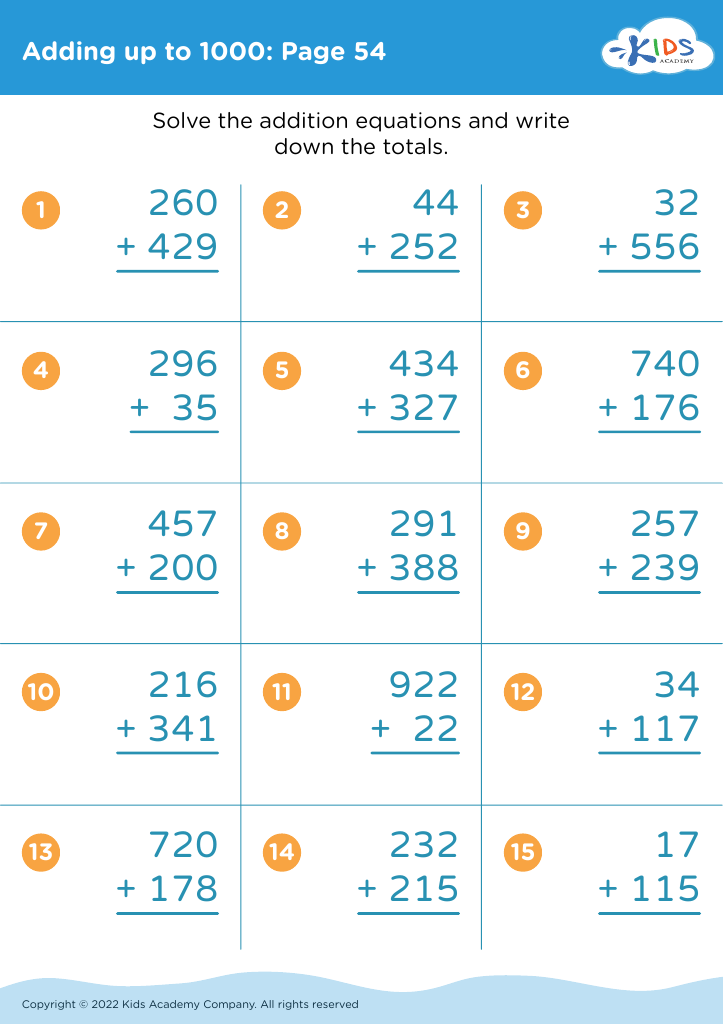
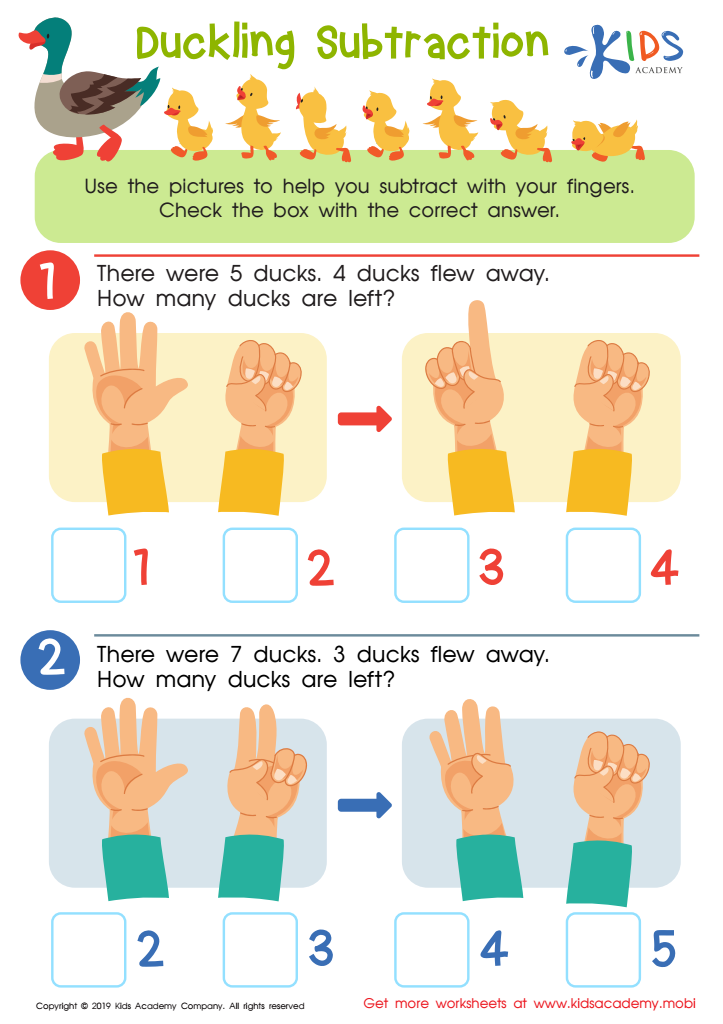
Duckling Subtraction Worksheet
Help your students learn equations and math with this fun worksheet. There are two questions to solve with the help of the pictures. Ask them to subtract with their fingers and check the box with the correct answer. This makes math easier and more enjoyable!
 Assign to My Students
Duckling Subtraction Worksheet
Worksheet
Join Kids Academy for Free
Who is primarily going to use this learning content?








Understanding number relationships is crucial for children ages 3-9, as it lays the foundation for their future mathematical success. During these formative years, children develop essential skills such as counting, recognizing patterns, and understanding quantities. This knowledge goes beyond mere arithmetic; it helps children make connections between numbers, shapes, and spatial awareness, which are fundamental components of more advanced math concepts they will encounter later.
For parents and teachers, fostering an understanding of number relationships promotes critical thinking and problem-solving abilities. Engaging children in activities that encourage number exploration—like sorting objects, sharing snacks equally, or playing with patterns—builds confidence and interest in math. It also equips children with the tools they need to succeed not only in mathematics but in everyday situations, such as budgeting or measuring ingredients while cooking.
Moreover, early intervention in developing these skills can identify and help address potential learning difficulties. When parents and teachers prioritize understanding number relationships, they create a supportive environment that nurtures mathematical literacy, ensures cognitive development, and encourages a lifelong love for learning. Ultimately, investing in these skills today will pave the way for children to become capable, enthusiastic learners in all subjects.








