
Understanding clocks Math Worksheets for Ages 3-9
5 filtered results
Difficulty Level
Grade
Age
-
From - To
Subject
Activity
Standards
Discover engaging "Understanding Clocks" math worksheets specially designed for children ages 3 to 9. These interactive resources help young learners grasp the fundamental concepts of time-telling, fostering essential math skills in a fun and efficient way. Our worksheets offer a variety of activities, including identifying clocks, matching analog and digital times, and solving time-related problems—ideal for both classroom and home environments. Promote a love for math as children engage with colorful illustrations and practical exercises that develop their understanding of hours and minutes. Perfect for early grade teachers and parents seeking to enhance their child's learning experience with time-related concepts!
Favorites
With answer key
Interactive
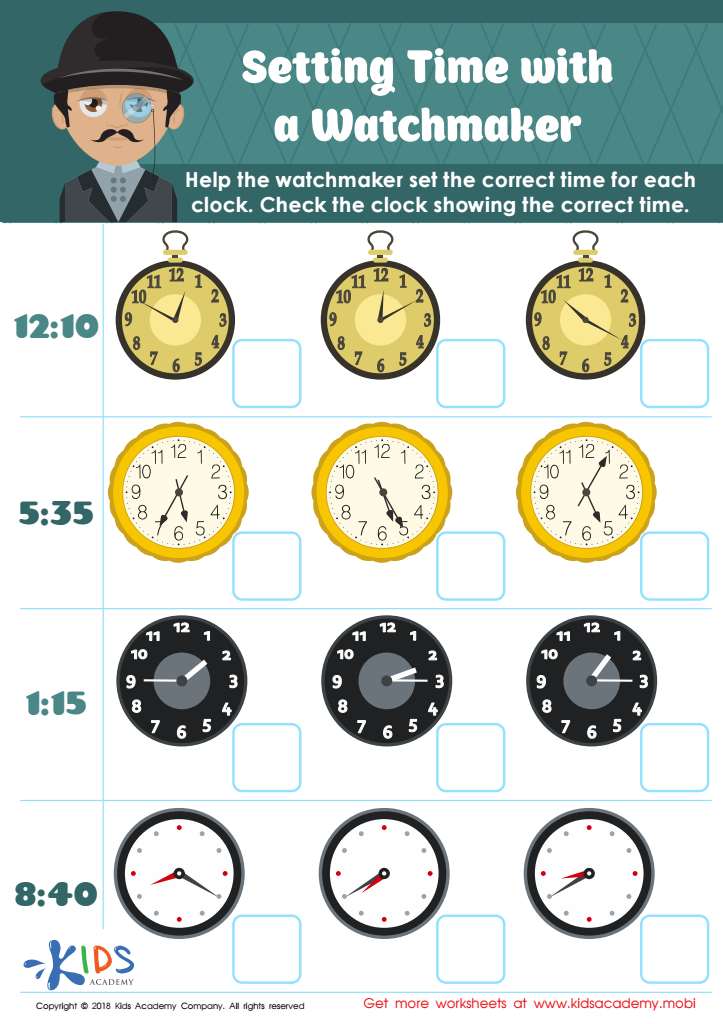
Setting Time with Watchmaker Worksheet
Can your kids tell the time? If so, this worksheet should be easy. Help them set the time for each clock: look at the time written on the left side and find the clock on the right side that matches.
 Assign to My Students
Setting Time with Watchmaker Worksheet
Worksheet
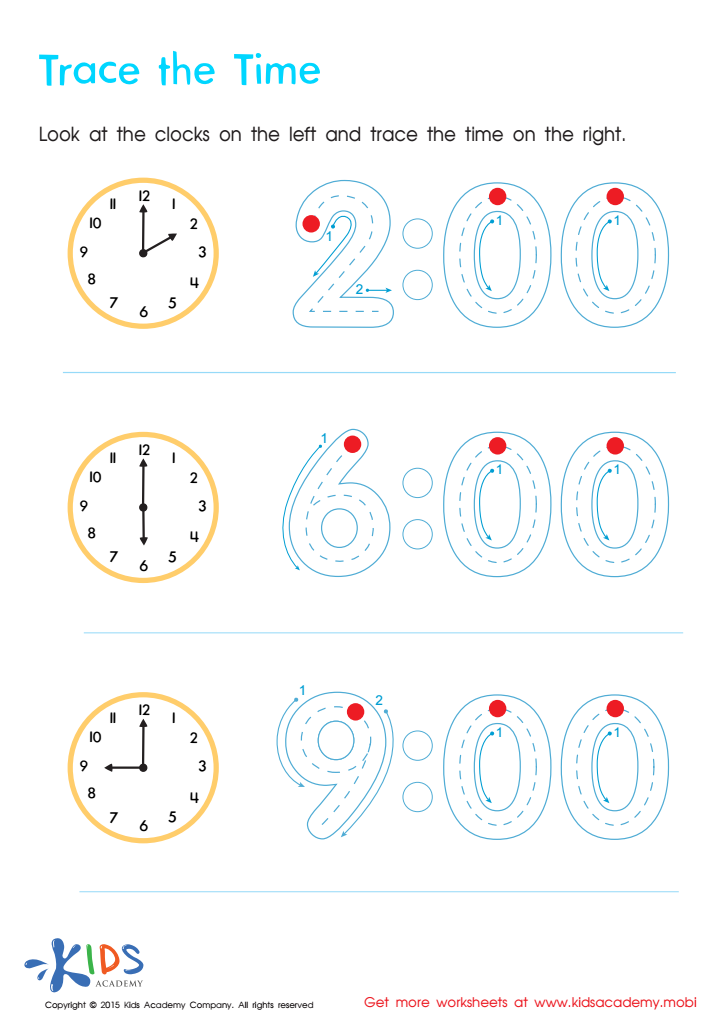
Telling The Time Worksheet: Part 2
Help your kids learn to tell the time with this free math worksheet from Kids Academy. Have them look at the clock faces and trace the time on the right - is it a full hour or half an hour? Get more practice with our wide selection of math worksheets for kindergarten.
Telling The Time Worksheet: Part 2
Worksheet
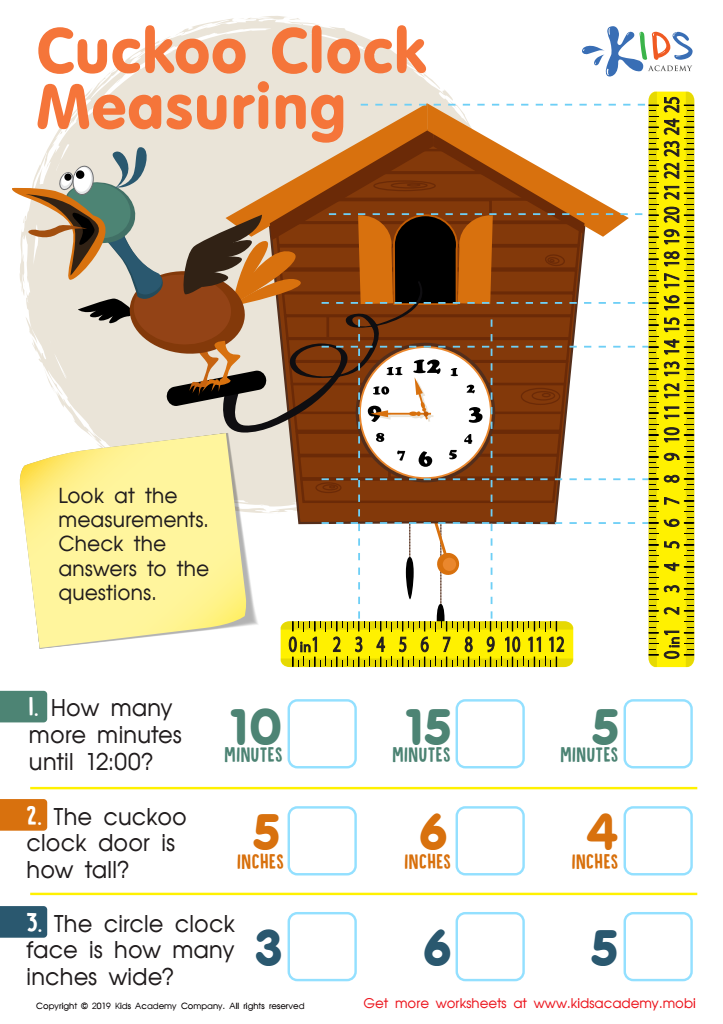
Cuckoo Clock Measuring Worksheet
Check out the fun picture in this worksheet. Ask your kids to identify the object. It's a cuckoo clock - the bird pops out every hour to announce the time. See if your child knows how to measure the clock. Help them answer the 3 questions and test their knowledge of time!
Cuckoo Clock Measuring Worksheet
Worksheet
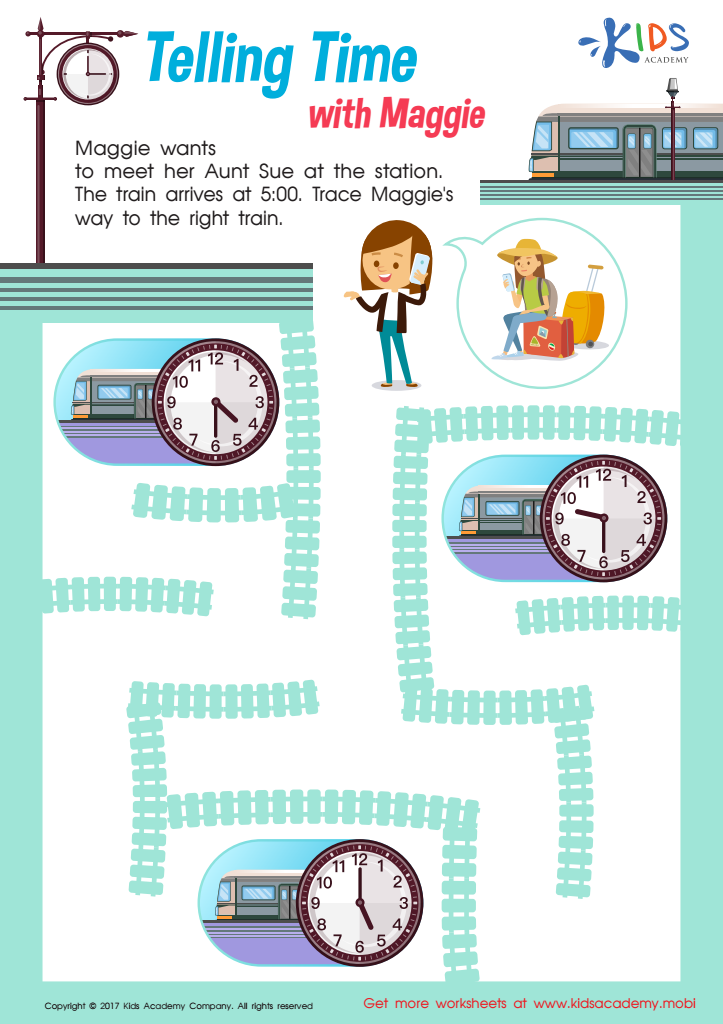
Telling Time With Maggie Time Worksheet
Help Maggie catch her train! Navigate the maze and read clocks to get her to her destination. Join her on a fun time-telling adventure with this puzzling worksheet. Your child will love it!
Telling Time With Maggie Time Worksheet
Worksheet
Join Kids Academy for Free
Who is primarily going to use this learning content?








Understanding clocks and telling time is a crucial mathematical skill for children ages 3-9. This foundational concept goes beyond mere number recognition, introducing young learners to essential cognitive development skills such as sequencing, problem-solving, and spatial awareness. When children grasp the concept of time, they can better organize their daily routines, which fosters independence and responsibility.
Moreover, teaching children to read clocks promotes numeracy skills through engaging activities. Concepts like hours, minutes, and intervals can be integrated into games and real-life situations, making learning both fun and meaningful. For example, scheduling playdates or family activities encourages children to understand the importance of punctuality and time management.
Parents and teachers should be proactive in this area because time-telling skills empower children to navigate their world, enhancing their confidence and self-reliance. Furthermore, developing a solid grasp of time can improve other academic areas, such as reading and math. By investing time in understanding clocks, adults provide children with valuable tools that contribute to their overall development, reinforcing academic success and life skills that will benefit them long into the future. Ultimately, fostering time comprehension equips children for the complexities of daily life while laying the groundwork for continued learning.








