Understanding number patterns Math Worksheets for Ages 3-9
6 filtered results
-
From - To
Discover engaging and educational ‘Understanding Number Patterns’ math worksheets tailored for ages 3-9. Our expertly designed activities help children develop critical thinking and problem-solving skills through interactive tasks. With colorful illustrations and fun exercises, children will experience learning as an enjoyable adventure. These worksheets cater to various difficulty levels, ensuring gradual comprehension of number sequences and patterns. Whether your child is just starting with basic counting or advancing towards more complex mathematical concepts, these printables provide foundational skills for future success. Perfect for both classroom and at-home learning, our resources make mastering math patterns a delightful journey. Explore today!
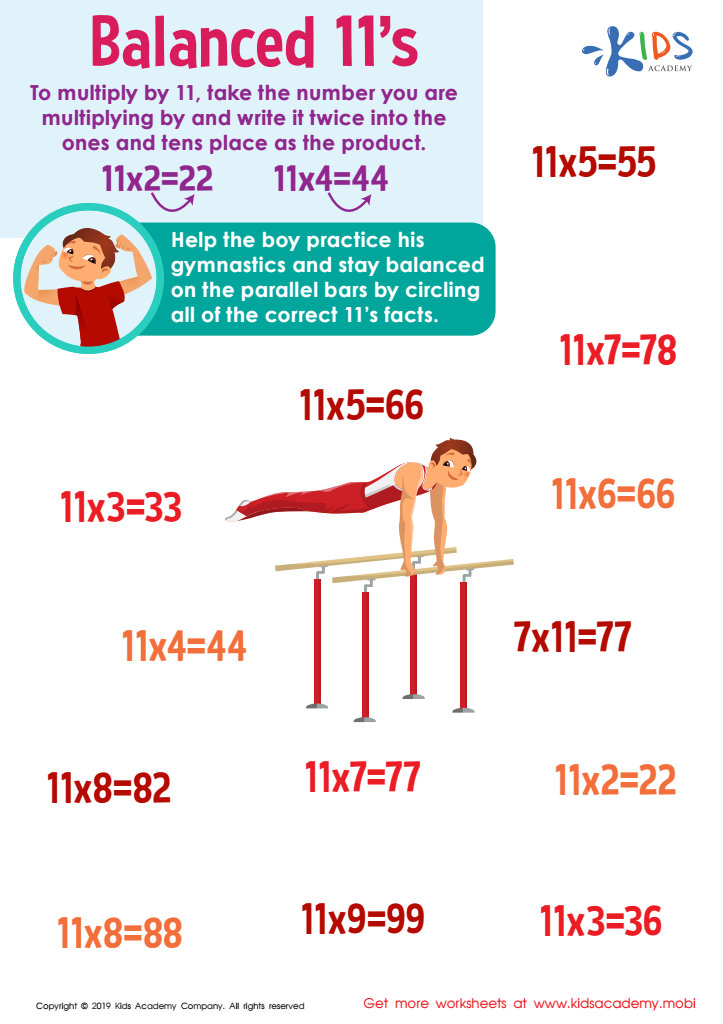
Balanced 11s Worksheet
 Assign to My Students
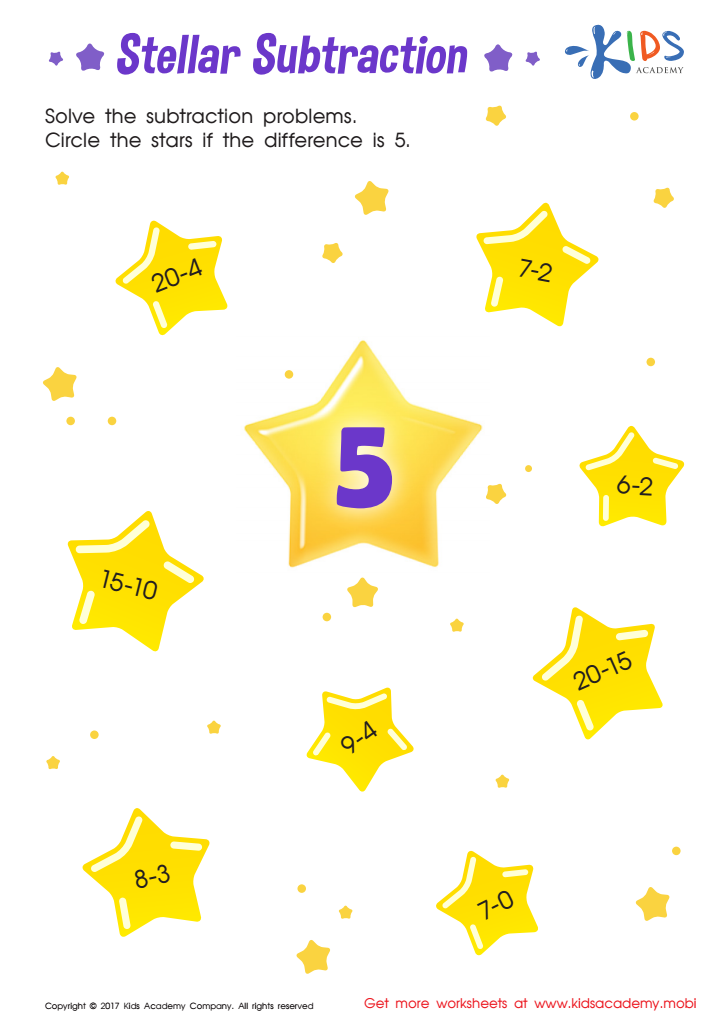
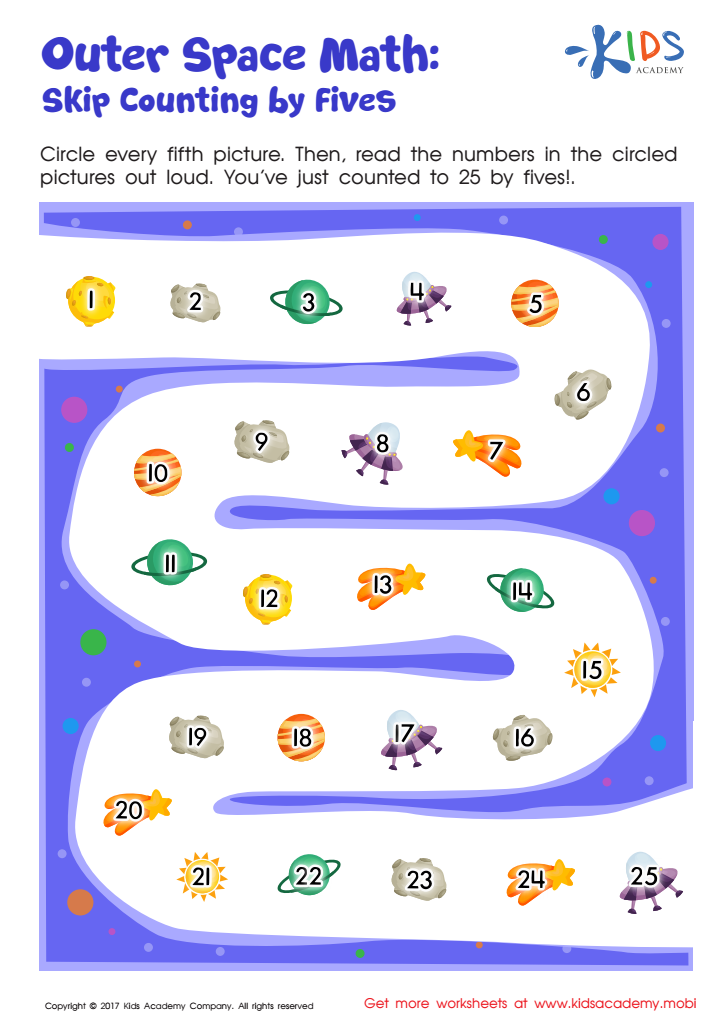
Skip Counting by 5s: Outer Space Math Printable
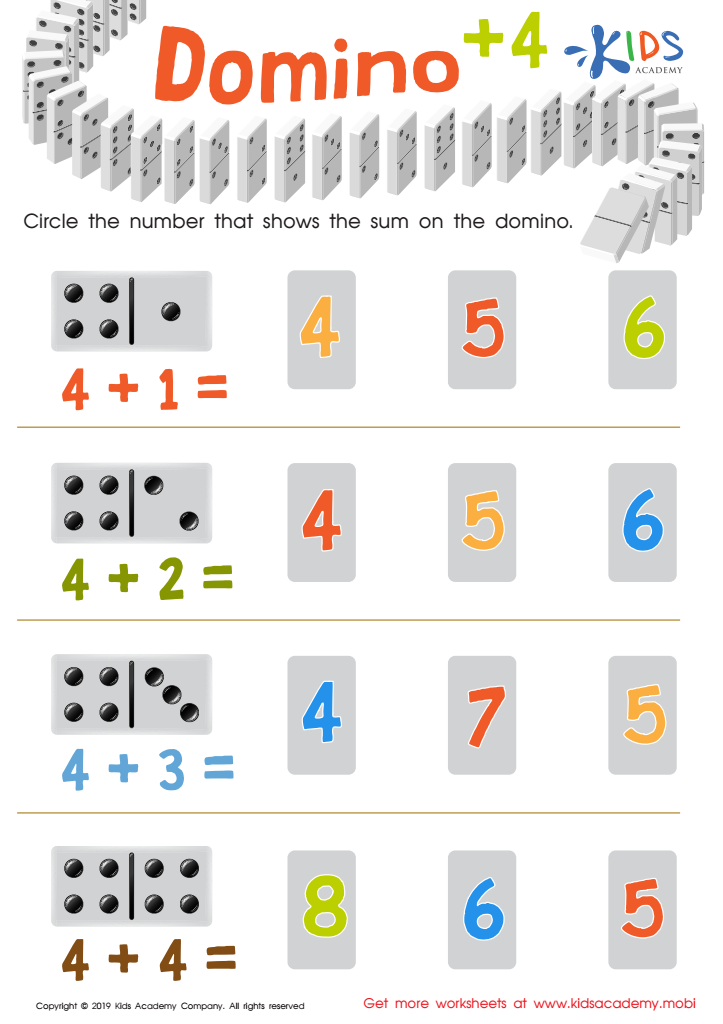
Domino +4 Worksheet
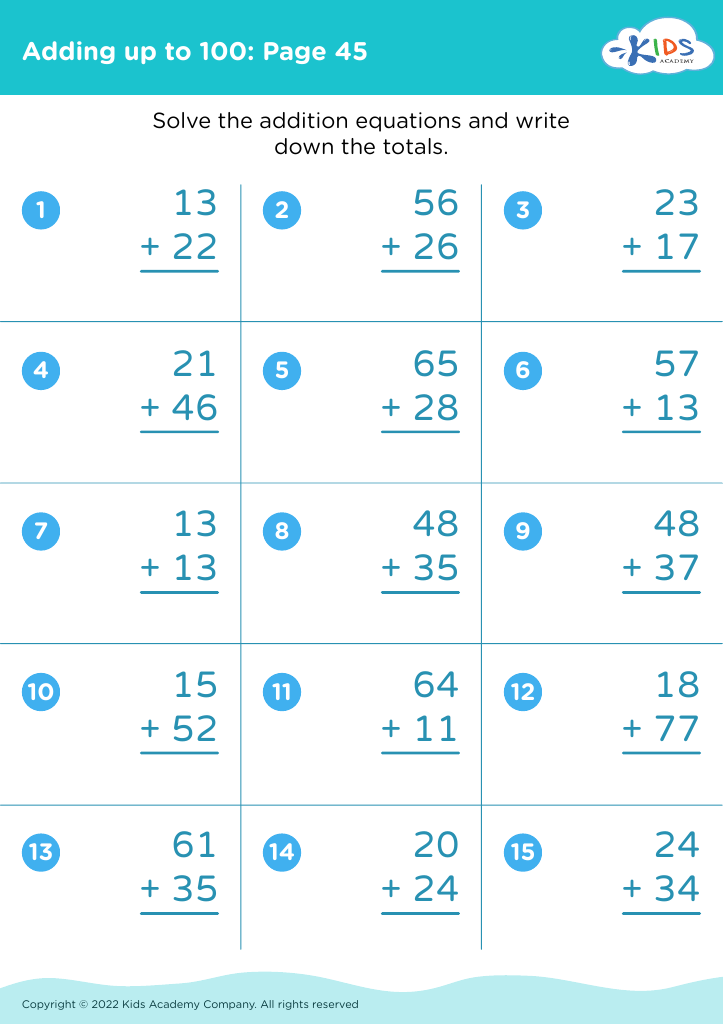
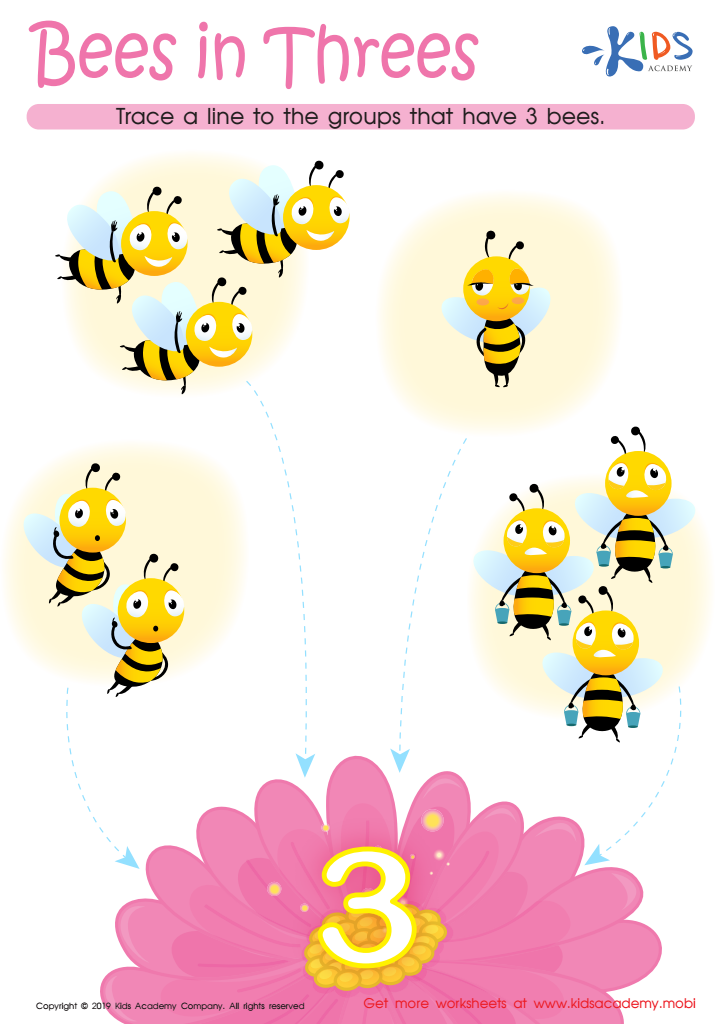
Bees in Threes Worksheet








Understanding number patterns for children aged 3-9 is crucial because it forms the foundation for mathematical thinking and problem-solving skills that they will use throughout their education and daily life. Number patterns help young students recognize relationships and make connections between numbers, enhancing their number sense. This early mastery fosters confidence and reduces math anxiety later.
When children discern patterns, they learn to predict and generalize, important skills for algebra and advanced mathematics. For instance, recognizing that 2, 4, 6, 8 is a pattern helps them understand multiplication and beyond. These skills are foundational for coding, statistics, and scientific analysis, making them versatile thinkers.
Moreover, exploring number patterns also supports cognitive development by improving memory, attention, and analytical skills. These patterns break complex problems into manageable parts, nurturing critical thinking and logical reasoning, essential for problem-solving not just in math but across other subjects too.
Parents and teachers who invest in teaching number patterns also promote a love for mathematics. Interactive activities, games, and real-life applications stimulate curiosity and engagement, motivating young learners. Thus, understanding number patterns at an early stage is integral to developing mathematical competency, cognitive growth, and a positive attitude towards learning and education as a whole.








