Understanding opposites Math Worksheets for Ages 3-9
4 filtered results
-
From - To
Explore our "Understanding Opposites" math worksheets designed for children ages 3-9! These engaging worksheets help young learners grasp the concept of opposites through playful activities and illustrations. By contrasting various elements, kids will enhance their vocabulary while developing essential critical thinking skills. Our thoughtfully crafted exercises include sorting, matching, and fill-in-the-blank tasks that make learning fun and interactive. Ideal for parents and educators alike, these worksheets provide a comprehensive approach to understanding opposites in everyday contexts. Encourage your child's mathematical foundation and cognitive development while fostering a love for learning with our vibrant and educational resources! Download now and start exploring!
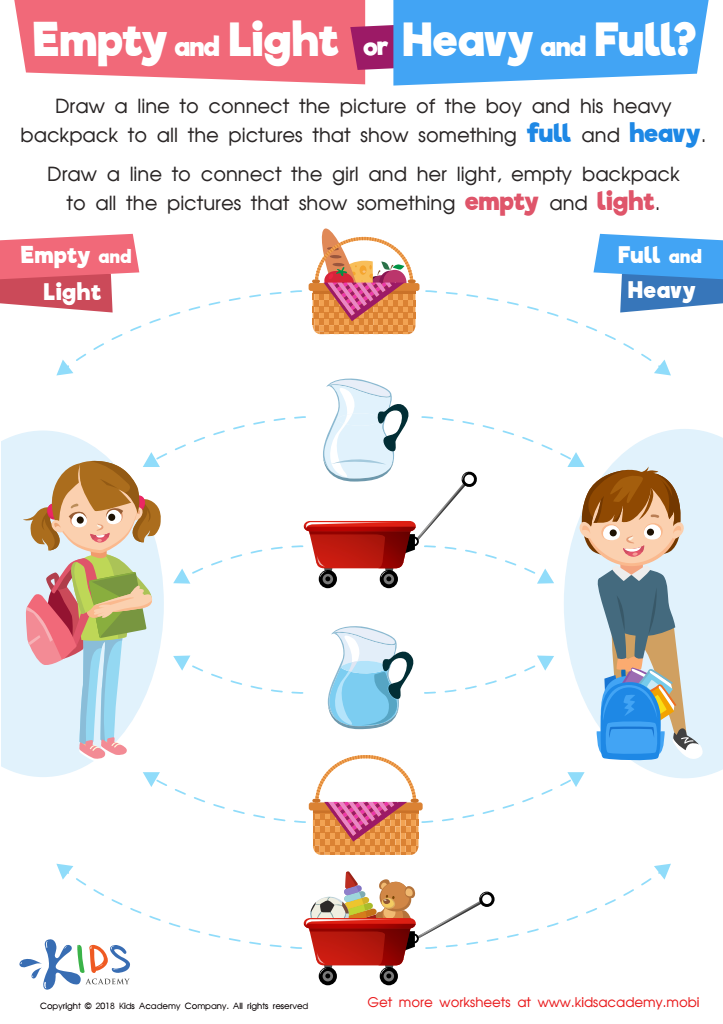
Empty and Light or Heavy and Full? Worksheet
 Assign to My Students
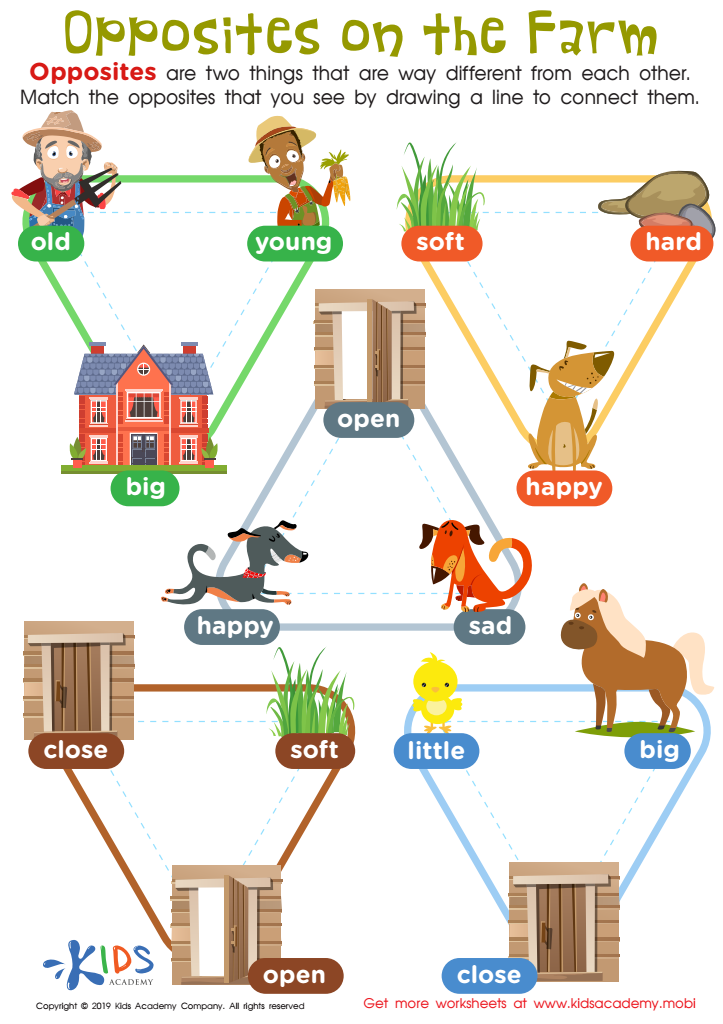
Opposites on the Farm Worksheet
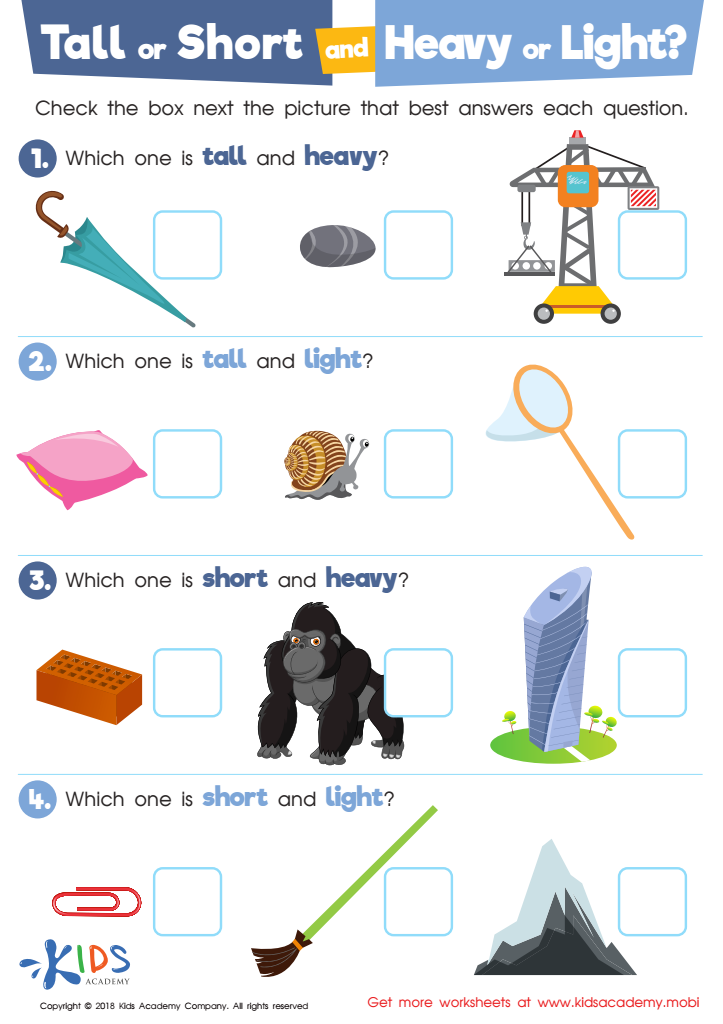
Tall or Short and Heavy or Light? Worksheet
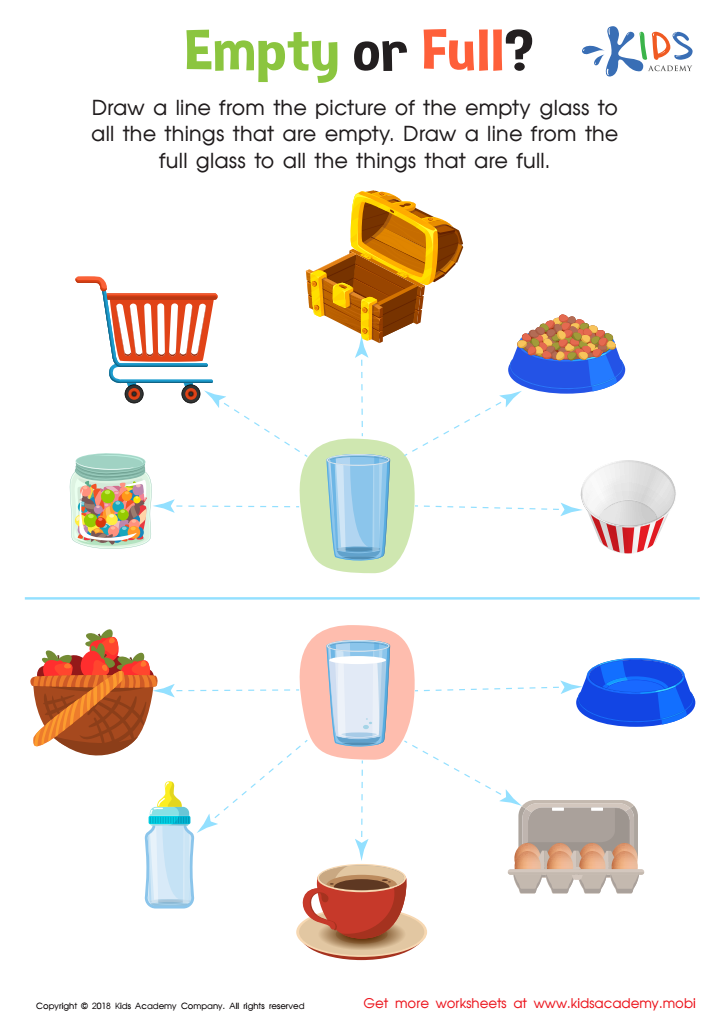
Empty or Full? Worksheet








Understanding opposites is fundamental for children aged 3-9, as it forms a critical foundation for both math and cognitive development. Recognizing opposites—such as big/small, inside/outside, and more/less—enhances children's ability to distinguish between different categories, which is essential for early mathematical concepts like addition and subtraction. When children grasp opposites, they develop stronger problem-solving skills and improve their logical thinking.
Moreover, teaching opposites encourages vocabulary expansion. As children learn new words to describe contrasting concepts, their communication skills improve, aiding in expressing thoughts and ideas more clearly. This vocabulary growth also plays a crucial role in their reading comprehension later on.
Parents and teachers should promote activities that involve opposites—through games, storytelling, and real-life examples—as this enhances engagement and makes learning fun. Such interactions lay the groundwork for a stronger mathematical foundation, fostering confidence as children encounter more complex concepts in the future.
In summary, understanding opposites enriches language, enhances critical thinking skills, and provides a strong basis for mathematical reasoning, making it a vital area for parents and teachers to focus on during the early learning years.








