Visual-motor skills Math Worksheets for Ages 3-9
5 filtered results
-
From - To
Enhance your child's coordination and cognitive development with our Visual-Motor Skills Math Worksheets, crafted for ages 3-9. These engaging printable worksheets integrate fun, educational activities designed to strengthen your child's ability to combine visual input with motor output, boosting their math skills along the way. Ideal for home or classroom use, each worksheet offers a unique blend of challenges that improve hand-eye coordination, fine motor skills, and number recognition. Perfect for developing critical early learning skills, our worksheets make mastering math a delightful experience for young learners. Download today at Kids Academy!
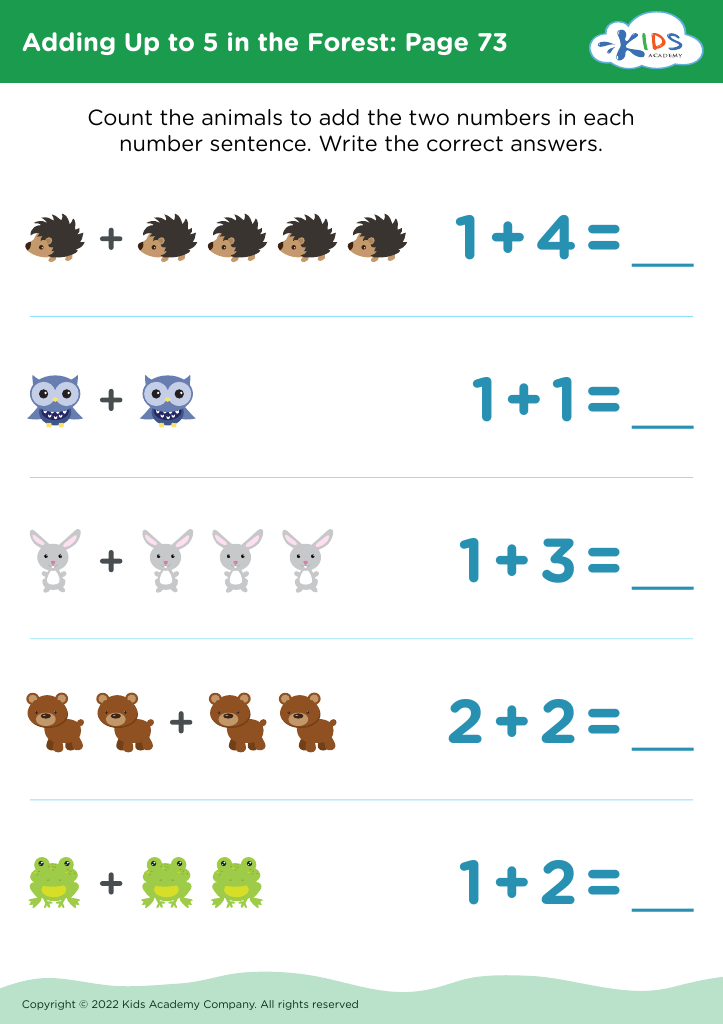
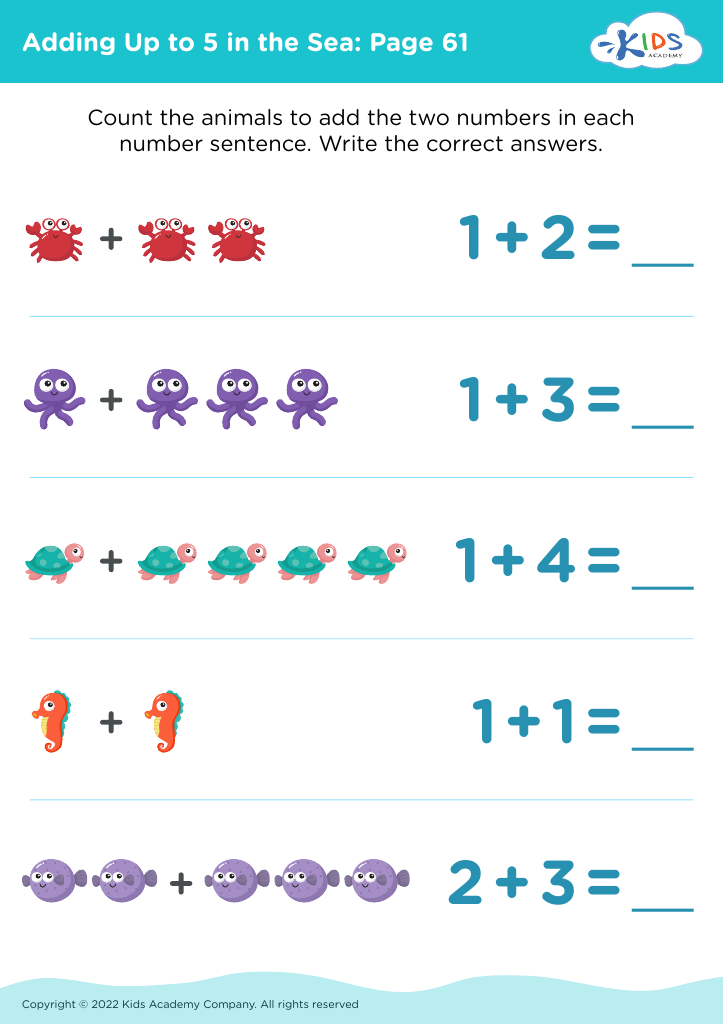
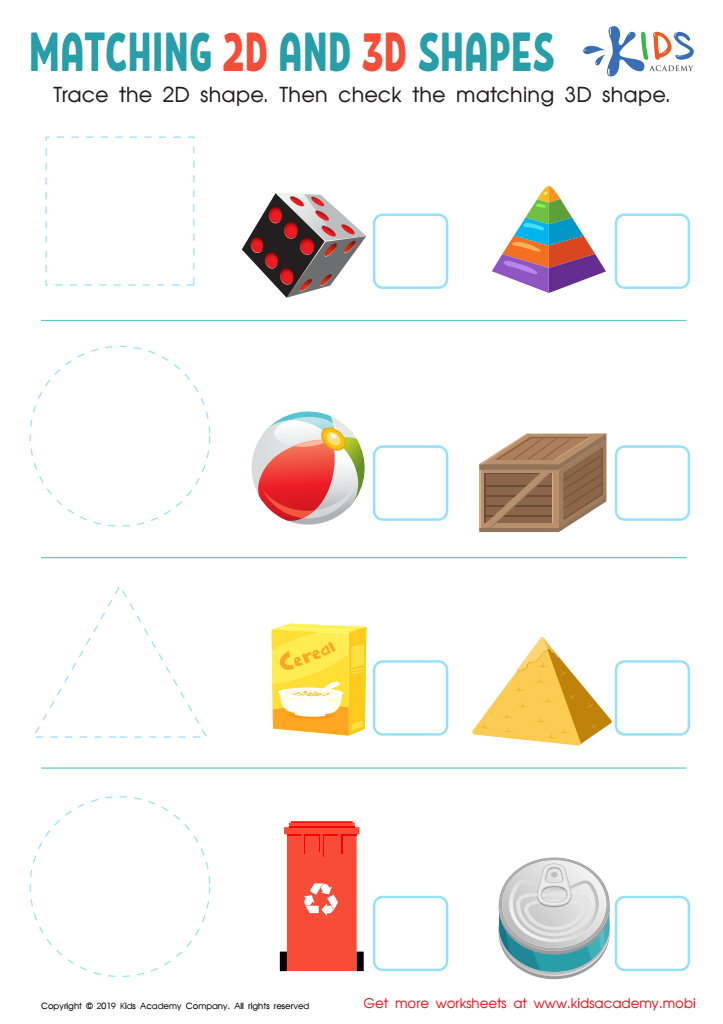
Matching 2D and 3D Shapes Worksheet
 Assign to My Students
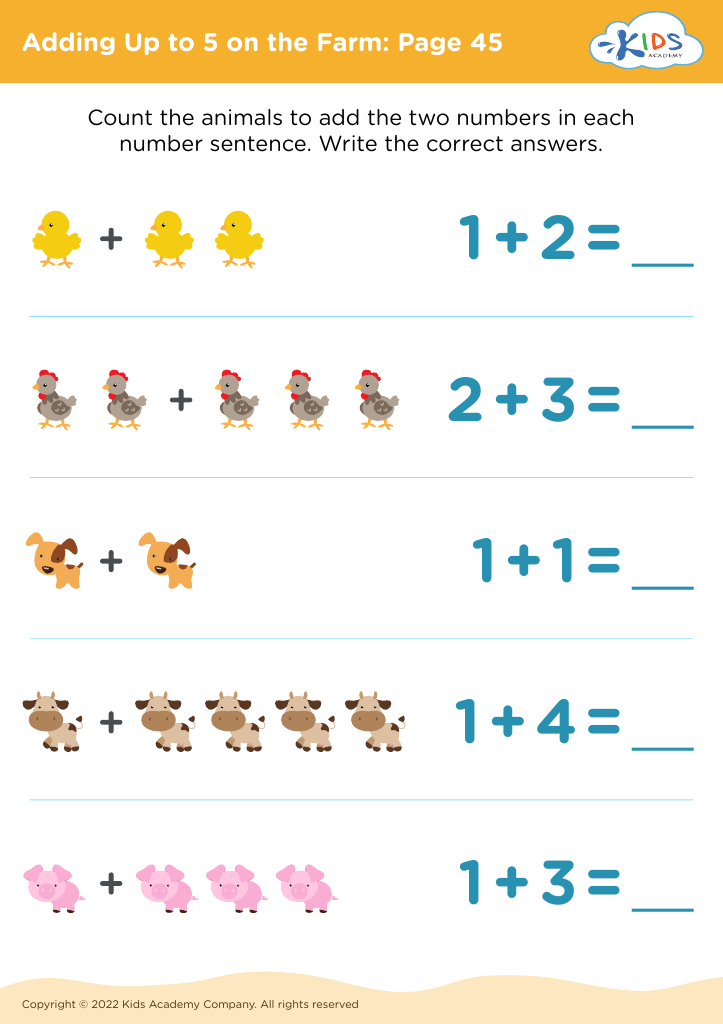







Visual-motor skills are essential for children aged 3-9, as they form the foundation for critical learning and development, particularly in math. These skills involve the coordination of visual perception and motor control, allowing children to interpret and interact with their environment effectively. For example, tasks like writing numbers, solving puzzles, and recognizing shapes require strong visual-motor integration.
In math, visual-motor skills help children understand spatial relationships and develop their ability to estimate, measure, and navigate through various math-related tasks. A child with well-developed visual-motor skills can easily align numbers when performing arithmetic operations, recognize patterns, and understand geometric concepts. These skills contribute to a smoother learning curve, enabling children to grasp complex math concepts more readily.
Moreover, strong visual-motor skills enhance a child's confidence and willingness to engage in math activities, promoting a positive attitude towards learning. Early development of these skills also prepares them for future academic and non-academic tasks, including reading and daily life activities.
Therefore, parents and teachers should prioritize activities that foster visual-motor skills, such as drawing, crafting, and playing with building blocks. Encouraging these activities not only supports math learning but also ensures a well-rounded developmental foundation for children.








