
Hand-eye Coordination Matching Worksheets for Ages 3-9
3 filtered results
Difficulty Level
Grade
Age
-
From - To
Subject
Activity
Standards
Enhance your child's hand-eye coordination with our engaging matching worksheets designed for ages 3-9! These printable resources encourage young learners to connect shapes, images, and colors through fun exercises that promote visual skills and fine motor development. Each worksheet is crafted with age-appropriate challenges to keep kids motivated and entertained while they practice essential matching skills. Perfect for at-home learning or as supplemental classroom activities, our hand-eye coordination matching worksheets provide a playful yet educational way to boost your child’s confidence and coordination abilities. Download now and support your child's growth in a fun, interactive way!
Favorites
With answer key
Interactive
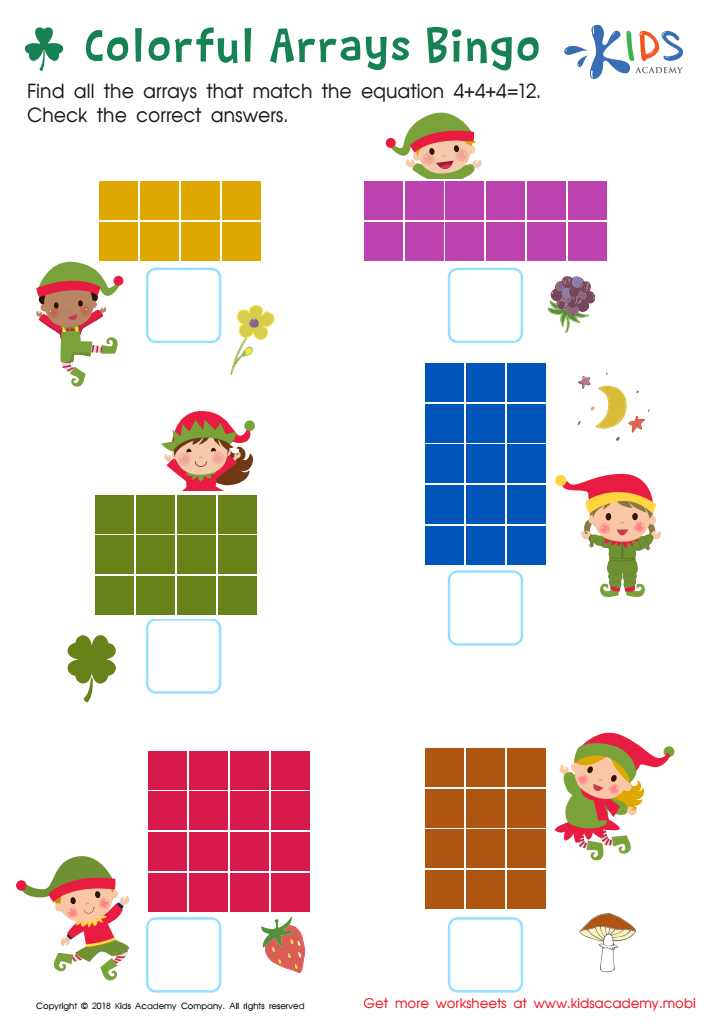
Colorful Arrays Bingo Worksheet
This worksheet stimulates thinking about arrays and how to represent them. Instruct students to count the 6 arrays and find which ones sum up to 12. Ask them to check the answers for accuracy.
 Assign to My Students
Colorful Arrays Bingo Worksheet
Worksheet
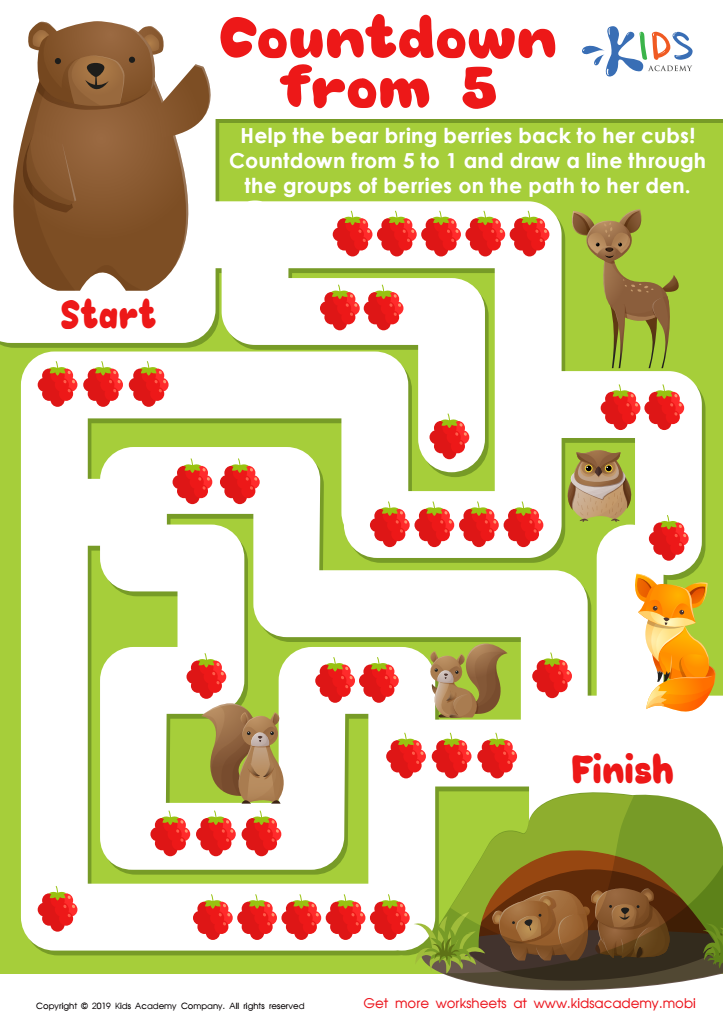
Countdown from 5 Worksheet
Encourage your kids to help Mama Bear find her way to her den! Ask them to count down from 5 to 1 and draw a line through the groups of berries on the path. Point them to the picture of the friendly bears. A fun and safe way to enjoy these cute animals!
Countdown from 5 Worksheet
Worksheet
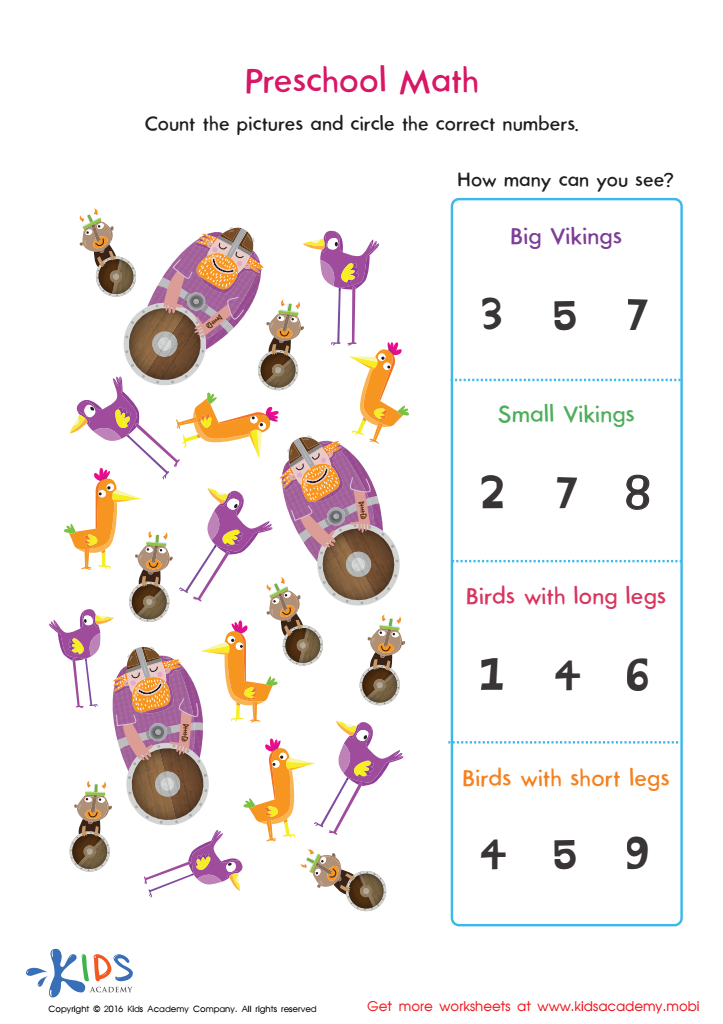
Counting Worksheet: Preschool Math
Worksheet
Join Kids Academy for Free
Who is primarily going to use this learning content?







Hand-eye coordination is a critical developmental skill for children aged 3-9, significantly influencing their learning, play, and daily activities. It refers to the ability to synchronize visual input with motor responses, allowing children to perform tasks efficiently and accurately. Parents and teachers should prioritize this skill for several reasons.
First, hand-eye coordination is foundational for many academic activities, such as writing, drawing, and catching a ball. Children with well-developed coordination are more likely to excel in these areas, enhancing their confidence and motivation to learn. Second, improved coordination can lead to better involvement in sports and physical activities, promoting a healthy lifestyle.
Moreover, activities that strengthen hand-eye coordination often engage multiple senses, encouraging cognitive development and critical thinking. Engaging in simple activities like puzzles, building blocks, or playing catch stimulates brain development and enhances focus and concentration. Importantly, fostering hand-eye coordination in early childhood can prevent learning challenges later on, equipping children with essential skills for success.
In sum, by focusing on hand-eye coordination, parents and teachers can support children's overall development, boost their academic performance, and lay a strong foundation for a healthy, active, and fulfilling life.








