Interpreting data Measurement Worksheets for Ages 3-9
5 filtered results
-
From - To
Welcome to our comprehensive collection of Interpreting Data Measurement Worksheets designed for children ages 3-9! These engaging resources help young learners develop essential math skills through hands-on activities that promote critical thinking. Our worksheets guide kids in interpreting charts, graphs, and pictograms, making data analysis accessible and fun. Crafted to align with early learning standards, each worksheet encourages creativity and practical application of mathematical concepts. Perfect for classroom use or at-home learning, these printable worksheets foster a strong foundation in data interpretation, setting the stage for future success in math. Explore our variety of worksheets today and ignite your child's love for learning!
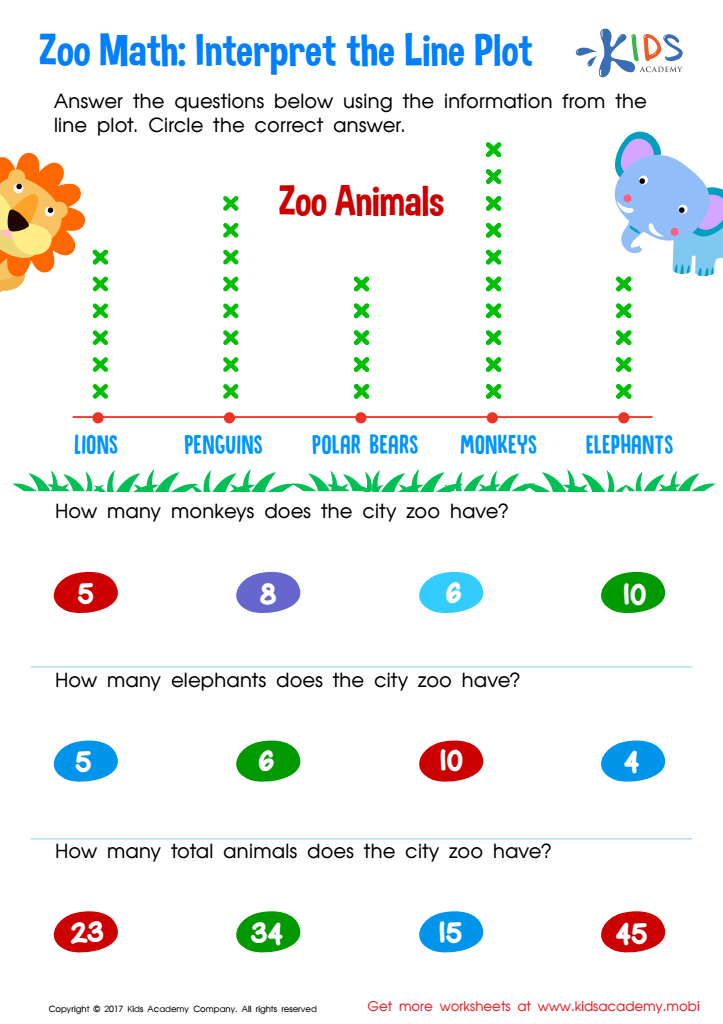
Interpret Line Plot Worksheet
 Assign to My Students
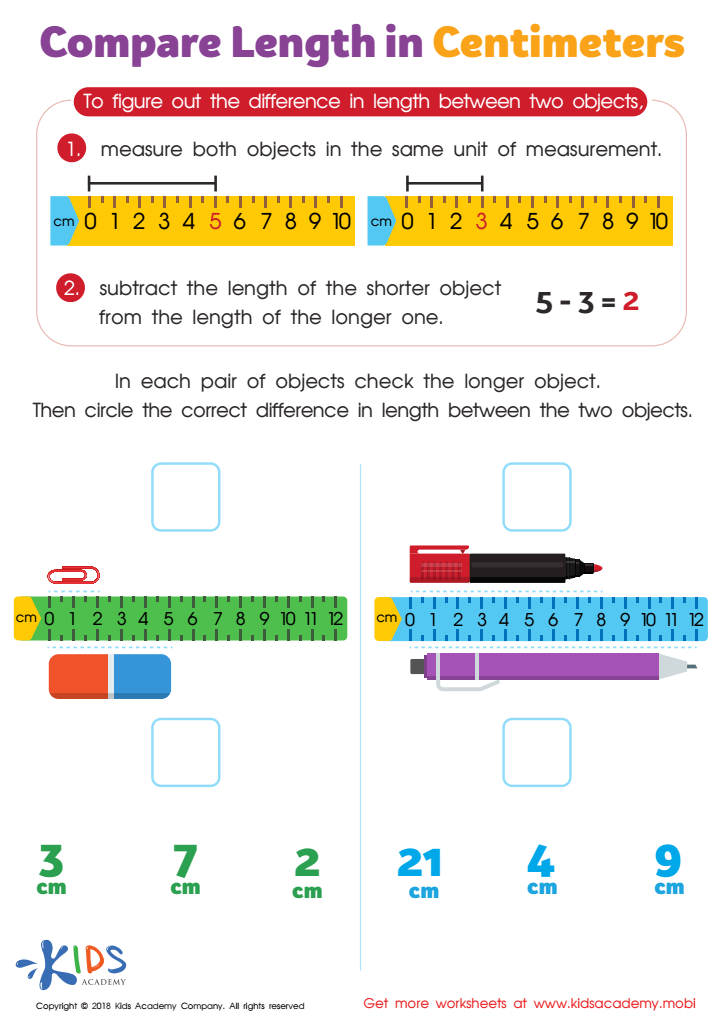
Compare Length in Centimeters Worksheet
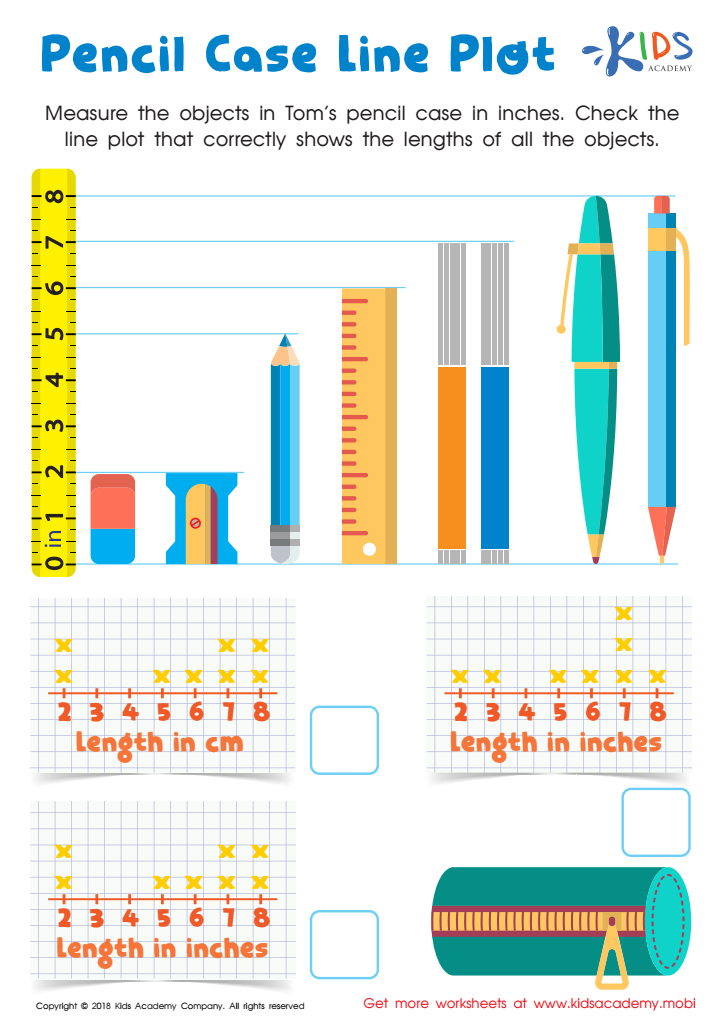
Pencil Case Line Plot Worksheet
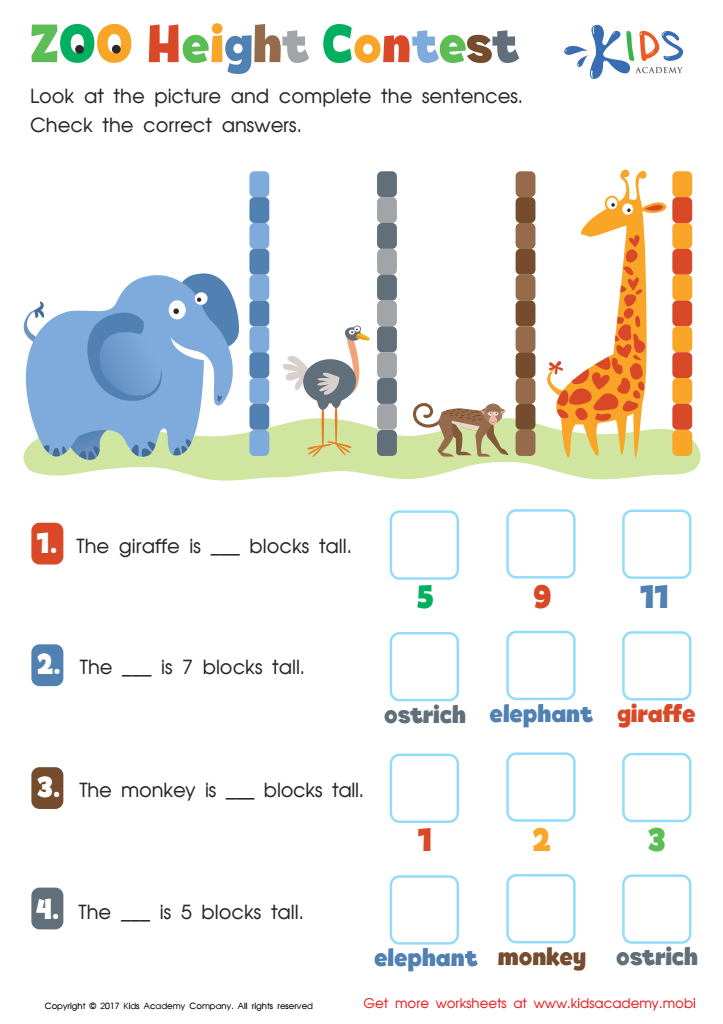
Zoo Height Contest Worksheet
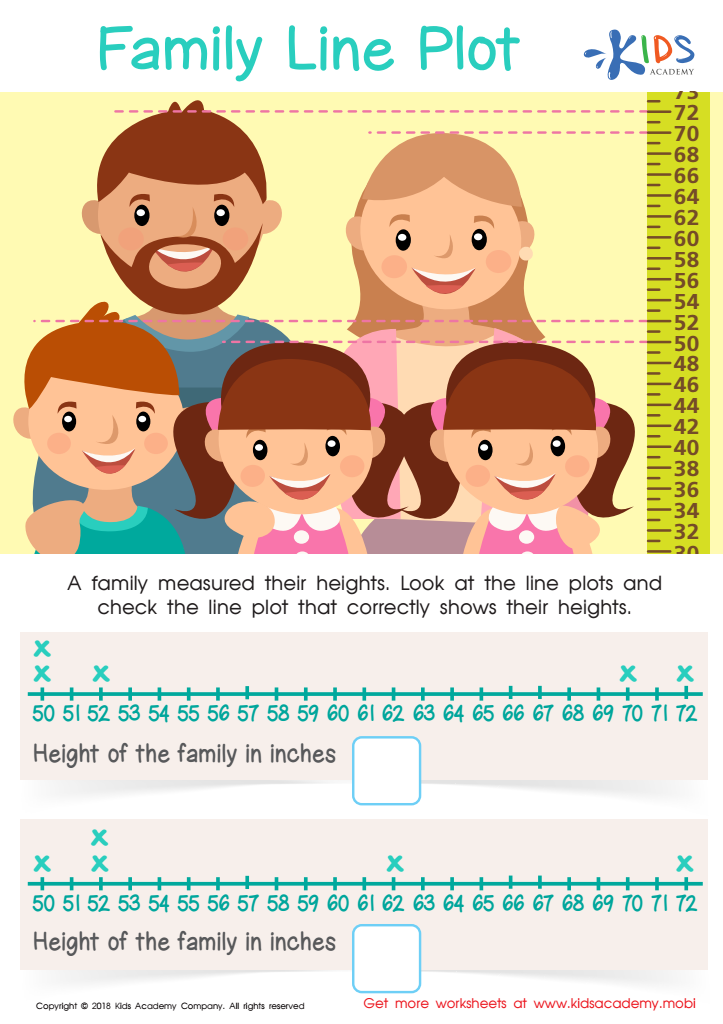
Family Line Plot Worksheet







Interpreting data measurement for children aged 3-9 is crucial for both parents and teachers as it provides insights into a child's development, learning progress, and educational needs. Understanding how to interpret this data enables parents to support their child's growth, tailoring home activities to strengthen areas where the child may struggle. For example, if assessment data reveals a child is developing literacy skills slower than peers, parents can introduce targeted reading activities to enhance those skills.
For teachers, proficiency in interpreting data measurements informs instructional decisions and interventions. Educators can identify learning gaps, adapt teaching strategies, and implement personalized learning experiences, ensuring that all children receive the support they need to thrive. Additionally, data measurement can highlight trends and patterns in classroom engagement, allowing educators to foster a more effective learning environment.
Moreover, sharing and discussing data with parents fosters a home-school partnership, creating alignment between school objectives and home expectations. This collaboration is essential for nurturing a child's holistic development, helping them acquire foundational skills critical for long-term academic success. Ultimately, parents and teachers both play pivotal roles in leveraging data to cultivate a rich, supportive learning experience shaped by awareness and responsiveness to each child's unique journey.








