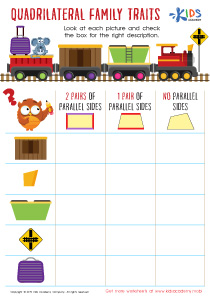
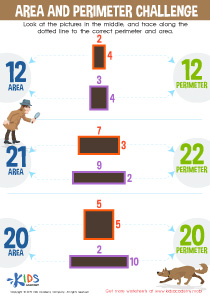
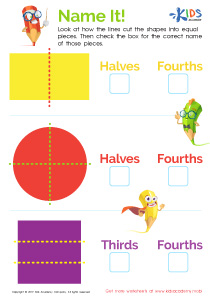
Shape identification Tracing Shapes Worksheets for Ages 3-9
3 filtered results
-
From - To
Shape Identification Tracing Shapes Worksheets for Ages 3-9 are perfect for young learners to grasp essential geometry concepts. These fun and interactive worksheets help children identify, trace, and color various shapes such as circles, squares, triangles, and more. By engaging in these activities, kids enhance their fine motor skills, improve hand-eye coordination, and develop critical thinking. Ideal for preschool through early elementary, these worksheets support Common Core standards, ensuring a solid math foundation. Parents and teachers can enjoy watching young learners build confidence as they play and learn with these enjoyable and educational shape identification sheets.
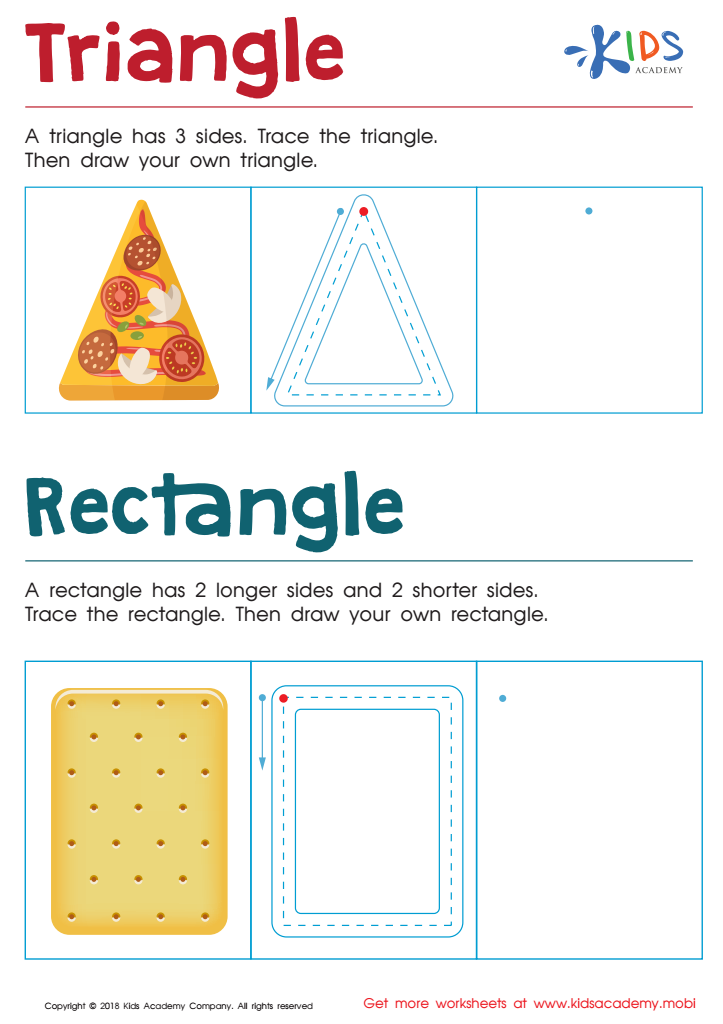
Triangle Rectangle Worksheet
 Assign to My Students
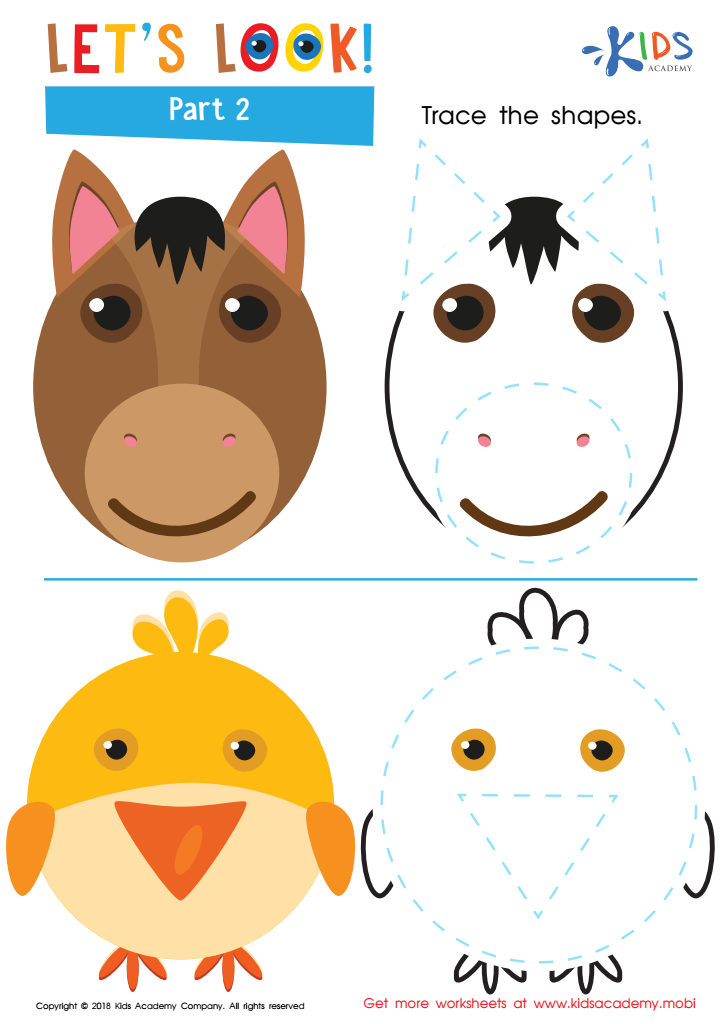
Let's Look! Part 2 Worksheet
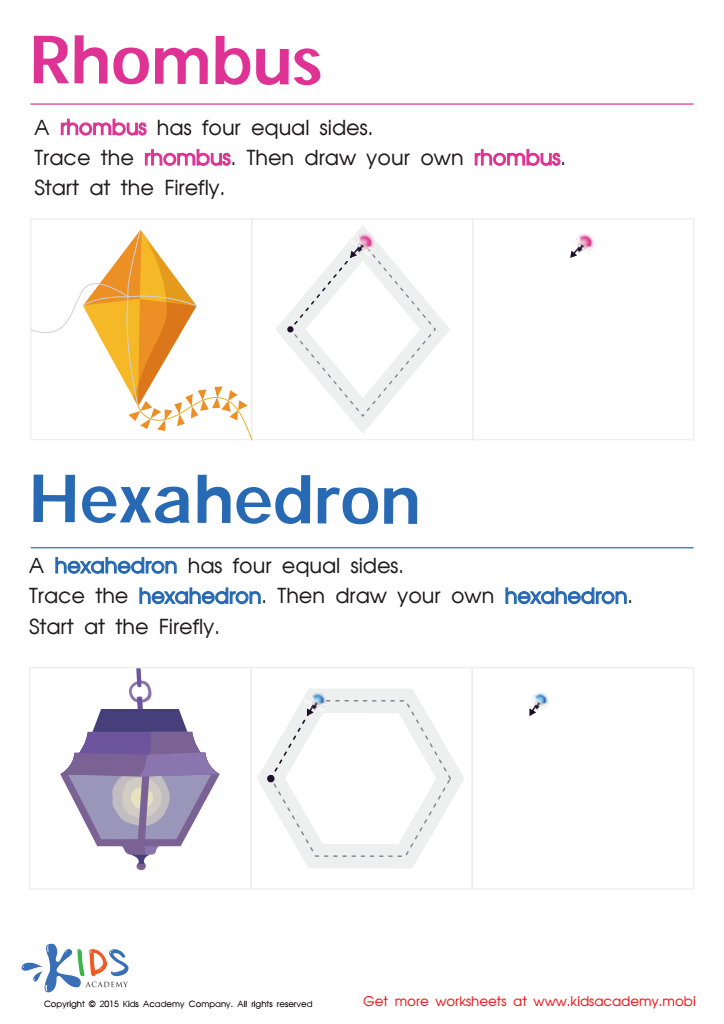
Draw a Rhombus And a Hexahedron Printable








Shape identification and tracing are foundational activities for young children, typically aged 3-9. These activities are crucial in early childhood development for several reasons.
Firstly, shape identification helps children recognize and differentiate between various geometric forms, an essential skill for later learning in both math and literacy. By being able to identify shapes like circles, squares, and triangles, children build the visual-spatial awareness necessary for understanding more complex concepts, such as numbers, letters, and patterns.
Tracing shapes further enhances fine motor skills, which are critical for writing. When children trace shapes, they practice controlling their hand movements, strengthening their muscle coordination and improving their dexterity. This lays a solid foundation for handwriting and art activities that they will encounter later in their educational journey.
Furthermore, these activities boost cognitive development. Identifying and tracing shapes engage children in problem-solving and critical thinking, as they learn to distinguish shapes based on physical attributes and replicate them accurately.
Socially and emotionally, mastering these skills can lead to increased confidence and a sense of accomplishment. When children can correctly identify and trace shapes, they feel successful, which encourages a positive attitude towards learning.
Parents and teachers should prioritize shape identification and tracing activities because they build crucial development skills, setting the stage for future academic success.