Division practice Word Problems Worksheets for Ages 3-9
5 filtered results
-
From - To
Empower young learners with our Division Practice Word Problems Worksheets, designed exclusively for children aged 3-9! These engaging worksheets help build essential math skills through fun, real-world problems tailored to each child's abilities. With colorful illustrations and varied difficulty levels, our division worksheets foster critical thinking, improve problem-solving abilities, and make learning enjoyable. Perfect for classrooms or at-home practice, these resources encourage steady progress and boost confidence in foundational math concepts. Start your child's journey to mastering division with Kids Academy and watch their skills flourish!
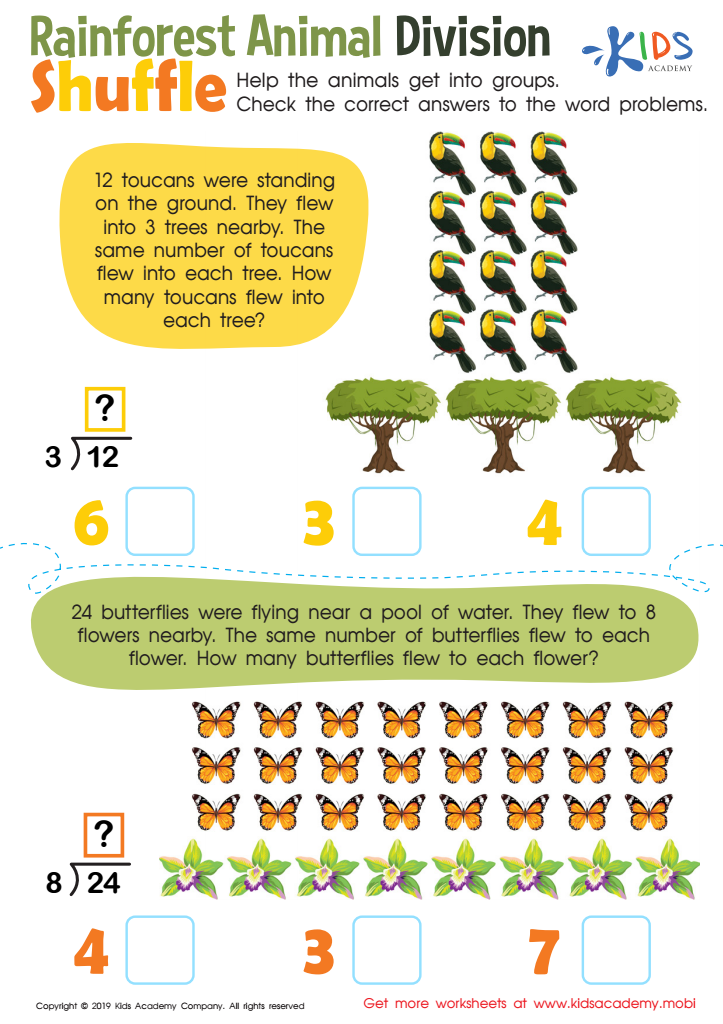
Rainforest Animal Division Worksheet
 Assign to My Students
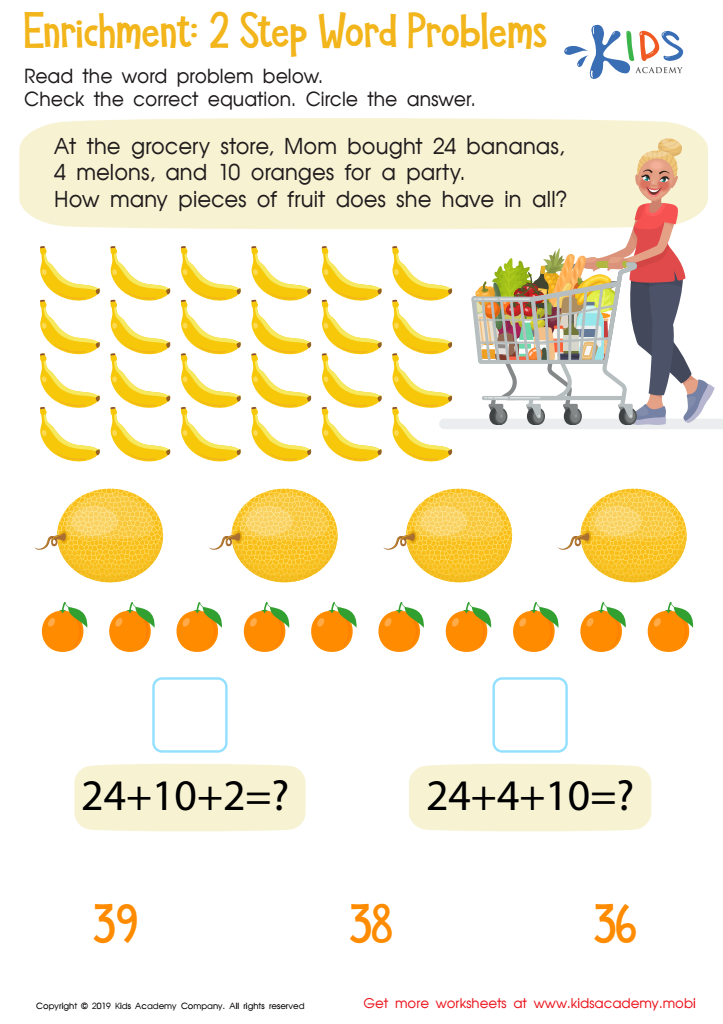
Enrichment -2 Step Word Problems Worksheet
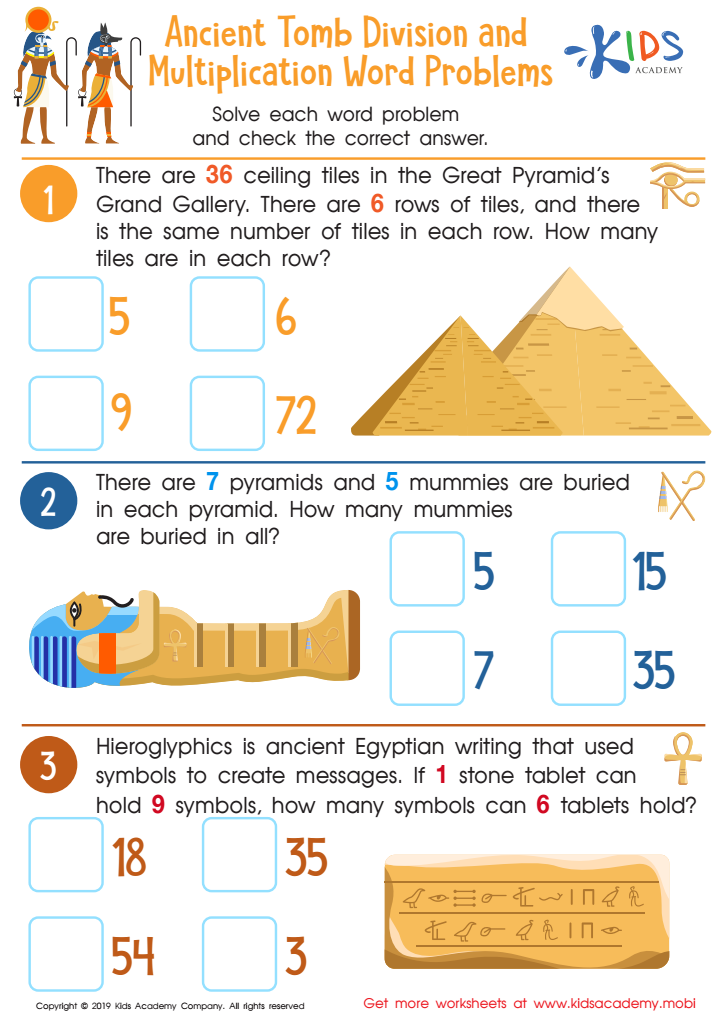
Ancient Tomb Division and Multiplication Word Problems Worksheet
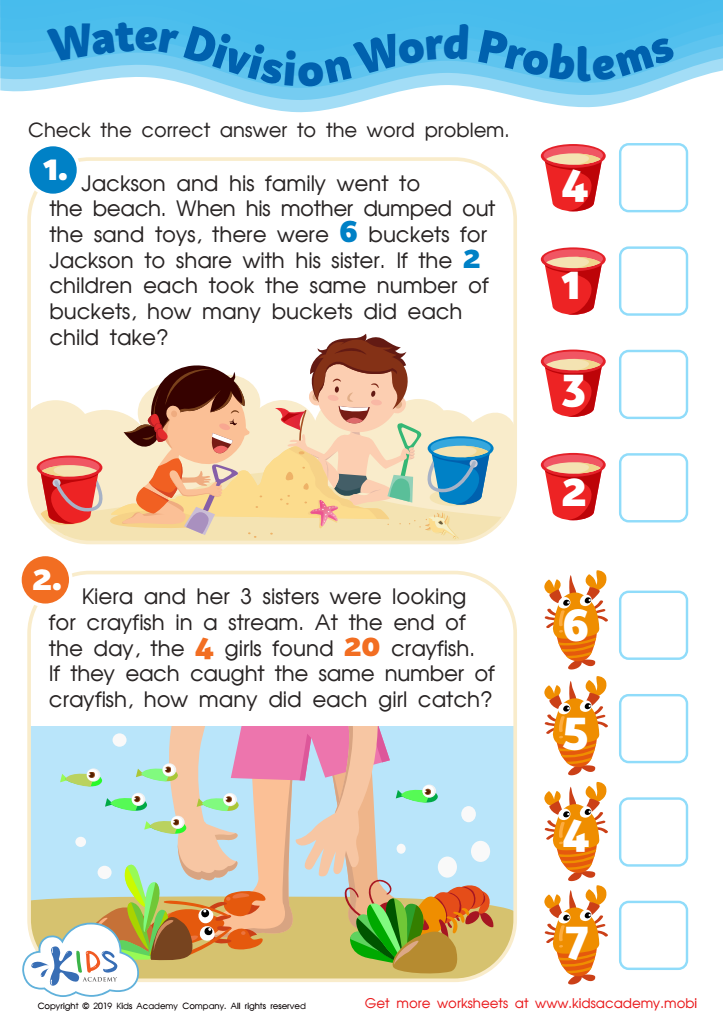
Water Division Word Problems Worksheet
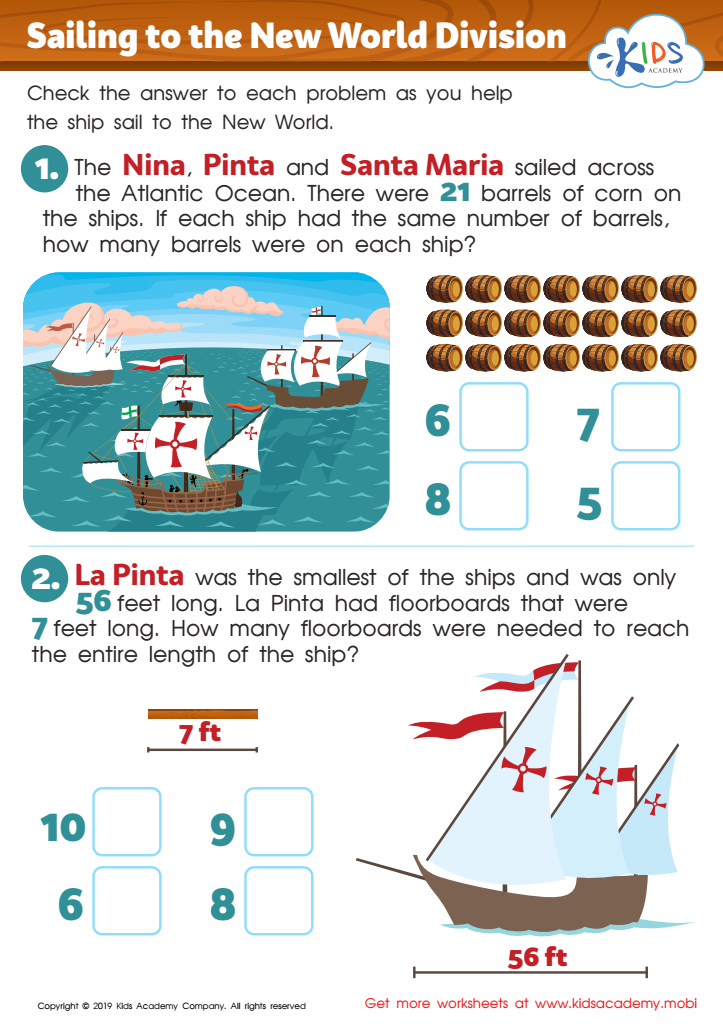
Sailing to the New World Division Worksheet








Parents and teachers should prioritize division practice word problems for children aged 3-9 because they form the foundation for essential mathematical understanding applicable throughout life. At this early stage, practicing division through engaging word problems helps young learners comprehend the concept practically rather than abstractly. This understanding is crucial because division is a fundamental skill used in everyday activities such as sharing, measuring, and problem-solving.
Incorporating word problems adds context and makes the math relatable, promoting critical thinking and improving problem-solving abilities. It encourages children to interpret real-world situations, identify relevant information, and perform accurate calculations. For instance, by figuring out how to equally share treats among friends, children understand fairness and equality better.
Additionally, focusing on division problems within this age group aligns with developmental milestones wherein kids are building cognitive and reasoning skills. Word problems stimulate language development as pupils must understand and process the details narrated in a problem.
Encouraging division practice early mitigates the risk of math anxiety by gradually building confidence and proficiency in a typically challenging area. When children see math as a series of small, achievable tasks embedded in everyday activities, their positive attitude towards mathematics will likely endure through their academic career and beyond. Thus, fostering a deeper and more enduring mathematical competence.








