Basic Addition Building Vocabulary Worksheets for Ages 3-9
4 filtered results
-
From - To
Introduce your child to the world of numbers with our "Basic Addition Building Vocabulary Worksheets for Ages 3-9". Designed to merge foundational math skills with critical vocabulary development, these worksheets make learning engaging and fun. Children will practice basic addition while simultaneously enhancing their reading and comprehension abilities. Perfect for young learners, these printables integrate colorful illustrations to keep them captivated. Developed by educational experts, these worksheets are ideal for both classroom settings and homeschool environments. Equip your child with the fundamental skills they need to excel in math and reading with Kids Academy!
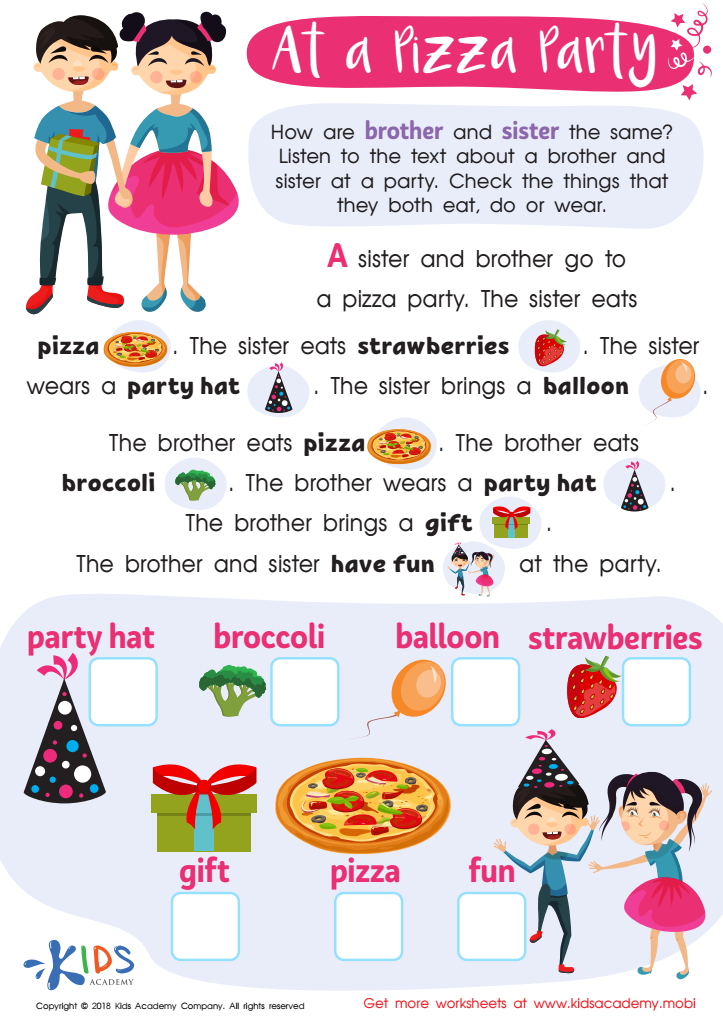
At a Pizza Party Worksheet
 Assign to My Students











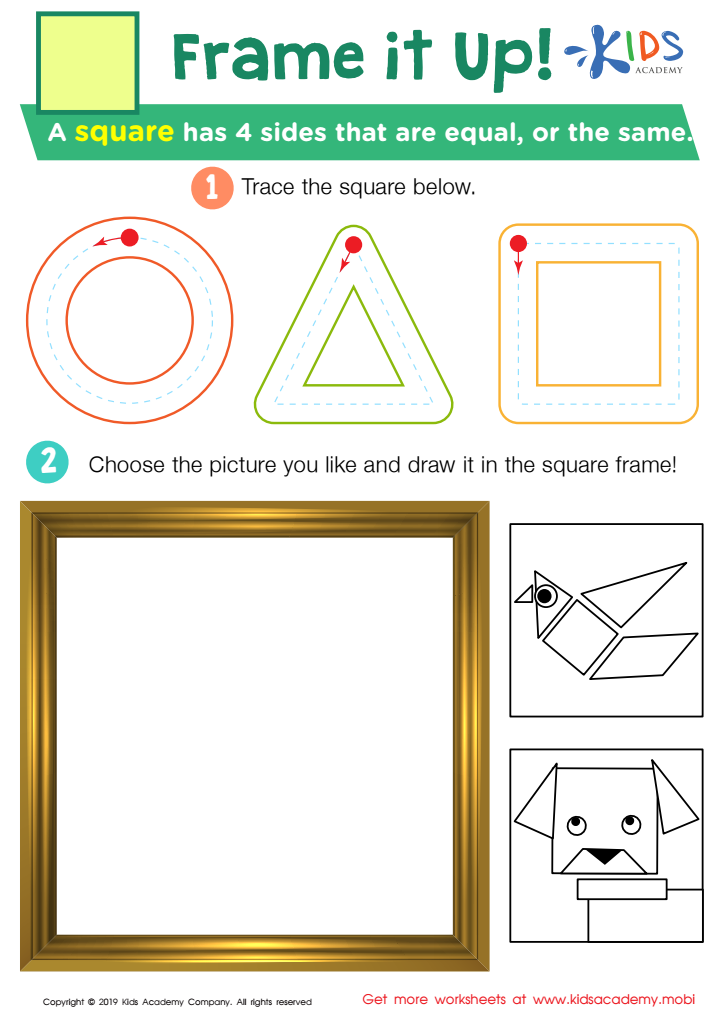
Frame it Up Worksheet








Basic addition vocabulary is foundational for young children, typically between the ages of 3-9. At this stage, children’s brains are highly receptive, making it a key period to instill essential math concepts. By focusing on basic addition terms, parents and teachers can promote mathematical understanding and confidence, which paves the way for more advanced math learning.
When children learn and use terms like "sum," "plus," and "equals," they're not just memorizing words—they're grasping concepts that will make future math tasks easier to understand. Familiarity with these terms fosters better problem-solving abilities and enhances critical thinking. Moreover, understanding math vocabulary allows children to follow instructions more accurately and engage more deeply with math lessons.
Using consistent vocabulary at home and school helps create a seamless experience for children, reinforcing learning and retention. Encouragement from both parents and teachers provides the emotional and cognitive support needed for young learners to feel successful and motivated.
Investing time in building this vocabulary enriches a child's academic foundation, setting them up for long-term success in mathematics and related fields. Essentially, it is an investment in their intellectual growth and their ability to navigate an increasingly complex world that relies on numerical literacy.








