
Logical thinking Building Vocabulary Worksheets for Ages 3-9
5 filtered results
Difficulty Level
Grade
Age
-
From - To
Subject
Activity
Standards
Our Logical Thinking Building Vocabulary Worksheets for Ages 3-9 are designed to enrich your child's cognitive development while expanding their language skills. Each worksheet integrates fun activities that challenge young minds with puzzles, matching games, and problem-solving exercises. Tailored for young learners, these worksheets enhance critical thinking, reasoning, and analytical skills through engaging vocabulary practice. Boost your child's confidence and readiness for future academic success with carefully crafted exercises that make learning enjoyable. Perfect for homeschoolers, classroom settings, or additional at-home practice, these worksheets provide a comprehensive approach to building foundational vocabulary and logical thinking.
Favorites
With answer key
Interactive
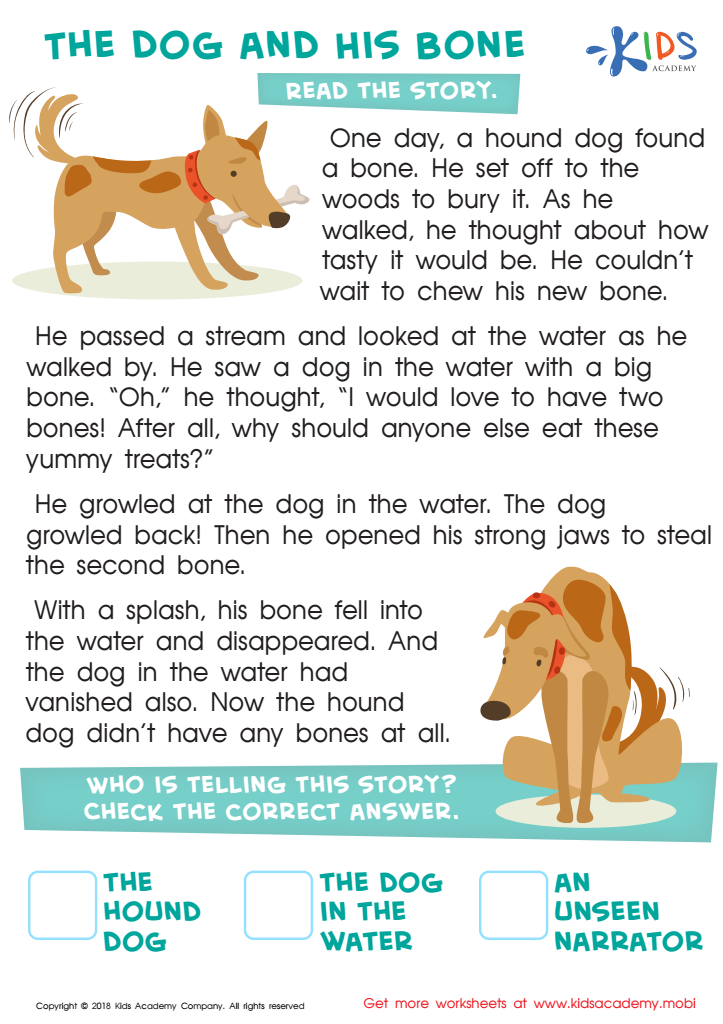
The Dog and His Bone Worksheet
Read the story of The Dog and His Bone to your kids, making sure they take in the details. Ask them the questions in this worksheet and help them check the answers. Encourage them to think carefully.
 Assign to My Students
The Dog and His Bone Worksheet
Worksheet











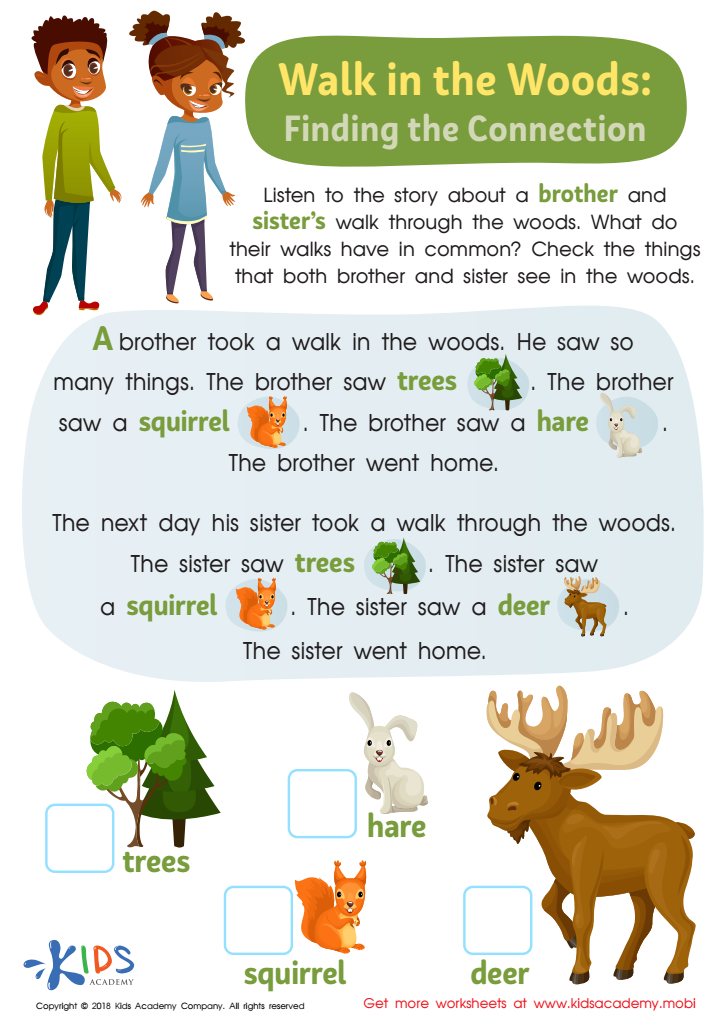
Walk In the Woods: Finding Connections Worksheet
Brother and sister took a walk in the woods to connect with nature and get some exercise. As they went, they noted different things like birds and plants, which they share in this story. Read it to your little ones, and help them check off the items the two saw. It's a great way to learn about nature and enjoy the outdoors.
Walk In the Woods: Finding Connections Worksheet
Worksheet
Join Kids Academy for Free
Who is primarily going to use this learning content?







Logical thinking and vocabulary development are vital components of a child's early education, particularly for ages 3 to 9. At this stage, children are extraordinarily receptive to learning and are developing foundational skills that will impact their future academic and social success.
Logical thinking encourages problem-solving abilities, helping children understand and analyze their environment. When kids learn to think logically, they can approach challenges systematically and make well-thought-out decisions. This skill is crucial not just in mathematics and science, but in everyday situations, fostering independent, thoughtful individuals capable of reasoning through complex issues.
Building a robust vocabulary, on the other hand, enhances communication skills, allowing children to express their thoughts and emotions more clearly and effectively. A strong vocabulary is directly linked to better reading comprehension and writing abilities, which are essential for academic success. Moreover, it is closely tied to cognitive development; as children learn new words, they also learn new concepts, broadening their understanding of the world.
For parents and teachers, prioritizing logical thinking and vocabulary development equips children with tools that support lifelong learning and adaptability. Engaging in activities that promote these skills—such as reading, puzzles, and structured play—lays a strong educational foundation, fostering confident, articulate, and insightful future adults.








