Moral lesson understanding Building Vocabulary Worksheets for Ages 3-9
3 filtered results
-
From - To
Enhance your child's vocabulary and moral understanding with our engaging Moral Lesson Understanding Building Vocabulary Worksheets for Ages 3-9. These thoughtfully designed worksheets foster essential literacy skills while introducing valuable life lessons. Ideal for parents and educators, these resources combine fun activities with meaningful themes, encouraging children to reflect on values such as kindness, honesty, and empathy. As kids explore new words within relatable moral contexts, they develop comprehension, critical thinking, and social awareness. Transform learning into a joyful journey! Discover our adaptable worksheets that cater to diverse learning styles and help shape responsible, well-rounded individuals through the power of language and moral storytelling.
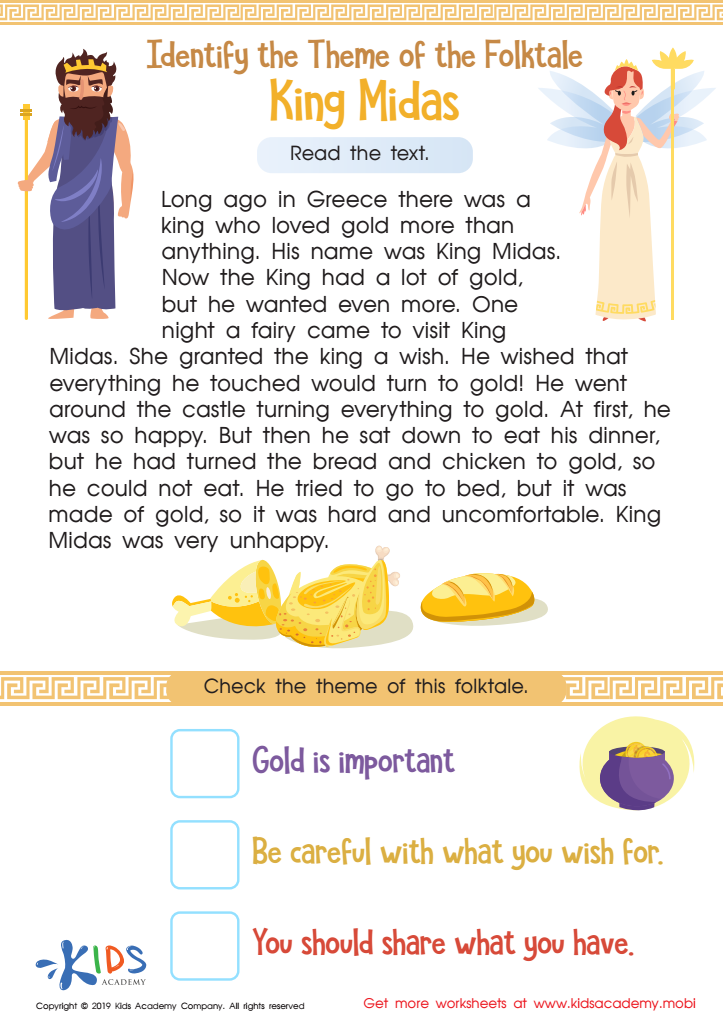
King Midas Worksheet
 Assign to My Students











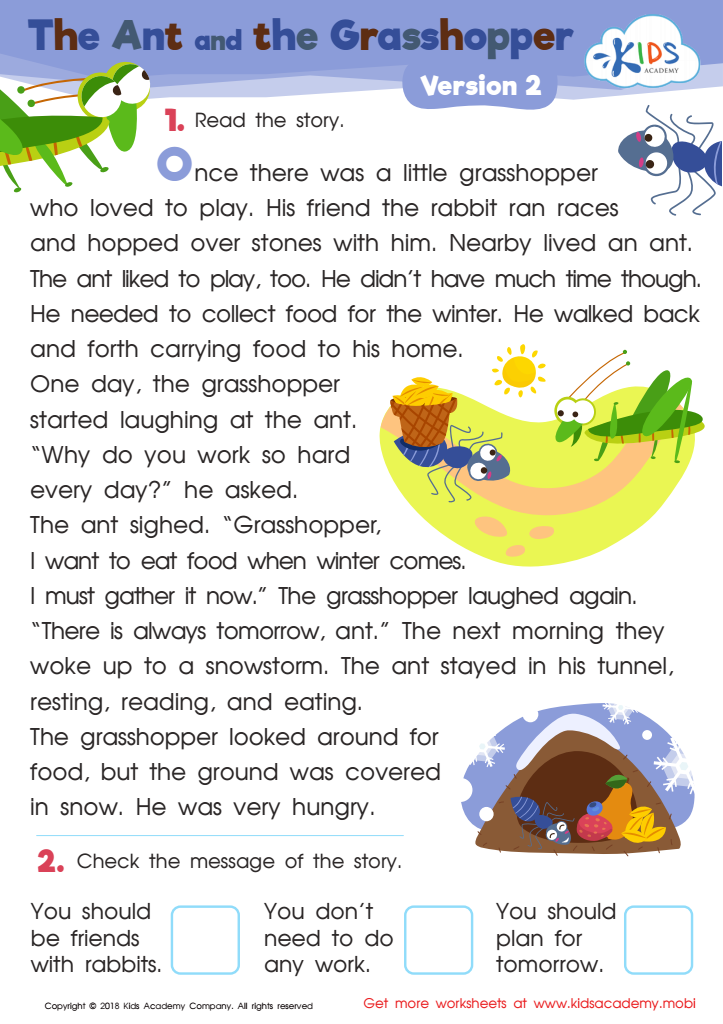
The Ant and The Grasshopper Version 2 Worksheet
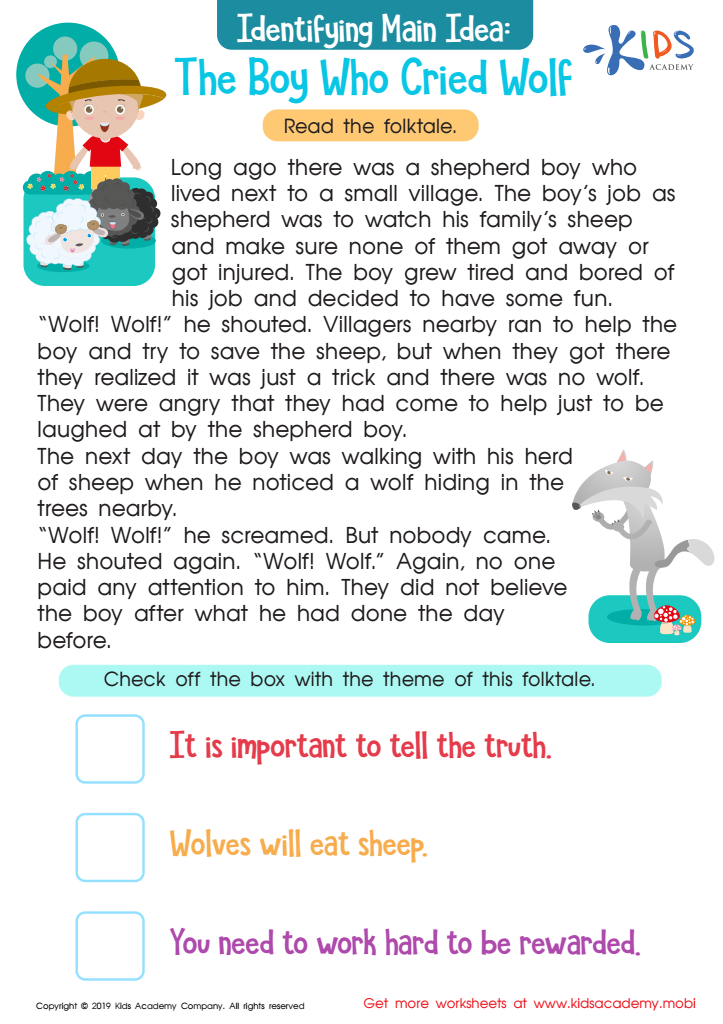
The Boy Who Cried Wolf Part 2 Worksheet



.jpg)




Understanding moral lessons and building vocabulary in children ages 3-9 are vital for their overall development. At this young age, children are like sponges, absorbing information, values, and language from their surroundings. Moral lessons help instill a sense of right and wrong, shaping the child's character and guiding their interactions with others. Parents and teachers play crucial roles in fostering these ideals through storytelling, discussions, and real-life examples.
Meanwhile, vocabulary development is equally essential as it enhances comprehension and communication skills. A rich vocabulary enables children to express their thoughts, emotions, and ideas more effectively, fostering self-confidence and social skills. When children learn new words in context—often through stories that illustrate moral lessons—they gain a deeper understanding not only of language but also of the ethical implications behind words and actions.
Additionally, strong vocabulary skills are foundational for academic success. Children equipped with a broad vocabulary excel in reading comprehension, which is critical for their educational journey. Engaging children in both moral understanding and vocabulary building ensures they become empathetic, articulate individuals ready to navigate the complexities of life. Therefore, investing in these areas is not merely beneficial but essential for their holistic development.








