Spelling Skills Building Vocabulary Worksheets for Ages 3-9
4 filtered results
-
From - To
Develop your child's spelling and vocabulary skills with our expertly designed Spelling Skills Building Vocabulary Worksheets for Ages 3-9. These engaging activities are tailored to improve literacy, enhance word recognition, and foster a love for reading. Each worksheet incorporates fun exercises and colorful illustrations that capture young learners’ attention while solidifying essential language principles. Created by educators, these resources provide valuable practice across various difficulty levels, supporting progressive learning from preschool to early elementary grades. Equip your child with the tools to excel in spelling and develop a strong vocabulary foundation that will benefit them throughout their academic journey.
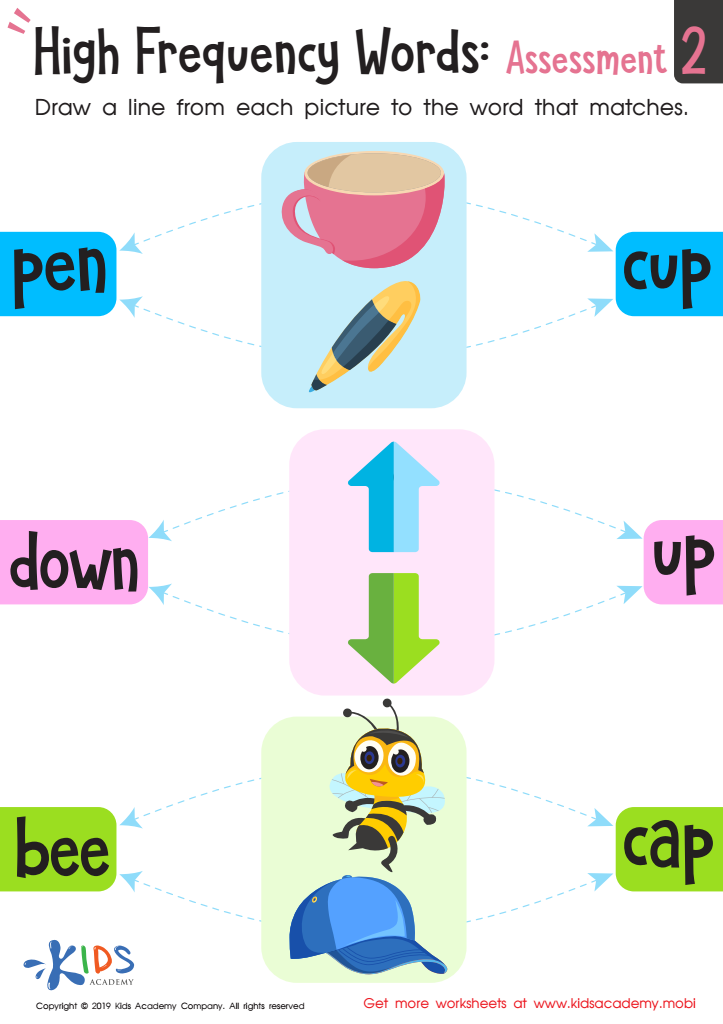
High Frequency Words: Assessment 2 Worksheet
 Assign to My Students











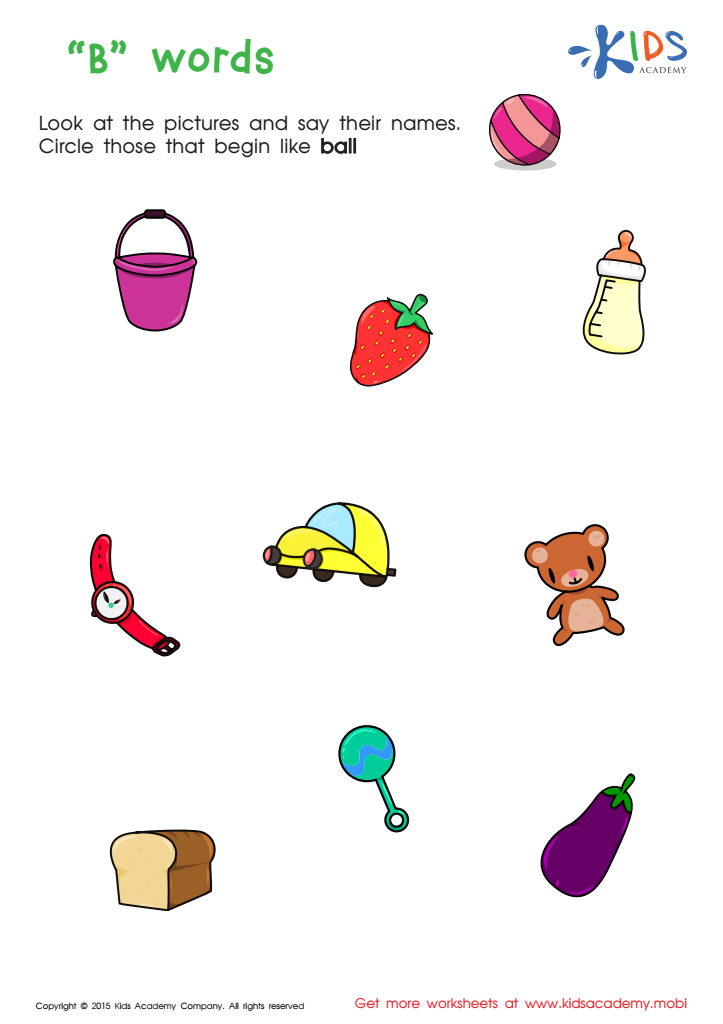
First Words Worksheet
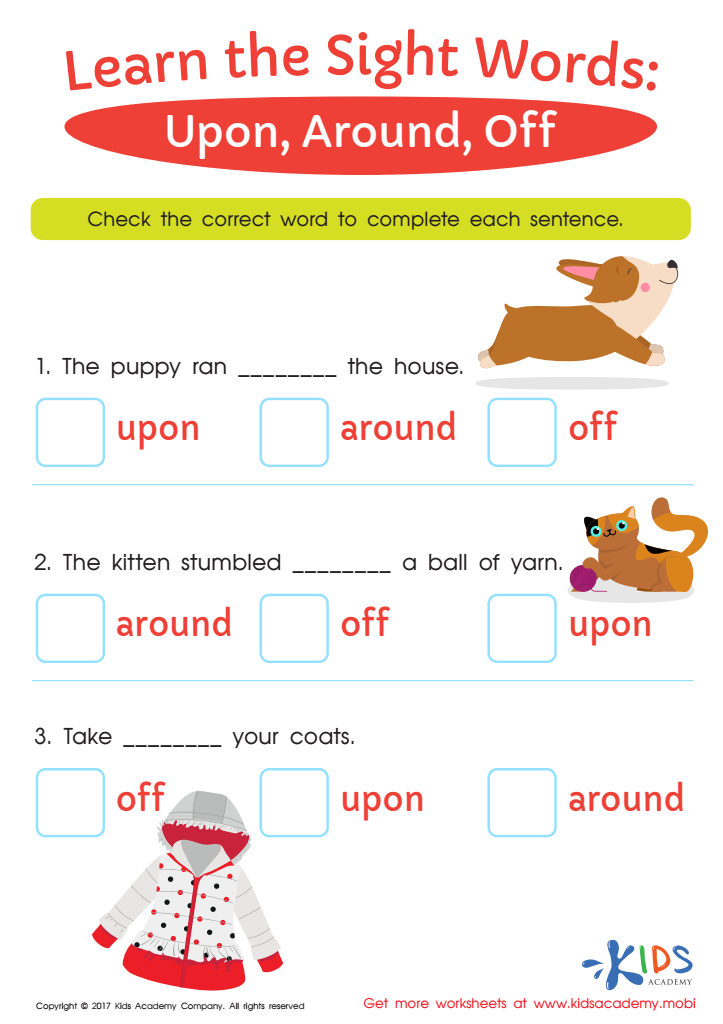
Upon, Around, Off Sight Words Worksheet
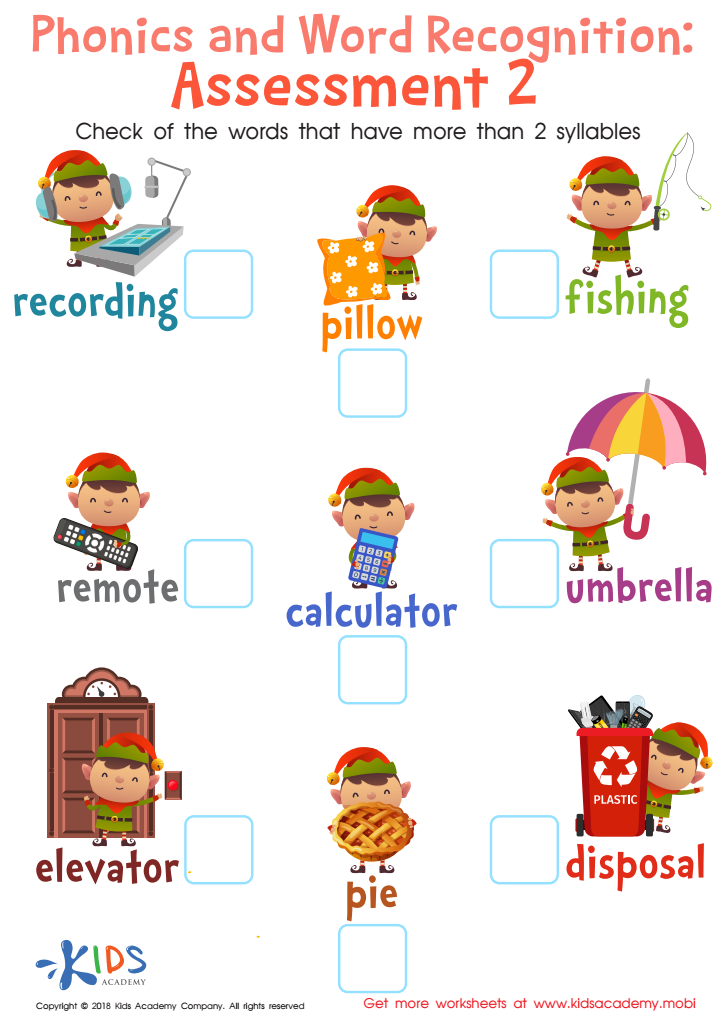
Phonics and Word Recognition: Assessment 2 Worksheet








Spelling skills play a crucial role in building vocabulary for children aged 3-9, a critical developmental window. During these early years, children's brains are highly receptive to learning language and literacy skills. Focusing on spelling not only helps in recognizing and replicating patterns in words but also strengthens reading comprehension and written communication.
When children can spell accurately, they are more likely to understand the meaning of words, identify root words, prefixes, and suffixes, and connect new terms to already known words. This holistic understanding aids in expanding their vocabulary, promoting better reading ability, and developing insightful thinking.
Strong spelling skills also empower children to articulate their thoughts and ideas more effectively, leading to more confident communication and academic performance. Moreover, a robust vocabulary lays the groundwork for all future learning by enabling easier comprehension of complex concepts across subjects.
Parents and teachers serving as guides during this formative period support lifelong literacy skills. By encouraging effective spelling practices, such as interactive spelling games, phonetic exercises, and reading activities, they help create an engaging and supportive learning environment. Hence, prioritizing spelling skills during early childhood is not just about learning words correctly, but shaping competent, enthusiastic learners.








