Hand-eye Coordination Reading Worksheets for Ages 3-9
9 filtered results
-
From - To
Unlock the full potential of young learners with our Hand-eye Coordination Reading Worksheets for Ages 3-9. Designed to enhance critical reading and coordination skills, these engaging printables combine fun activities with valuable learning. Perfect for guiding early readers through interactive exercises, each worksheet encourages children to visually sync their hand movements with what they see. This dual focus not only sharpens reading abilities but also improves overall motor skills. Ideal for children in preschool through early elementary, our worksheets create a solid foundation for academic success. Discover exciting and effective ways to support your child's development today!
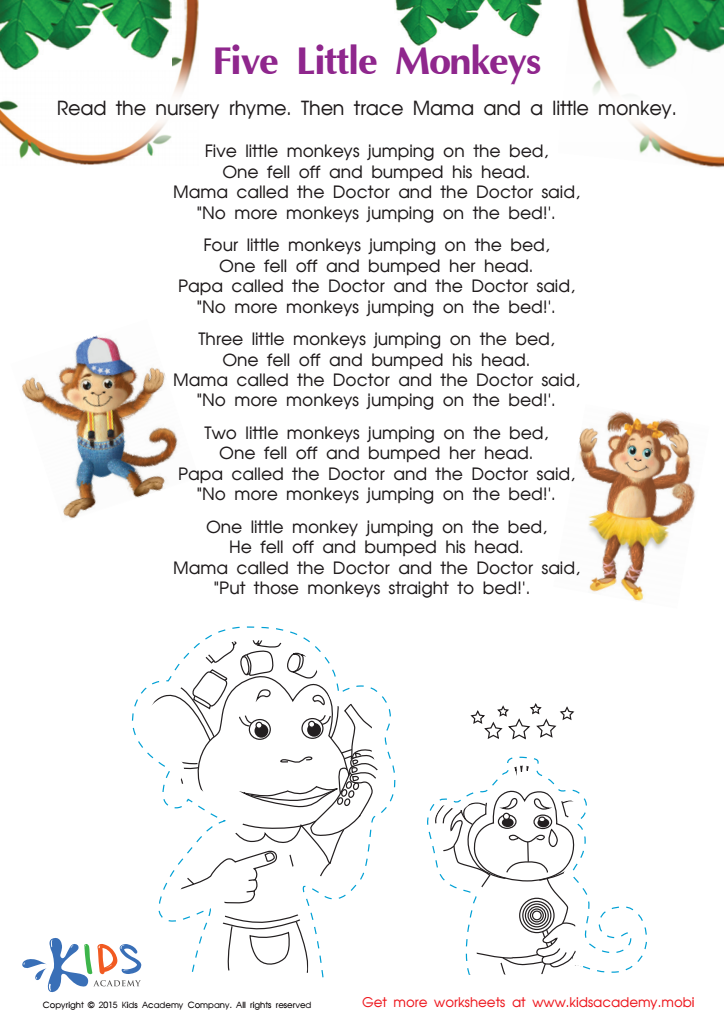
The Five Little Monkeys Nursery Rhyme Worksheet
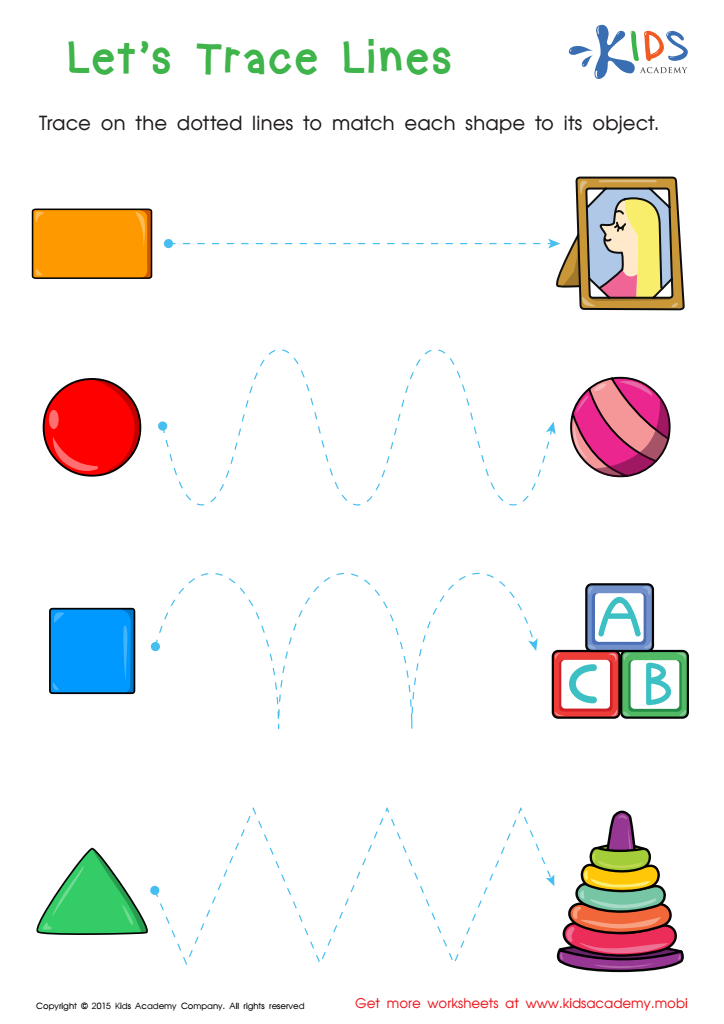
First Words: Let's Trace Lines Worksheet

Long and Short U Worksheet
 Assign to My Students
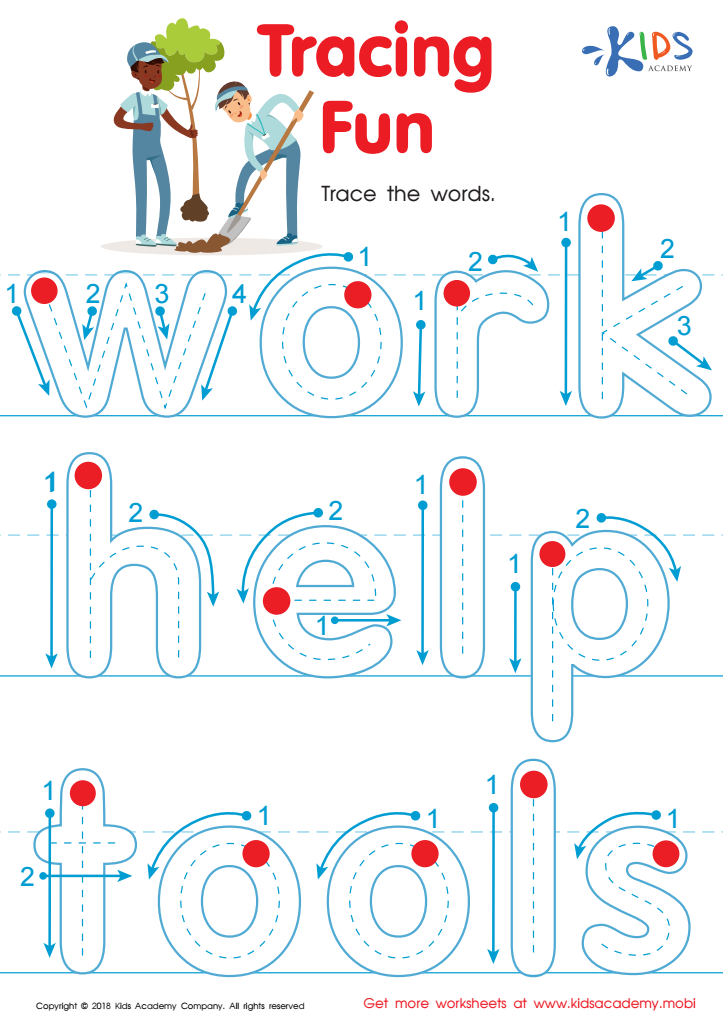
Tracing Fun Worksheet
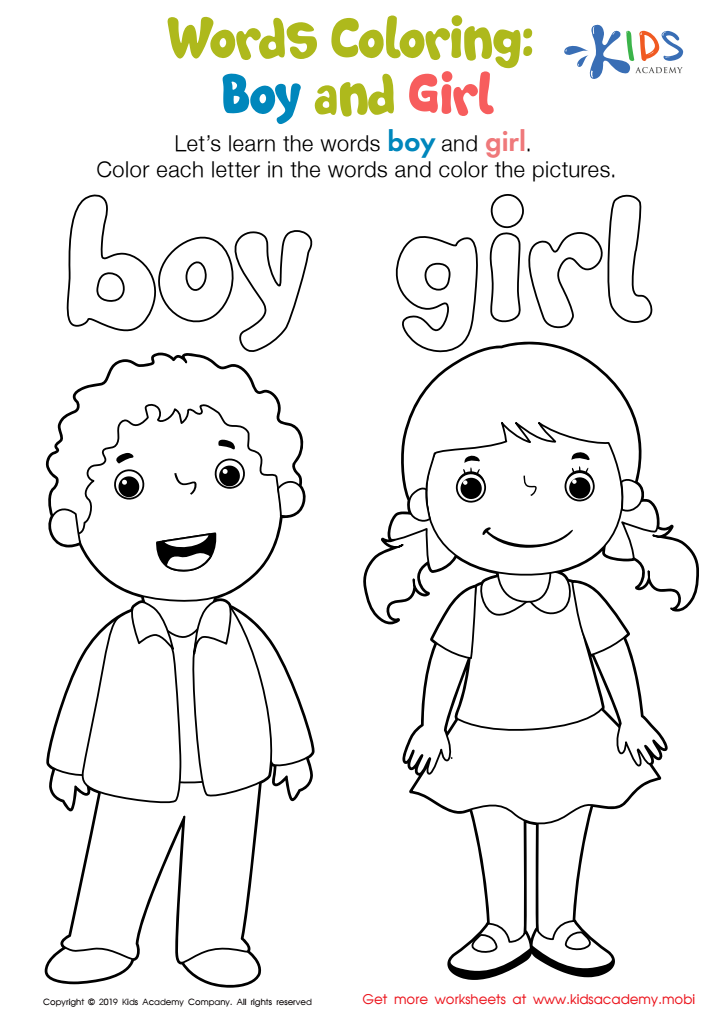
Boy and Girl Words Coloring Worksheet
Assign to My Students
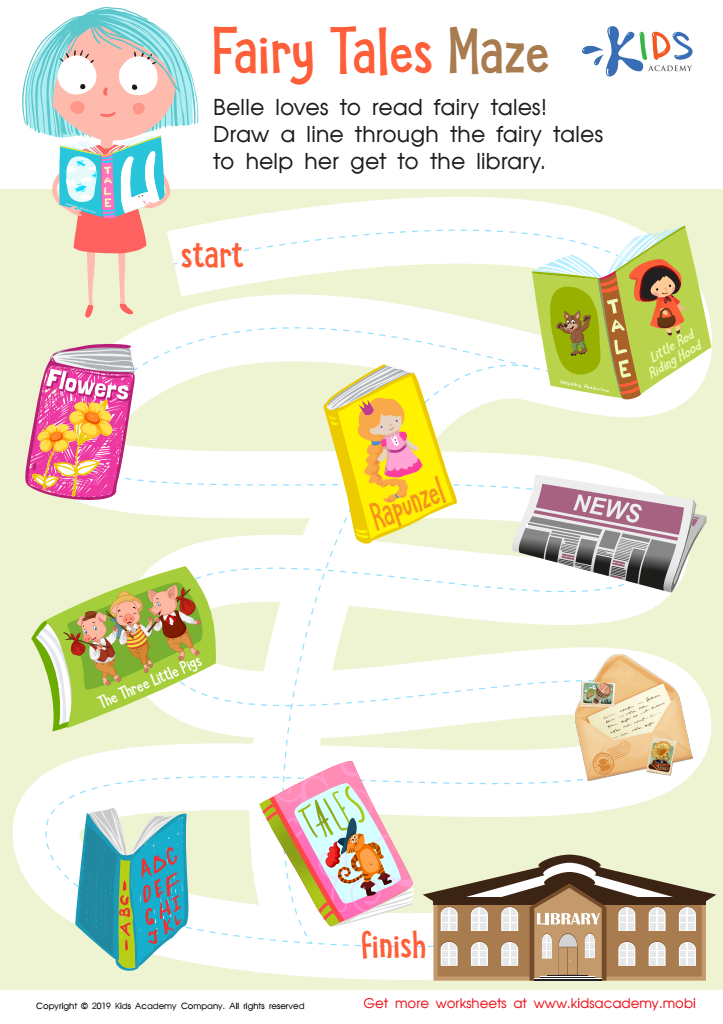
Fairy Tales Maze Worksheet
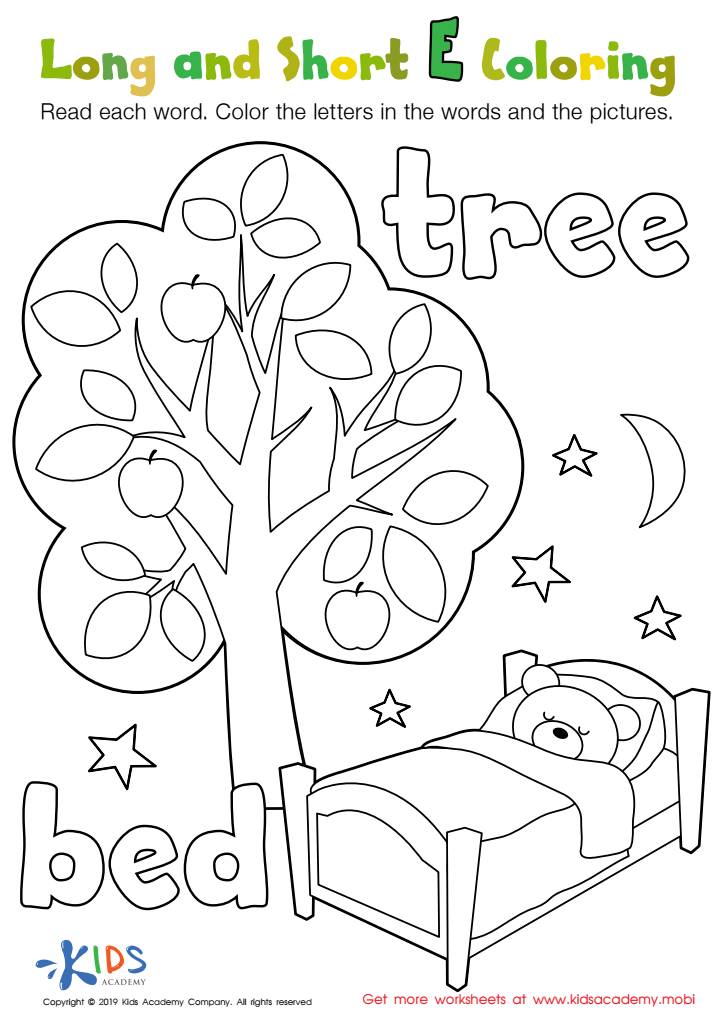
Long and Short E Worksheet
Assign to My Students
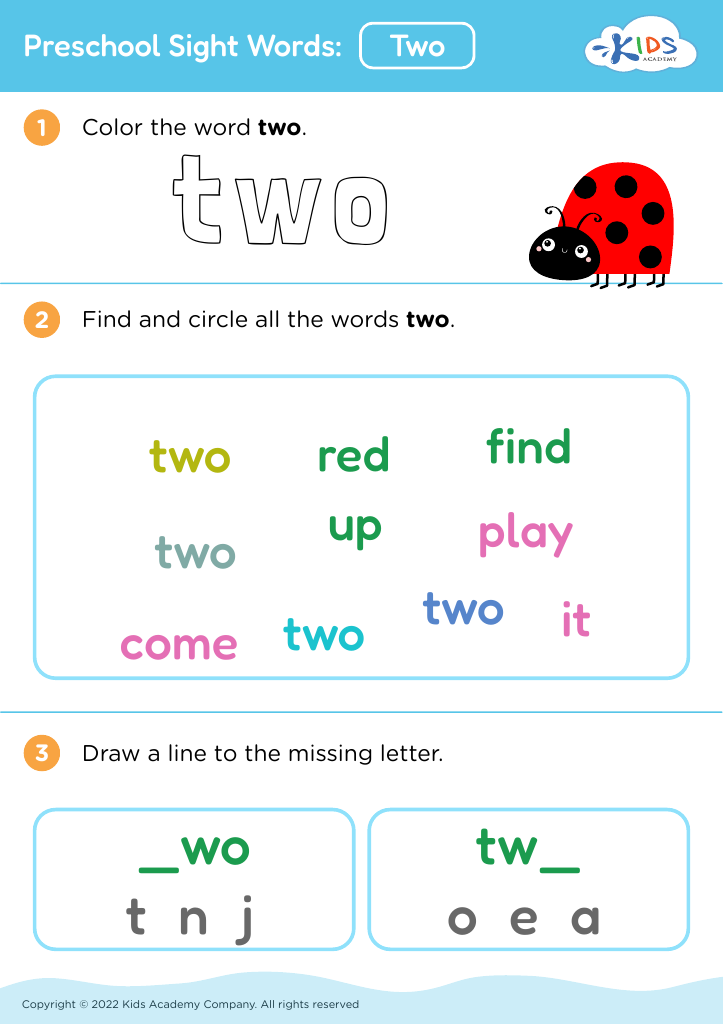
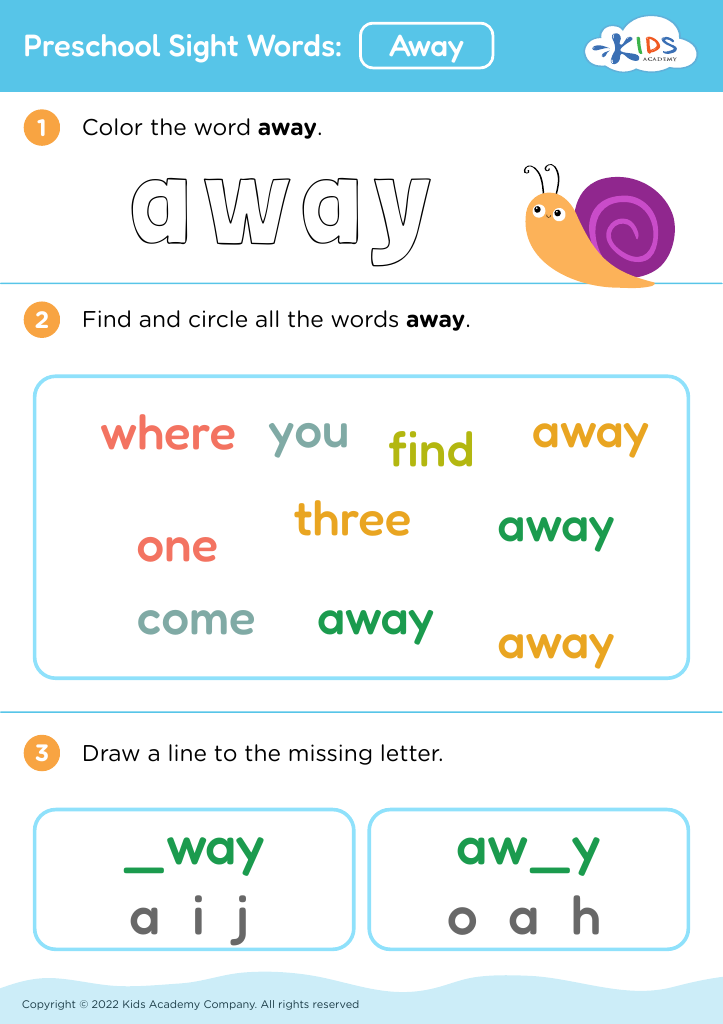


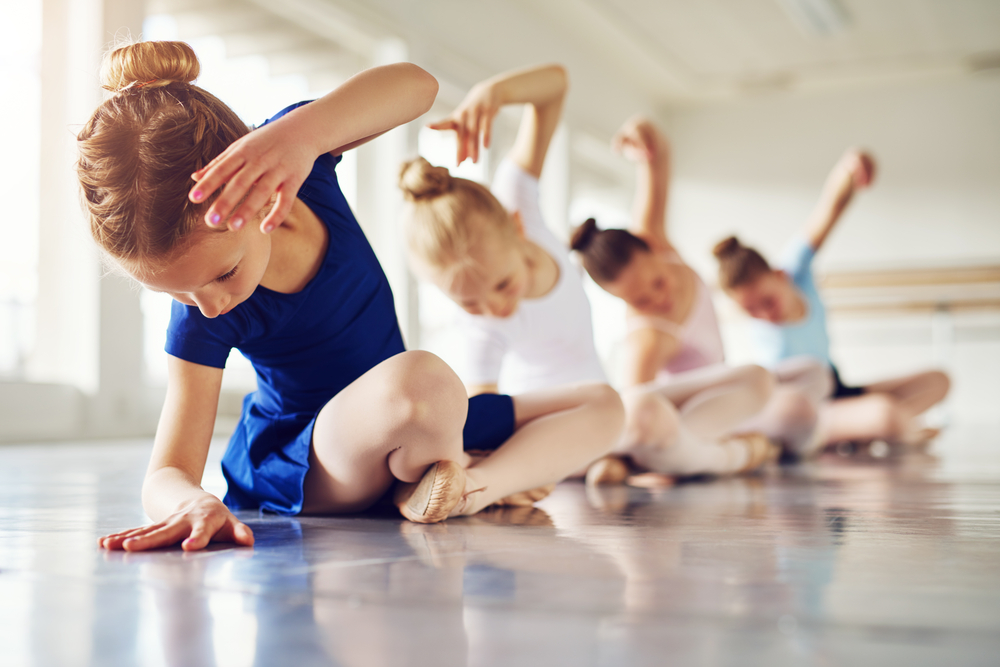




Hand-eye coordination is a crucial skill that significantly impacts a child's overall development, particularly during the formative ages of 3-9. This synchronization of visual input with hand movement is foundational for various activities that children engage in daily, from simple play to more structured learning tasks.
First, strong hand-eye coordination supports the development of fine motor skills, essential for writing, drawing, and other tasks requiring precision. Children with refined hand-eye coordination can smoothly transition to writing letters and numbers, an important aspect of their academic journey.
Second, it aids in reading. As children track text across a page, their eyes guide their understanding while their hands follow along, enhancing their capacity to connect written words with their meanings. Activities that encourage coordination, such as puzzle assembling and shape sorting, often bolster cognitive functions linked to reading proficiency.
Moreover, physical activities like playing catch, building blocks, or using scissors, which rely on hand-eye coordination, promote physical confidence and spatial awareness. These experiences build the neural pathways that are critical for problem-solving and critical thinking.
Finally, positive experiences with coordinated tasks can boost a child's self-esteem and interest in learning, fostering an enduring passion for knowledge. By prioritizing hand-eye coordination development, parents and educators lay a vital foundation for a child's educational success and overall well-being.








