Rhyming skills development Reading Worksheets for Ages 3-9
3 filtered results
-
From - To
Enhance your child's early literacy with our Rhyming Skills Development Reading Worksheets, designed specifically for ages 3-9. These engaging, printable resources help young learners recognize and create rhymes, boosting their phonemic awareness and language skills in a fun way! Through a variety of activities, including matching words, filling in blanks, and playful exercises, children will develop vital reading skills while enjoying the magic of rhythm and rhyme. Our worksheets promote cognitive development and encourage a love for reading from an early age. Perfect for parents, teachers, and homeschooling, these tools are essential for nurturing budding readers! Start developing rhyming skills today!

Rhyming Words Rhyming Worksheet
 Assign to My Students
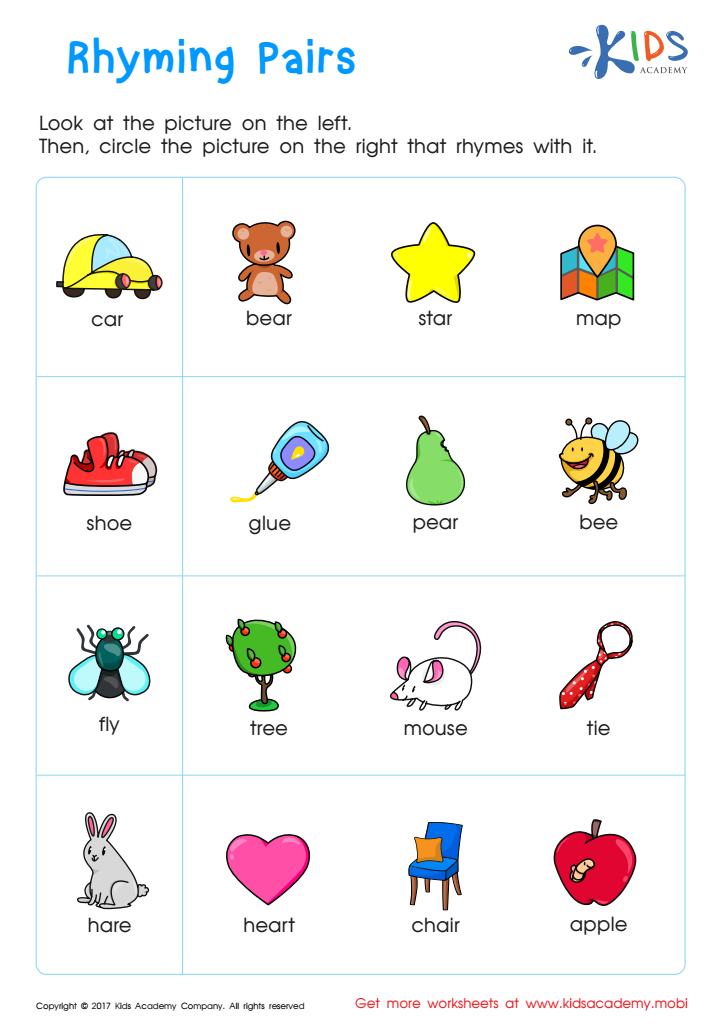

First Words: Picture Rhymes Worksheet








Rhyming skills play a vital role in early literacy development for children aged 3 to 9. First and foremost, rhyming helps children develop phonological awareness, which is the ability to recognize and manipulate sounds in words. This skill is foundational for effective reading, as children who can identify rhyming words are more likely to understand the sounds within words and how they can be blended to form meaningful language.
Furthermore, rhyming enhances vocabulary and comprehension. When children engage with rhyming books and songs, they are exposed to a richer range of words and ideas. This not only builds their vocabulary but also strengthens their understanding of language structure and syntax.
Additionally, learning to rhyme fosters creativity and encourages engagement with language. Children often find joy in playing with sounds, making learning interactive and fun. This joy can ignite a lifelong love of reading.
In essence, prioritizing rhyming skills in early education can lead to improved literacy outcomes, offering children essential tools for communication, expression, and academic success. Teachers and parents should actively support rhyming activities to lay a firm foundation for future reading abilities.








